

A Doctor of Business Administration (DBA) is designed for experienced professionals who want to deepen their business expertise and expand their leadership capabilities. A DBA builds on existing education and professional experience.
So, what is a DBA? It’s a doctoral degree that emphasizes leadership, strategy and applied research that helps advanced business leaders address complex organizational challenges.
If you’re considering doctoral study, understanding what a DBA is, how it compares with other business degrees and what the educational journey looks like can help you decide whether it’s the right fit for your professional goals.
What Does DBA Stand For?
DBA stands for Doctor of Business Administration. Beyond the name, the degree represents the highest level of professional study in business administration and prepares experienced professionals for advanced leadership and applied research.
Why Professionals Pursue a DBA
As professionals gain experience, they often begin looking for new ways to grow as leaders and make a greater impact within their organizations.
A DBA helps you deepen your expertise, approach business challenges through research and strengthen your ability to make informed decisions. It also supports continued professional growth by building on the knowledge and experience you’ve already developed.
What Do Students Learn in a DBA Program?
DBA coursework builds on existing business knowledge and professional experience. Throughout the program, students connect what they learn to real-world organizational challenges, applying new knowledge and research to situations they encounter in their own workplaces.
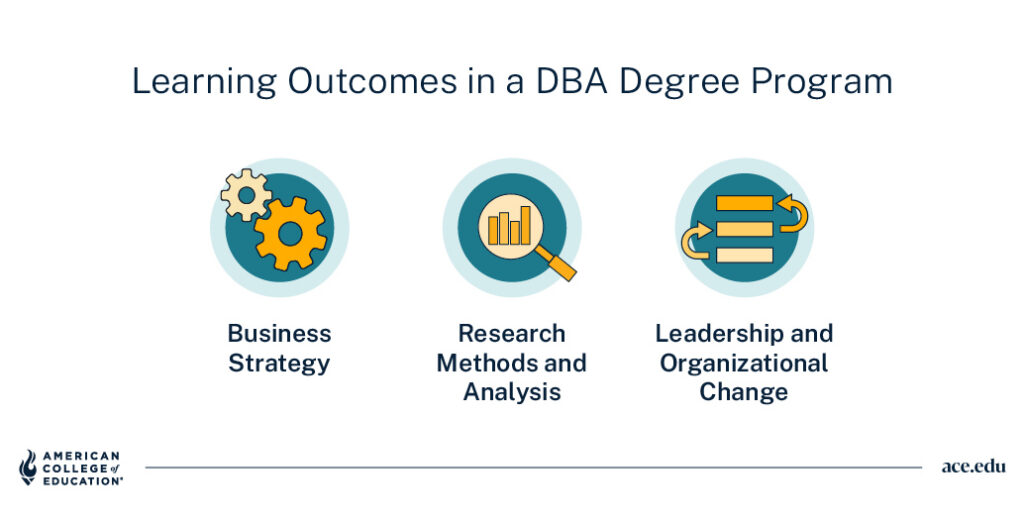
Advanced Business Strategy
Strategic planning, organizational leadership and business innovation are common areas of study in a DBA program. Students learn how to evaluate complex business situations and develop strategies that support organizational goals.
Research Methods and Data Analysis
Students learn the research methods used to investigate business challenges and evaluate organizational performance. Coursework also explores how to gather and analyze data, interpret findings, and use research to support data-driven decision-making.
Leadership and Organizational Change
Leading a business through organizational change requires more than strong management skills. DBA coursework examines change management, organizational leadership and strategies for guiding transformation initiatives while improving organizational performance.
Applied Research in a DBA Program
Instead of focusing on research for its own sake, students in a DBA program investigate real business challenges and develop practical, evidence-based solutions that can be applied in organizational settings.
Solving Real-World Business Problems
Many DBA students focus their research on challenges their organizations or industries face. Common topics include organizational performance, leadership effectiveness, organizational change, employee engagement, operational efficiency and innovation.
By investigating these issues, you develop evidence-based recommendations that can be applied in professional practice.
Conducting a Research Project
Students typically complete a research project that addresses a real business problem. The process includes defining a research question, gathering and analyzing data, and developing evidence-based recommendations.
Depending on the program, the culminating project may take the form of a dissertation, an applied doctoral project or another practice-focused research study.
Connecting Research to Practice
Instead of stopping with the research itself, students focus on how their findings can be applied in the workplace. The result is practical actions that support stronger decision-making and organizational improvement.
How Is a DBA Different From Other Business Degrees?
A DBA is just one of several advanced business degrees and knowing the differences between them can help you choose the best path forward.
DBA vs. MBA
A Master of Business Administration (MBA) is a master’s degree that focuses on broad business management and leadership. Students strengthen their knowledge across core business disciplines while developing the skills needed to lead teams and organizations.
A DBA is a doctoral degree that builds on that foundation through advanced leadership study and applied research. Rather than focusing on broad business management, students investigate complex business challenges, evaluate evidence and develop practical, research-informed solutions.
Many professionals pursue a DBA after earning an MBA, seeing the degrees as complementary rather than competing. The right choice depends on your educational background, professional experience and long-term goals.
DBA vs. Other Doctoral Business Degrees
A DBA emphasizes applying research to real-world business challenges. Students investigate organizational issues and develop practical, evidence-based recommendations that can be used to improve business performance.
Other doctoral business degrees may place greater emphasis on theoretical or academic research. Because each pathway has a different focus, you should consider which best supports your professional goals. To learn more about other doctoral pathways, take a look at our Ed.D. vs. Ph.D. guide.
Who Is a DBA Designed For?
A DBA is best for experienced professionals with master’s degrees who want to continue building their expertise.
Experienced Business Professionals
Many DBA students bring years of work experience into the classroom. They want to better understand why organizational challenges occur, how businesses can improve and what evidence points to the most effective solutions.
Executives and Organizational Leaders
Executives, managers and organizational leaders often pursue a DBA to elevate their impact. They’re interested in understanding why organizational challenges occur, how organizations can improve and how to apply research-based strategies toward the best path forward.
Professionals Interested in Research-Based Solutions
A DBA isn’t limited to business executives or professionals working in traditional business settings. Students often come from healthcare, education, government, nonprofit organizations, finance and entrepreneurship.
Leadership opportunities exist across industries, and organizations in every sector need professionals who can analyze challenges, make informed decisions and lead meaningful change.
How to Get a Doctorate in Business Administration
Most DBA programs follow a similar path, from meeting admission requirements and completing coursework to finishing a dissertation research project.
Meet Admission Requirements
Admission requirements vary by program, but most DBA programs require applicants to have a master’s degree. They typically ask for materials such as official transcripts, a résumé and a personal statement. Some programs may also require professional experience before admission.
Complete Doctoral Coursework
Doctoral coursework lays the foundation for the rest of the program. Students build on their existing business knowledge while learning to conduct the advanced research required later in their doctoral studies.
Finish a Doctoral Research Project
The final stage of a DBA program is the culminating research project. Students apply what they’ve learned throughout the program to investigate a business problem and develop practical recommendations.
Depending on the institution, this requirement may take the form of a dissertation, an applied doctoral project or another practice-focused research study.
How Long Does It Take to Earn a DBA?
Completion timelines will vary between students and from one DBA program to another.
Full-Time vs. Part-Time Study
Many professionals continue working while enrolled in a DBA program. Choosing between full-time and part-time study depends on the flexibility you need to balance work, personal responsibilities and doctoral coursework.
Factors That Affect Completion Time
A student’s timeline depends on more than enrollment status. Program structure, transfer credits, research requirements and outside commitments can all affect how quickly someone moves through the program.
What Skills Can a DBA Program Help Develop?
A DBA helps professionals build skills they can apply in their organizations. Along with expanding their business knowledge, students strengthen the leadership and analytical skills needed to address complex business challenges.
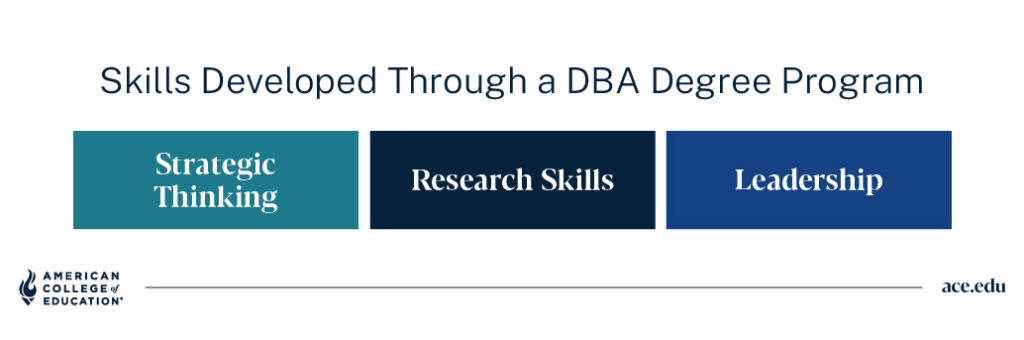
Strategic Thinking
A DBA helps you deepen your strategic thinking by evaluating complex business challenges and developing practical solutions. Along the way, you learn how to make informed decisions based on research rather than assumptions.
Research and Analytical Skills
Throughout a DBA program, you learn how to gather and interpret data, evaluate research, and assess organizational performance. You also build upon your ability to ask better questions, evaluate evidence and use research to support business decisions.
As organizations generate more information than ever before, these skills help leaders make better use of the data available to them.
Executive Leadership
Leadership development is woven throughout a DBA program. Students strengthen their ability to lead teams and organizations, communicate effectively, and manage change initiatives while exploring strategies that contribute to organizational performance.
The Value of a DBA in Today’s Business Environment
Business leaders face increasingly complex challenges as organizations adapt to changing markets, new technologies and evolving workforce needs. A DBA helps professionals develop the knowledge and skills needed to work through issues with confidence.
Navigating Complex Business Challenges
Business conditions can change quickly, requiring leaders to evaluate new challenges and opportunities as they arise. A DBA helps professionals develop a thoughtful, research-informed approach to making decisions in changing environments.
Supporting Innovation and Growth
Innovation depends on leaders who can evaluate opportunities, adapt to change and turn research into practical solutions that improve organizational performance.
Leading With Evidence-Based Decision Making
Professional experience plays an important role in business leadership, but research helps leaders test assumptions and evaluate their options. By learning how to interpret findings and assess evidence, you strengthen your ability to leverage reliable information and address challenges.
How ACE’s DBA Program Supports Working Professionals
The Doctor of Business Administration program at American College of Education (ACE) is designed for working professionals to succeed in advanced business leadership roles. The fully online program has no in-person requirements, allowing you to complete coursework around your professional and personal responsibilities.
Throughout the program, students connect their coursework to workplace challenges and apply what they learn in real time. ACE also offers one of the more affordable DBA programs available, making doctoral study accessible and doable.
FAQs
Is a DBA considered a terminal degree?
Yes. A Doctor of Business Administration is considered a terminal degree, meaning it’s the highest academic credential in the field of business administration.
Can professionals from non-business backgrounds pursue a DBA?
It depends on the program. While many DBA students have business backgrounds, professionals from a variety of industries may also be eligible to apply to some programs.
Do DBA programs require dissertations?
Requirements vary by institution. Some DBA programs require a traditional dissertation, while others conclude with an applied doctoral project or another practice-focused research experience.
How does a DBA support organizational consulting work?
A DBA can help you develop the research, analytical and problem-solving skills often used in organizational consulting. Those skills support evaluating business challenges and developing practical recommendations for improvement.
Can a DBA help professionals transition into executive leadership roles?
A DBA can help professionals prepare for executive leadership by strengthening advanced leadership, strategic thinking and decision-making skills. While a degree doesn’t guarantee a leadership position, it can support professionals pursuing executive-level roles.
How is success measured in a DBA program?
Success is typically measured through a combination of coursework, research milestones and the successful completion of the program’s culminating research project.
Explore the fully online and affordable business programs at American College of Education.