

The value of an advanced degree depends on more than its advertised tuition price. For working professionals, a master’s or doctorate can be a worthwhile investment when its total cost, time commitment, career benefits, earning potential and flexibility align with long-term professional goals.
According to the United States Census Bureau, adults age 25 and over with a graduate or professional degree had median earnings of $90,191, compared with $70,470 for those with a bachelor’s degree.
Evaluating these factors together can help prospective students determine whether graduate education is likely to provide meaningful value.
Key Takeaways
- Tuition is only one expense. Fees, materials, financing and potential lost income can change the actual cost of a degree.
- Continuing to work while studying can reduce the financial impact, while a degree that leads to stronger career opportunities may improve long-term returns.
- A master’s degree may be sufficient for some career paths, while a doctorate may be more appropriate for advanced research, academic or senior professional roles.
Calculate the Total Cost of an Advanced Degree
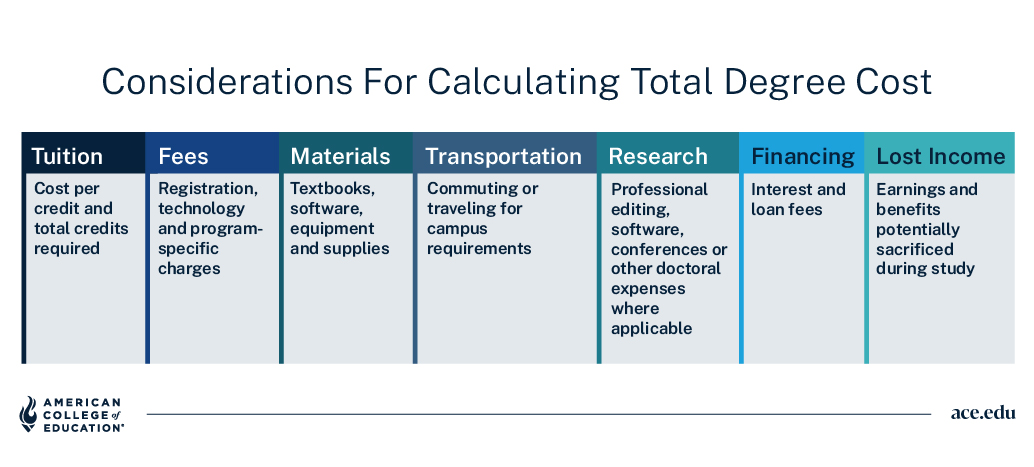
When calculating what an advanced degree will cost, it’s critical to look at the full picture. Tuition is only one part of the total cost, so be sure to include all major expenses you may incur from enrollment through graduation. Choosing an online program may reduce transportation, relocation and housing expenses, but it can still involve significant tuition and technology costs.
Opportunity cost should also be included in the calculation. A professional who leaves a full-time job to attend school could forgo salary increases, bonuses, employer benefits or promotions during enrollment. A professional who continues working may preserve much of that income while earning the degree.
This is why it’s essential to look beyond tuition alone when evaluating value. For example, Research.com analyzed the economics of earning a master’s degree at American College of Education (ACE), demonstrating how program costs, potential earnings, flexibility and long-term career value can factor into your overall return on investment in graduate education.
Compare Time to Completion With Career Plans
Time is another component of the real cost of graduate education. A shorter program can allow professionals to apply their new credentials sooner, while a longer program may offer a manageable pace for students who need to remain employed.
Completion times vary by field, enrollment status and program structure. Master’s degrees are often shorter, while doctoral study generally requires a longer commitment because students must complete advanced coursework and a substantial final research requirement.
Before enrolling in a program, ensure you understand:
- Total credits required
- Full-time and part-time completion timelines
- Availability of year-round courses
- Internship, practicum or residency requirements
- Typical time needed to complete a thesis or final project
- Expected dissertation or doctoral research timeline
Determine If You Can Continue Working While Studying
For working professionals, maintaining employment can significantly change the economics of graduate education. Continued employment provides ongoing income and may allow students to retain employer-sponsored health insurance, retirement contributions and other benefits.
It can also create a direct connection between academic study and professional experience. Students may be able to apply new knowledge to workplace projects while building skills that support future advancement. Choosing online master’s degree programs, such as those at ACE, can give working professionals more options for fitting graduate coursework into their existing schedules.
However, working while studying requires a realistic assessment of workload. You should consider whether your employer offers flexible scheduling or tuition assistance, and whether the academic program permits part-time enrollment.
Answering these questions can help you determine if balancing work and study is doable:
- How many hours of coursework are expected each week?
- Can I take fewer courses during busy periods at work?
- Are classes scheduled during standard working hours?
- For online courses, do I need to log in at a specific time, or is the coursework asynchronous?
- Can I maintain full-time employment throughout the program?
- Does my employer offer tuition reimbursement?
- Can assignments or projects connect to my current work?
Continuing to work while studying can reduce the income professionals give up during graduate school. It can also help you maintain your salary and benefits while earning the degree.
Evaluate Online Flexibility Separately
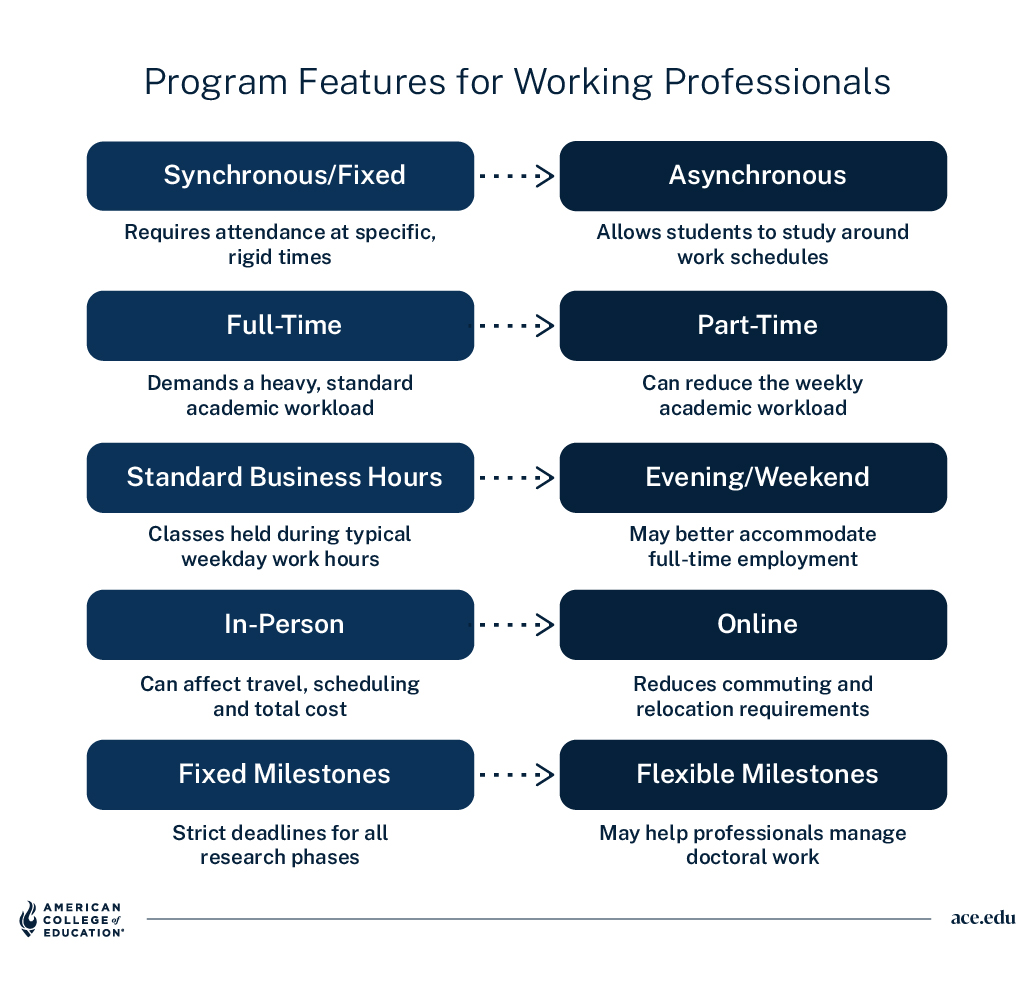
Online education can make advanced study more accessible to professionals who cannot relocate or attend campus classes regularly. Its value largely depends on how well the program structure fits around existing responsibilities and accommodates students with different scheduling needs.
Asynchronous courses allow students to complete coursework at different times, while synchronous classes require attendance at scheduled sessions. Some online programs may also include in-person residencies, practicums, internships or other requirements.
Measure Career Advancement and Long-Term Earning Potential
Career advancement should be evaluated alongside salary. An advanced degree has the potential to qualify you for a promotion, specialized role, management position or career transition that would otherwise be difficult to pursue.
In 2025, the U.S. Bureau of Labor Statistics reported median usual weekly earnings of $1,876 for full-time wage and salary workers age 25 and over with a master’s degree and $2,307 for those with a doctoral degree. Workers with a bachelor’s degree had median usual weekly earnings of $1,578.
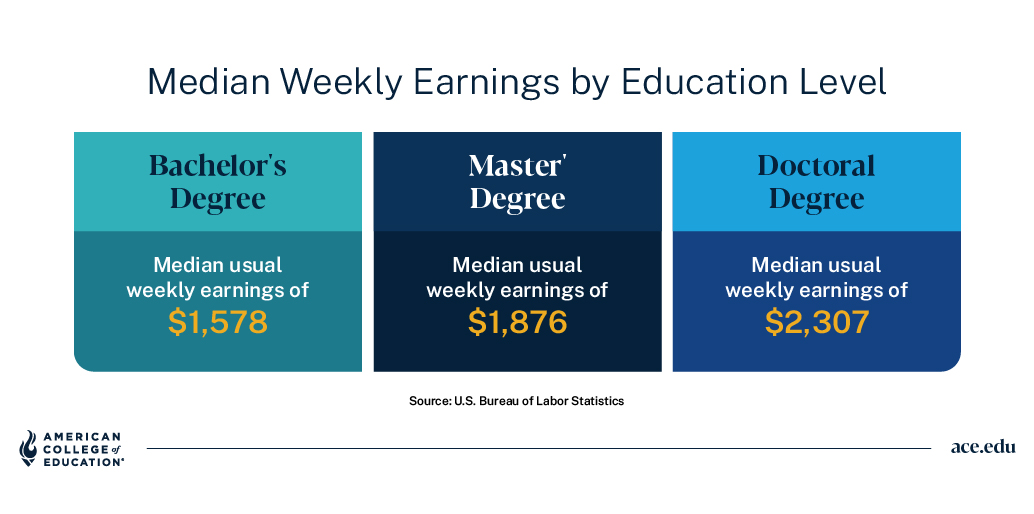
These figures show that people with higher levels of education tend to earn more. Occupation, experience, industry and location also influence earnings. Be sure to evaluate your own potential earnings rather than relying solely on national averages.
How to Estimate Your Potential Long-term Return
Your potential return should be considered over several years rather than based only on a first post-graduation salary. A degree that helps support a higher-paying career path or opportunities for repeated advancement may have greater long-term value than one that yields only a modest initial salary increase.
Consider:
- Current earnings: What do you earn without the degree?
- Target position: What roles could the degree help you pursue?
- Target salary: What do those positions typically pay?
- Career progression: Could the credential accelerate advancement?
- Time to benefit: How soon could the degree affect your career?
- Total investment: How much will tuition and other costs reduce the financial gain?
Master’s vs. Doctorate: Which Investment Fits?
A master’s and a doctorate involve different levels of time, specialization and research. The appropriate choice depends on the professional outcome you’re pursuing.
A master’s degree may make sense for professionals who want to:
- Develop specialized professional knowledge
- Qualify for advanced positions
- Move into management
- Change career fields
- Meet an employer or occupational requirement
A doctorate may make sense for professionals who want to:
- Conduct advanced research
- Pursue academic or research careers
- Develop highly specialized expertise
- Address complex professional problems
- Prepare for certain senior leadership positions
- Meet a doctoral-level professional requirement
If a master’s already provides the qualifications needed for a target position, pursuing a doctorate may not offer sufficient additional benefit to justify its greater cost and time commitment.
Examine the Final Doctoral Research Requirement
The final research component can significantly affect the length and workload of doctoral study. Traditional doctoral programs may require a dissertation that includes original research, a literature review, a methodology, analysis and a formal defense.
Professional doctorates can use different approaches. Some programs incorporate applied research projects, dissertation-in-practice models, capstones or other practice-oriented requirements.
The structure of the final research requirement is another important consideration. You may find that some universities emphasize applied research projects or practice-based doctoral work rather than the conventional dissertation format.
Students should determine:
- What type of final research project is required
- How the research is supervised
- Whether the project can address a workplace problem
- How long the research phase typically takes
- Whether a formal defense is required
These details can affect both the workload and total time needed to earn the doctorate.
Align the Degree With Your Professional Goals
The strongest way to evaluate an advanced degree is to work backward from the desired career outcome.
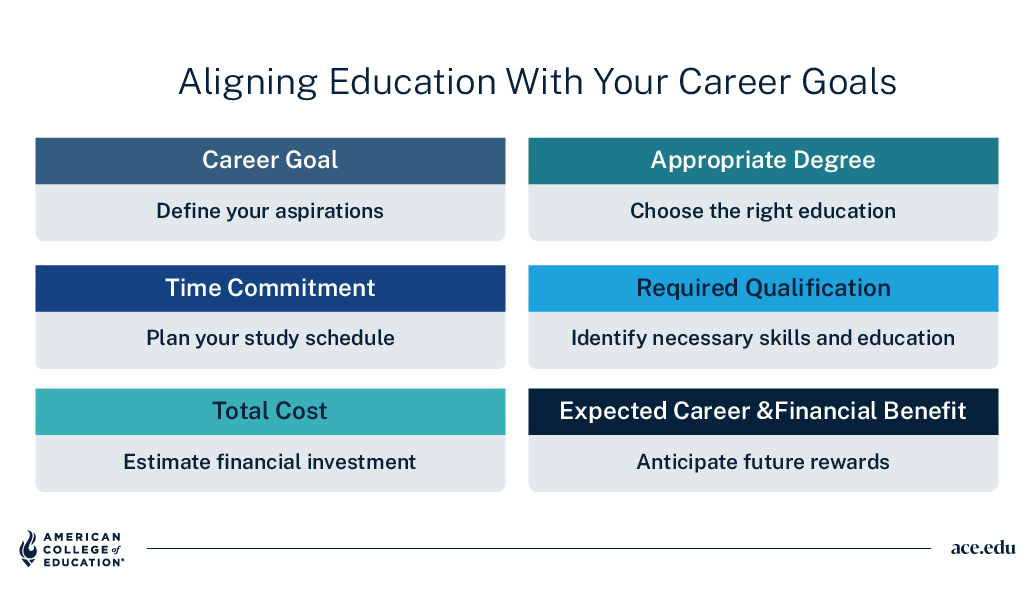
This approach prevents professionals from pursuing a graduate credential simply because it appears valuable in general. Someone seeking a management promotion may need only a master’s degree, while someone pursuing advanced research or academic work may require doctoral-level preparation.
Before enrolling, professionals should be able to answer:
- What career outcome do I expect from this degree?
- Is the degree required or strongly preferred for that outcome?
- Can I continue working while studying?
- What will the degree cost in total?
- How much income could I sacrifice?
- What salary and advancement opportunities could it create?
- Does the program’s format fit my responsibilities?
- Does the final doctoral research requirement match my professional interests?
Ultimately, the long-term value of an advanced degree comes from the relationship between what a professional invests and what the credential can realistically help them achieve. Evaluating cost, completion time, employment flexibility, career advancement, earning potential, opportunity cost and program structure provides a more complete basis for deciding whether a master’s or doctorate is the right next step.
FAQs
How do I know if I am ready for graduate school after several years of working?
Readiness can depend on your current professional responsibilities, study habits and ability to commit regular time to academic work. Reviewing admission requirements and speaking with current or former students can also help you understand what the program expects from working professionals.
Should I consider employer tuition assistance before enrolling?
Yes. Employer tuition assistance can reduce the amount you need to pay personally. Check whether your employer has an annual reimbursement limit, eligibility requirements, grade requirements or rules about remaining with the company after completing the program.
Can previous professional experience reduce the amount of graduate coursework I need?
Some programs may award credit for qualifying prior coursework or learning through transfer credit, prior learning, examination or other established credit evaluation processes. Policies vary by institution, so prospective students should check whether previous coursework or experience can count toward their degree requirements.
What happens if my career goals change after I start the degree?
Career plans can change during graduate school. Before enrolling, check whether the program offers electives, concentrations or opportunities to develop skills that apply across multiple roles. A broader curriculum may provide more room to adjust your professional direction.
Should I speak with current students before choosing a graduate program?
Speaking with current students or recent graduates can provide practical insight into workload, faculty communication, course organization and the overall student experience. Their experiences can complement the information provided in official program materials.
American College of Education (ACE) offers affordable degree programs designed for working professionals. Online, asynchronous coursework creates accessible opportunities to maintain personal and professional commitments while pursuing career advancement.