

Have you ever wondered what truly separates a high-performing department from one that just gets by? While many factors contribute to a company’s bottom line, the answer often boils down to a single concept: leadership management.
What is leadership in management? It’s a question that every aspiring business manager should be able to answer.
At its core, leadership in management is the ability of an individual to influence, motivate and enable others to contribute toward the effectiveness and success of an organization. It’s far more than just a title or a spot on an organizational structure. It’s a dynamic, living process that guides teams through the complexities of today’s work environment.
Leadership is formally recognized as one of the essential functions of management. While managers are often associated with logistical tasks like planning and budgeting, effective leadership breathes life into those plans. It supports productivity, streamlines communication and serves as the bedrock for organizational success. When managers embrace strong leadership principles, they do more than just supervise; they create a vision and inspire their immediate team to execute it, directly achieving higher overarching organizational goals.
This blog post will discuss the leading function of management, examine why leadership is critical for a positive culture and explore the specific leadership skills you need to become a successful leader.
The Leading Function of Management
We must look at leading as a function of management to understand how leadership works in a corporate setting. Management is often categorized into four core functions: planning, organizing, leading and controlling. While planning sets the course and organizing provides the necessary resources, leading is the human element of the equation. Managers use leadership to direct teams, resolve conflicts and align individual efforts with broader organizational priorities. Without the “leading” pillar, the other three functions often lack the momentum required to move the needle.
Guiding Employees Toward Goals
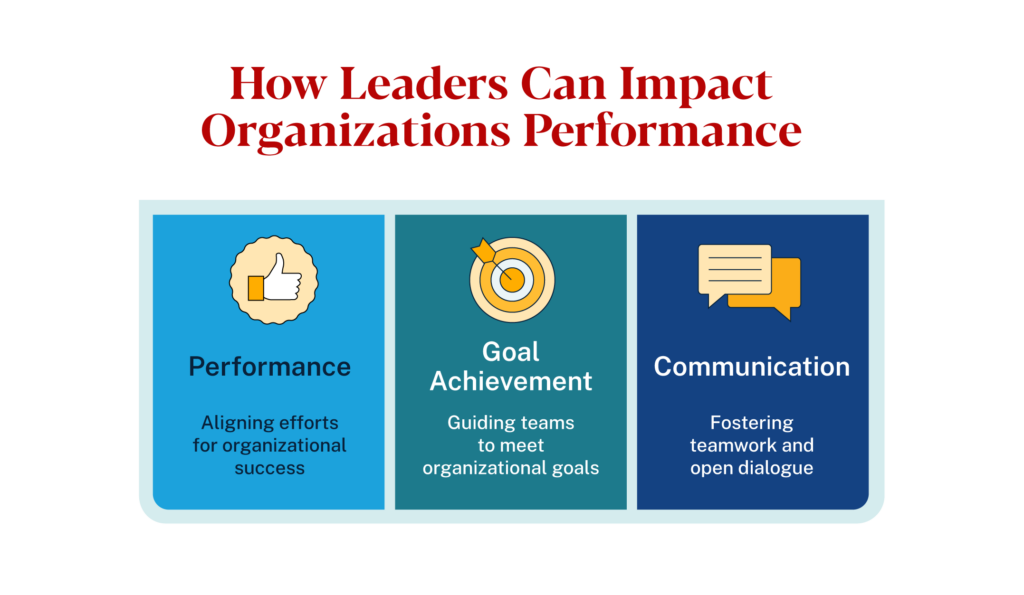
One of the primary responsibilities of a leader is supporting teams in achieving organizational goals. Without clear direction, even the most talented employees can lose focus or become overwhelmed by daily tasks. Successful leaders provide the necessary direction, motivation and support to keep everyone on track. They also translate high-level strategies into actionable steps, ensuring every team member understands their role in the bigger picture.
Building Communication and Collaboration
A manager who leads effectively understands that they cannot succeed in a vacuum. By encouraging teamwork and open communication, they break down departmental silos and foster a collaborative spirit. This approach doesn’t just get the work done – it creates a positive and productive work environment where employees feel heard and valued. Collaboration is rarely accidental. It’s often the result of a leader who intentionally creates channels for feedback and idea sharing.
Supporting Organizational Performance
Leadership is a key driver of overall efficiency. By aligning employee efforts with organizational objectives, leaders help their companies improve both effectiveness and internal performance. When a leader identifies a roadblock, they don’t just report it, but they work with their team to find a solution that keeps the organization moving forward, helping it improve efficiency and effectiveness.
Importance of Leadership in Management
The importance of leadership in management cannot be overstated. It’s the invisible thread that connects a company’s strategy to its daily culture. Organizations rely on effective leaders to guide their teams through periods of change, economic challenges and internal growth.
Creating a Positive Work Environment
A leader’s attitude and approach significantly influence workplace culture and employee engagement. By building trust, encouraging collaboration and maintaining accountability, leaders foster a space where employees feel safe to take risks and innovate. High morale and engagement are benefits of good leadership that prioritizes the professional and personal well-being of a team.
Driving Organizational Success
Leadership has a tangible impact on the bottom line that goes beyond the soft skills of culture-building. Leaders help organizations meet their performance targets while supporting innovation and strategic growth. In competitive markets, the ability to pivot and adapt is a hallmark of strong leadership. Companies that invest in leadership development may see higher retention rates and more consistent year-over-year growth.
Building Trust Within Teams
Transparency, consistency and accountability are key foundations of building trust. When managers are honest about challenges, consistent in their decision-making and accountable for their mistakes, they earn the credibility needed to lead through difficult times. Encouraging transparency ensures no hidden agendas, allowing teams to focus entirely on the tasks at hand rather than second-guessing management.
Key Leadership Skills in Management
Developing a specific set of leadership skills is essential for career advancement, and this is not a one-time process. Building these abilities contributes to good leadership and helps you handle the multifaceted demands of a modern management role. It’s important that they’re continuously updated and refreshed to maintain competency and prevent complacency in leadership roles.
Communication Skills
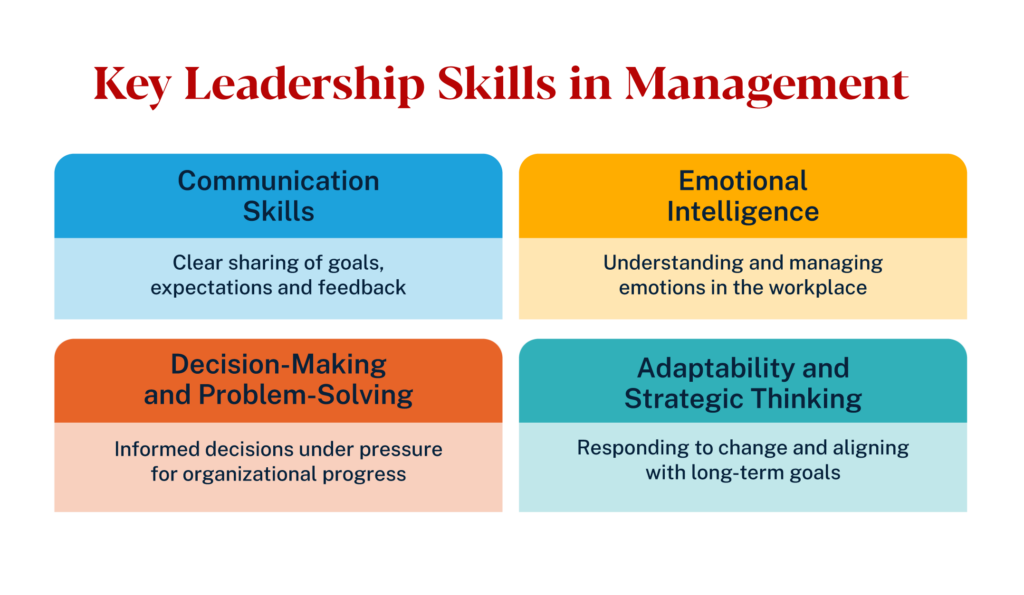
Clear communication is the lifeblood of leadership. It involves more than just giving direction. It’s about clearly sharing goals, expectations and feedback. Strong communicators also excel at active listening, which is vital for supporting collaboration across diverse teams. A leader who articulates a clear vision for the team and organization is much more likely to realize that vision for themselves, their team, their colleagues and the organization.
Emotional Intelligence
Emotional intelligence is essential for management at all levels. It involves understanding and managing your own emotions while also recognizing and influencing the emotions of others in the workplace with empathy. Using emotional intelligence allows managers to strengthen relationships, resolve conflicts with empathy and increase overall leadership effectiveness. This skill often differentiates a manager who is going through the motions from one who is truly respected.
Decision-Making and Problem-Solving
Managers are frequently required to make informed decisions under intense pressure. Whether it’s a budget crisis, a project delay or personnel conflict, the ability to analyze a situation, weigh the risks and provide a clear path forward is crucial for maintaining team and organizational efficiency. Successful leaders don’t shy away from difficult choices. Instead, they engage stakeholders and make those decisions with confidence while taking responsibility for the outcomes.
Adaptability and Strategic Thinking
The business world moves fast, and leaders must be able to respond effectively to change. Strategic thinking involves aligning leadership decisions with long-term organizational objectives rather than focusing only on immediate needs or concerns. Adaptability ensures that when market conditions shift or organizational priorities change, the leader can pivot the team’s strategy without losing morale or momentum.
Leadership Styles in Management
There is no one-size-fits-all approach to leadership, and no specific style is inherently better or worse than any other. Different leadership styles influence how managers interact with their teams and can have a lasting impact on organizational culture and outcomes. Each is suited for different situations.
Transformational Leadership
Transformational leadership focuses on inspiring employees to go above and beyond. By encouraging innovation, motivation and personal growth, leaders using this approach create a high-energy environment. This style is particularly effective in industries that require constant innovation and creative problem-solving.
Collaborative Leadership
In a collaborative style, the focus is on teamwork and shared decision-making. This approach supports strong communication and ensures that team members feel a sense of ownership over their work. It is often used in flat organizational structures where expertise is distributed across the team.
Directive Leadership
Directive leadership involves providing clear expectations and a rigid structure. While it can be seen as less flexible, it supports high efficiency in fast-paced or high-pressure environments where split-second decisions are necessary. This style is usually deemed the authoritarian or autocratic style of leadership.
Leadership and Organizational Structure
Leadership isn’t just for those at the very top. It functions at every level of an organizational structure. Leadership can be demonstrated at every level of an organization. Everyone’s contributions are necessary to drive organizational goals forward.
Top Management Leadership
Those in top management are responsible for guiding the overall organizational strategy. Their leadership style sets the tone for the entire company, supporting company-wide decision-making and defining the fundamental culture. Their focus is typically on long-term survival and industry-wide influence.
Leadership Across Organizations
Strong leadership can be demonstrated by anyone, regardless of their official title. By demonstrating leadership at all organizational levels, companies encourage accountability and communication throughout their teams. This decentralized approach to leadership ensures that problem-solving happens at the point of origin, rather than waiting for a directive from the top.
What Makes Effective Leaders Successful?
What are the specific qualities associated with successful leaders? While technical expertise is important, leadership effectiveness often depends on human-centric elements.
Vision and Strategic Direction
Successful leaders can look past the current week’s hurdles and set clear goals and priorities while ensuring every team member understands how their specific output contributes to the overall organizational objectives.
Accountability and Integrity
All levels of leadership require a moral compass. By demonstrating ethical and responsible leadership, managers and team members alike build the credibility and integrity needed to lead. When a leader takes the blame for a failure and shares the credit for a success, they can build trust within teams.
Continuous Growth and Learning
The business world is in a constant state of flux, and the most successful and effective leaders are the ones who never stop learning. They encourage professional development for themselves and their teams to constantly adapt leadership approaches to suit changing environments.
FAQs About Leadership in Management
How does leadership differ from management?
Management handles logistical functions like planning and organizing, while leadership is the human element that motivates others toward a common organizational vision.
Why is leadership important during organizational change?
Leadership provides the direction and reassurance necessary to navigate complexity and pivot strategies to guide teams through periods of transition.
Can leadership skills be developed over time?
Yes! Leadership is a continuous process involving ongoing development and the refinement of emotional intelligence and other skillsets. The learning process never ends.
How does leadership influence company culture?
A leader’s attitude and approach set the standards that establish the trust and accountability needed for a healthy organizational culture. This, in turn, drives team engagement and innovation.
What challenges do managers face as leaders?
Common challenges include balancing managerial duties, such as administrative functions and high-pressure decision making, with softer leadership skills like coaching and team engagement. Sometimes immediate or daily operational needs must be balanced against the overarching organizational goals and vision.
How does effective leadership improve employee performance?
Leadership aligns individual roles with organizational goals and ensures the team has a supportive motivational environment to succeed.
If you are ready to take the next step in your career and develop the skills needed for leadership, American College of Education (ACE) offers affordable programs designed for working professionals to lead effectively.