
Career Guide: Management Consultant
Here’s what you need to know.
Toggle Navigation
Our Enrollment Counselors are here to answer your questions and walk you through the enrollment process.
Career Guide: Management Consultant
An outside perspective can be valuable, even in places where experience and expertise already run deep. Take the business landscape, for example. An organization may lose money without fully understanding why, consider a move into an unfamiliar market or search for a better way to organize its operations.
In moments of uncertainty or change, an objective, external assessment can help organizations identify issues, consider new possibilities and determine what to do next. That is the gap management consultants help fill.
These professionals examine business challenges from a fresh angle, using research, data and industry knowledge to identify problems and recommend practical solutions. Their work can influence how organizations operate, spend resources, manage change and plan for the future.
For individuals who enjoy analyzing information, solving complex problems and working across different business environments, management consulting can offer a career where each day brings unique challenges.
What Is a Management Consultant?
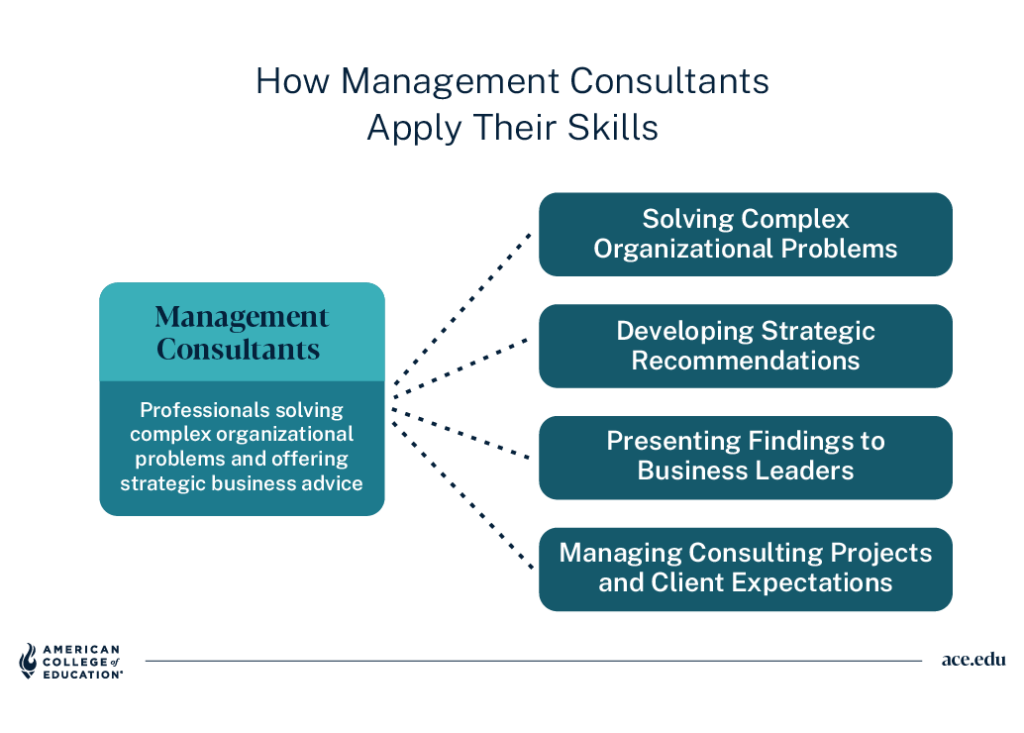
A management consultant is a business professional who helps organizations evaluate challenges, improve performance and make informed decisions. They study how an organization currently operates, identify areas that could be improved and develop recommendations based on their findings.
Their work falls within the broader world of business management, where organizational resources, people and processes must work together to achieve strategic goals. However, they typically work in an advisory capacity rather than managing the organization’s everyday operations themselves.
Management consulting can differ from specialized forms of business consulting. While some consultants concentrate exclusively on areas such as marketing, information technology or human resources, management consultants often address broader questions involving strategy, organizational structure, operations and performance.
They may work for a strategy or management consulting firm, serve on an internal corporate team or operate an independent practice. Government agencies and nonprofit organizations can also use consulting services to address organizational challenges.
What Does a Management Consultant Do?
What does a management consultant do when an organization brings them in to solve a problem? They gather information through research, data and conversations with company leaders to understand what is happening, why it is happening and what the organization hopes to accomplish. They then turn those findings into practical recommendations and a path forward.
Organizations regularly encounter challenges involving costs, competition, technology and operational performance. When leaders need help understanding those challenges or deciding how to respond, management consultants can provide research, analysis and an external perspective.
Core Duties and Responsibilities
Depending on the consulting job or client, responsibilities can include:
- Analyzing business operations to understand organizational challenges and current performance
- Gathering and evaluating data from financial reports, interviews, research and other business sources
- Identifying inefficiencies and opportunities to improve processes, costs or organizational performance
- Developing strategies and recommendations based on research and analysis
- Creating reports and presentations that clearly communicate findings to clients and business leaders
- Managing consulting projects to keep deliverables and timelines on track
- Collaborating with leaders and project teams to understand organizational priorities and constraints
- Supporting implementation as organizations put recommended changes into practice
- Monitoring outcomes to determine whether solutions produce meaningful improvements
Work Environments
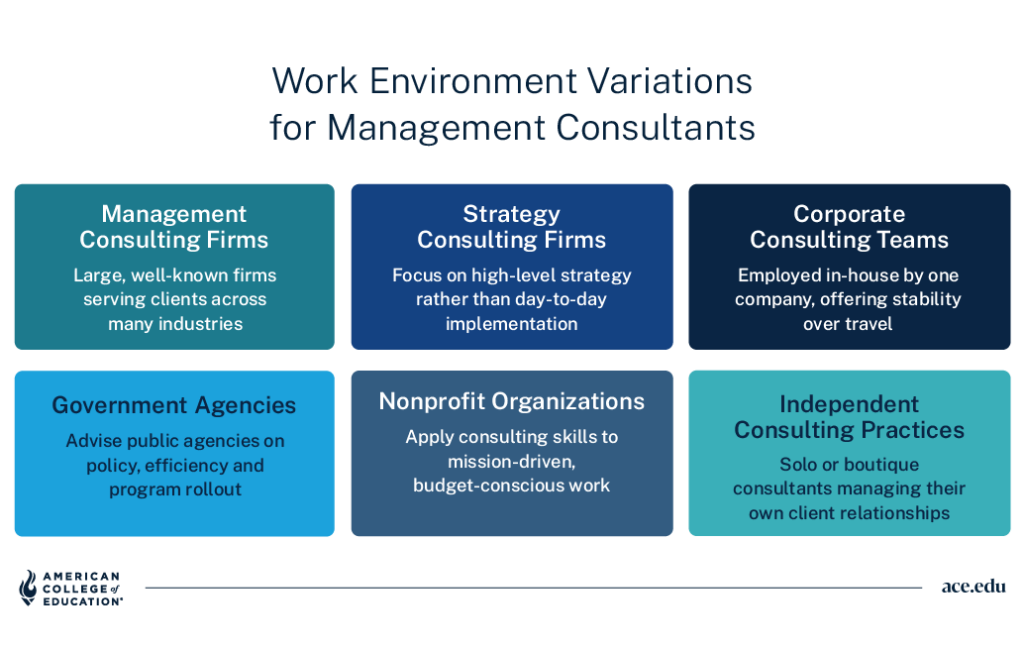
Consulting work can look different depending on the employer and specialty. Large management consulting firms may assign professionals to multiple clients and industries, while strategy consulting practices may focus heavily on high-level business decisions. Alternatively, internal consultants concentrate on challenges within their own organization.
Other opportunities exist with government agencies, nonprofits and independent consulting practices. Travel may also be part of the job when consulting projects require professionals to spend time at client locations.
Skills & Traits That Make a Successful Management Consultant
Management consultants generate effective results when they can combine analytical thinking and business knowledge with the interpersonal skills needed to solve problems and communicate recommendations.
Essential Soft Skills
- Analytical thinking to examine information and recognize meaningful patterns
- Problem-solving to move from identifying a challenge to developing realistic solutions
- Communication to ask effective questions and explain complex ideas clearly
- Presentation skills to deliver findings and recommendations to clients and leaders
- Collaboration to work productively with clients, colleagues and project teams
- Time management to balance deadlines and multiple project responsibilities
- Adaptability to work across changing business environments and challenges
- Relationship-building to establish credibility and maintain productive client relationships
Important Technical Skills
- Business analysis and process evaluation
- Data analysis and interpretation
- Project management
- Strategic planning
- Financial and operational analysis
- Research methods
- Business technology and analytics tools
How These Skills Apply on the Job
Technical analysis might reveal why an organization is underperforming, but a recommendation still needs to work within that organization’s culture, leadership structure and resources. Understanding and applying organizational management skills can help consultants consider those factors when developing solutions.
The same applies when a recommendation requires significant change. Different management styles can influence how leaders communicate, make decisions and guide employees through that process. Strong consultants consider these human factors alongside financial and operational data.
Management Consultant Education Requirements
Learning how to become a management consultant begins with building a broad understanding of how organizations operate. Because consulting projects can involve strategy, finance, operations and organizational performance, employers often look for candidates with strong business and analytical foundations.
Minimum Education Requirements
Management analysts typically need at least a bachelor’s degree. Common areas of study include business administration, management, finance and economics, although professionals can enter the consulting industry from other academic backgrounds.
Additionally, coursework involving business operations, finance, data analysis and organizational strategy can provide useful preparation for entry-level consultants.
Preferred Education Pathways
Some professionals begin consulting after earning a bachelor’s degree and gaining relevant work experience. Others pursue a Master of Business Administration (MBA) or related graduate degree to deepen their expertise in areas relevant to consulting and leadership.
Graduate coursework in strategy, finance, analytics and organizational leadership can help professionals develop a deeper understanding of the challenges they may encounter when advising organizations.
Certifications and Training Options
Professional development can continue throughout a consulting career. Depending on specialty, useful options may include project management certifications, business analytics training or credentials related to a particular industry. Consultants can also pursue training in strategy, technology or other areas relevant to their client work.
How to Become a Management Consultant
There is no single route into consulting. Your pathway may depend on your education, professional experience, industry knowledge and the type of consulting work you want to pursue.
- Earn a Relevant Bachelor’s Degree
Begin by developing a foundation in business and organizational decision-making. A bachelor’s degree in business administration, management, finance, economics or a related field can introduce you to areas such as strategy, operations and financial analysis.
- Develop Consultant Skills
Strengthen your analytical, research and problem-solving abilities while learning how to communicate findings effectively. Look for opportunities to work with business data, manage projects and present recommendations, since consulting requires you to translate analysis into action.
- Gain Professional Experience
Internships and entry-level business roles can help you understand how organizations operate while building practical experience. You may also develop expertise in a specific industry or business function that eventually becomes valuable in consulting projects. Use these opportunities to build your professional network as well.
- Pursue Management Consulting Roles
Apply for roles in management consulting firms, strategy consulting practices or internal consulting teams. Analyst and entry-level consultant positions can provide experience with client research, project delivery and business analysis. Progress is most evident when you’re taking greater responsibility for client relationships or even serving as a project leader.
- Optional: Advance With a Graduate Degree
An MBA or another business-focused graduate degree can help you deepen your knowledge of strategy, finance and leadership. Advanced education may also support your preparation for senior consulting, management or executive opportunities.
Day-in-the-Life & Real-World Scenarios
A Typical Workday
There may be no truly “typical” day in management consulting. A consultant could spend the morning reviewing client performance data, move into an interview with department leaders and finish the afternoon preparing recommendations for an upcoming presentation. Between those tasks are project meetings, research and deadlines that keep consulting projects moving forward.
Real-World Examples
Imagine a retailer whose operating costs have risen even though sales remain relatively stable. A consulting team might analyze expenses, examine workflows and interview department leaders to determine where inefficiencies are occurring before recommending changes.
Another client might want to expand into a new market. Consultants could research competitors, customer demand and financial risks before presenting leadership with potential strategies.
In both cases, the consultant’s value comes from turning a broad business question into a structured problem that can be researched, analyzed and addressed.
What Success Looks Like in the Role
A polished presentation alone does not make a consulting project successful. Recommendations need to be useful, realistic and connected to the client’s goals. Strong client relationships matter but so do measurable improvements in efficiency, processes or organizational performance.
Management Consultant Salary & Job Outlook
A management consultant salary can reflect several aspects of the work, including experience, industry expertise, employer and the complexity of the consulting projects involved. Compensation structures can also differ between consulting firms, internal corporate roles and independent consulting practices.
Developing specialized expertise and a record of successful projects can also create opportunities to move into senior consulting, project leadership or broader business leadership roles.


FAQs
Do management consultants travel for work?
Some do. Travel requirements depend on the employer, client and nature of the consulting project. Consultants may visit client offices to conduct interviews, observe operations or work directly with project teams, while other consulting work can be completed remotely or from the consultant's primary office.
What industries hire management consultants?
Management consultants can work across industries including finance, healthcare, technology, manufacturing, government and nonprofit organizations. Some consultants remain generalists while others develop expertise in a particular industry or business function.
Can you become a management consultant without an MBA?
Yes. A bachelor's degree is typically the entry-level education for management analysts, and an MBA is not universally required. Relevant professional experience, industry expertise, and strong analytical and communication abilities can also help individuals prepare for a consulting career.
What is the difference between a management consultant and a business consultant?
The terms can overlap, and employers may use them differently. Management consulting commonly focuses on organizational performance, strategy, operations and management challenges. “Business consultant” is a broader term that can also describe specialists advising organizations in areas such as marketing, technology, finance or human resources.
Turn Business Problems Into Your Career Opportunities
Let’s be honest, an organization will not bring in consultants when the answer is obvious. They turn to them when a problem demands closer examination, a different perspective or a new strategy for moving forward. That makes management consulting a career built around curiosity, analysis and the ability to turn insight into action.
Building those capabilities starts with understanding how organizations make decisions, manage people and respond to change. ACE's online business programs can help you strengthen your knowledge of leadership, strategy and organizational performance as you prepare for the next stage of your career.