
Career Guide: Risk Analyst
Here’s what you need to know.
Toggle Navigation
Our Enrollment Counselors are here to answer your questions and walk you through the enrollment process.
Career Overview: Risk Analyst
Organizations face financial, operational and strategic risks every day. Risk analysts help organizations identify potential challenges before they become costly problems. By evaluating information, assessing potential risks and recommending strategies to reduce them, these professionals help leaders make informed business decisions.
If you’re interested in finance, problem-solving and helping organizations navigate uncertainty, a career as a risk analyst may be a good fit. This guide explores what risk analysts do, the skills and education they need, and the steps you can take to enter the profession.
What Is a Risk Analyst?
A risk analyst is a professional who helps organizations understand and prepare for uncertainty. They identify potential risks that could affect an organization’s finances, operations or long-term goals and provide insights that support informed decision-making.
Risk analysts work in industries such as finance, insurance, consulting, government and corporate business. Depending on the role, they may specialize in financial risk, operational risk or enterprise risk management.
What Does a Risk Analyst Do?
Risk analysts identify, assess and help manage risks that could affect an organization’s financial performance, operations or strategic goals. They analyze information, evaluate potential risks and recommend strategies that help organizations make informed business decisions.
Core Duties and Responsibilities
While responsibilities vary by industry and employer, most risk analyst jobs involve the same core functions. Common responsibilities include:
- Identifying potential risks that could affect business operations, financial performance or regulatory compliance
- Conducting risk analysis using financial data, market trends and other business information
- Assessing financial, operational, strategic and regulatory risks
- Developing risk management strategies and recommending plans to mitigate risk
- Monitoring economic conditions and emerging threats that could affect the organization
- Preparing reports and recommendations for leadership teams
- Supporting compliance and governance initiatives
Work Environments
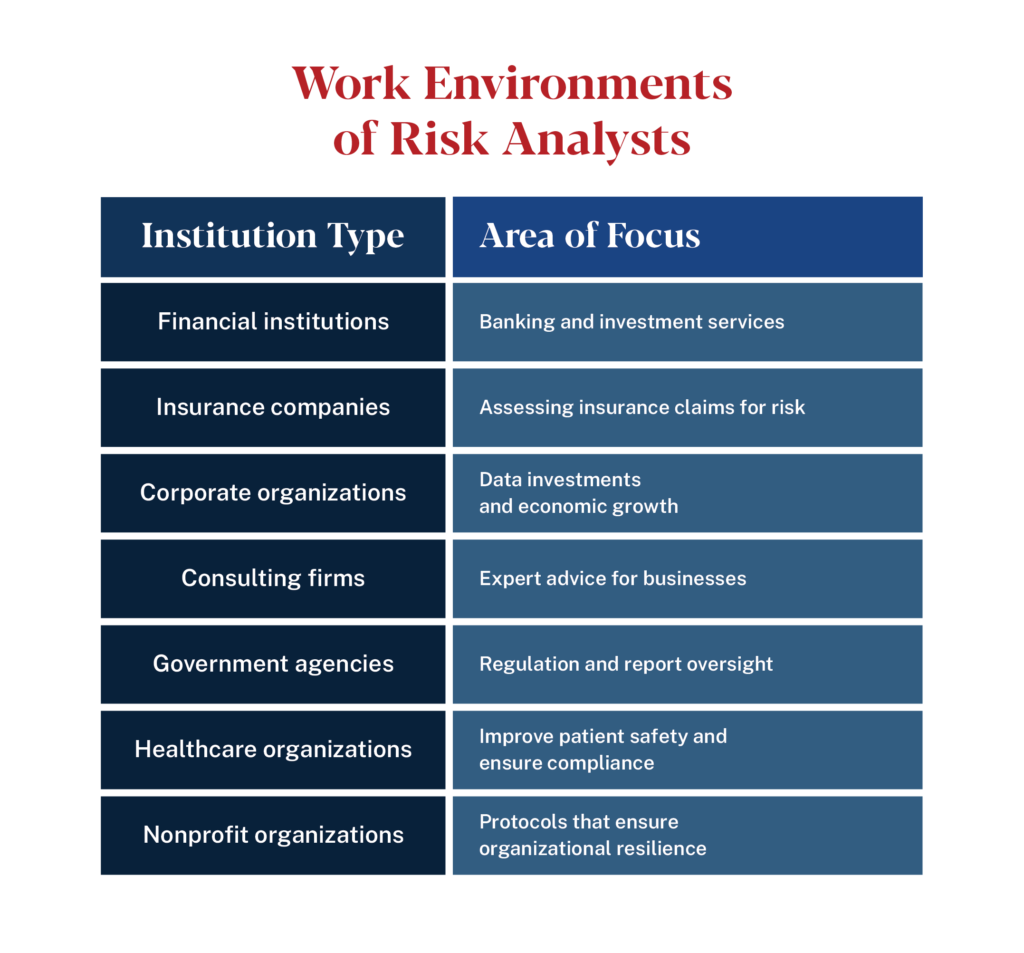
Risk analysts work in a variety of industries, with responsibilities that vary based on the organization’s goals and the types of risks it manages. Common work environments include:
- Financial institutions
- Insurance companies
- Corporate organizations
- Consulting firms
- Government agencies
- Healthcare and nonprofit organizations
Skills & Traits That Make a Successful Risk Analyst
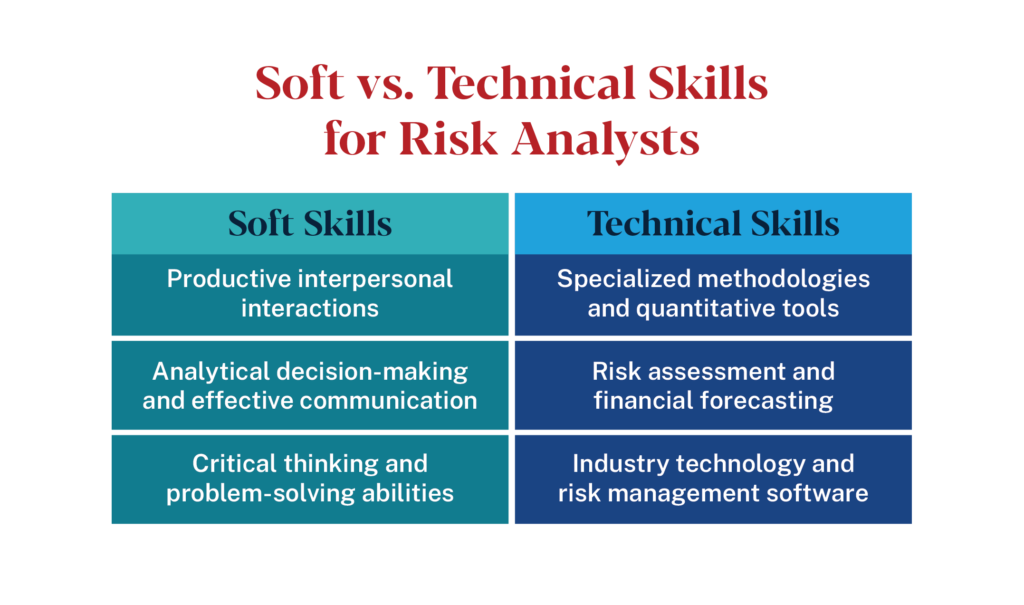
Successful risk analysts combine analytical, technical and interpersonal skills. They use these abilities to evaluate potential risks, communicate their findings and help organizations make informed decisions.
Essential Soft Skills
Successful risk analysts rely on a combination of soft skills to evaluate information, solve problems and communicate their recommendations. Important skills include:
- Critical thinking
- Analytical reasoning and problem-solving
- Attention to detail
- Communication and presentation skills
- Strategic decision-making
Important Technical Skills
Risk analysts use technical skills to evaluate data, assess potential risks and support informed decision-making. Common technical skills include:
- Risk assessment methodologies
- Financial analysis and forecasting
- Data analytics and reporting tools
- Regulatory compliance knowledge
- Risk management software
How These Skills Apply on the Job
Together, these skills help risk analysts evaluate potential risks, identify opportunities for improvement and support informed business decisions. They also enable professionals to develop strategies that mitigate risk and strengthen organizational performance.
Risk Analyst Education Requirements
If you’re wondering how to become a risk analyst, earning a relevant degree is typically the first step. Most employers require at least a bachelor’s degree, though additional education and professional certifications may support career advancement.
Minimum Education Requirements
Most risk analyst positions require at least a bachelor’s degree. Common fields of study include finance, economics, accounting, business administration, mathematics and statistics.
Preferred Education Pathways
While several fields of study are valuable for building a career in this field, coursework in risk management, financial analysis, economics, data analytics and business intelligence helps build relevant knowledge and skills.
Some risk analyst professionals choose to pursue a graduate degree to strengthen their leadership skills and deepen their understanding of business strategy and risk management after gaining some work experience. Advanced education may also support leadership opportunities and career progression.
Certifications and Training Options
Professional certifications can build specialized knowledge and strengthen qualifications for different types of risk analyst positions. Some options include the Financial Risk Manager (FRM) or Professional Risk Manager (PRM) credentials. Certifications in risk management, compliance and internal auditing may also be valuable.
Many risk analysts also pursue continuing education in areas such as analytics, financial modeling and emerging risk management practices to keep their skills current.
How to Become a Risk Analyst
To become a risk analyst, you’ll typically need a combination of education, practical experience and analytical skills. While everyone’s career path is different, these steps can help you get started.
- Earn a Relevant Degree
Start by earning a bachelor’s degree in finance, business administration, economics, accounting or another closely related field. A strong educational foundation can help you develop the analytical and problem-solving skills needed for a career in risk analysis.
- Gain Experience in Finance, Operations or Analytics
Look for opportunities to analyze financial data, evaluate business performance and support operational decision-making. Entry-level roles in banking, accounting, financial advising, compliance, auditing or business analytics can help you gain experience with risk assessment and risk mitigation practices.
- Develop Technical and Analytical Skills
Continue building your technical skills by learning risk modeling, forecasting and data analysis techniques. As you gain experience, become familiar with analytics, reporting and risk management tools commonly used in the field.
- Apply for Risk Analyst Positions
Once you’ve built the necessary education, skills and experience, start applying for risk analyst positions with financial institutions, insurance companies, consulting firms, government agencies and corporate organizations.
- Optional: Advance With Graduate Education or Certifications
As your career progresses, you may choose to pursue a graduate degree in business, finance or organizational leadership to prepare for leadership opportunities. You can also earn professional certifications, such as the FRM or PRM credential, to build specialized knowledge and support career advancement.
Day-in-the-Life & Real-World Scenarios
A typical day for a risk analyst includes reviewing data, assessing potential risks and preparing recommendations for business leaders.
A Typical Workday
A typical day may include reviewing financial reports, operational data and market trends to identify potential risks. Risk analysts also prepare risk assessments, develop recommendations and meet with business leaders to discuss strategies that help reduce risk and support organizational goals
Real-World Examples
Risk analysts apply their skills in many ways depending on their industry. For example, they may assess how changing economic conditions could affect lending decisions or evaluate insurance claims trends to identify potential business exposures. Operational risk analysts may recommend process improvements that reduce operational risks.
What Success Looks Like in the Role
Success as a risk analyst means helping organizations identify potential risks before they become larger issues. By providing data-driven insights and practical recommendations, risk analysts support informed decision-making and help reduce financial and operational risks.
Risk Analyst Salary & Job Outlook
Risk analyst salary can vary based on factors such as education, experience, industry, geographic location and level of responsibility. Professionals who develop specialized expertise or advance into leadership roles may have additional earning potential.


FAQs
What is the difference between a risk analyst and a financial analyst?
Financial analysts evaluate investments, budgets and financial performance to support business growth and profitability. Risk analysts identify potential risks that could affect an organization’s finances, operations or strategic goals and recommend ways to reduce those risks.
What industries employ risk analysts?
Risk analysts work in many industries, including banking, financial services, insurance, healthcare, manufacturing, consulting, government and nonprofit organizations. They may also work for large corporations and other organizations that manage financial, operational or strategic risks.
Can risk analysts specialize in specific types of risk?
Yes. Risk analysts can specialize in areas such as financial, operational, enterprise, compliance, market or credit risk. The area they choose often depends on their industry, employer and career interests.
Do risk analysts need professional certifications?
No. Professional certifications aren’t always required for entry-level risk analyst positions, but they can help you build specialized knowledge and support career advancement. Credentials such as the Financial Risk Manager (FRM) and Professional Risk Manager (PRM), along with certifications in compliance and auditing, may strengthen your qualifications.
Advance Your Business Career
The next level of your career is ready when you are. All you have to do is apply now!