
Career Guide: Financial Advisor
Here’s what you need to know.
Toggle Navigation
Our Enrollment Counselors are here to answer your questions and walk you through the enrollment process.
Financial Advisor Career Overview
A financial advisor career combines strategic decision-making with relationship-driven client work. For professionals interested in helping others make confident financial decisions, it offers a structured path into the financial services and wealth management industry, along with clear steps for advancing in the field.
What Is a Financial Advisor?
A financial advisor, often referred to as a personal financial advisor, helps individuals and families manage their earnings and work toward defined financial goals. They advise across key areas of financial services, including budgeting, retirement plans and wealth management. They guide clients in building and adjusting investment portfolios, navigating risk management decisions and planning for major life events.
The role often extends into specialized areas such as taxes and estate planning, life insurance selection and long-term asset protection. At its core, financial advising focuses on helping clients make informed decisions that support long-term financial stability and growth.
What Does a Financial Advisor Do?
Financial advisor responsibilities center on guiding clients through financial decisions using personalized planning, analysis and ongoing strategy adjustments.
Core Duties and Responsibilities
- Developing personalized financial plans
- Helping clients set and achieve financial goals
- Managing investment portfolios
- Offering financial advice regarding retirement, insurance, taxes and estate planning
- Monitoring market conditions and risk tolerance
Work Environment Variations
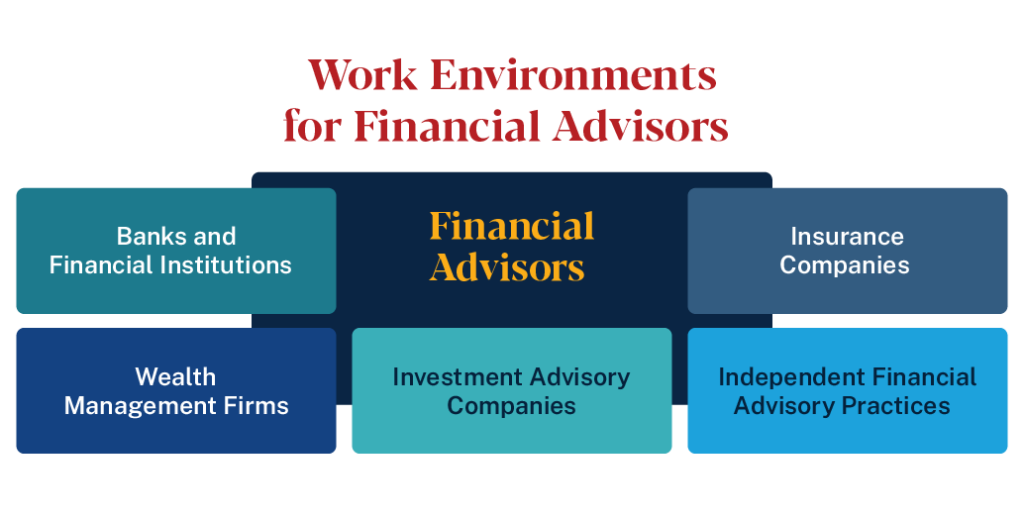
Financial advisors work in a range of settings, including banks, financial institutions, wealth management firms and investment advisory companies. Some work within insurance companies, while others operate independent financial advisory practices.
Skills & Traits That Make a Successful Financial Advisor
Financial advising requires a combination of strong interpersonal judgment and technical expertise.
Essential Soft Skills
- Communication and interpersonal skills
- Trust-building and client relationship management
- Analytical thinking and decision-making
- Problem-solving and financial reasoning
- Ethical judgment and professionalism
Important Technical Skills
- Financial planning and analysis
- Investment and portfolio management
- Knowledge of taxes, estate planning and insurance products
- Understanding of financial markets and risk management
- Use of financial planning software
How These Skills Apply on the Job
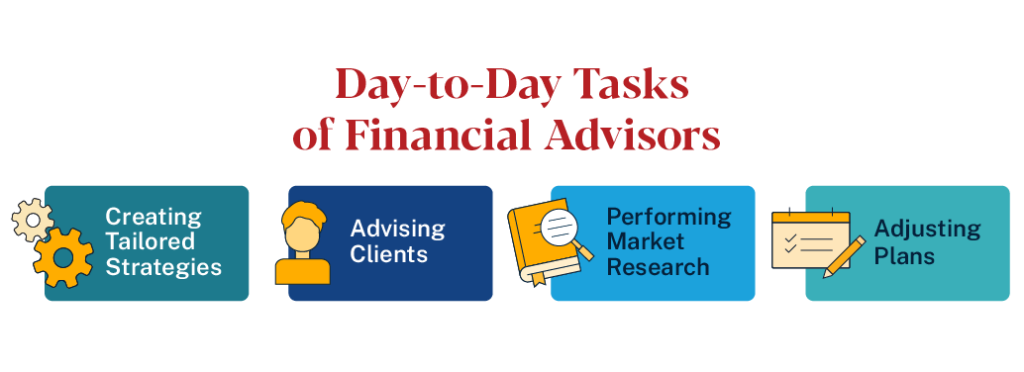
These skills come together when advisors design tailored financial strategies, guide clients through investment decisions and adjust plans in response to life changes or market shifts. A client’s financial situation can change at any given time, so their ability to offer support in these scenarios demonstrates the impact of their expertise. The role also requires strong analytical thinking, similar to a business analyst, when evaluating data, identifying trends and translating insights into actionable recommendations.
Financial Advisor Education Requirements
Financial advisor requirements typically include a combination of education, licensing and ongoing professional development to enter and advance in the field.
Minimum Education Requirements
Most roles require at least a bachelor’s degree in finance, business administration, economics or a related field. A business degree provides foundational knowledge in accounting, economics and financial systems, preparing graduates for entry into financial services roles.
Preferred Education Pathways
Some employers prefer candidates with advanced education, particularly roles involving complex financial planning or high-net-worth clients. Earning a Master of Business Administration (MBA) can deepen knowledge in investment strategies, leadership and financial decision-making.
Certifications and Training Options
Professional certifications can enhance credibility and expand career opportunities. The Certified Financial Planner (CFP) designation is widely recognized, and many advisors complete licensing exams such as the Series 7 or Series 65 while pursuing continuing education.
How to Become a Financial Advisor
If you’re exploring how to become a case manager, it’s helpful to think of the process as a series of steps that build on one another. While there are multiple entry points into the field, most professionals follow a similar path.
- Earn a Relevant Degree
Start with a bachelor’s degree in finance, business, or a related field to build core knowledge in financial systems and analysis.
- Gain Industry Experience
Entry-level roles in banking, financial services or investment firms provide exposure to client interactions and financial planning processes, helping build both technical and interpersonal skills.
- Obtain Licensure and Certifications
Depending on the role, advisors may need to pass industry exams such as the Series 7 or Series 65. Pursuing certifications like the CFP designation can further strengthen credibility and expand career opportunities.
- Build Client Relationships and Experience
Over time, advisors develop a client base and refine their approach to financial planning, investment management and long-term strategy.
- Optional: Advance With Specialized Credentials
Some professionals pursue advanced certifications in wealth management or tax planning, while others become a Certified Public Accountant (CPA) to focus on tax-related advisory services.
Day-in-the-Life & Real-World Scenarios
A Typical Workday
A financial advisor’s day often includes analyzing investment portfolios, monitoring market conditions and meeting with clients to review financial plans. Time is also spent developing strategies aligned with upcoming financial goals.
Real-World Examples
An advisor might help a client build a retirement plan that balances current income needs with long-term savings or adjust investment portfolios during periods of market volatility to align with a client’s risk tolerance.
What Success Looks Like in the Role
Success is reflected in clients achieving their long-term financial goals, consistent growth in managed assets and the development of trust-based relationships that support ongoing financial confidence.
Financial Advisor Salary & Job Outlook
Financial advisors help individuals and families navigate complex financial decisions, and demand for these services continues to grow.

According to the United States Bureau of Labor Statistics, the median annual salary for personal financial advisors is approximately $102,140,* with earnings varying based on experience, client base and compensation structure.

It’s estimated that there will be 24,100 financial advisor positions* posted each year between 2024 and 2034, which means the field is expanding at about double the average rate.
FAQs
Do financial advisors need a license to work with clients?
Yes, many financial advisors are required to obtain licenses, particularly if they buy or sell securities. Requirements vary based on the services provided and applicable regulations.
Can financial advisors specialize in retirement planning or taxes?
Yes, many advisors specialize in areas such as retirement planning, tax strategies or estate planning, allowing them to provide more targeted financial advice.
How long does it take to become a financial advisor?
Most individuals can enter the field in about four years by earning a bachelor’s degree, though additional time may be required for licensing and professional certifications.
What is the difference between a financial advisor and an investment advisor?
A financial advisor provides comprehensive financial planning services, while an investment advisor focuses specifically on managing investment portfolios and securities.
Begin Your Financial Advisor Career Here
The next level of your career is ready when you are. All you have to do is apply now!