
Career Guide: Chief Financial Officer
Here’s what you need to know.
Toggle Navigation
Our Enrollment Counselors are here to answer your questions and walk you through the enrollment process.
Career Guide: Chief Financial Officer
Major business decisions must answer important financial questions. For instance, can the organization afford to expand? What happens if revenue falls short of expectations? The answers can influence everything from day-to-day operations to an organization’s ability to grow for years to come.
Few professionals carry more responsibility for answering those questions than a chief financial officer (CFO). They help leadership teams understand the organization’s financial health, anticipate potential risks and determine how its resources can support long-term goals. Reaching the CFO position takes years of experience but can provide opportunities to influence decisions at the highest levels of an organization. Learn more about what a CFO does, how to become a CFO and what you can expect from this executive-level career.
What Is a Chief Financial Officer?
Let’s begin with a fundamental question: What is a CFO? This professional is a senior executive responsible for guiding an organization’s financial health and long-term financial strategy. CFOs oversee areas such as financial reporting, budgeting, forecasting and risk management while using financial information to help leadership make informed business decisions.
CFOs work closely with the chief executive officer (CEO), boards of directors and other senior leaders to connect financial performance with organizational goals. Their financial expertise can influence decisions about investments, expansion, staffing and other priorities that shape an organization’s future.
In most cases, these executives work across public and private companies as well as nonprofit organizations, government agencies, healthcare organizations and startups. Their role sits at the intersection of finance, leadership and business administration, making a broad understanding of organizational operations especially valuable.
What Does a Chief Financial Officer Do?
So, what does a CFO do on a day-to-day basis? While responsibilities vary by organization, CFOs oversee financial operations while providing senior leaders with the insight needed to make strategic decisions.
Core Duties and Responsibilities
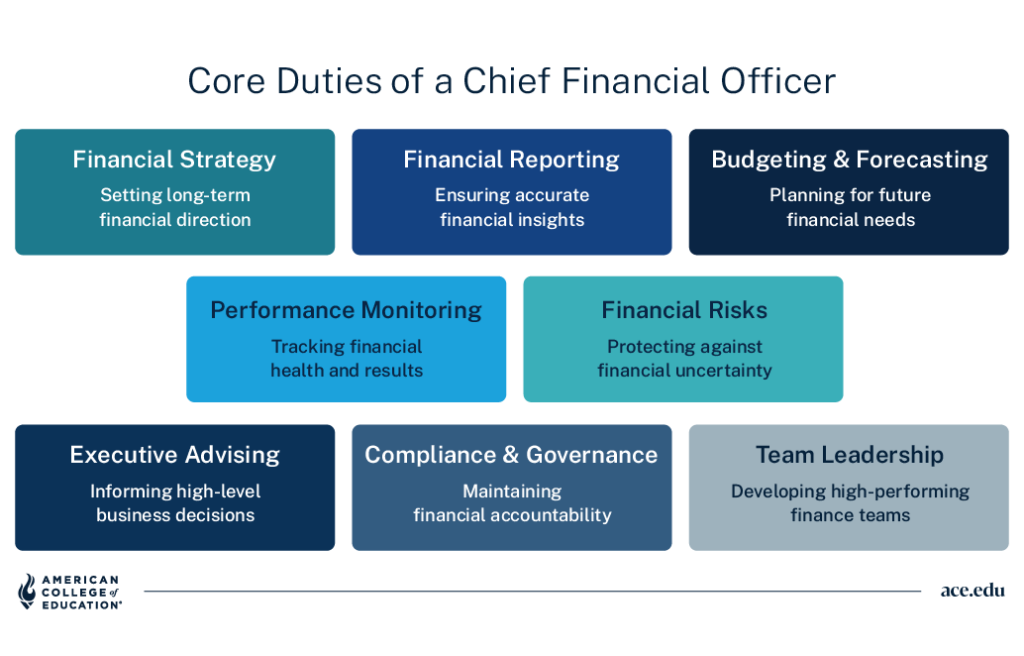
A CFO’s responsibilities generally include:
- Developing and guiding organizational financial strategy
- Overseeing financial reporting and reviewing statements
- Leading budgeting, forecasting and long-term financial planning
- Monitoring cash flow and overall financial performance
- Identifying financial risks and developing management strategies
- Advising executive leadership on major investments and strategic decisions
- Supporting regulatory compliance and financial governance
- Leading finance and accounting teams
Work Environment Variations
CFOs can work in organizations of nearly every size and sector. They can support a wide range of necessities. For instance, public corporations may require extensive financial reporting and shareholder communication, while private companies often focus on growth, profitability and long-term planning. Nonprofit and government organizations require financial leadership that supports responsible use of resources.
CFOs also work in healthcare organizations, financial services firms and startups, where priorities can range from regulatory requirements to raising capital and managing rapid growth.
Skills & Traits That Make a Successful Chief Financial Officer
On the surface, the CFO role requires extensive financial knowledge, yet technical expertise alone is not enough. Successful CFOs must interpret complex financial problems, communicate their implications and lead organizations through decisions that can carry significant financial consequences.
Essential Soft Skills
Important leadership competencies include:
- Executive leadership approach to guiding financial teams and influencing organizational direction
- Strategic thinking to connect financial performance with long-term goals
- Communication to present complex financial information clearly
- Decision-making when financial conditions require timely action
- Problem-solving when organizations encounter complex financial challenges
- Team leadership to develop finance professionals and coordinate across departments
- Business acumen to understand how financial decisions affect the broader organization
Important Technical Skills
CFOs rely on expertise in:
- Financial reporting and analysis to evaluate performance and provide leadership with accurate financial information
- Corporate finance to guide decisions involving capital, investments and long-term financial strategy
- Budgeting and forecasting to anticipate financial needs and support organizational planning
- Cash flow management to monitor available resources and maintain financial stability
- Risk management to identify financial risks and develop strategies for addressing them
- Financial modeling to evaluate potential outcomes and inform strategic decisions
- Accounting principles to understand financial statements, reporting practices and organizational performance
- Regulatory compliance to help financial operations follow applicable laws and reporting requirements
- Data analytics and financial software to interpret complex financial information and identify trends that can guide decision-making
How These Skills Apply on the Job
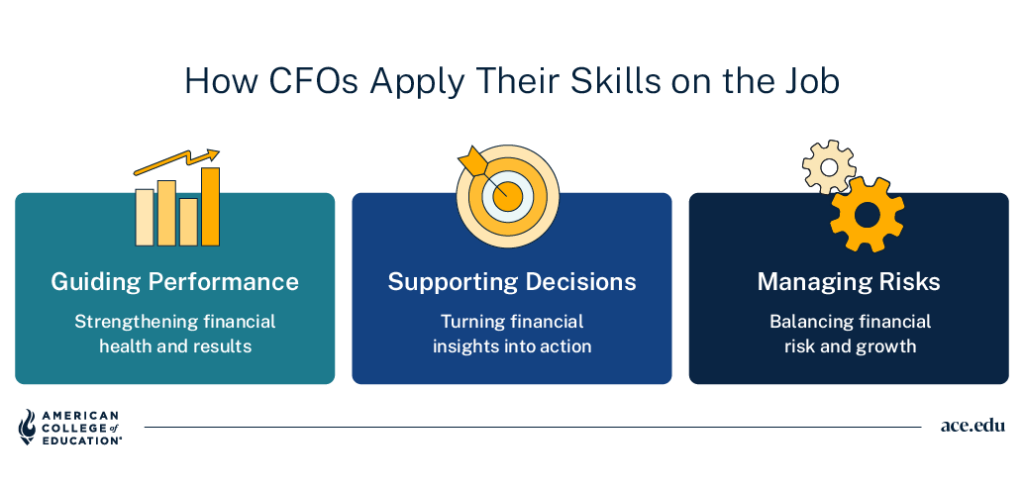
A CFO may need to determine whether an expansion is financially sustainable, explain changing financial risks to a board or help the CEO evaluate a major investment. Combining technical expertise with leadership skills allows CFOs to turn financial data into guidance that supports organizational performance and sustainable growth.
Chief Financial Officer Education Requirements
Understanding how to become a CFO begins with recognizing that this is typically an advanced career rather than an entry-level position. Individuals in this position generally build their qualifications through higher education and substantial professional experience in finance, accounting or related business functions.
Minimum Education Requirements
A bachelor’s degree is typically expected for chief executives. Aspiring CFOs commonly study finance, accounting, business administration, economics or a related discipline that develops a strong foundation in financial management and business operations.
Preferred Education Pathways
Many finance professionals pursue graduate education as they advance. A Master of Business Administration (MBA) can broaden expertise in finance, strategy and organizational leadership, while other graduate programs may emphasize finance or strategic management.
Certifications and Training Options
Professional credentials can further demonstrate financial expertise. Depending on their career path, aspiring CFOs may pursue the Certified Public Accountant (CPA), Chartered Financial Analyst (CFA) or Certified Management Accountant (CMA) credential. Executive education and continuing professional development can also strengthen leadership and financial knowledge.
How to Become a Chief Financial Officer
If you’re considering taking on a CFO role, it’s important to remember that reaching this position will take time. You’ll typically need to develop extensive financial expertise while gradually taking on greater leadership responsibilities.
- Earn a Bachelor’s Degree
Begin by earning a bachelor’s degree in finance, accounting, business administration, economics or a related field. Your education should provide a strong foundation in financial management and broader business principles.
- Gain Financial Leadership Experience
Build professional experience through roles in accounting, auditing, financial analysis or corporate finance. As you progress, seek opportunities to manage budgets, contribute to strategic planning and lead financial initiatives. Exploring different career paths for people interested in finance can help you understand how early and mid-career roles may contribute to long-term advancement.
- Pursue Advanced Education or Certifications
You may choose to strengthen your qualifications with an MBA or another graduate business degree. Professional certifications such as the CPA, CFA or CMA can also demonstrate specialized expertise, although specific credentials are not universally required for CFO positions.
- Advance Into Executive Leadership
Continue progressing into senior finance positions where you can lead teams and take responsibility for financial strategy. Experience managing forecasting, financial reporting and organization-wide initiatives can help prepare you for executive responsibilities.
- Optional: Expand Executive Leadership Expertise
Executive education or advanced graduate study can help you deepen your knowledge of organizational leadership, governance and enterprise strategy as your responsibilities grow.
Day-in-the-Life & Real-World Scenarios
A Typical Workday
A CFO’s day might begin by reviewing financial reports, cash flow and organizational performance before meeting with senior leaders about current priorities. Later, they may evaluate forecasts, discuss budgets with department heads or prepare financial information for the CEO or board of directors.
Real-World Examples
Let’s say an organization is considering entering a new market. The CFO may evaluate projected costs, revenue potential and financial risks before advising leadership on whether the opportunity supports the organization’s long-term strategy.
During uncertain economic conditions, the CFO might analyze changing revenue forecasts and cash flow to determine where resources should be preserved or redirected. Their recommendations can help the organization respond while protecting its long-term financial health.
What Success Looks Like in the Role
Successful CFOs provide leadership teams with a clear understanding of the organization’s finances and the implications behind important decisions. Their work supports financial stability, responsible risk management and sustainable business growth.
Chief Financial Officer Salary & Job Outlook
A CFO salary can vary depending on education, executive experience, employer, industry and geographic location. Chief financial officers may find opportunities across corporations, financial services firms, nonprofit organizations, healthcare organizations and other sectors that require senior financial leadership.
As organizations navigate financial risks, changing markets and long-term growth opportunities, executives who can interpret complex financial information and provide strategic direction remain important to organizational leadership. Finance professionals who develop extensive financial expertise, business acumen and executive leadership experience may find opportunities to advance into CFO and other senior leadership positions.


FAQs
Do most CFOs have an accounting or finance background?
Many CFOs build their careers in accounting, finance, auditing or related areas that develop strong financial expertise. Career paths vary, however, and broader experience in operations, strategy or business leadership can also help prepare professionals for executive responsibilities.
Is an MBA required to become a chief financial officer?
No. An MBA is not universally required to become a CFO. However, graduate business education can strengthen knowledge of finance, organizational strategy and leadership while helping experienced professionals prepare for greater responsibilities.
What is the difference between a CFO and a controller?
A controller generally oversees accounting functions such as financial records, reporting and internal controls. A CFO has broader executive responsibilities and uses financial information to help shape organizational strategy. In some organizations, the controller reports directly to the CFO.
What industries employ chief financial officers?
CFOs work across many industries, including financial services, healthcare, manufacturing, technology, retail and nonprofit organizations. Any organization with complex financial operations may benefit from senior financial leadership.
Take Your Leadership Skills to New Heights With ACE
An organization's finances tell a story about where it stands and where it’s going. CFOs turn that information into strategic guidance, helping organizations determine when to invest, where risks may emerge and how financial resources can support long-term goals.
Reaching this level of leadership requires significant experience and financial expertise. Whether you're building your foundation in business or preparing for greater leadership responsibilities, the online business programs at American College of Education (ACE) can help you develop knowledge that supports the next stage of your professional journey.