
Human resources (HR) helps create workplace environments where employees can succeed while supporting the goals of the organization. While HR is often associated with hiring and workplace policies, these professionals also play an important role in employee development, engagement and retention throughout the employee lifecycle.
As workplaces continue evolving through remote work, shifting employee expectations and changing workforce needs, HR responsibilities have expanded beyond administrative functions alone. From talent acquisition and training programs to employee support and compliance management, HR professionals help organizations build productive teams and maintain positive workplace environments.
Understanding how HR functions across recruiting, employee development and workplace operations can provide insight into how organizations attract, retain and support employees over time. By supporting both employees and organizations, HR helps create workplaces where people can grow professionally while contributing to shared goals.
What Is HR?
Human resources, commonly called HR, refers to the department responsible for managing employee-related processes within an organization. These teams oversee many aspects of the employee experience, including recruiting, onboarding, compensation, training and employee relations.
At its core, HR helps organizations balance employee needs with operational and strategic business goals. This team works to recruit and hire qualified employees, support workforce development, and help businesses retain talent over time.
Today’s HR departments often contribute to more than hiring and administrative tasks. Many of these teams support leadership development, employee engagement and workplace culture initiatives that help strengthen communication, productivity and retention.
Employees are critical to a company’s success, so HR professionals help create workplace environments where people can develop new skills, pursue career growth and contribute to organizational goals.
HR Responsibilities
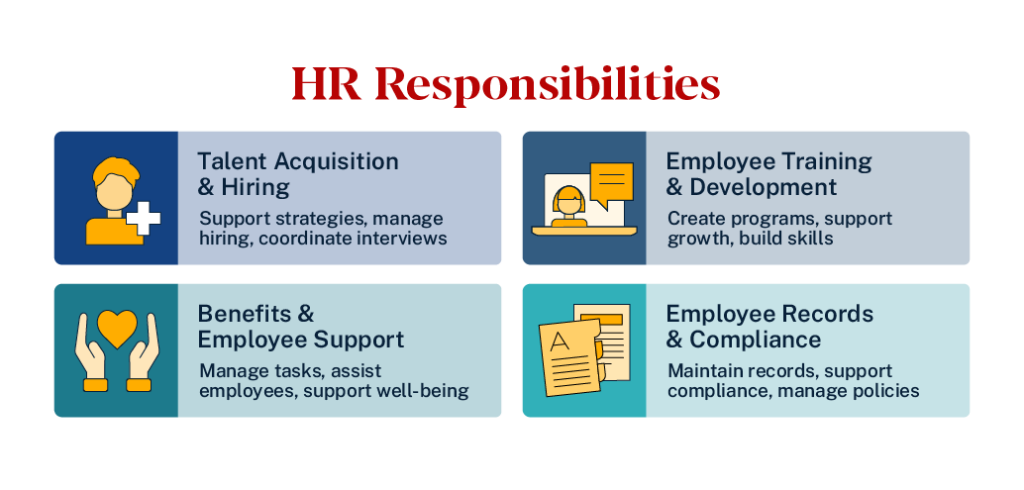
What is the role of HR? Their responsibilities span multiple stages of the employee lifecycle, from recruiting and onboarding to employee development, engagement and compliance management. Specific responsibilities may vary by organization, industry and workforce size.
Talent Acquisition and Hiring
One of the most visible HR responsibilities involves supporting talent acquisition and managing the hiring process. They help organizations recruit and hire qualified employees by creating job postings, screening resumes, coordinating interviews and assisting hiring managers throughout candidate selection.
HR teams also support onboarding by introducing workplace policies, explaining benefits and helping new employees transition into their roles. Effective hiring and onboarding practices can improve retention and help organizations build stronger teams over time. They can also help new employees feel connected to the organization, positioning them for long-term success.
Employee Training and Development
HR departments often oversee training programs and development initiatives that help employees build workplace skills and grow professionally. Professional development can benefit both employees and organizations by improving performance, strengthening employee confidence and supporting internal advancement.
Employee development programs may include leadership workshops, compliance training, mentoring opportunities and continuing education support. Some organizations also partner with HR teams to create workforce development strategies that prepare employees for future leadership roles. These efforts help employees continue growing in their careers while helping organizations prepare for future workforce needs.
Benefits and Employee Support
Another important part of HR involves managing benefits administration and helping employees access workplace resources. They may assist employees with health insurance options, retirement plans, paid leave policies and workplace wellness programs.
Human resources professionals also answer questions related to benefits, workplace expectations and organizational policies.
Clear communication and accessible support systems can help employees feel informed, supported and more connected to their workplace. When employees understand the resources available to them, they are often better positioned to focus on their work and professional growth.
Maintaining Employee Records and Compliance
HR professionals are responsible for maintaining employee records and managing workplace compliance efforts. This may include handling documentation related to payroll, performance evaluations, benefits enrollment and workplace policies.
They also help organizations comply with employment laws, workplace safety standards and equal employment regulations. Accurate recordkeeping and policy management help reduce organizational risk while promoting consistency, fairness and transparency across the workplace.
What Does an HR Person Do?
HR roles can vary widely depending on an organization’s size, structure and needs. Some human resources professionals focus on recruiting and hiring, while others specialize in employee relations, training, compliance or workplace operations.
In some organizations, HR professionals manage a specific area of human resources. In others, they oversee multiple employee-related functions across the organization.
Supporting Recruitment Efforts
HR professionals often support recruitment efforts by posting job openings, reviewing applications, coordinating interviews and assisting with candidate selection. They may also work closely with managers to identify hiring needs and improve recruiting strategies designed to attract qualified talent. Effective recruitment practices can help organizations connect qualified candidates with opportunities that align with their skills and career goals.
Managing Employee Relations
Human resources professionals frequently support communication between employees and leadership. They may help address workplace concerns, clarify organizational policies and assist with conflict resolution efforts.
HR teams may also help mediate workplace disputes, support performance conversations and guide managers through sensitive employee situations that require clear communication and consistency.
Strong communication practices can help organizations improve collaboration and maintain productive workplace relationships.
Coordinating Training and Development
HR teams help coordinate employee learning initiatives and workforce training efforts. This may include organizing workshops, leadership training sessions and continuing education programs that help employees build workplace skills and prepare for advancement.
As workplace technologies and employee expectations continue evolving, ongoing training can help organizations maintain workforce readiness and support long-term growth.
Building a Fulfilling Workplace
Across all duties of HR professionals, there is one throughline: creating a great place to work. This is often the “why” for people who enter the field of HR. From recruiting the right people to supporting them with the right resources and development, the core of HR is about creating an environment where people can do their best work.
To that end, the HR department is often at the forefront of establishing an organization’s workplace culture. This typically happens through a combination of formal policies, ongoing training, employee initiatives and modeling.
Types of HR Roles
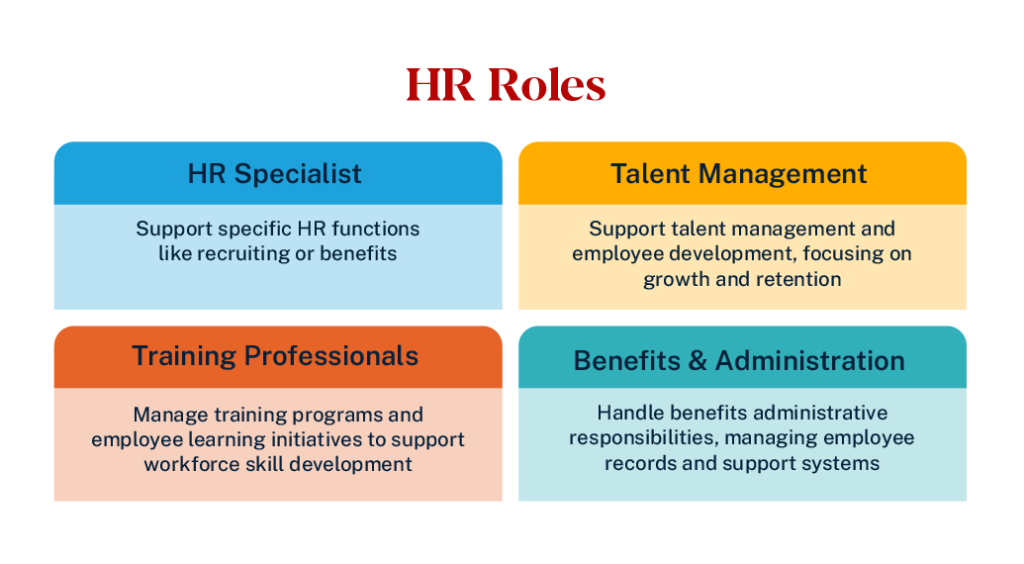
HR departments often include professionals who specialize in different areas of human resources.
HR Specialist
An HR specialist focuses on specific functions such as recruiting, benefits administration, compliance or employee relations. These professionals often develop expertise within a particular area of human resources and help organizations manage specialized processes more effectively.
Talent Management Roles
Talent management professionals focus on employee retention, workforce planning and long-term career growth strategies. Their work helps employees advance in their careers while helping organizations retain institutional knowledge and prepare future leaders. Responsibilities may include leadership development, succession planning and initiatives designed to improve engagement and retention across the organization.
Training and Development Professionals
Training and development professionals manage employee learning programs designed to strengthen workplace skills and support professional growth, helping organizations adapt to changing workforce needs while supporting employee advancement. Their responsibilities may include coordinating onboarding education, leadership workshops and continuing education initiatives across the organization.
Benefits and Administrative Roles
Benefits administration roles may involve managing employee records, processing benefits enrollment and coordinating payroll-related processes.
Administrative HR functions help organizations maintain accurate documentation, support compliance efforts and keep workplace systems running efficiently.
How HR Supports Organizational Success
HR departments contribute to organizational success by helping businesses support employees, strengthen workplace culture and build effective teams.
Improving Employee Satisfaction
Employee satisfaction often improves when employees feel valued, connected and engaged in their work. HR teams help foster positive workplace experiences through communication initiatives, professional development opportunities and engagement strategies.
Organizations that invest in employee engagement may also experience stronger retention, collaboration and workplace morale. People like to feel that the work they do matters, and HR teams play a large role in cultivating and emphasizing the purpose behind the work their employees do.
Supporting Workforce Development
HR professionals help organizations build skilled and adaptable teams through workforce development and leadership training initiatives. In many industries, HR teams also support reskilling initiatives, leadership succession planning and ongoing employee learning opportunities.
As business needs continue evolving, many organizations rely on human resources teams to identify skill gaps, coordinate employee learning opportunities and support long-term professional growth. By aligning employee development with organizational goals, HR can help businesses build leadership pipelines and prepare for future challenges.
Strengthening Organizational Culture
HR teams often help shape workplace culture by encouraging accountability, teamwork and open communication across the organization. Culture-building efforts may include employee recognition programs, feedback systems and initiatives designed to improve inclusion and workplace engagement. These efforts can help employees feel more connected to their teams, their work and the organization’s mission, creating a stronger sense of purpose across the workplace.
The Employee Lifecycle and HR
The employee lifecycle refers to the stages employees move through during their time with an organization, from recruitment and onboarding to career development and offboarding. By effectively managing each stage, HR departments can help organizations improve retention, strengthen workplace experiences and support long-term workforce stability.
Recruitment and Onboarding
HR teams help organizations recruit talent and guide new employees through onboarding and workplace orientation. Effective onboarding can help employees feel more prepared, connected and confident as they transition into their new roles.
Development and Retention
Throughout employment, HR professionals help employees build skills, pursue professional development and stay engaged in the workplace. Retention strategies may include mentorship opportunities, workplace flexibility, recognition programs and pathways for long-term career advancement.
Career Transitions and Offboarding
HR teams also manage employee departures and offboarding processes. This may involve conducting exit interviews, coordinating final documentation and helping organizations maintain continuity during staffing changes.
Professional offboarding practices can help preserve workplace relationships and support smoother workforce transitions.
FAQs
Why is HR important in every organization?
This team helps organizations manage hiring, training, workplace communication and compliance efforts. Human resources professionals also support workforce planning and employee engagement initiatives that help employees succeed while contributing to broader business goals.
How has HR changed in modern workplaces?
Modern HR departments often play a larger role in business strategy and workplace planning than they did in the past. In addition to managing traditional functions, many teams now support remote work policies, employee wellness initiatives and workplace culture efforts designed to improve engagement and retention.
What challenges do HR departments commonly face?
HR departments may face issues related to recruiting talent, employee retention, workplace communication and changing employment regulations. Rapid shifts in workplace expectations, technology and workforce needs can also require them to adapt quickly.
How does HR contribute to workplace culture?
HR contributes to workplace culture by helping organizations establish clear expectations, strengthen team relationships and support positive work environments. These teams may also lead initiatives focused on recognition, inclusion and workplace feedback to improve employee experiences across the organization.
How do HR teams support remote or hybrid employees?
HR teams often support remote and hybrid employees through virtual onboarding, workplace communication tools and flexible work policies. They may also help employees access resources, stay connected with coworkers and maintain engagement across distributed teams.
What skills are important for HR professionals?
HR professionals often benefit from strong communication, organization, problem-solving and interpersonal skills. Knowledge of employee relations, talent management and workplace compliance can also help professionals navigate complex workplace situations and support organizational goals.
American College of Education (ACE) offers affordable programs with flexible coursework that can equip you for a meaningful career in human resources.