

|
Getting your Trinity Audio player ready...
|
In today’s fast-paced environment, balancing career milestones and personal obligations can feel like an uphill battle. No matter your commitments, the way you control your calendar dictates your path toward success, making strong organizational skills an absolute necessity.
But what is time management, and why is time management important in contemporary settings? At its core, mastering your schedule is about intentionally managing your attention, energy and focus. Implementing effective time management strategies allows you to optimize your daily output, leading to increased productivity, reduced stress and task completion.
This guide explores common management methods, advanced tools and practical time management techniques to help you regain control of your time.
What Is Time Management?
At its core, time management involves planning, organizing and prioritizing activities to use your finite daily hours as effectively as possible. Rather than simply reacting to the most recent notification or urgent request, individuals who practice good time management deliberately dictate how much time they allocate to specific activities.
Ultimately, managing your schedule well is what allows you to successfully balance competing responsibilities while making measurable progress toward your aspirations.
The Purpose of Time Management
The underlying purpose of this discipline extends far beyond checking off a daily to-do list. It centers on properly prioritizing your responsibilities so that you are making efficient use of all available time. By establishing structured workflows, you build a reliable framework that directly supports your long-term personal and professional success.
Signs of Good and Poor Time Management
Recognizing your current behavioral patterns is the first step toward optimization. Individuals with strong organizational habits consistently meet project deadlines, stay highly organized and remain focused on their core objectives. Conversely, common indicators of poor time management include chronic procrastination, missed deadlines, disorganized workspaces, constant multitasking and elevated stress levels caused by last-minute rushing.
Why Is Time Management Important?
Understanding why time management is important is essential for shifting your mindset from a reactive state to a proactive one. How you choose to allocate your hours directly influences your professional performance, intellectual growth, and overall physical and emotional well-being.
Supports Increased Productivity
One of the most immediate outcomes of structured scheduling is a boost in your daily output. By learning to organize your calendar, you can accomplish more work in less time. This systematic improvement in efficiency and effectiveness allows you to maintain an unshakeable focus on your most important tasks, preventing minor distractions from draining your daily momentum.
Helps Reduce Stress
When you lack a clear plan for your day, you are constantly forced into a defensive position, rushing to finish projects right before they are due. Proactive workload management removes this anxiety by preventing last-minute rushing. Knowing exactly when and how a project will be completed naturally lowers your daily anxiety and supports healthier personal stress levels.
Creates Better Work-Life Balance
In a world where professional demands frequently bleed into personal life, boundaries are incredibly easy to lose. Strong scheduling allows you to manage competing priorities with more clarity. By allocating dedicated time blocks for career responsibilities, you safely protect the space needed for family, hobbies and rest.
Outcomes of Effective Time Management Strategies
When you commit to long-term time management strategies, the benefits extend into every corner of your life. These habits do more than patch up short-term performance issues; they rewrite your baseline potential for long-term success.
Improved Focus and Concentration
Multitasking is one of the most common productivity traps in modern society. By utilizing structured scheduling methods, you train your brain to embrace single-tasking, staying focused on priority work without constantly shifting your attention. This reduction in mental distractions allows you to complete complex assignments more efficiently.
Better Decision-Making
When you are overwhelmed by an endless, unorganized list of chores, your brain experiences decision fatigue. Managing your time well provides the clarity needed to prioritize responsibilities effectively and allocate your time appropriately. This mental space supports strategic thinking, allowing you to evaluate the long-term impact of your choices rather than just looking for short-term fixes.
Greater Goal Achievement
Without a structured execution plan, a long-term goal is nothing more than a pleasant daydream. Time management provides the tactical bridge required to turn broad aspirations into daily actions. By consistently tracking your incremental accomplishments, you maintain your operational momentum over long periods.
Increased Confidence
As you gain control over your daily responsibilities, you naturally build deep trust in your personal productivity. This sense of mastery drastically reduces feelings of overwhelm, leaving you feeling confident and capable when facing unexpected challenges.
Common Time Management Methods
Because every individual possesses a distinct learning style, cognitive workflow and professional routine, there is no single scheduling system that fits everyone perfectly. Successful students and professionals often experiment with various methods to see what aligns best with their specific needs.
Task Prioritization Methods
Prioritization frameworks focus entirely on organizing your workload based on value and impact. Instead of working on projects in a random order, these systems require you to identify urgent and important work first. By focusing your energy on high-value activities, you can manage competing responsibilities without letting critical projects fall through the cracks.
Time Blocking
If you frequently find your day fragmented by constant interruptions, time blocking can be incredibly effective. This method requires you to divide your day into distinct, dedicated blocks of time, with each block reserved exclusively for a specific responsibility. Protecting these periods ensures that complex, strategic projects get your absolute best focus while eliminating the urge to multitask.
Goal-Based Planning
This approach focuses on aligning your intentions with your actions. Every single week, you explicitly connect your daily activities back to your larger, overarching objectives. Keeping your eyes fixed on the big picture ensures that your daily energy actively supports your long-term success.
Daily and Weekly Planning
Organization requires consistent preparation. By mapping out your responsibilities ahead of time, you create realistic schedules that account for your actual capacity. This deliberate tracking allows you to monitor your progress consistently and make adjustments before deadlines become urgent.
Time Management Techniques
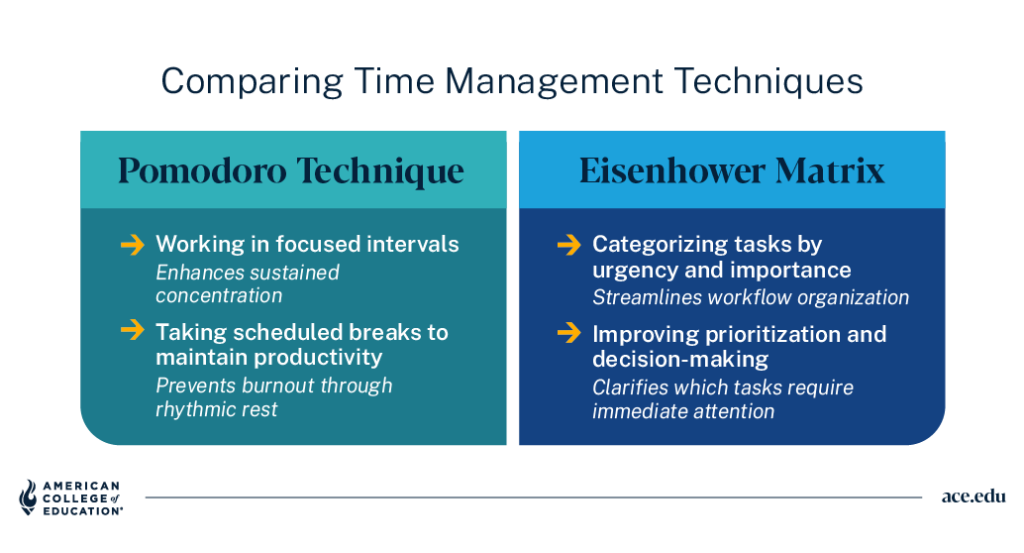
Moving past abstract methods requires adopting concrete, tactical habits. Two of the most widely used time management techniques can help you optimize your concentration and streamline your daily choice-making process.
The Pomodoro Technique
Developed to combat mental fatigue and distraction, the Pomodoro Technique uses structured, timed intervals to protect your focus. The system is incredibly straightforward:
- Choose a specific task that you need to complete
- Set a timer for 25 minutes and work with complete, uninterrupted focus
- When the timer rings, take a five-minute break to stretch, hydrate or rest
- Repeat this cycle four times and then reward yourself with a longer 15- to 30-minute break
These scheduled breaks prevent cognitive burnout, keep your mind fresh and dramatically increase your overall productivity over the course of a long day.
The Eisenhower Matrix
When you struggle to figure out which assignment to tackle first, the Eisenhower Matrix provides an objective framework for categorizing your workload. It forces you to evaluate every single task based on two distinct metrics: urgency and importance. This splits your responsibilities into four clear quadrants:
- Do: Address high-value tasks with pressing deadlines
- Schedule: Plan dedicated time to focus on this strategic work
- Delegate: Pass these minor tasks to a team member
- Delete: Drop these low-value items completely
How to Improve Time Management Habits
Refining your daily organization is an active, iterative process that requires modifying deep-rooted behaviors. If you want to learn how to improve time management right away, there are several practical time management tips you can implement immediately.
Set Clear Priorities
You must accept that you cannot do everything at once. Start every morning by identifying your most important tasks. By focusing your prime mental energy where it matters most, you protect your day from being derailed by minor requests.
Break Large Projects Into Smaller Tasks
When an assignment feels too massive, your brain naturally defaults to procrastination. You can bypass this mental block by breaking complex milestones down into specific tasks. Making the work more manageable allows you to build momentum through small, consistent wins.
Minimize Distractions
Take proactive steps to build a productive work environment. Turn off non-essential digital notifications, close unnecessary browser tabs and establish clear boundaries with those around you. Eliminating these frequent interruptions is essential for maintaining deep concentration.
Review and Adjust Your Schedule
An effective routine must be dynamic. Set aside time at the end of each week to evaluate your actual productivity habits. Identifying where you lost time allows you to make consistent improvements and adapt your upcoming schedule to changing priorities.
Time Management Tools That Support Productivity
Utilizing modern time management tools can make organizing your responsibilities easier. Leveraging technology helps you automate tracking, visualize deadlines and maintain accountability.
Digital Calendars and Scheduling Tools
Platforms like Google Calendar and Microsoft Outlook serve as the foundation of modern scheduling. By neatly organizing your appointments, exams and deadlines in one central digital space, you dramatically improve the visibility of your weekly commitments.
Task Management Applications
Ditch the loose scraps of paper for digital task lists and project tracking applications. These tools allow you to log specific tasks, set automated reminders, categorize projects by priority level and monitor your incremental progress through clean visual dashboards.
Productivity and Focus Tools
If you struggle to stay locked into an assignment, consider installing specialized digital focus applications. These tools can temporarily block distracting websites, run automated focus timers and provide detailed tracking data regarding your actual time spent working.
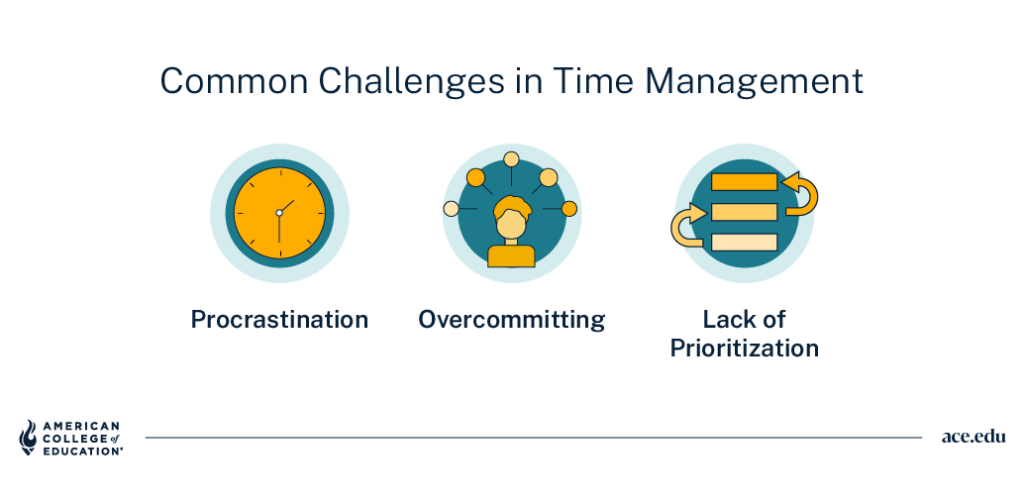
Common Time Management Challenges
Even with the best tools, you will inevitably encounter obstacles that threaten to disrupt your workflow. Learning how to spot and overcome these common challenges is essential for maintaining consistency.
Procrastination
Procrastination is rarely a sign of laziness. It is typically an emotional reaction to an assignment that feels overwhelming or tedious. When you catch yourself delaying important work, use the five-minute rule: Commit to working on the project for just five minutes. Once you clear that initial hurdle, taking action becomes much easier.
Overcommitting
Saying yes to every single request is a fast track to exhaustion. When you take on too many responsibilities, the quality of your output inevitably suffers. Guard your calendar by learning to set realistic expectations and declining low-value invitations that do not align with your core goals.
Lack of Prioritization
When you treat every incoming email or chore as an emergency, you spend your entire day spinning your wheels. Overcome a lack of prioritization by using structured frameworks to evaluate your workload before you start working, ensuring your choices remain strategic.
Time Management for Students and Professionals
The principles of effective planning remain remarkably consistent, but how you apply them shifts depending on your environment. Mastering these skills builds a strong foundation for lifelong success.
Academic Time Management
For students, success requires balancing complex coursework, heavy reading schedules and strict exam deadlines. Managing your time well ensures you can fit your academic obligations around personal responsibilities without experiencing chronic burnout.
Workplace Time Management
In a professional setting, time management can impact your career growth. Consistently meeting project deadlines and maintaining high levels of professional productivity demonstrates reliability, proving that you are ready for greater corporate responsibility.
Lifelong Learning and Career Development
True professionals never stop growing. However, finding the space for professional development requires deliberate planning. Effective scheduling ensures you can manage professional growth activities while successfully balancing your education and full-time work commitments.
Building Long-Term Time Management Habits
It is vital to recognize that effective organization is an ongoing, lifelong skill rather than a quick, one-time fix. Developing a highly efficient lifestyle requires patience, self-assessment and continuous refinement.
Creating Sustainable Routines
Do not try to completely overhaul your entire life overnight. Instead, focus on developing consistent, sustainable habits over time. Building predictable daily routines reduces the amount of willpower needed to stay productive, turning organization into a natural reflex.
Tracking Progress Over Time
Make it a habit to regularly evaluate the actual effectiveness of your routines. Reviewing your historical tracking logs helps you identify clear opportunities for improvement, allowing you to optimize your workflows as your life evolves.
Maintaining Flexibility
A rigid schedule will inevitably break when faced with real-world disruptions. True time management requires maintaining a high degree of operational flexibility, allowing you to comfortably adjust your strategies and adapt to changing priorities without losing your peace of mind.
How Our Online Courses Help Students With Time Management
At American College of Education (ACE), we understand that finding the time to advance your career can feel impossible. That’s why we’ve designed courses that are flexible enough for busy working professionals to pursue while balancing demanding careers, family responsibilities and personal commitments. You’ll get the structural flexibility you need to stay on track while working toward your career goals.
Learn on Your Schedule
Online courses allow you to access learning materials and complete coursework anywhere with an online connection. Predictable deadlines make it easy to fit your studies around irregular work shifts, family obligations and personal responsibilities. By creating a personalized study routine, you retain control over your weekly calendar.
Balance Education With Full-Time Work
Because our programs are designed with working adults in mind, you never have to choose between earning a living and advancing your education. Our intuitive online platforms make it possible to do both. Utilizing effective time management strategies allows you to manage these competing priorities smoothly.
FAQs
How long does it take to develop strong time management habits?
Research indicates it typically takes anywhere from 59 to 66 days on average to develop a new habit, depending heavily on the complexity of the routine and your personal consistency over time.
Can time management skills be learned at any age?
Yes, time management is a highly adaptable, behavioral skill set that can be successfully studied, practiced and refined by individuals at any stage of life.
What role does self-discipline play in time management?
Self-discipline acts as the primary internal driver needed to stick to your blocked calendar schedule, resist constant digital distractions and protect your daily boundaries from external interruptions.
How does time management affect workplace performance evaluations?
Strong organization directly improves your professional reliability, ensuring you meet project deadlines consistently and maintain a high-quality output, which are key metrics during performance reviews.
Can effective time management improve teamwork and collaboration?
When individual team members manage their responsibilities efficiently, it eliminates operational bottlenecks, builds deep trust among colleagues and streamlines group communication.
Why do some time management strategies work better for certain people than others?
Different methods align with distinct cognitive workflows, personal energy levels and learning styles, meaning a system that works perfectly for a visual planner might feel restrictive to someone else.
American College of Education offers affordable programs designed for working professionals to effectively fit career advancement into a busy schedule.