
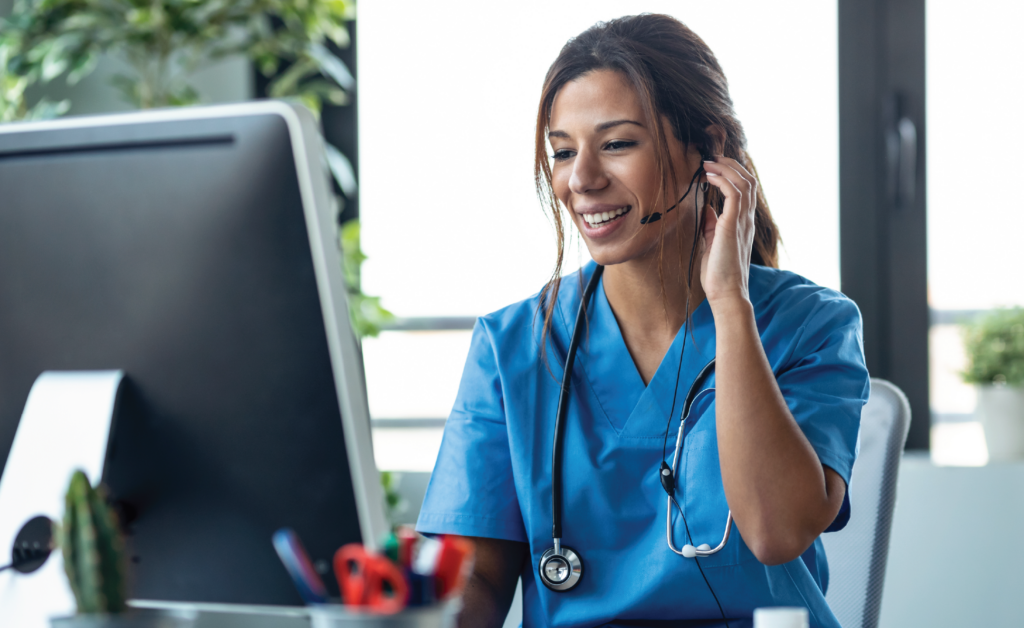
Patients no longer have to visit a doctor’s office or hospital for every healthcare need. Through phone calls, video visits and other digital tools, nurses can provide guidance, answer questions and support ongoing care from virtually anywhere.
So, what is telehealth nursing? It’s the practice of delivering patient care, education and communication through remote technologies. By extending care beyond traditional in-person settings, telehealth nursing helps improve healthcare accessibility while giving patients a more convenient way to stay connected with their care team.
How Telehealth Nursing Works
Telehealth technologies allow nurses to connect with patients through digital communication tools that are available outside of traditional healthcare settings. Instead of meeting patients in person, care is delivered through phone calls, video visits, secure messaging and patient portals.
Depending on a patient’s needs, telehealth nurses may:
- Evaluate symptoms
- Answer health questions
- Provide patient education
- Review data collected by remote patient monitoring devices
- Coordinate follow-up care with other members of the healthcare team
While some situations still require in-person care, telehealth nursing allows nurses to provide healthcare guidance and support patients remotely.
Telehealth Services in Healthcare
Telehealth services have become an important part of healthcare delivery, expanding access to care beyond traditional clinical environments. They’re used across a variety of healthcare settings to help providers reach patients in different locations and support ongoing care.
Healthcare Settings Using Telehealth
Telehealth nursing is used across a variety of healthcare settings and specialties, including:
- Hospitals and healthcare systems
- Primary care and specialty clinics
- Outpatient facilities
- Home healthcare agencies
- Virtual-first healthcare organizations
- Nurse advice lines
What Do Telehealth Nurses Do?
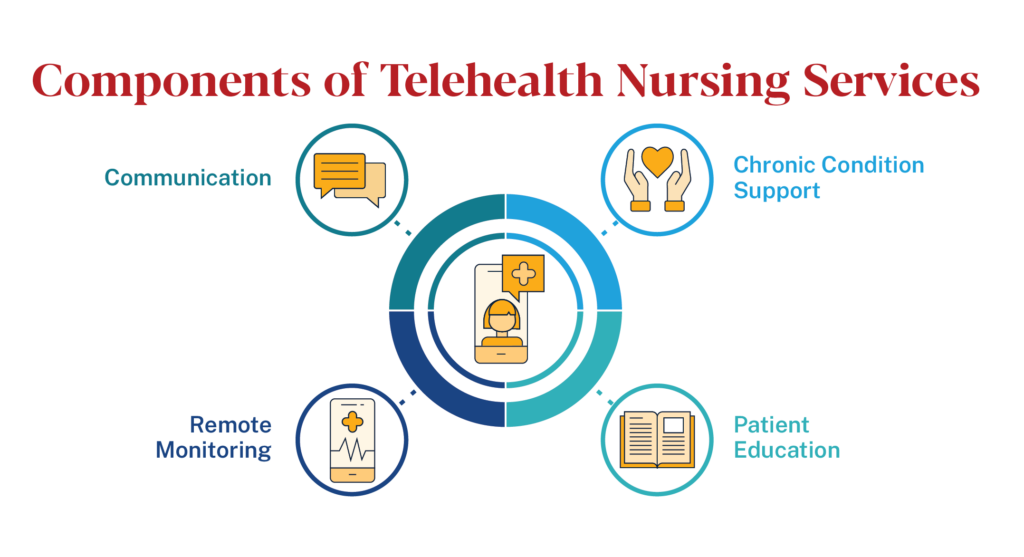
Nurses working in telehealth provide patient support, health monitoring, education and care coordination through virtual care platforms. Working with physicians, nurse practitioners and other healthcare professionals, they help patients navigate their healthcare needs without requiring an in-person visit.
Monitoring Patients Remotely
Remote patient monitoring allows telehealth nurses to track a patient’s health between appointments using connected devices and other digital tools. By reviewing patient data remotely, they can monitor progress, identify changes that may need attention and coordinate follow-up care when needed.
Supporting Patients With Chronic Conditions
Telehealth nursing plays an important role in helping patients manage chronic conditions through regular virtual check-ins and ongoing support. These appointments help patients stay on track with their treatment plans while giving nurses opportunities to answer questions and address concerns.
Telehealth nurses also encourage medication adherence, provide follow-up care and help patients recognize when they should seek additional medical attention.
Patient Education and Communication
Patient education is an important part of telehealth nursing. Nurses explain medications, care plans, discharge instructions and other healthcare information in ways patients can understand.
They also answer questions, address concerns and encourage patients to stay engaged in managing their health between appointments.
Telehealth Technologies in Nursing
Telehealth technologies make it possible for nurses to deliver patient care remotely while staying connected with patients and other healthcare professionals. They support communication, remote monitoring and electronic documentation across a variety of healthcare settings.
Video and Virtual Care Platforms
Video conferencing platforms allow nurses and other healthcare providers to conduct virtual appointments and consultations with patients. They also support communication between providers and patients, making it easier to deliver care remotely.
Remote Patient Monitoring Tools
Remote patient monitoring tools – such as blood pressure cuffs, glucometers and other wearables – collect and transmit patient data to healthcare teams, allowing telehealth nurses to track a patient’s health between appointments.
By reviewing this information, nurses can monitor patients, identify changes that may need attention and coordinate follow-up care when needed.
Digital Documentation and Communication
Telehealth nurses use electronic health records, secure messaging systems and other digital tools to manage patient information and document care. These systems also support communication and collaboration among healthcare providers across different care settings.
Benefits of Telehealth Nursing
Telehealth nursing benefits patients, providers and healthcare systems by expanding access to care and supporting ongoing communication. As virtual care continues to grow, it plays an increasingly important role in healthcare delivery.
Increased Access to Care
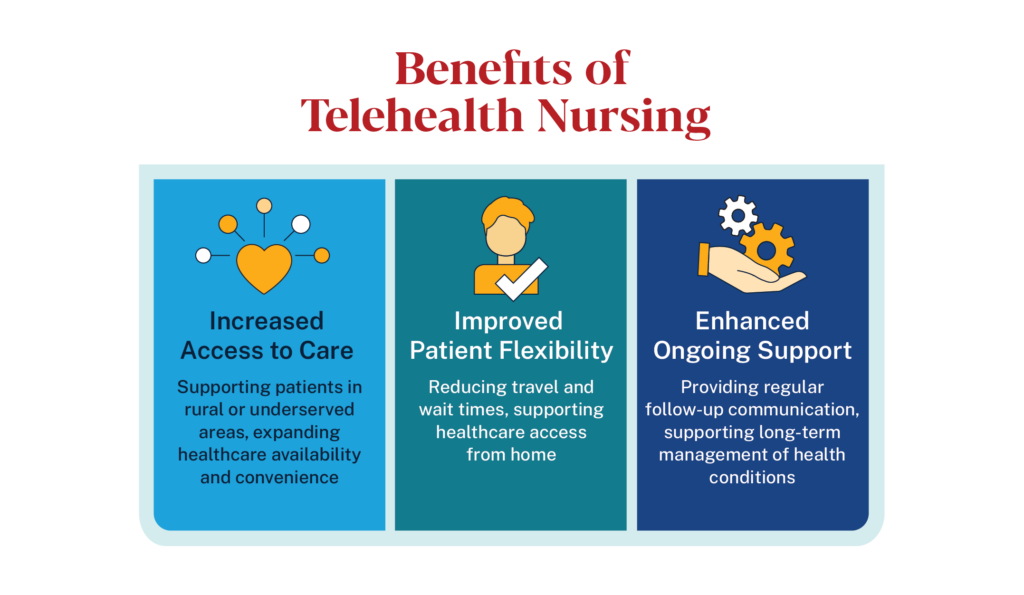
Telehealth nursing expands access to care for patients in rural and underserved communities by reducing barriers related to distance and transportation. It also makes it easier for people with mobility challenges to connect with healthcare providers and receive timely care without leaving home.
Improved Patient Flexibility and Convenience
Virtual care gives patients more flexibility by reducing travel time and limiting time away from work, school or family responsibilities. It also makes it easier to connect with healthcare professionals from home using familiar digital devices.
Enhanced Ongoing Patient Support
Regular virtual check-ins help patients stay engaged with their treatment plans between office visits. They also give telehealth nurses opportunities to monitor progress, answer questions and support long-term management of health conditions.
Telehealth Nursing in Different Care Settings
Telehealth nursing is used across a variety of healthcare settings, from hospitals to home health services.
Hospitals and Healthcare Systems
Patients don’t always need to stay in the hospital for follow-up care. Telehealth allows nurses to support discharge planning, answer questions and stay connected with patients during recovery.
Outpatient and Specialty Clinics
Virtual visits help patients manage chronic conditions between in-person appointments. Telehealth nurses provide ongoing education, answer questions and support follow-up care.
Home Health and Remote Care
Patients recovering at home can stay connected with their healthcare team through telehealth. Nurses provide virtual support and monitor healthcare progress remotely, helping patients manage their care between in-person visits.
How to Become a Telehealth Nurse
Becoming a telehealth nurse starts with the same foundation as many other nursing careers: earning a nursing degree, becoming licensed and gaining clinical experience. Strong communication, patient care and technology skills can also help you prepare for virtual care roles.
Nursing Education and Programs
To become a telehealth nurse, you’ll begin with completing an accredited nursing program and meeting your state’s licensure requirements. Many nurses earn a bachelor’s or master’s degree to build the clinical knowledge and professional skills needed for a wider range of nursing roles.
For registered nurses looking to continue their education, RN to BSN, RN to MSN and BSN to MSN programs can help strengthen the skills used in virtual care environments. American College of Education (ACE) offers these programs with fully online courses and practicum requirements that can be completed locally, allowing many working nurses to continue their education while balancing professional responsibilities.
Clinical Experience and Patient Care
Clinical experience helps you build the assessment, communication and patient care skills needed for telehealth nursing. Working in hospitals, clinics and other healthcare settings also prepares you to make informed decisions and support patients in a variety of situations.
Technology and Communication Skills
Telehealth nurses use electronic health records, video conferencing platforms and other digital healthcare systems to support patient care, so knowledge of these tools is essential. Strong communication skills also help you build relationships with patients and provide effective care through virtual interactions.
Career Opportunities in Telehealth Nursing
As virtual care becomes more common, telehealth nursing continues to create opportunities across a variety of healthcare settings and nursing specialties.
Telehealth Nurse Roles
Telehealth nurses support patient triage, follow-up care and remote patient management through virtual care platforms. Their responsibilities vary by employer but often include assessing patient concerns, coordinating care and helping patients access the services they need.
Advanced Nursing Roles in Telehealth
Advanced practice nurses, including nurse practitioners, also use telehealth to deliver virtual healthcare services. Depending on their role and specialty, they may provide patient assessments, manage ongoing care and support patients through virtual visits.
Education and Leadership Opportunities
Experienced nurses may pursue leadership or nurse educator roles that support telehealth training and implementation. These professionals help prepare healthcare teams to use telehealth technologies and deliver effective virtual care.
FAQs
Is telehealth nursing different from bedside nursing?
Yes. Bedside nurses provide hands-on care in hospitals and other healthcare settings, while telehealth nurses deliver patient support and communication remotely through phone, video and other digital technologies.
What skills are most important for telehealth nurses?
Telehealth nurses need strong communication, clinical assessment and technology skills. They must also be able to educate patients, think critically and build trust through virtual interactions.
Can telehealth nurses work from home?
Yes. Some telehealth nurses work from home, while others provide virtual care from hospitals, clinics and other healthcare settings.
How does telehealth improve patient communication?
Telehealth makes it easier for patients to connect with healthcare professionals through phone calls, video visits and secure messaging. More frequent communication helps patients ask questions, receive timely guidance and stay engaged in their care.
What challenges do telehealth nurses face?
Telehealth nurses may face challenges such as technology issues, communication barriers and the limited ability to perform physical assessments. They must also find ways to help patients who may feel uncomfortable using virtual care tools.
Why is telehealth becoming more important in healthcare?
Telehealth is becoming more important because it expands access to care and makes it easier for patients to connect with providers. As virtual care continues to grow, telehealth nursing helps support ongoing care and improve healthcare accessibility.
American College of Education offers affordable programs designed for registered nurses looking to deepen clinical knowledge, enhance evidence-based interventions and influence patient care. Online courses and a local practicum allow for a flexible pathway to career advancement.