

A Doctor of Business Administration (DBA) is designed for experienced business professionals who want to deepen their expertise and expand their leadership capabilities. Through applied research and advanced business concepts, this degree helps you develop practical solutions to real organizational challenges.
Many professionals who pursue a DBA start with a Master of Business Administration (MBA). A DBA can also support career growth in executive leadership, consulting, business strategy, operations and organizational development. Where it leads depends on your professional experience, industry and career goals.
What Can You Do With a Doctorate in Business?
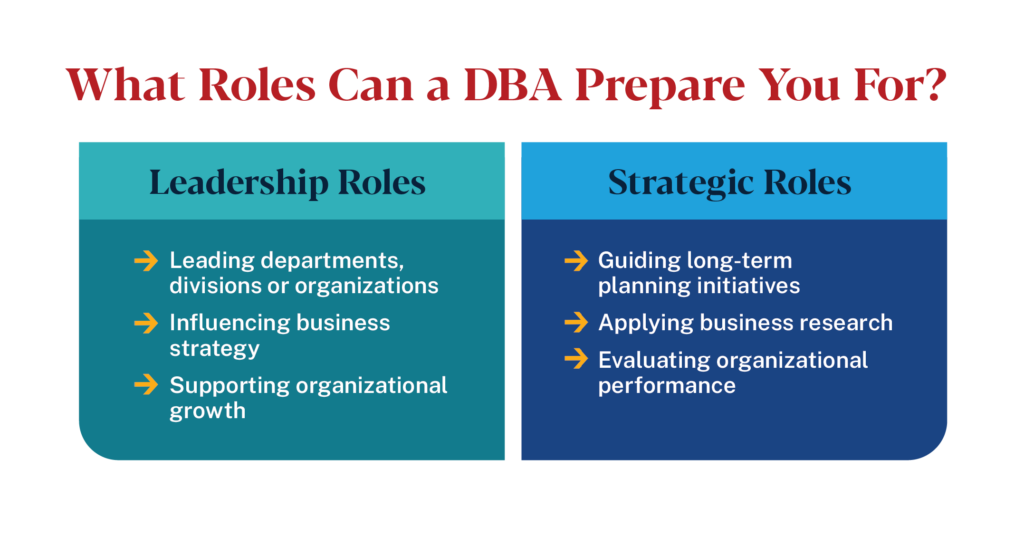
A Doctor of Business Administration can support leadership opportunities across a wide range of industries. The roles professionals pursue depend on their experience, industry and career goals.
Leadership and Executive Opportunities
Many professionals use a DBA to prepare for leadership roles with greater responsibility. The degree helps strengthen executive communication, strategic thinking and leadership skills that advance department, division and organizational leadership.
Strategic Decision-Making Roles
Strategic decision-making requires more than experience alone. A DBA helps you apply business research, evaluate organizational performance and improve long-term planning initiatives.
Doctor of Business Administration Careers in Executive Leadership
Many Doctor of Business Administration careers focus on executive leadership. While responsibilities vary by organization, a DBA helps you prepare for leadership roles that shape strategy, oversee operations and contribute to organizational growth.
Chief Executive Officer
A chief executive officer (CEO) sets an organization’s vision and long-term direction. CEOs lead company-wide strategy, make high-level business decisions and work with executive teams to support growth, innovation and organizational success.
Chief Operating Officer
Overseeing business operations means turning strategic plans into day-to-day action. Chief operating officers (COOs) work across departments to improve efficiency, help reach organizational goals and keep operations running effectively.
Senior Business Leadership Positions
Beyond CEO and COO roles, DBA graduates may pursue senior leadership positions that oversee business units, regional operations or organizational transformation initiatives. These roles often involve leading cross-functional teams, managing large-scale initiatives and supporting organizational change.
Doctor of Business Administration Careers in Business Strategy
A DBA prepares you for positions focused on business strategy and organizational performance. These roles involve evaluating opportunities, advising on strategic planning and helping organizations achieve long-term goals.
Corporate Strategy Leadership
Creating long-term growth requires evaluating new practices, understanding the competitive landscape and making strategic business decisions.
Organizational Development
Improving business processes often means identifying inefficiencies, leading change initiatives and helping teams work more effectively. These efforts lead to long-term performance improvements across the organization.
Business Innovation Roles
Identifying new areas of growth is just one part of driving innovation. Business leaders also evaluate potential risks, advance innovation initiatives and align new ideas with broader organizational goals.
Doctor of Business Administration Job Opportunities in Consulting
Consulting is a common career path with a DBA. Organizations seek experienced professionals who can apply business research and practical expertise to address strategic and operational challenges.
Management Consulting
Management consultants evaluate how organizations operate, identify opportunities for improvement and recommend strategies that address business inefficiencies. Their work can improve organizational effectiveness and inform stronger business decisions.
Executive Advisory Services
Executive advisors partner with senior leaders to navigate complex business decisions. Their guidance helps shape strategic initiatives, organizational priorities and long-term planning.
Independent Consulting
Independent consultants apply industry-specific expertise across a variety of organizations, helping clients solve complex business problems, develop practical strategies and support long-term growth.
Opportunities in Operations and Organizational Performance
A DBA prepares professionals for roles focused on improving business operations and organizational performance.
Business Operations Leadership
Managing business operations means improving efficiency, overseeing day-to-day processes and keeping teams focused on business objectives. Strong operational leadership helps organizations work more effectively while supporting long-term goals.
Performance Improvement Initiatives
Evaluating existing processes helps organizations identify opportunities to improve performance. Leaders in these initiatives measure results, streamline operations and drive measurable outcomes.
Change Management Leadership
Leading organizational change means managing transformation efforts that help businesses adapt to new challenges and opportunities. Clear communication and strong leadership help organizations navigate change more effectively.
Applying Research and Analytics in Business Leadership
Research and analytics help business leaders make informed decisions and solve complex organizational challenges. A DBA strengthens the skills professionals use to apply data and research in strategic decision-making.
Data-Informed Decision Making
Using business intelligence and organizational data helps leaders evaluate performance, identify trends and support strategic planning. A DBA develops the analytical skills needed to turn data into informed business decisions.
Business Research Applications
Investigating organizational challenges often begins with research. Business leaders use those findings to identify trends, uncover new opportunities and develop actionable recommendations that lead to stronger decision-making.
Organizational Problem Solving
Addressing complex business issues requires careful analysis and practical problem-solving. A DBA helps you evaluate challenges, develop actionable recommendations and lead to sustainable organizational growth.
Industries That Value DBA Graduates
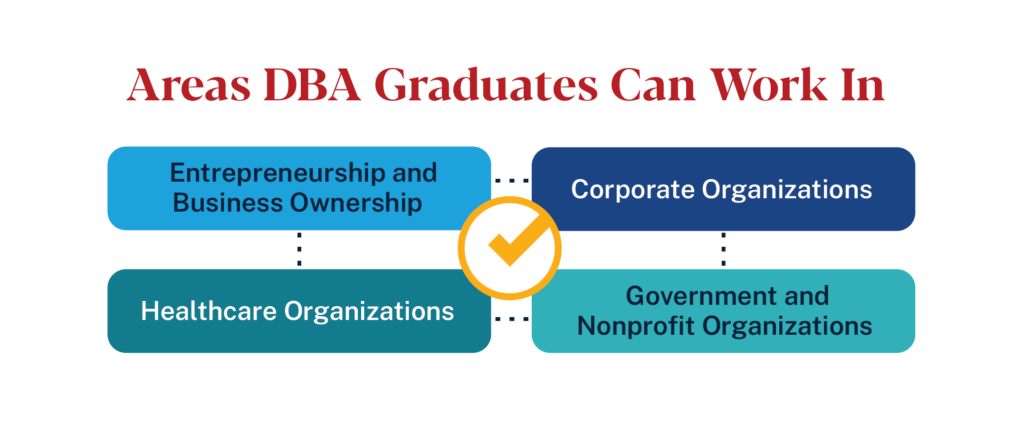
A DBA can lead to leadership opportunities across a wide range of industries. How professionals apply the degree depends on their experience, interests and the needs of the organizations they serve.
Corporate Organizations
Many professionals apply their DBA in corporate organizations, where they help lead teams, build strategic plans and oversee business operations. These responsibilities often span departments and contribute to organizational growth.
Healthcare Organizations
Healthcare organizations rely on strong leadership to manage operations, support healthcare administration and improve day-to-day performance. A DBA can help you lead improvement initiatives across a variety of healthcare settings.
Government and Nonprofit Organizations
Program leadership and strategic management are common responsibilities in government agencies and nonprofit organizations. Organizational development initiatives also help improve services and strengthen operations.
Entrepreneurship and Business Ownership
A DBA can help entrepreneurs and business owners make strategic decisions, identify opportunities for business growth and strengthen organizational leadership.
How a DBA Supports Long-Term Professional Growth
Upon earning a DBA degree, job expectations include deeper and more advanced skills grounded in applied research. This means that these programs help you grow professionally.
Strengthening Leadership Skills
DBA degree programs help you strengthen executive communication, strategic thinking and organizational leadership. These skills support leadership opportunities across a variety of industries.
Expanding Professional Expertise
A DBA helps you deepen your understanding of business strategy, organizational performance and research-based decision-making. That knowledge supports continued growth as a business leader.
Building Organizational Impact
A DBA helps you develop the knowledge and skills needed to drive change, improve performance and support innovation. Those capabilities can help you make a lasting impact within organizations.
How ACE’s DBA Program Prepares Professionals for Leadership Opportunities
The Doctor of Business Administration program at American College of Education (ACE) is designed for experienced professionals who want to expand their leadership expertise. The program focuses on practical leadership and business skills, including:
- Leading strategic initiatives
- Applying research to business challenges
- Supporting organizational performance
- Making data-informed business decisions
A DBA helps professionals build the knowledge and perspective needed to make a greater organizational impact.
FAQs
Can a DBA help professionals transition into new industries?
A DBA can help experienced professionals build the leadership and business expertise needed to pursue opportunities in new industries. Career outcomes still depend on factors such as previous experience, professional accomplishments and organizational needs.
How does a DBA compare to other doctoral business degrees?
A DBA generally emphasizes applying research to real-world business challenges, while other doctoral business degrees may place a greater emphasis on academic research. All are advanced business degrees, but they support different professional goals.
Are DBA graduates prepared to lead organizational change initiatives?
Yes. DBA programs typically emphasize leadership, strategic thinking, organizational development and evidence-based decision-making. Those skills help you lead organizational change and guide businesses through periods of transition.
What types of business challenges are DBA graduates trained to address?
DBA programs prepare you to address challenges related to business operations, organizational performance, strategic planning, leadership and innovation. They also equip you with the research and analytical skills needed to evaluate complex business problems and recommend practical solutions.
Can a DBA support entrepreneurship and business ownership?
Yes. A DBA helps business owners and entrepreneurs strengthen their strategic decision-making, support business growth and develop impactful organizational leadership.
How do organizations benefit from leaders with doctoral-level business education?
Organizations benefit from more informed decision-making, stronger strategic leadership and a research-based approach to solving business challenges. Those strengths can support innovation, improve performance and guide long-term growth.
American College of Education’s DBA program is designed for business professionals with master’s degrees to deepen strategic leadership skills through applied research.