

Over the years, online education has taken on a wide range of shapes – an exciting trend in its infancy, a vital need during the COVID-19 pandemic and the new center of gravity in higher education today. Experts predict that online enrollment will surpass in-person learning, signaling a shift that will only continue to grow.
At the same time, surveys reveal something equally important: Many students still feel that the quality of online learning varies widely from one course or institution to another. For colleges and universities, that gap is a wake-up call. The future of higher education depends on a willingness to build digital education models that are better and smarter – more engaging, equitable and sustainable.
Let’s explore the recent findings, why they matter and how institutions can take meaningful steps toward improving online learning quality.
A Wake-Up Call for Higher Education
Online learning is reshaping higher education in real time. Students expect digital experiences that are interactive, accessible and designed with intention.
The findings highlighted in a recent Inside Higher Ed story confirm what many of us in the field have already sensed: Students want active engagement, clear structure, and instructors who are present and connected, even in a digital environment. When those elements are missing, satisfaction drops. And when satisfaction drops, so does trust in the value of an online degree.
One thing is clear: This moment is an opportunity. Forward-thinking institutions are already investing in online learning quality improvement and digital learning innovation. Colleges with established online ecosystems have begun rethinking course design, strengthening faculty development and adopting data-driven approaches that elevate the student experience. These efforts show that high-quality online learning is not only possible but deeply effective when done intentionally.
Key Takeaways
The recent surveys reveal several clear insights about online learning trends across higher education:
- Student satisfaction with online classes is declining in key areas
- Students want more active engagement rather than passive content delivery
- Colleges need consistent frameworks to guide online course design
- Faculty require ongoing support and training to teach effectively in digital settings
- Continuous data collection and feedback loops improve online learning quality
- Strengthening online education is essential for long-term institutional credibility
These takeaways serve as a guide for understanding what students need and where institutions can focus their efforts.
Understanding the Findings
What the Surveys Say About Online Learning
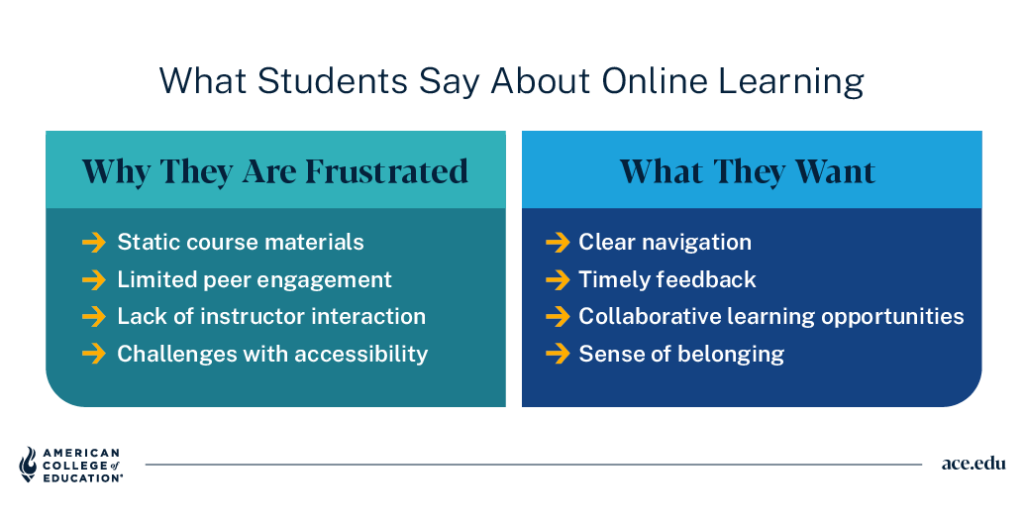
The Inside Higher Ed surveys offer a helpful look at what students experience in online courses. Many students report that their classes rely heavily on recorded lectures or static readings. They express frustration with limited peer interaction and a lack of communication from instructors. Students also note challenges related to accessibility, particularly when courses are not designed with diverse learners in mind.
These findings align with national e-learning trends. Higher education is still adjusting to the rapid transition toward digital education that began during the pandemic. Even as online learning becomes more expected, the quality varies significantly between institutions and courses. Some colleges have built strong online ecosystems. Others continue to operate with materials or structures created during emergency periods of remote teaching.
It’s important to acknowledge that, while the surveys point out what is lacking, they are a clear indication of the features students value. Students want clear navigation, timely feedback, collaborative opportunities and a sense of belonging. These expectations can guide the next phase of growth for higher education.
Why These Insights Matter for Higher Education
Higher education institutions face increasing pressure to demonstrate value. When online learning feels disconnected or inconsistent, student trust suffers. And when trust suffers, retention becomes more difficult. These outcomes affect institutional effectiveness and the broader reputation of online education across the country.
Additionally, these findings matter because online learning expands access to students who rely on flexible formats. When the quality is strong, online education supports equity. When it is weak, it widens gaps. Colleges have a responsibility to ensure that digital learning experiences are designed with care and grounded in best practices for online teaching.
Quality Matters in Effective Online Learning
The Shift From Emergency Teaching to Sustainable Models
The pandemic pushed colleges into online learning at an unprecedented pace. Many institutions moved courses online quickly, which meant the immediate priority was continuity rather than optimization. Now, as digital learning becomes a long-term component of higher education, it is time to build sustainable systems with intentional design.
Quality is an essential feature in online education because students notice the difference between emergency strategies and purpose-built online learning. Institutions that plan strategically, use strong instructional design principles, and invest in higher education technology demonstrate that online learning can be rigorous, supportive and engaging. These qualities build trust and position colleges for future growth.
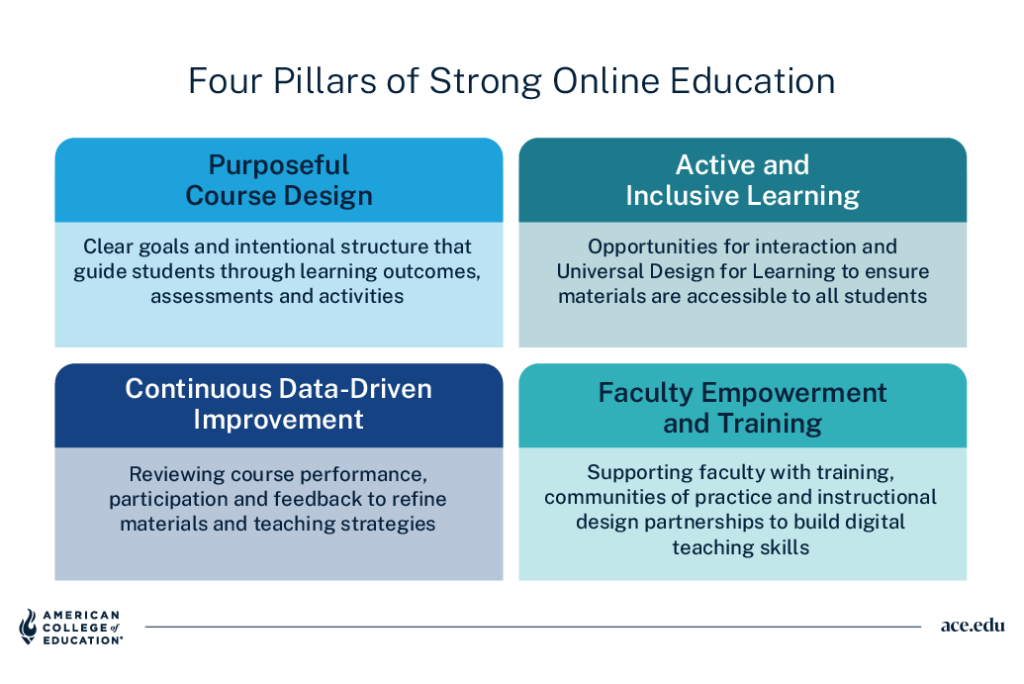
Four Pillars of Strong Online Education
1. Purposeful Course Design
Quality online learning begins with clear goals and intentional structure. Each course should guide students through learning outcomes, assessments and activities that build upon one another. Strong instructional design supports clarity, reduces cognitive load and increases student confidence.
Purposeful course design also ensures consistency. When students move between courses and programs, they benefit from familiar navigation, predictable communication patterns and well-organized materials. This structure reduces frustration and helps learners focus on mastering content.
2. Active and Inclusive Learning
Online learning should create opportunities for interaction. Students want to discuss ideas, collaborate with peers and engage with multimedia. Activities like group projects, discussions, case studies and simulations support deeper understanding and make digital learning more dynamic.
Inclusive design is equally important. Universal Design for Learning helps ensure that materials are accessible to all students. Clear captions, alt text, flexible formats and varied engagement options help students learn in the ways that suit them best. This approach supports accessible digital education and strengthens the overall quality of online instruction.
3. Continuous Data-Driven Improvement
One advantage of online learning is the amount of data available. Institutions can review course performance, discussion participation, assignment trends and feedback surveys. These insights help educators refine course materials and teaching strategies each term.
Data-driven improvement supports instructional quality over time. It also allows colleges to identify areas where additional resources, training or redesign may be needed. When institutions use analytics thoughtfully, they improve outcomes for students while strengthening online learning quality improvement processes.
4. Faculty Empowerment and Training
High-quality online learning depends on faculty readiness. Effective digital teaching requires new skills, tools and approaches. Institutions can support faculty by offering training, communities of practice, instructional design partnerships and opportunities to experiment with new methods.
Professional development also creates alignment across courses. When instructors understand best practices for online teaching, student experiences become more consistent. This contributes to stronger student engagement online and higher satisfaction.
Technology That Humanizes Online Education
Choosing the Right Tools for Connection
Digital learning innovation often centers around technology, but the best tools are those that support connection and belonging. Learning management systems, virtual classrooms, adaptive learning platforms and communication tools should make it easier for students and instructors to interact.
Institutions have a responsibility to select technology that enhances clarity and simplifies communication. Tools that are intuitive reduce student stress and allow instructors to focus on teaching rather than troubleshooting. This supports a more human-centered online experience.
Maintaining Human Connection in Digital Learning
Students value instructors who are present, responsive and supportive. Even in a fully online environment, small gestures make a significant impact. Regular announcements, timely grading, personalized feedback and check-in opportunities help build community. When students feel seen and supported, they are more likely to stay motivated and engaged.
Better Online Education Listens to Students
Building Trust Through Responsiveness
Student feedback offers valuable insight into what is working and what needs improvement. Institutions that listen closely and respond quickly build trust. When colleges make adjustments based on feedback, students feel valued and respected. This improves retention and contributes to stronger online learning experiences.
Building a Culture of Quality in Online Learning
Institutional Collaboration
High-quality online learning requires collaboration across the institution. Instructional designers, faculty, IT teams, student support offices and academic leaders all play essential roles. When these groups work together, institutions create reliable systems that support students from the moment they enroll to the moment they graduate.
Diversifying Through Online Non-Degree Credentials
The field is seeing strong growth in online non-degree credentials. Certificates, micro-credentials and stackable pathways help adult learners gain skills for workforce advancement. These options also support flexibility for students who want to explore new disciplines without committing to a full degree. Many institutions have begun to expand their offerings to meet this growing demand.
How American College of Education Provides Proven Online Education
American College of Education (ACE) is a digital native, offering online learning from its founding. Our experience in providing accessible online education has helped us intentionally build an entire college that successfully prepares busy working adults for their futures, purposefully designing programs that meet our students’ learning needs and professional goals.
We’ve intentionally invested time and resources into addressing each of the four pillars of high-quality online education mentioned above, resulting in a 97% student satisfaction rate.*
A Commitment to Quality Online Learning
When it came to their learning, ACE students were largely unaffected when the pandemic hit in 2020. That’s because we didn’t have to change anything about how we offered our courses or curriculum.
Instead of adopting online learning out of necessity or in response to a trend, ACE has worked on honing the effectiveness and intuitiveness of our online course delivery from our conception. To ensure our students learn our rigorous curriculum through the best experience possible, we have a dedicated team of experienced course developers and instructional designers who custom-create the coursework for every single program, ensuring that learning outcomes are delivered using the best higher education teaching strategies in combination with clear, interactive design.
Faculty Support and Innovation
Student interaction with instructors and faculty members can make or break their higher education experience. To ensure our faculty members are providing our students the support they need, ACE provides regular touchpoints for our students to provide feedback on their instructors. We use end-of-term and annual survey results to evaluate faculty performance and identify areas where faculty may require additional support or development. We also conduct faculty observations, a great way to make sure every instructor is adequately responding to student needs.
Faculty at ACE have access to regular professional development opportunities. We’ve also leveraged AI tools like Harmonize to provide our faculty members with insights into students’ participation and engagement in the discussion boards, identifying those who may be at risk of falling behind or becoming disengaged. This allows instructors to intervene early and provide targeted support.
Expanding Access Through Online Non-Degree Credentials
Through industry and organizational partnerships, ACE understands the skills most in demand in today’s job market. We provide affordable and accessible ways for working professionals to add those skills to their resume through online non-degree programs like micro-credentials and graduate certificates.
But more than just a way to quickly upskill, we intentionally designed our non-degree programs to be stackable toward full degrees. Our students aren’t just earning a new credential for their resume – they’re also earning academic credit that can be applied toward a future degree, making that degree more affordable and faster to pursue.
Data-Driven Improvement
ACE is proud of our 97% student satisfaction rate and 84% graduation rate.* However, we’re also keenly aware that there’s always more we can be doing to serve our students better, especially with how quickly technology changes within the online education space.
Our Institutional Analytics team utilizes the data we collect from student feedback and performance analytics to help us continually improve our courses and student experience. This data helps us prioritize everything from the courses and programs that require re-evaluation to the processes that need refinement. For example, in the past few years, data has helped us improve the clarity and consistency of assignment instructions, the transparency and accountability of faculty, and simplified the payment process for students.
All higher education institutions – whether they’re natively online, transitioning into online learning or offering hybrid education – can evolve proactively to meet student needs the way that ACE does.
The Continuous Journey of Improvement
Just as technology rapidly changes, evolves and innovates, so too does online learning. If higher education institutions seek to meet the growing demand for high-quality online learning experiences, they must evolve as well. The good news is that all schools – whether they’re natively online, transitioning into online learning or offering hybrid education – can evolve proactively to meet student needs the way that ACE does.
FAQs
What’s the biggest challenge in online learning today?
According to recent surveys, the biggest current challenge in online learning is ensuring colleges and universities are offering educational experiences that meet the needs and expectations of students. Right now, there seems to be a gap between the quality students want and what many schools are able to offer.
How can colleges ensure consistent quality in online education?
Colleges should invest in the four pillars that make up high-quality online education: purposeful course design, creating active and inclusive learning experiences, continuous data-driven improvement, and faculty training and empowerment.
What’s next for the future of online learning?
As students continue to be skeptical of the value of costly traditional higher education, online college programs will continue to grow in popularity. But the quickly created online experiences that many schools utilized during the pandemic will no longer satisfy student expectations. Students want clear navigation, timely feedback, collaborative opportunities and a sense of belonging. These expectations can guide the next phase of growth for higher education.
American College of Education is proud to be at the forefront of online education, redefining what’s possible for students who want a higher education. Explore our programs today.
*Student Right to Know. Accessed July 21, 2026.