by Eric Klein
Higher education is experiencing a period of extraordinary change. Shifting student expectations, advances in artificial intelligence (AI), questions about affordability and value, evolving workforce needs, and declining public trust are reshaping the environment in which colleges and universities operate.
For those of us who lead within higher education, this moment calls for continued growth. The institutions we serve are evolving, the needs of our students are changing and our leadership must develop alongside them.
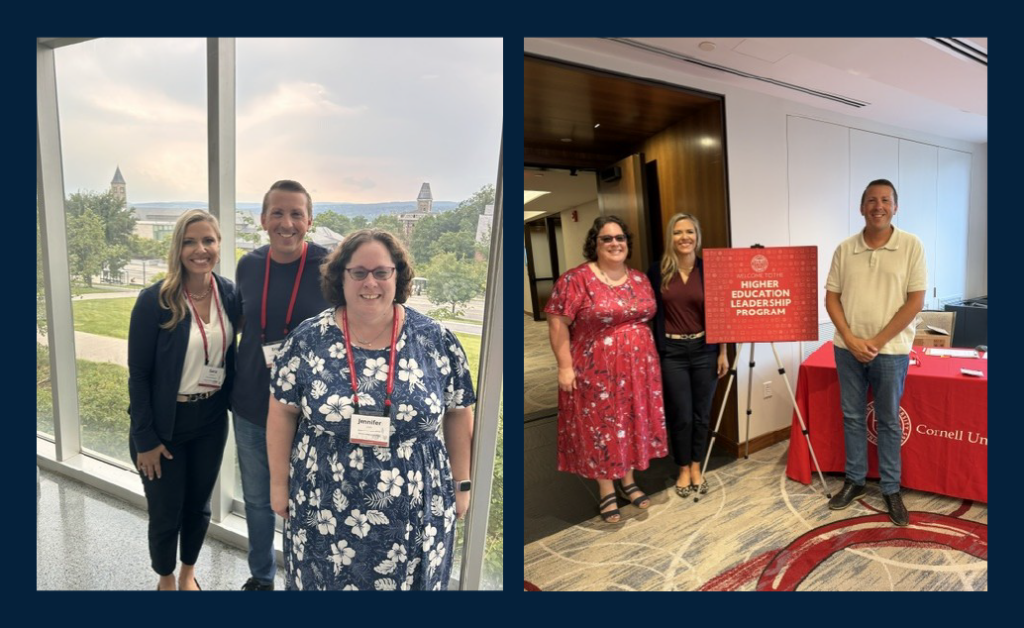
That commitment to continuous learning brought three leaders from American College of Education (ACE) to Cornell University’s Higher Education Leadership Program: Dr. Jennifer Linch, director of college support services; Dr. Sara Reichard, director of doctoral research; and me. Over four days, we learned alongside higher education professionals from institutions including Princeton University, Vanderbilt University, Tufts University, Syracuse University and others across the country.
The program explored emotional intelligence in higher education leadership, negotiation, team leadership, conflict resolution, feedback, community engagement, enrollment management strategy, AI and the future of higher education. Conversations with colleagues from different institutions were equally valuable, providing opportunities to compare experiences and consider how the ideas we were exploring might apply to our own organizations.
I returned from Cornell with many pages of notes and a renewed appreciation for what leadership requires during a period of significant change.
Leadership Requires Versatility
One theme surfaced repeatedly throughout the week: Effective leadership is deeply contextual.
Sessions on leadership versatility and emotional intelligence emphasized the importance of understanding ourselves and the people we lead. Conversations about negotiation, managing teams, conflict resolution in higher education and feedback reinforced the importance of understanding people, reading situations carefully and responding with intention.
This is especially important in higher education. Leaders routinely work across different roles, experiences, perspectives and priorities while making decisions that affect students, faculty, staff and the institution as a whole.

Leadership is multifaceted. It involves knowing others’ social styles and being able to lead with versatility and flexibility.
Dr. Jennifer Linch
Different circumstances call for different approaches. Sometimes a leader needs to listen carefully and create room for others to contribute. Other situations require clarity, decisiveness or constructive feedback. Effective leadership comes from recognizing what the moment requires and responding in ways that move people and the organization forward.
“Leadership is multifaceted,” Linch said in reflection on this theme. “It involves knowing others’ social styles and being able to lead with versatility and flexibility. Knowing when to give constructive feedback, using the tools and frameworks available, and having the ability to pivot as the situation requires are foundational skills of a strong leader.”
Her observation captures an important dimension of leadership development. Frameworks and tools expand the choices available to leaders. Experience and reflection help us develop the judgment to determine how and when to use them.
Leading Through Complexity
The program also reinforced something I have increasingly come to believe about higher education leadership. Complexity has become a defining feature of the work.
Higher education leaders are navigating significant questions simultaneously. How should institutions respond to AI? How can colleges and universities demonstrate value to students and the public? How do we sustain affordability while investing in quality and innovation? How should academic programs evolve alongside changing workforce needs?
Cornell’s program created space to examine these questions from several perspectives. Discussions explored conflict within institutions, the relationship between universities and their communities, and ways institutions can connect academic programs and partnerships with changing workforce and societal needs.

The ability to connect present decisions with long-term purpose may be one of the most important leadership capabilities higher education needs today.
Dr. Eric Klein
Together, these conversations pointed toward a larger leadership challenge. Decisions about academic programs affect enrollment. Technology influences teaching and learning. Student support shapes persistence and completion. Partnerships can strengthen workforce relevance and public impact.
Strategic leadership requires seeing those connections and maintaining a clear sense of institutional direction. The ability to connect present decisions with long-term purpose may be one of the most important leadership capabilities higher education needs today.
Keeping Students at the Center
Some of the most meaningful conversations of the week occurred on the final day, when the program turned explicitly toward the future of higher education.
Cornell professor Ariel Avgar explored the future of the American university against a backdrop of declining public trust, changing relationships with government and the rapid acceleration of AI. Cornell Vice Provost Lisa Nishii examined undergraduate education and enrollment management at a time when students and families are increasingly focused on affordability and employment outcomes.
Those conversations raised fundamental questions. What will students expect from colleges and universities in the years ahead? How should institutions demonstrate the value of education? How can we preserve what is most meaningful about higher education while continuing to evolve for the students and communities of the future?
For Reichard, the discussion reinforced the importance of connecting institutional strategy to the people it ultimately serves.
“One of my biggest takeaways was that behind every metric, process and strategic initiative is a student whose future may be changed through education,” she said.
That idea stayed with me as well.
Higher education depends on data. We examine enrollment, retention, completion, learning outcomes, finances and other indicators to understand our institutions and make informed decisions. Their significance ultimately comes from the people and experiences they represent.
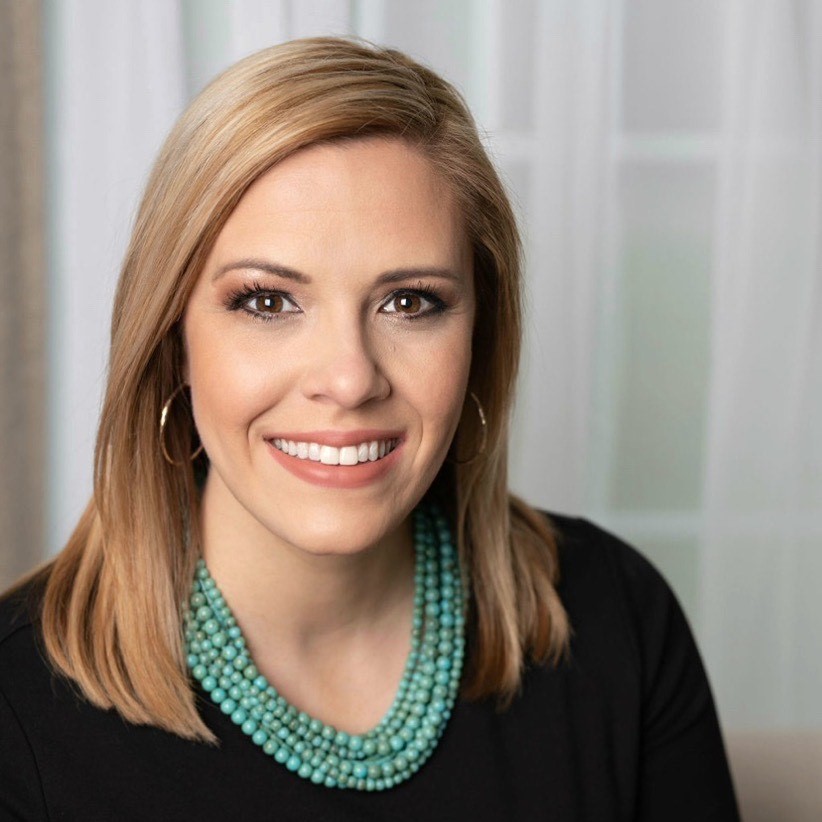
Behind every metric, process and strategic initiative is a student whose future may be changed through education.
Dr. Sara Reichard
Behind an enrollment number is a student deciding whether higher education fits into the realities of life. Behind a retention statistic is someone balancing education with work, family, finances and other responsibilities. Behind a graduation rate are individuals pursuing career advancement, creating new opportunities for their families and accomplishing goals they have carried for years.
Strong strategic leadership connects institutional performance with human impact. Data helps us understand where we are. Purpose helps us remember why the work matters.
As Reichard reflected, “The experience challenged me to think not only about how we lead institutions, but why we lead them. Our work creates opportunities that extend far beyond the classroom.”
Mission and Adaptation
The discussion about the future of the American university also highlighted a question that I believe will shape higher education over the next decade: How can institutions continue evolving while remaining grounded in their missions?
Technology is advancing quickly. Students are seeking greater flexibility. Employers are asking for evolving skills. Demographic changes are reshaping enrollment. Affordability, outcomes and return on investment increasingly influence how students and families evaluate higher education.
Mission can provide direction through these changes. It gives leaders a lens for considering how innovation and thoughtful adaptation can help an institution serve its students more effectively.
Reichard saw a strong connection between this conversation and ACE. The program, she observed, reinforced “how intentionally ACE balances affordability, accessibility and quality to meet the needs of today’s learners.”
At ACE, many of our students are working professionals pursuing degrees while managing careers, families and community responsibilities. Serving them well requires us to continually consider how higher education can remain accessible, relevant, rigorous and responsive to the realities of their lives.
These questions extend far beyond ACE. They are increasingly central to the future of higher education.
Leadership Development Is Never Finished
Perhaps the most valuable aspect of spending several days at Cornell’s Higher Education Leadership Program was having dedicated time to learn, reflect and exchange ideas with colleagues.
Leadership positions fill quickly with meetings, decisions, projects and immediate priorities. Creating space for professional development for higher education administrators allows us to think more deeply about how we are leading and how we can continue to grow.
Experiencing the program alongside Linch and Reichard made that opportunity especially meaningful. We attended the same sessions, yet our professional responsibilities shaped the questions we asked and the ideas that captured our attention. Our conversations often turned toward what those ideas might mean for our teams, our students and ACE more broadly.
Our students at ACE understand the value of continuing learning firsthand. Choosing to pursue another degree or credential while established in a profession reflects a commitment to continued growth. Our students bring substantial professional and life experience into their classrooms and combine it with new knowledge, perspectives and relationships that can shape what they do next.
Those of us who work in higher education should model that same commitment to learning.
As I left Cornell, I found myself reflecting on the week’s collective message. Higher education will continue to change. Technology will advance. Student needs will evolve. New challenges and opportunities will emerge.
Leadership determines how institutions respond to those changes.
For those of us entrusted with that responsibility, the work begins with remaining curious, continuing to learn, listening to the people around us and keeping students at the center of our decisions.
The future of higher education will be shaped by many forces. It will also be shaped, every day, by higher education leadership development, shaped for the better by those willing to learn, adapt and lead with purpose.
At American College of Education, we’re relentlessly committed to putting our students first. Learn more about our programs and how we help our students succeed.


