
Sometimes, no matter how much we need it, time has a way of slipping away. Between balancing work and caring for family, it can feel like there are never enough hours in the day. For many people, the idea of going back to school when time is limited only adds to that pressure.
Flexible learning options have made it possible to pursue your goals without putting everything else on hold. For aspiring educators, earning a degree online can be one of the most practical ways to begin a teaching career.
So, can you get a teaching degree online? The short answer is yes. Many accredited programs allow you to complete coursework online while preparing for real classroom experience. Understanding how these programs work and can help you move forward with confidence. Learn more about online teaching degrees, how to earn one and how they can pair with your busy schedule.
Key Takeaways
- Yes, you can earn a teaching degree online — accredited programs combine online coursework with required in-person components like observation hours and student teaching.
- Teaching licenses are granted by state departments of education, not colleges, so a program must align with state licensure requirements to qualify graduates for certification.
- Program accreditation (such as CAEP) helps ensure the degree meets recognized teacher-preparation standards and can support license reciprocity between states.
- Student teaching is the one requirement that can’t be done online — it typically runs 12 to 16 weeks in a real classroom under an experienced teacher’s supervision.
- Options range from a traditional four-year bachelor’s in education to accelerated master’s programs (12–18 months) and alternative certification paths (6–12 months) for career changers.
- Benefits include flexibility, lower costs and broader program access, while trade-offs include required in-person fieldwork, less face-to-face interaction, and the self-discipline online learning demands.
Can I Get a Teaching Degree Online?
Yes, you can get a teaching degree online. Many colleges and universities offer online teaching degree programs that are designed to meet the same academic and professional standards as traditional programs.
While requirements vary by state, most online education programs combine flexible coursework with structured preparation for becoming a licensed teacher. This means you can complete much of your degree program through online learning while still gaining the experience needed to work in public schools.
One important distinction is that online teaching degrees are not entirely virtual. Although coursework is completed online, most programs include in-person components such as student teaching requirements and observation hours. These experiences help ensure that prospective teachers are prepared to manage a classroom and support student learning effectively. As online learning continues to grow, more students are choosing this path for its flexibility, accessibility and ability to fit into busy schedules.
How Online Teaching Degrees Work
Online teaching degree programs are designed to provide both flexibility and structure. They allow you to complete coursework from home while still following a clear path toward teacher certification. Most programs include a mix of learning formats and hands-on preparation. Here is what you can typically expect:
- Online coursework: Classes are delivered through an online platform, allowing you to access lectures, assignments and discussions from anywhere.
- Synchronous and asynchronous learning: Some courses may require you to log in at scheduled times, while others allow you to complete work on your own schedule.
- Fieldwork preparation: Programs often include early observation hours to help you become familiar with classroom environments.
- Practicum experience: As you progress, you will complete supervised teaching experiences that prepare you for full-time student teaching.
- Technology requirements: A reliable internet connection and basic digital tools are essential for participating in an online program.
The Accreditation and Licensure Reality
Understanding accreditation and licensure is one of the most important parts of choosing the right teaching degree program. After all, these factors determine whether your degree will be recognized and whether you can move forward toward certification.
It’s highly important to remember that teaching licenses are granted by each state’s department of education, not by the college or university itself. This means your program must align with state licensure requirements in order for it to qualify you for teaching certification or licensure.
Accreditation is another key consideration. Many respected programs are accredited by organizations such as the Council for the Accreditation of Educator Preparation (CAEP), which helps ensure that the education program meets recognized standards for teacher preparation. Choosing an accredited online teaching degree can also support teaching license reciprocity if you plan to move between states.
It is also helpful to understand the difference between program types. Some degree programs are designed specifically for licensure, such as a Master of Arts in Teaching. Others, like education studies degrees, may focus on broader topics without leading directly to certification.
Can You Become a Licensed Teacher With an Online Teaching Degree?
Yes, you can become a licensed teacher with an online teaching degree, as long as the program meets your state’s licensure requirements. Most teacher preparation programs are structured to include both a degree and the steps needed for certification. However, not all programs automatically lead to licensure, so it is important to confirm what your chosen program offers. In many cases, becoming a certified teacher includes:
- Completing an approved degree program: This ensures you have the academic foundation needed for teaching careers
- Passing required exams: Many states require assessments such as the Praxis exam or other subject-area tests
- Meeting fieldwork requirements: This includes observation hours and student teaching
- Applying for licensure: After completing your program and exams, you apply through your state’s department of education
If you are planning to teach in a different state later in your career, understanding teacher licensure requirements and reciprocity policies can help you stay flexible in your career path.
How Fast Can You Get a Teaching Degree Online?
Are you wondering how fast you can get a teaching degree online? The answer typically depends on your starting point and the type of program you choose. While some prospective teachers follow a traditional path, others may take advantage of accelerated or alternative options. Plus, factors such as transfer credits, year-round course schedules and prior experience can also influence how quickly you complete your degree.
Here are a few common timelines to consider:
- Traditional programs: A bachelor’s degree in education typically takes about four years to complete
- Accelerated online programs: Some programs allow you to finish in a shorter timeframe, often between 12 and 18 months for advanced degrees
- Alternative certification programs: Career changers may complete certification requirements in as little as 6 to 12 months, depending on the program and state guidelines
Those who wish to transition careers into education can often leverage online teaching certificate programs to speed up their path to teacher licensure as long as those programs are also properly accredited and approved by your state. Designed for those who already hold a bachelor’s degree in another field, these transition to teaching certificates cover the same important skills and knowledge educators need as full degrees.
Student Teaching: The Unavoidable In-Person Requirement
One of the most common questions about online teaching degrees is whether everything can be completed virtually. While coursework is online, student teaching is an in-person requirement that plays a critical role in your development as an educator.
Student teaching is typically completed near the end of your program and often lasts between 12 and 16 weeks. During this time, you work full-time in a classroom under the guidance of an experienced teacher.
This experience allows you to apply your knowledge in real-world settings while building confidence and practical skills. It also provides opportunities to connect with school communities and gain valuable professional experience.
Online programs often support students by helping them find placements in local school districts. This allows you to complete your fieldwork close to home while still meeting state requirements.
Types of Online Teaching Degrees You Can Earn
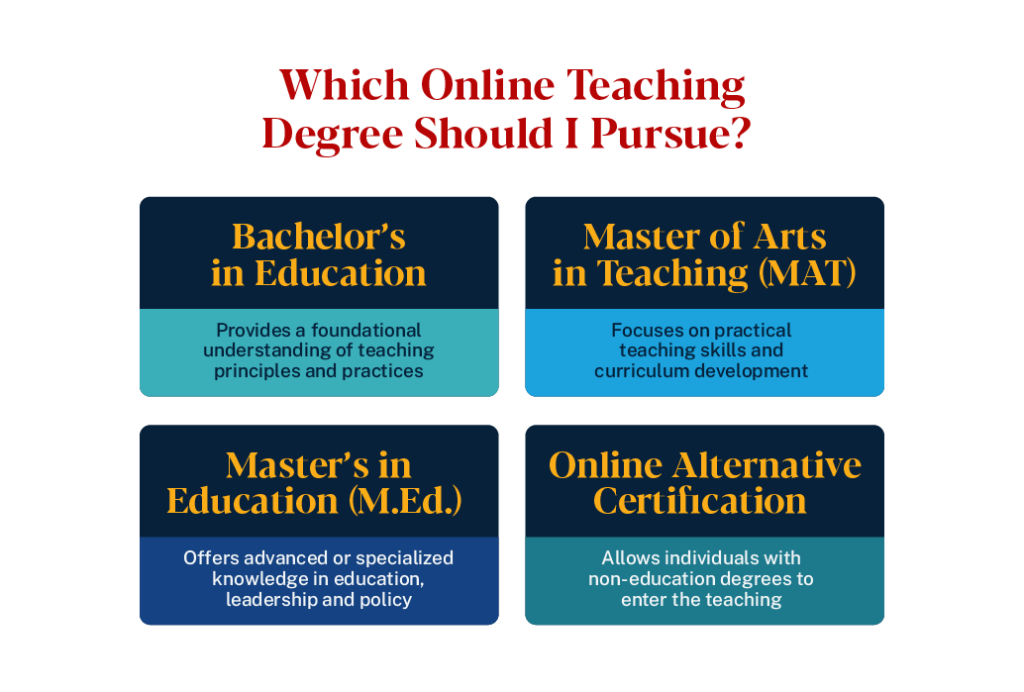
There are several types of online teaching degrees available depending on your goals and experience level. Understanding your options can help you choose the right path:
- Bachelor’s in Education: Designed for those beginning their teaching career and can sometimes lead to licensure for elementary education or early childhood education roles
- Master of Arts in Teaching: A graduate-level program focused on preparing students for teaching roles, with coursework aligned to state licensure requirements
- Master’s in Education: Focused on advanced topics such as curriculum development, leadership or specialized instruction, catering to already licensed educators who wish to advance their career
- Alternative certification programs: Designed for individuals who already hold a degree and want to transition into teaching
Advantages of Getting a Teaching Degree Online
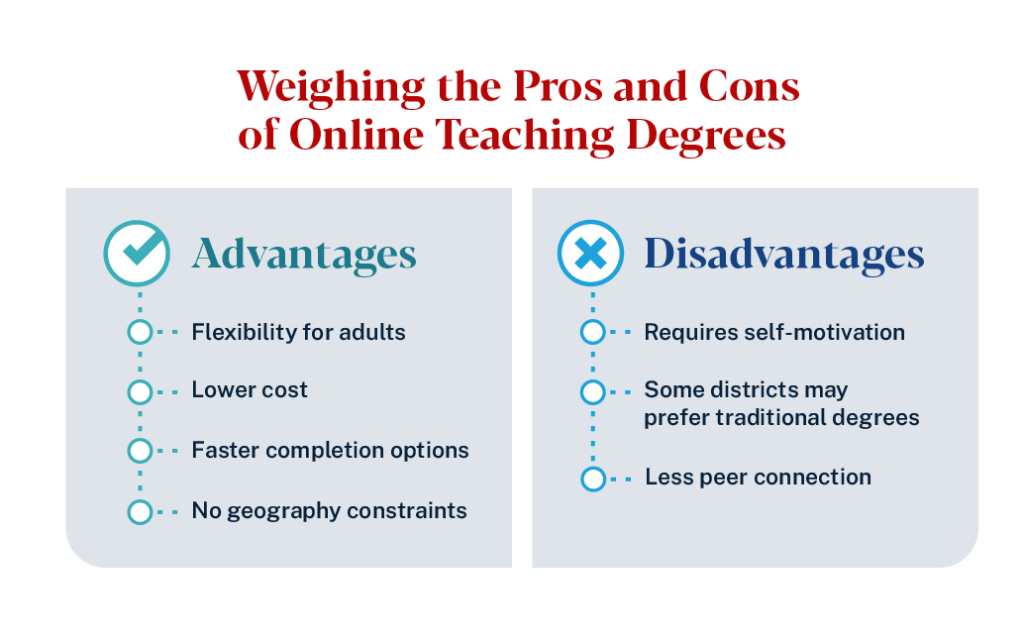
Online teaching degree programs offer several benefits that can make pursuing a degree more accessible and manageable. For many students, these advantages include:
- Flexibility: Online learning allows you to balance coursework with work and personal responsibilities
- Lower costs: Tuition and related expenses are often more affordable compared to traditional programs
- Faster pathways: Accelerated options may allow you to complete your degree program more quickly
- Access to more programs: You are not limited by location and can choose from a wider range of online schools for teacher certification
- Schedule control: Many programs allow you to study or complete assignments when it fits your schedule
Disadvantages of an Online Teaching Degree
While online programs offer flexibility, there are a few factors to consider before choosing this path. Understanding these can help you make an informed decision. Some considerations include:
- In-person requirements: Student teaching and observation hours must still be completed in a classroom setting
- Less face-to-face interaction: Online learning may not offer the same level of in-person connection as traditional programs
- Self-motivation: Staying on track requires strong time management and discipline
- Perception differences: Some employers may prefer traditional degrees, although accredited online programs are widely accepted
Still can’t decide which delivery method best suits your needs? This guide will help you understand the differences between traditional on-campus education and online learning.
Cost of Getting a Teaching Degree Online
The cost of an online teaching degree can vary depending on the institution, program length and level of study. However, many online programs are designed to be more affordable than traditional options. Typical costs may include tuition, technology fees and materials. Financial aid, scholarships and employer assistance programs may also be available to help reduce costs.
FAQs
Can I become a teacher faster online?
In some cases, yes. Accelerated programs and alternative certification pathways can help you complete requirements more quickly, depending on your background.
Is student teaching also online?
No. Student teaching must be completed in person in a real classroom setting, even if your coursework is online.
Can I teach in another state with an online degree?
While many states offer teaching license reciprocity, their requirements can vary. It is important to check with your state’s education department if you plan on teaching somewhere else.
Are online teaching degrees respected?
Yes. Accredited online teaching degrees are widely recognized and designed to meet the same standards as traditional programs.
If you are an aspiring educator who wants to obtain your teaching license, explore the programs from American College of Education that could help you reach your goal, featuring flexible online coursework and student teaching requirements that can be completed locally.