

As you work toward a career as a licensed educator, you’ll come to a point when it’s time to apply what you’ve learned to real classrooms. While education degree programs provide the foundation for teaching, you start building experience with student teaching.
So, what is student teaching? It is a required, hands-on experience in many teacher education programs that allows you to practice instruction in a real classroom before becoming a licensed educator. You work alongside experienced teachers to develop classroom management, lesson planning and instructional skills. It helps future educators apply what they have learned in their teacher preparation programs while working with students at a specific grade level.
For many, the student teaching semester is one of the final steps before meeting teacher licensing criteria, depending on state requirements Understanding how this process works can help you prepare for what comes next. In this guide, you will learn how student teaching works, what responsibilities to expect, the benefits of student teaching and why it is important for your future in education.
Key Takeaways
- Student teaching is a required, hands-on placement in most teacher preparation programs where candidates practice real classroom instruction before earning licensure.
- Candidates are placed in a classroom aligned with their program and paired with a cooperating (mentor) teacher who guides lesson planning, classroom management and feedback.
- The experience typically progresses through three stages: observation, co-teaching/collaborative instruction, and independent teaching practice.
- Common responsibilities include assisting with lesson planning, leading small-group and whole-class instruction, managing behavior, grading and collaborating with the mentor teacher.
- Student teaching is usually a full-time, one-semester commitment and is often required to meet state teacher licensure requirements (which vary by state).
- Success tips include building a strong relationship with the mentor teacher, staying open to feedback, staying organized, and actively engaging with students.
How Student Teaching Works
Student teaching is structured to help teacher candidates gradually transition into the role of a full-time educator. Built into most teacher preparation programs, it involves working under supervision while taking on increasing teaching responsibilities. The goal is to move from observation to active instruction, allowing you to build confidence and practical teaching experience.
Student Teaching Placement
Before stepping into the classroom, you are placed in a school environment that aligns with your program and career goals. This placement is an important part of the student teaching experience and helps shape the skills you will develop.
In most cases, teacher preparation programs partner with local schools to coordinate placements. You are assigned to a classroom at a specific grade level and paired with a cooperating teacher who serves as a mentor throughout the process. Placements may take place in elementary, middle or secondary classrooms depending on your focus.
Some programs, including those at American College of Education (ACE), offer flexible coursework that allows you to complete student teaching requirements in your local area. For those exploring pathways to becoming a teacher, selecting a program that supports flexibility can make this step more accessible.
Typical Teaching Responsibilities During Student Teaching
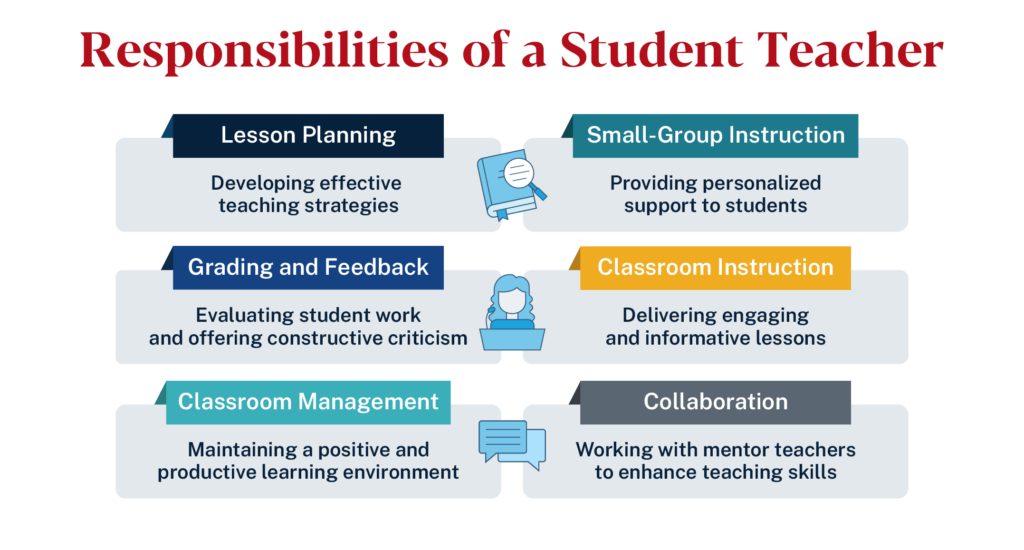
As the student teaching semester progresses, responsibilities expand to reflect growing confidence and skill within real classroom scenarios. You begin to take a more active role in instruction and classroom management. Common responsibilities during student teaching include:
- Assisting with lesson planning and classroom instruction
- Leading lessons and classroom activities over time
- Working directly with students through small-group instruction
- Managing classroom behavior and maintaining a positive learning environment
- Grading assignments and providing feedback
- Collaborating with your mentor teacher on teaching strategies
The Role of a Mentor or Cooperating Teacher
A key part of the student teaching experience is the guidance provided by a mentor teacher, also known as a cooperating teacher. These seasoned educators help you grow professionally and offer professional mentorship relationships that often last far beyond student teaching. Throughout the placement, they provide structure and support that help you refine your skills by:
- Offering guidance on lesson planning and instruction
- Observing teaching skills and providing feedback
- Supporting classroom management development
- Modeling effective instructional approaches
- Encouraging professional growth
Working closely with veteran teachers allows you to learn tricks of the trade while building your own teaching style.
What Happens During the Student Teaching Experience?
Student teaching is designed to build your confidence over time. Rather than expecting you to lead immediately, programs structure it in stages that support gradual growth. As you gain experience working with students, you move from observation to active teaching and eventually to leading instruction independently.
Observation and Classroom Integration
At the beginning of the placement, student teachers focus on observation. This stage helps you understand classroom routines and expectations. You get to see how your mentor teacher manages the classroom, delivers instruction and engages students. This period also allows you to analyze teaching strategies and discuss any questions you have.
Co-Teaching and Instruction
Once the initial observation phase is complete, student teachers begin to participate more actively in classroom instruction. This stage introduces co-teaching and collaborative lesson planning. In most cases, you assist with lessons, lead small-group instruction and begin working directly with students. This hands-on involvement is where you truly begin to explore and discover what your unique approach to instruction might look like.
Independent Teaching Practice
As the placement progresses, student teachers, also referred to as teacher candidates, take on more responsibility for leading the classroom. Independent teaching practice often includes planning and delivering full lessons or units. With continued feedback from the mentor teacher, you’ll fine-tune your teaching strategies and classroom management skills.
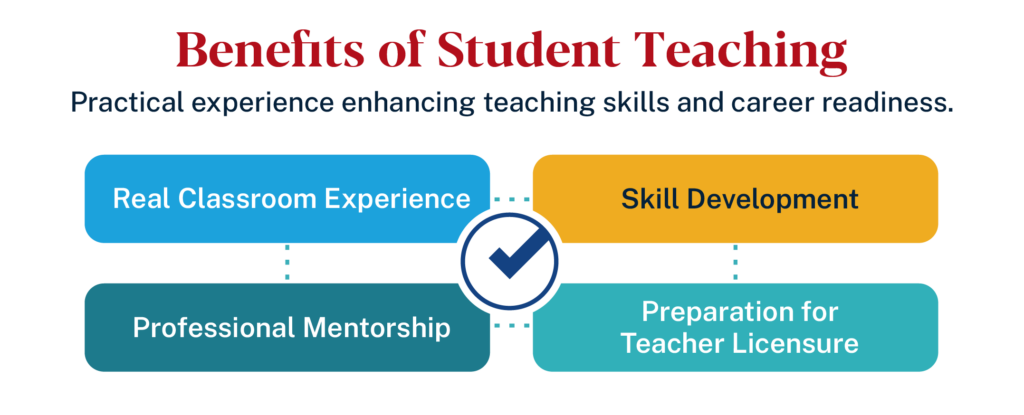
Key Benefits of Student Teaching
Student teaching bridges the gap between coursework and application, allowing you to build confidence and knowledge before leading a classroom of your own.
Real Classroom Experience
Gaining direct experience working with students helps you understand how to manage diverse learning needs and respond to real-time challenges.
Professional Mentorship
Guidance from mentor teachers provides valuable insight into effective teaching practices. You learn from experienced teachers who model successful strategies and offer feedback that supports your growth.
Skill Development
Throughout the student teaching experience, you build a wide range of skills essential to teaching success. What you learn supports both immediate classroom success and long-term professional development. Your new skillset often includes:
- Lesson planning and curriculum implementation
- Classroom management techniques
- Communication with students, parents and school staff
- Assessment and grading practices
Preparation for Teacher Licensure
Student teaching is often required to obtain teacher licensure, as it ensures you are prepared to take on full-time teaching roles after graduation. Choosing a preparation or degree program that aligns with licensure expectations is an important step in the process. Please note that teacher licensure requirements vary by state, and individuals should confirm specific requirements with their state licensing agency.
Why Is Student Teaching Important?
At its core, student teaching ensures that new educators are ready to handle the realities of the classroom. When you have the opportunity to practice and apply your knowledge in real-world settings, it improves teaching quality and student outcomes. It also helps you confirm your preferred grade level and teaching specialization before entering the profession.
After student teaching, you’ll feel better prepared to manage classrooms, engage students and deliver effective instruction. This readiness is essential for long-term success in education.
Tips for Success During Student Teaching
Preparing for student teaching involves more than understanding responsibilities. Ultimately, how you approach the experience and the effort you put into developing your skills can influence your transition into teaching independently. You want to make the most of this time and glean as much information as you can from your mentor teacher.
Build a Strong Relationship With Your Mentor Teacher
Establishing open communication with your mentor teacher is essential. Ask questions, seek guidance and observe how they approach instruction and unpredictable scenarios.
Be Open to Feedback
One of the best ways to improve your teaching is to reflect on your performance and be open to adjusting as needed. Remember that constructive feedback is a valuable part of the learning process. Listening carefully and applying suggestions can help improve more quickly.
Stay Organized and Prepared
Planning ahead is essential to managing the demands of student teaching. Keeping track of lesson plans, assignments and schedules helps create a smoother teaching experience.
Engage With Students
A great teacher is an engaged teacher. As you establish close bonds with your students, you’ll find that building these positive relationships supports a more effective and welcoming learning environment. Prioritize encouraging participation and make a conscious effort to create a classroom space where students feel comfortable and supported.
FAQs About Student Teaching
How long does the student teaching experience last?
The length varies by program, but it typically takes place over one semester as a full-time commitment.
What does a student teacher do in the classroom?
Student teachers assist with lesson planning, lead instruction, manage classroom activities and work directly with students while receiving guidance from a mentor teacher.
Do all teacher education programs require student teaching?
Most teacher education programs include student teaching as a required component because it provides essential hands-on experience.
How does student teaching help with teacher licensure?
Student teaching is often required to meet licensure requirements. It ensures candidates have practical teaching experience before leading a classroom.
What is the role of a cooperating teacher?
A cooperating teacher mentors student teachers by providing guidance, feedback and support throughout the placement.
Your Future Is the Classroom. Let’s Get You There.
Student teaching is much more than a requirement. It is the final step before starting your professional teaching career, and it prepares you to do so with confidence. If you’re an aspiring teacher, the right program, in tandem with an impactful student teaching experience, can help you get ready for a fulfilling and successful education career.
ACE’s affordable programs and flexible courses are designed to support aspiring educators as you move through each stage of your journey. Now is the time to begin building the skills that will shape your future in the classroom.