

Special education teachers play a distinct and deeply impactful role in the education system. They work closely with students with disabilities, helping them develop not only academic knowledge but also essential life skills that build independence and long-term success. Whether supporting students with learning disabilities in inclusive classrooms or leading instruction in more specialized settings, special educators are central to creating equitable learning environments.
Demand for special education professionals is on the rise. School systems across the country are seeking qualified educators who are prepared to meet diverse student needs, making this a meaningful and practical career path for those interested in teaching special education.
Key Takeaways
- Becoming a special education teacher starts with a bachelor’s degree — either in special education or another field followed by an alternative, transition-to-teaching pathway.
- Public school roles require a state-specific teaching license, which typically involves completing an approved prep program, passing exams like Praxis, and a background check.
- A core responsibility is developing and implementing Individualized Education Programs (IEPs) in collaboration with general education teachers, school psychologists and families.
- Hands-on experience through practicums, internships and student teaching is essential, and many candidates gain early exposure as paraprofessionals or teacher aides.
- A master’s or doctoral degree isn’t required to enter the field but can support career advancement into leadership, administration or higher education roles.
- Demand remains strong nationally, with the Bureau of Labor Statistics reporting a 2024 median annual salary of $64,270 for special education teachers.
What Is a Special Education Teacher?
A special education teacher is responsible for supporting students with disabilities across a range of academic, behavioral and developmental needs. In both public school and private settings, these educators adapt instruction to ensure students can access the curriculum in ways that align with their abilities.
A core part of the role involves developing and implementing individualized education programs (IEPs). These plans outline specific learning goals, accommodations and instructional strategies tailored to each student. Special education teachers also collaborate regularly with general education teachers, school psychologists and families to monitor progress and adjust support as needed.
Work environments can vary widely. Some special education teachers work in inclusive classrooms alongside general educators, while others teach in resource rooms, self-contained classrooms or specialized programs. Across all settings, the work centers on advocating for students and creating pathways for meaningful learning.
Educational Requirements
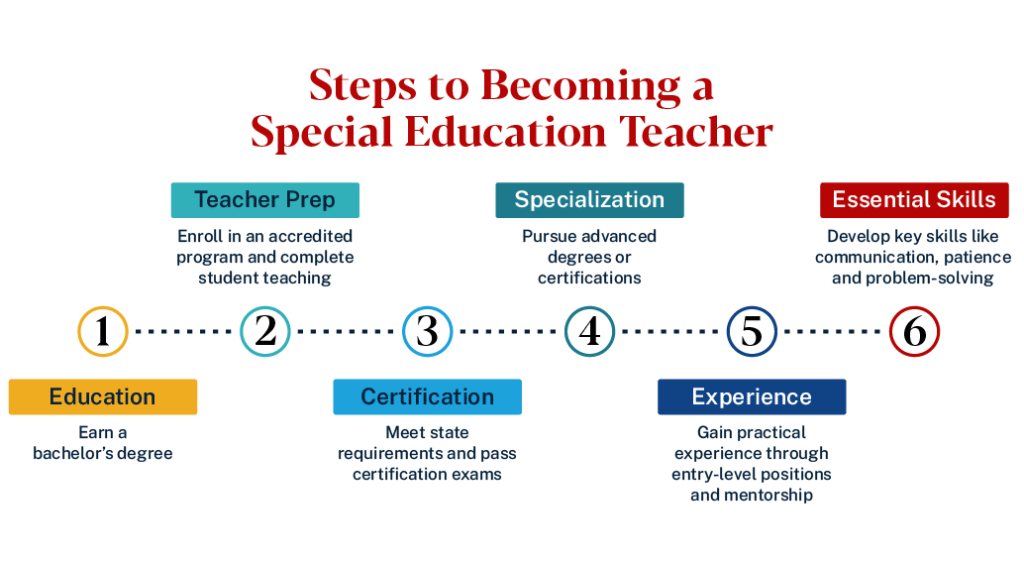
The first step in learning how to be a special ed teacher is earning a bachelor’s degree. Many aspiring educators pursue a special education teacher degree, though individuals with a degree in another field may also pursue licensure through alternative pathways such as a transition-to-teaching program.
These programs typically include coursework in instructional strategies, child development and working with students with disabilities. They also include participation in a special education program that prepares candidates to apply theory in real classroom settings.
Most states require completion of a state-approved teacher preparation program that meets all special education teacher requirements. These programs include supervised fieldwork and student teaching, where candidates gain hands-on experience planning lessons, managing classrooms and supporting diverse learners. In many states, alternative pathways like special education certificate programs can help professionals transition into a special education career.
Certification and Licensing
To work as a special education teacher in a public school, you must obtain a teaching license specific to your state. While requirements vary, most states follow a similar process.
Candidates are typically required to:
- Complete an approved teacher preparation program
- Pass standardized exams, such as Praxis assessments
- Undergo a background check
- Apply for special education teacher certification or licensure
Earning a special education teaching license confirms that you meet the professional standards necessary to support students effectively and safely in a classroom environment.
Some states also require additional endorsements in special education or specific disability areas. Because state requirements differ, it’s important to review guidelines for the state where you plan to teach.
Gaining Practical Experience
Hands-on experience is a critical part of becoming an effective special education teacher. Most preparation programs include clinical experiences such as practicums or internships, along with formal student teaching placements.
These experiences allow aspiring educators to apply instructional strategies, manage classroom dynamics and work directly with students with disabilities. Many individuals also gain early exposure by working as paraprofessionals or teacher aides, which can provide valuable insight into daily classroom operations.
Advanced Credentials & Professional Development
While a bachelor’s degree and initial licensure are required to enter the field, many educators choose to pursue advanced credentials to further their careers. A master’s degree in special education can deepen instructional expertise and open opportunities for leadership roles, while a doctoral degree in special education may support careers in administration, policy or higher education.
Ongoing special education teacher training is also essential. Many states require continuing education to maintain licensure, and professional development helps educators stay current with evolving instructional methods, technologies and legal requirements related to special education.
Essential Skills for Success
Teaching special education requires a combination of technical knowledge and interpersonal skills. Patience is essential, as students may progress at different rates and require individualized approaches. Strong communication skills are needed to support collaboration with families, colleagues and multidisciplinary teams, particularly when discussing IEP goals and progress.
Adaptability is equally important. A special education teacher may need to adjust lesson plans in real time, respond to behavioral challenges or tailor instruction for a range of learning needs within the same classroom. Empathy and a commitment to advocating for students help ensure that each student receives appropriate support and opportunities to succeed.
Career Outlook and Job Prospects
The demand for special education teachers remains steady, driven by the need to support students with disabilities in a variety of educational settings. According to the Bureau of Labor Statistics, as of 2024, special education teachers earn a median annual pay of $64,270, though this figure can vary based on location, experience and school district.*
Special education teachers work in public schools, private institutions and specialized programs, with opportunities to focus on specific age groups or areas of need. As schools continue to emphasize inclusive education and individualized support, the role of the special education teacher remains essential.
FAQs: Becoming a Special Education Teacher
What degree do you need to become a special education teacher?
Special education teachers require at least a bachelor’s degree, which can be in special education or a related field, along with completion of a state-approved teacher preparation program. Individuals with a degree in another field may also pursue licensure through alternative pathways such as a transition-to-teaching program. Most programs include student teaching experiences to help candidates meet special education teacher requirements.
How long does it take to become a special education teacher?
It typically takes about four years to earn a bachelor’s degree, plus additional time for certification depending on your state. Alternative pathways may allow career changers to begin teaching special education while completing licensure.
Can you become a special education teacher without a master’s degree?
Yes. A master’s degree is not required for entry-level roles, though it may support career advancement and specialization. Some states or districts may encourage advanced credentials for long-term growth or leadership opportunities.
Is special education teaching in demand?
Yes. There is consistent demand for qualified special education teachers, particularly in public school systems serving diverse student populations. Ongoing shortages in some regions continue to increase opportunities for licensed special education teachers.
American College of Education (ACE) offers affordable programs with flexible coursework to support your career growth in special education, including a Certificate in Transition to Teaching in Special Education, M.Ed. in Special Education, Ed.S. in Special Education and Ed.D. in Special Education.
*Accessed April 15, 2026.