

Substitute teachers, or sub teachers, play a quiet but essential role in keeping classrooms running when full-time educators are unavailable. Across public schools and districts, they provide continuity, support student learning and help stabilize a school system facing ongoing staffing challenges. It offers a practical entry point for those exploring education or seeking flexible, meaningful work.
Key Takeaways:
- Substitute teachers fill in for classroom teachers on a temporary basis. They help maintain instruction and classroom management when regular teachers are unavailable.
- Requirements vary by state and district. Most substitute teachers need at least a high school diploma or bachelor’s degree, along with background checks or certification.
- Strong communication and adaptability are essential skills. Substitute teachers must quickly adjust to different classrooms, grade levels, and teaching environments.
- Substitute teaching can provide valuable classroom experience. Many aspiring educators use the role to build teaching skills and explore education careers.
- The role offers flexibility and career opportunities. Substitute teaching can lead to networking, professional growth, and full-time education positions.
What Is a Substitute Teacher?
What does a substitute teacher do? A substitute teacher steps in when a regular classroom teacher is absent, ensuring that instruction continues and students remain on track. While the role can vary by school district and grade level, most substitute teacher duties include:
- Following provided lesson plans
- Managing classroom behavior and maintaining structure
- Supporting students across different subject areas
- Communicating with school staff and administrators
Unlike full-time teachers, substitute teachers typically aren’t responsible for long-term planning or grading, nor are they responsible for parent communication. Instead, they focus on maintaining continuity in the classroom.
Why Become a Substitute Teacher?
Substitute teaching appeals to a wide range of professionals, from aspiring educators to career changers. The benefits are both practical and professional:
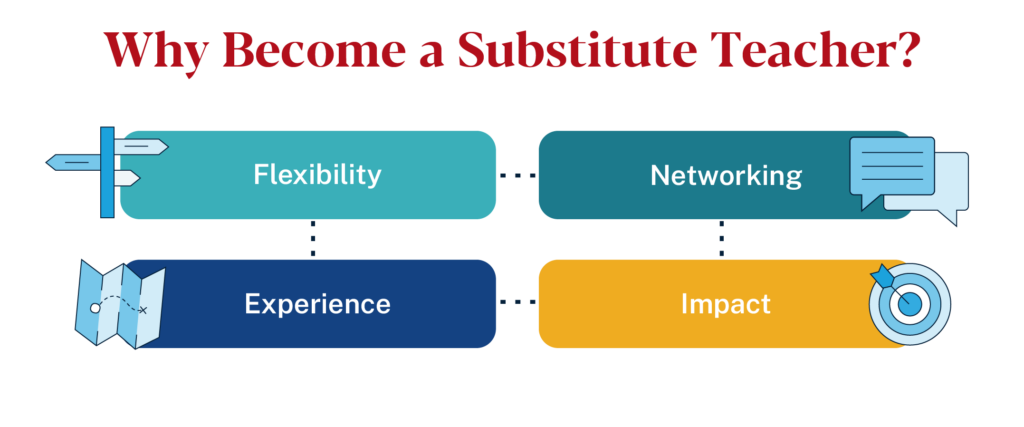
- Flexibility: Many substitute teachers choose when and where they work, making it easier to balance other responsibilities
- Experience: It provides hands-on exposure to classroom management, lesson delivery and different grade levels
- Networking: Working across schools helps build relationships with administrators and support staff
- Impact: Even in short-term roles, substitute teachers contribute to student success and classroom stability
Substitute teaching is often a low-risk way to confirm whether the profession is the right fit before committing to licensure and a full-time role.
How to Become a Substitute Teacher
While requirements vary by state and school district, the overall process follows a clear path.
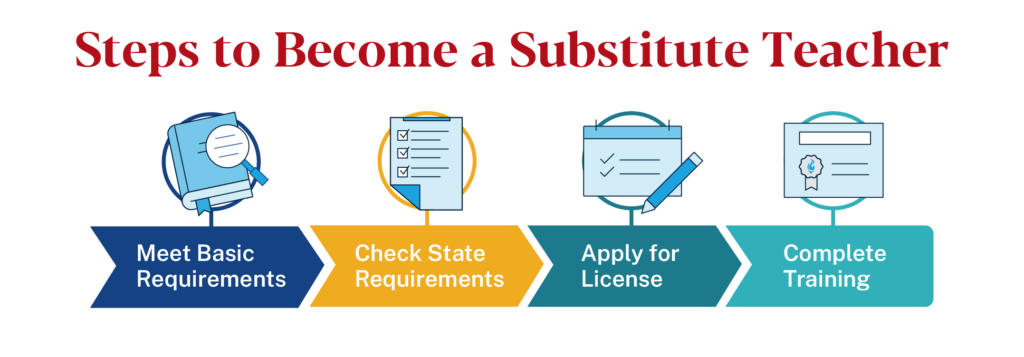
Meet Basic Substitute Teacher Requirements
At a minimum, most districts require:
- A high school diploma or equivalent
- A minimum age (often 18 or 21)
- Legal authorization to work in the United States
So, do you need a degree to be a substitute teacher? Not always. Some districts require a bachelor’s degree, while others allow candidates with a high school diploma, especially in areas experiencing teacher shortages.
Check Your State’s Substitute Teaching Requirements
Substitute teaching requirements are set at the state and district level, which means expectations can differ significantly.
- Some states require a substitute teacher license or permit
- Others allow districts to set their own criteria
- Background checks and fingerprinting are almost always required
For example, states like Florida and Pennsylvania offer distinct pathways, with varying education requirements and application processes. Checking your state’s department of education website is the best place to start.
Apply for a Substitute Teacher License or Permit
Depending on your location, you may need to apply for a substitute teaching credential. This process is also a key part of understanding how to get a substitute teaching job in your local district.
This typically involves:
- Submitting an online application
- Providing transcripts or proof of education
- Completing a background check
Processing timelines can range from a few days to several weeks, depending on the state and time of year. Some school districts also hire directly and guide candidates through the credentialing process.
Complete Training
Many districts require or provide substitute teacher training before you begin. This may include:
- Classroom management strategies
- School policies and procedures
- Mandated reporter training
- Orientation to the school system
For those interested in turning substitute teaching into a long-term career, additional preparation can help you move more efficiently into a full-time teaching role. Programs like the Certificate in Transition to Teaching in Elementary, Secondary or Special Education offered at American College of Education (ACE) include fully online courses and local student teaching, offering a structured path toward becoming a licensed teacher.
How Long Does It Take to Become a Substitute Teacher?
In many cases, you can start substitute teaching in as little as one to eight weeks, though timelines vary by state and district.
The timeline depends on:
- State and district requirements
- Background check processing times
- Whether a license or permit is required
District hiring needs can also affect speed, since some move quickly to fill urgent gaps in staffing.
How Much Do Substitute Teachers Make?
Elementary and secondary school substitute teachers make an hourly mean wage of $21.46, according to a 2023 report published by the U.S. Bureau of Labor Statistics.* Pay often varies based on:
- School district budgets
- Grade level or subject areas (such as special education)
- Long-term substitute assignments, which often offer higher pay
While most roles don’t include full benefits, some districts provide limited access to professional development or consistent placement opportunities.
FAQs
Do you need a degree to be a substitute teacher?
Not always. Requirements vary by state and district, with some accepting a high school diploma and others requiring a bachelor’s degree.
Is substitute teaching hard?
It can be challenging at first, especially with classroom management, but many find it becomes easier with experience and familiarity.
Can substitute teaching lead to a full-time teaching job?
Yes. Many schools use substitute teaching as a pipeline for hiring full-time classroom teachers, especially for those who pursue licensure.
If you’re interested in becoming a substitute teacher, American College of Education (ACE) offers flexible, affordable paths toward a career in education, including certificates, bachelor’s degrees, master’s degrees and more.
*Accessed April 15, 2026.