
Take a moment to think about your favorite teacher. The one who made learning feel as exciting as it is important. Maybe it was someone who helped you understand a difficult subject, encouraged you to speak up in class or supported you during a challenging moment. Teachers play a powerful role in shaping how students see themselves and the world around them.
From early childhood educators to high school instructors, teaching careers offer the opportunity to guide academic growth while also supporting social and emotional development. Whether you are beginning your professional career or considering a new direction, becoming a teacher can be a meaningful and rewarding path.
If you are exploring how to become a teacher, this blog post will walk you through what you need to become a teacher, how long it may take and the different pathways available to prospective teachers.
Key Takeaways:
- Teaching requires a bachelor’s degree and state certification. Most public school teachers must complete both academic and licensing requirements.
- You must complete a teacher preparation program. This includes coursework in education theory plus supervised classroom experience.
- Exams and student teaching are required in most states. Candidates typically pass subject and pedagogy exams and complete hands-on teaching practice.
- Licensing is state-specific. Requirements vary, so aspiring teachers must follow the rules for the state where they plan to work.
- Alternative pathways exist. Some programs allow individuals with non-education degrees to become certified while teaching.
What Do You Need to Become a Teacher?
Are you wondering what you need to become a teacher? The answer can vary depending on where you plan to teach and which grade level interests you. Requirements are typically set by each state’s department of education, which means teacher qualifications are not always identical across the country.
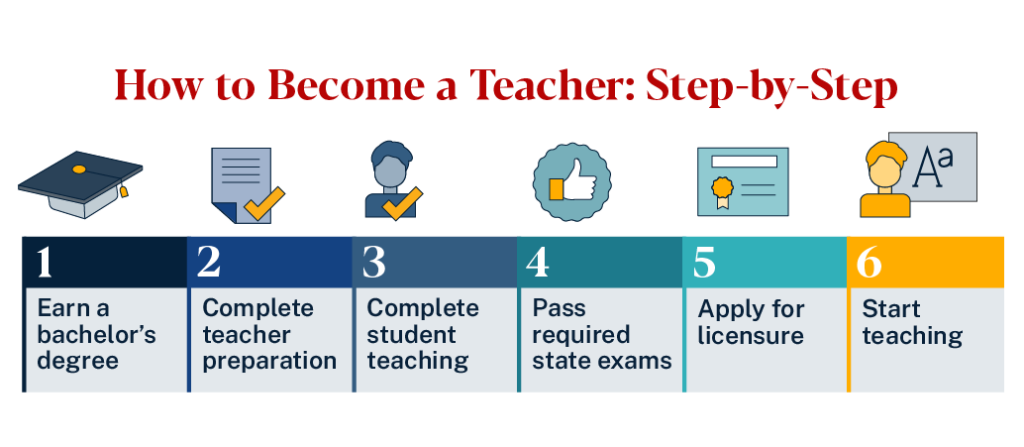
That said, most prospective teachers follow a similar path that includes education, preparation and certification. Understanding these core components can help you feel more confident as you begin exploring your options. Let’s take a closer look at what’s often needed to become a certified teacher:
- A bachelor’s degree: Most public schools require at least a bachelor’s degree in education or a related field.
- Teacher preparation programs: These programs combine coursework with hands-on experience to prepare you for the classroom, often included in teaching degree programs.
- Teaching credentials or licensure: A teaching license is issued by the state and confirms that you meet specific teacher requirements. This process often includes exams and supervised experience.
- Background checks and clearances: Schools can require fingerprinting and background checks to ensure student safety.
- Key soft skills: Strong communication, classroom management and organization are essential for supporting student success and maintaining a productive learning environment.
Education Requirements to Become a Teacher
For many aspiring educators, the first step in the teaching career path is earning a bachelor’s degree. While requirements vary, this is typically the minimum education level needed to teach in public schools.
Choosing the right degree depends on the type of teacher you want to become or where you will teach. Different grade levels and subject areas often call for different academic paths, so it helps to think about where you see yourself making the greatest impact. Here are two common approaches to consider:
- Education-focused degrees: A bachelor’s degree in education helps you become an elementary school teacher or work in early childhood education. These programs focus on instructional strategies, child development and classroom management.
- Subject-specific degrees: If you plan to teach older students, perhaps as a junior high or high school teacher, you may choose to major in specific subjects like math, science or English. This helps you build deep knowledge in the subject matter you will teach.
Teacher Preparation Programs
Once you begin your degree program, teacher preparation programs help you transition from learning theory to practicing it in real classrooms, but it’s not always approached the same way among different institutions.
Built-In Teacher Preparation
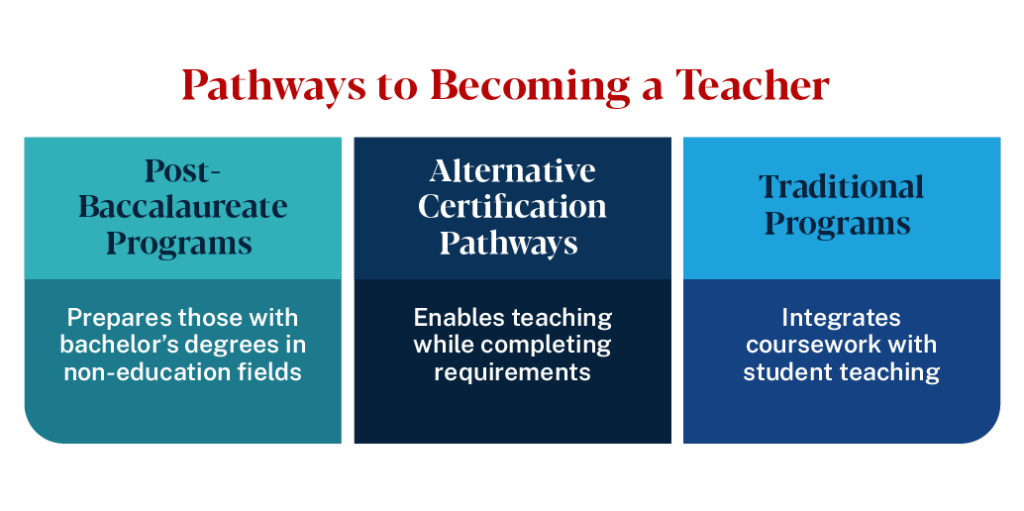
If you don’t have a bachelor’s degree yet, you can complete a traditional program. This means you’ll complete a teacher preparation program as part of a bachelor’s degree in education, often integrating coursework with field experience or potentially leading to eligibility for teacher certification.
Post-Baccalaureate Preparation
If you already have a bachelor’s degree, there are generally two options available to get your certification:
- Post-baccalaureate programs: Usually offered by colleges and universities, these structured programs operate adjacently to other programs. You earn academic credit that can be applied to other degrees, such as a Master of Arts in Teaching.
- Alternative certification programs: Often offered by providers or agencies and commonly presented as training, like a Transition to Teaching Certificate, rather than formal coursework.
Both options may allow you to start teaching immediately and use that experience in lieu of student teaching.
If you’re exploring a potential career shift into teaching, American College of Education (ACE) offers helpful resources to assist you with things to keep in mind and how to transition into teaching.
Real-World Experience and Fieldwork
Student teaching is often one of the most valuable parts of teacher preparation programs. It provides the opportunity to apply what you have learned in a real classroom setting while receiving guidance from an experienced educator. Think of it as a kind of “internship” period in your career. The networking you do here can potentially lead to your very first job offer.
During this phase, you gradually take on more responsibility as you build confidence and develop your teaching style. Many programs structure this experience to move from observation to leading lessons and managing the classroom. Here is what you can typically expect:
- Observation and support: Watching experienced teachers and learning how they structure lessons and interact with students
- Gradual responsibility: Leading activities, teaching lessons and managing classroom routines
- Mentorship: Receiving feedback and guidance from a cooperating teacher throughout the experience
- Professional growth: Refining your approach to classroom management, communication and curriculum development
Alternative certification programs, however, don’t always require student teaching. Most often, students learn on the job and complete coursework while working toward licensure.
Testing and Licensure
To become a certified teacher, most states require candidates to pass specific exams and meet licensure standards. These requirements are set by each state department of education, so the process may differ depending on where you plan to teach.
Understanding the general components and common licensure requirements can help you feel more prepared as you move forward. These include:
- Basic skills exams: These assessments evaluate reading, writing and math skills. The Praxis exam is one example used in many states.
- Subject-area tests: These exams measure your knowledge in specific subjects, such as science, history or language arts.
- State licensure application: After completing your education and exams, you apply for a teaching license through your state. Some states offer teaching license reciprocity, which can make it easier to transfer your credentials if you move.
- Background checks: Fingerprinting and background screenings are required to ensure a safe learning environment for students.
- Additional requirements: Some states require targeted preparation in areas like CPR, substance abuse and suicide prevention, and/or mental health awareness
How Long Does It Take to Become a Teacher?
So, how long does it take to become a teacher? The timeline can vary based on a few factors such as your chosen path, prior education, or whether you’re pursuing this career through full-time or part-time study. With that said, for most prospective teachers, the process generally includes both academic and practical experience. Here are a few timelines to consider:
- Bachelor’s degree: Earning a bachelor’s degree typically takes about four years.
- Teacher certification: Completing certification requirements may take an additional six to twelve months, depending on your program and state requirements
- Alternative pathways: Career changers may follow accelerated programs that allow them to begin teaching while completing certification
Advancing Your Teaching Career: Master’s Degrees & Salary
Once you begin your teaching career, there are several opportunities to grow professionally and expand your impact. While a master’s degree is not always required to enter the field, it can open doors to new roles and responsibilities. As you gain experience, you may consider advancing your career in the following ways:
- Earning a master’s degree: Some states or districts may require teachers to earn an advanced degree after a certain number of years
- Increasing earning potential: Teachers with advanced degrees often earn higher salaries compared to those with only a bachelor’s degree
- Specializing your expertise: Advanced study can prepare you for roles in curriculum development, instructional leadership or administration
Skills and Qualities Needed to Be a Successful Teacher
Teachers must have the personal and professional skills needed to support students in meaningful ways. Strong teachers often demonstrate a combination of the following qualities:
- Classroom management: Creating a structured and respectful environment helps students stay focused and engaged
- Communication skills: Clear communication allows teachers to explain concepts effectively and connect with students, families and colleagues.
- Adaptability: Adjusting teaching approaches based on student needs
- Passion for learning: Staying motivated and continuing to grow throughout your careers
Is teaching the right path for you? Let’s find out.
FAQs
Can you become a teacher without an education degree?
In some cases, yes. Alternative certification routes are available in certain states. These can allow individuals with a bachelor’s degree in another field to enter teaching after completing required training and exams.
Can you become a teacher later in life?
Yes. Many people transition into teaching as a second career. Flexible programs and alternative pathways can support career changers who want to make an impact in education.
Do teachers get paid during student teaching?
Student teaching is typically unpaid, as it is considered part of a teacher preparation program. However, some alternative certification programs may offer paid teaching opportunities while completing requirements.
Teaching offers the opportunity to make a lasting impact on students and communities. With affordable programs and flexible courses designed for working adults, American College of Education can support you as you take the next step toward a meaningful career in education.