
Technology has transformed nearly every aspect of healthcare, from how providers document patient information to how they coordinate care across departments. As technology becomes more integrated into clinical practice, nursing informatics has emerged as a specialty that helps healthcare organizations use these tools to improve patient care.
Nursing informatics combines nursing practice, healthcare technology, information technology, and data management to improve healthcare delivery. Nurse informaticists use healthcare data and digital tools to support patient care, improve clinical decision-making, and strengthen healthcare operations.
The Purpose of Nursing Informatics
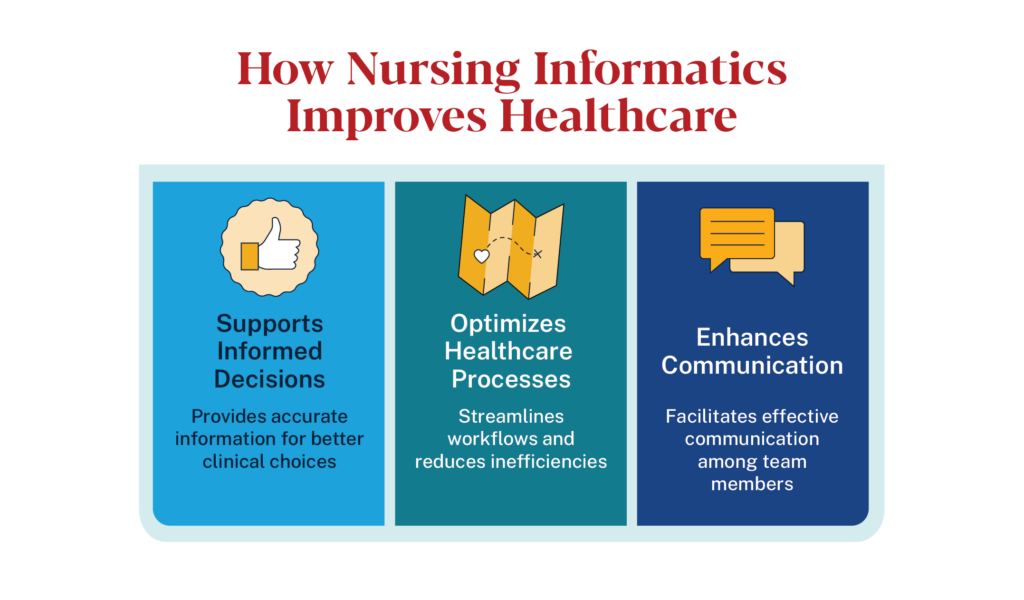
At its core, nursing informatics focuses on improving how healthcare information is collected, shared and used. By combining nursing knowledge with technology, the specialty helps healthcare organizations improve efficiency, strengthen communication and support better outcomes for patients and providers alike.
Specifically, it helps healthcare professionals:
- Improve processes by reducing inefficiencies and administrative burdens
- Support informed clinical decision-making through timely access to accurate health informatics
- Enhance communication across interdisciplinary care teams
- Strengthen data management to support quality improvement efforts
- Optimize technology so it better supports clinical practice and patient care
Why Nursing Informatics Matters
Healthcare organizations generate and rely on vast amounts of data every day. From electronic health records (EHRs) to medication administration systems, healthcare professionals depend on accurate, accessible information to make informed clinical decisions.
Nursing informatics helps ensure that information is easy to access, share and use. By improving flow and reducing duplication, it supports more efficient operations and better coordination across the broader healthcare system.
How Nursing Informatics Supports Patient Care
Nursing informatics helps improve patient care by making it easier for healthcare professionals to use technology effectively. The following examples highlight some of the ways it supports safer, more coordinated care.
Improving Patient Safety
Patient safety is one of the primary goals of nursing informatics. Technology can help reduce documentation errors, standardize clinical processes and give healthcare professionals timely access to the information they need to make informed decisions.
By improving accuracy and consistency, nursing informatics supports safer care, more effective communication and better-informed clinical decision-making.
Supporting Better Clinical Outcomes
Healthcare data has become an essential resource for improving patient outcomes. Nurse informaticists help organizations organize and analyze data to identify trends, evaluate treatments and measure quality improvement efforts.
By making information more accessible and reliable, nursing informatics strengthens care coordination among providers. It also supports evidence-based practice by giving healthcare professionals access to patient information, clinical guidelines and current research when making care decisions.
Enhancing Patient Experiences
Technology improves the patient experience by making healthcare more connected and accessible.
Secured patient portals, streamlined communication systems, and EHRs help providers coordinate care more efficiently while giving patients better access to their information. Together, these tools support continuity of care across providers and healthcare settings, reducing communication gaps throughout a patient’s care journey.
What Does an Informatics Nurse Specialist Do?
An informatics nurse specialist combines clinical experience with technical knowledge to improve how healthcare organizations use technology. They serve as a bridge between clinical teams and information technology, helping ensure digital tools support patient care.
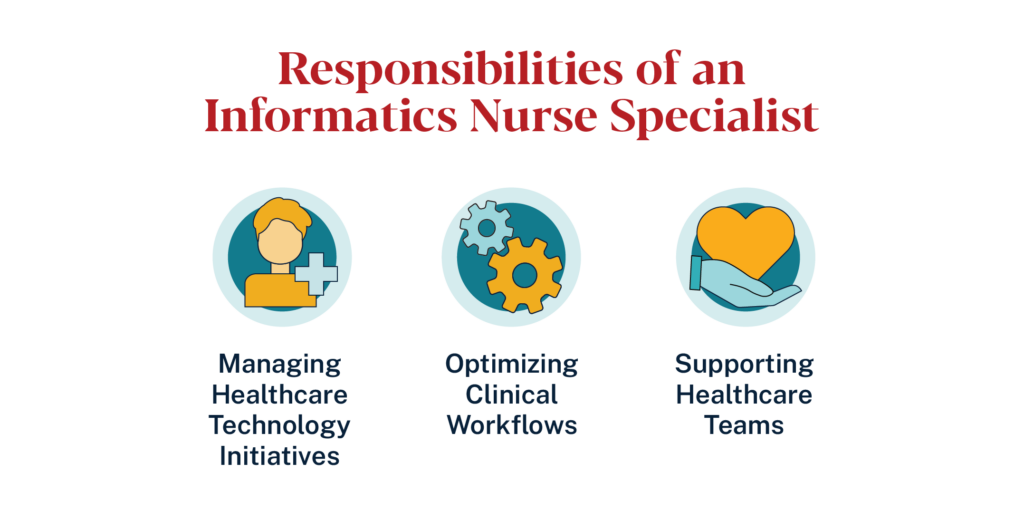
Managing Healthcare Technology Initiatives
Healthcare organizations regularly introduce new technologies to improve patient care and operational efficiency. Informatics nurse specialists help evaluate, implement, and optimize these systems.
Their responsibilities may include:
- Leading EHR implementation
- Evaluating new healthcare software
- Supporting technology adoption among clinical staff
- Identifying opportunities for system improvements
Many informatics nurse specialists also pursue professional certification through the American Nurses Credentialing Center to demonstrate expertise in the specialty. They also often complete either a Master of Science in Nursing (MSN) program or a nursing informatics program.
Optimizing Clinical Workflows
Nurse informaticists help optimize clinical workflows by identifying opportunities to improve how technology supports patient care. By evaluating healthcare processes, they can reduce documentation burdens, improve efficiency and recommend solutions that help healthcare professionals work more effectively.
Supporting Healthcare Teams
Successful technology implementation depends on more than installing new software. Teams also need training and guidance to use new systems effectively.
Informatics nurse specialists help educate healthcare teams, answer questions and collaborate with registered nurses, physicians, clinical informatics teams, information technology professionals and organizational leaders to support effective technology use.
Nursing Informatics and Electronic Health Records
EHRs are central to modern healthcare and play an important role in nursing informatics. They give healthcare professionals access to patient information while supporting communication, care coordination and clinical decision-making.
Improving Documentation Accuracy
Accurate documentation is essential for quality patient care. Nursing informatics helps standardize healthcare records and improve documentation practices, making patient information more consistent and reducing the risk of errors.
Enhancing Information Accessibility
Patient information often needs to be shared across departments, facilities and care teams. Nursing informatics helps ensure authorized healthcare professionals can access timely, accurate information when needed.
Improved accessibility supports better care coordination, particularly for patients receiving treatment from multiple providers or transitioning between care settings.
Supporting Data-Driven Care
Beyond documenting patient encounters, EHR systems generate valuable healthcare data that organizations can use to improve care delivery.
Nurse informaticists analyze this information to identify trends, monitor quality measures and support healthcare quality initiatives. These insights help organizations make more informed decisions and continuously improve patient care.
The Role of Information Technology in Nursing Informatics
From electronic documentation platforms to advanced analytics tools, information technology helps healthcare professionals deliver safer, collaborative care.
Healthcare Software Systems
Healthcare organizations rely on software systems to support clinical practice and patient care. From electronic documentation platforms to clinical decision support tools, these technologies help improve coordination.
Nurse informaticists help evaluate these systems to ensure they meet clinical needs and support efficient workflows.
Data Security and Privacy
Healthcare organizations manage large amounts of sensitive patient information, making data security and privacy essential. Nursing informatics professionals work with information technology teams to help protect patient data and support compliance with privacy regulations.
Protecting patient information safeguards confidentiality while helping maintain trust between patients and healthcare providers.
Emerging Healthcare Technologies
Technology continues to reshape healthcare delivery. Artificial intelligence, predictive analytics and machine learning help healthcare organizations identify patient risks, support clinical decision-making and optimize operations.
As these technologies evolve, nurse informaticists help evaluate and integrate new tools into clinical practice while ensuring they support safe, effective patient care.
Nursing Informatics and Healthcare Leadership
Nursing informatics plays an important role in healthcare leadership. By combining clinical expertise with healthcare data and technology, nurse informaticists help organizations make more informed decisions and improve patient care.
Supporting Strategic Initiatives
Healthcare organizations regularly launch initiatives to improve quality, increase efficiency and expand patient access to care. Nurse informaticists help support these efforts by using technology and healthcare data to inform organizational decisions and drive continuous improvement.
Project Management in Informatics
Implementing new healthcare technology requires careful planning and coordination. Nurse informaticists often support project management by working with clinical staff, technology vendors and organizational leaders throughout implementation.
They may help set project goals, test new systems, gather feedback and support organizational change to encourage successful adoption.
Driving Innovation in Healthcare
As healthcare continues to evolve, nurse informaticists help identify opportunities to improve existing systems and adopt new technologies. By evaluating innovative solutions, they support modernization efforts that improve efficiency and enhance patient care.
Nursing Informatics in the Healthcare System
By improving how healthcare information is collected, managed and shared, nursing informatics helps healthcare organizations operate more effectively and deliver higher-quality care.
Improving Organizational Efficiency
Well-designed information systems streamline communication, improve access to patient information and reduce duplicate work. These improvements help healthcare professionals work more efficiently while reducing administrative burdens.
Supporting Healthcare Quality
Reliable healthcare data supports quality improvement across healthcare organizations. Nurse informaticists help ensure information is accurate and consistent, giving organizations the insights they need to evaluate performance, measure outcomes and identify opportunities for improvement.
Strengthening Interdisciplinary Collaboration
Effective healthcare depends on collaboration among nurses, physicians, pharmacists, administrators and information technology professionals. Nursing informatics helps connect these teams by improving communication and supporting coordinated care across departments.
FAQs
How does nursing informatics differ from healthcare administration?
Healthcare administration focuses on managing healthcare organizations, while nursing informatics focuses on using healthcare data and technology to improve patient care.
Can nursing informatics support population health initiatives?
Yes. Nursing informatics helps healthcare organizations analyze patient data to identify trends, monitor community health and support population health initiatives. These insights can inform prevention strategies, improve resource allocation and guide public health efforts.
What industries outside hospitals employ nurse informaticists?
Opportunities exist with health insurance companies, government agencies, healthcare consulting firms, software developers, academic institutions, and public health organizations. Any organization that manages healthcare data or develops clinical technology may benefit from nursing informatics expertise.
How does nursing informatics contribute to healthcare research?
Nursing informatics supports research by improving the collection, organization, and analysis of healthcare data. Researchers can use this information to evaluate treatment outcomes, identify healthcare trends, and develop evidence-based recommendations that improve patient care.
What challenges do organizations face when implementing informatics systems?
Common challenges include resistance to change, training needs, integrating new systems, protecting patient data, and the cost of implementing new technology.
How has nursing informatics evolved over the past decade?
Over the past decade, nursing informatics has evolved alongside advances in EHRs, AI and predictive analytics. Today, it plays a larger role in helping healthcare organizations improve patient care through technology and data.
American College of Education (ACE) offers affordable nursing programs with flexible courses designed to fit in a busy nurse’s schedule. Explore opportunities to deepen your knowledge and advance your career.