

Medical billing and coding are essential administrative functions that support the financial and operational side of healthcare. Together, they help healthcare organizations document patient care, process insurance claims and receive reimbursement for the services they provide.
Although medical billing and coding are closely connected, they serve different purposes. Understanding how each role contributes to healthcare operations can help you better understand how providers maintain accurate records, manage reimbursement and keep the healthcare system running efficiently.
What Is Medical Coding?
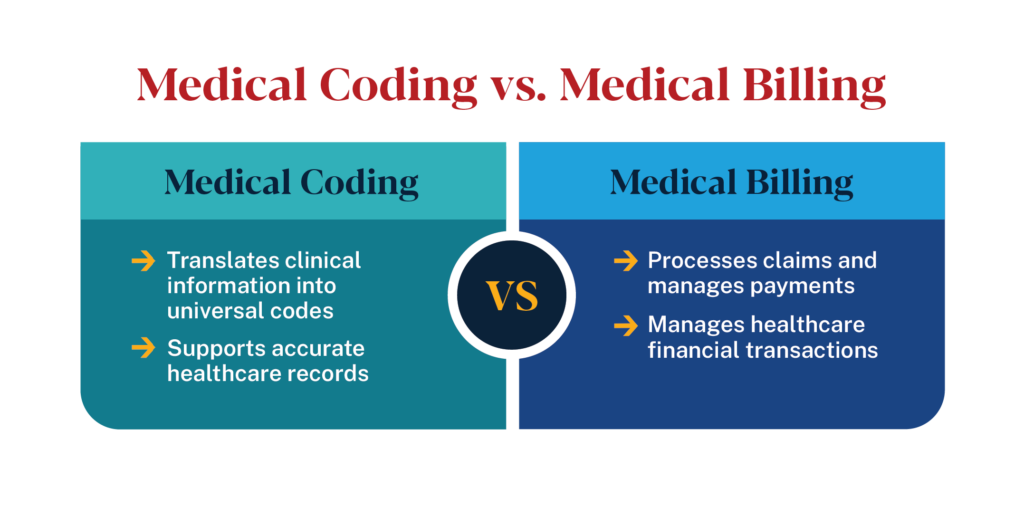
Medical coding is the process of translating diagnoses, procedures and treatments into standardized medical codes. After a patient receives care, medical coders review clinical documentation to accurately assign codes that represent the services provided.
These codes help create consistent healthcare records and allow providers, insurance companies and other healthcare organizations to communicate using a common language.
What Is Medical Billing?
Medical billing is the process of using medical codes to prepare and submit insurance claims for reimbursement. Medical billers help healthcare organizations receive payment by submitting claims, tracking their status, and communicating with insurance providers and patients when needed.
Accurate medical billing helps support timely reimbursement and keeps the financial side of healthcare operations running smoothly.
How Medical Billing and Coding Work Together
Medical billing and coding are separate functions that work together to support accurate documentation and healthcare reimbursement.
From Patient Visit to Claim Submission
The process begins when a healthcare provider documents a patient’s visit. A medical coder reviews documentation and assigns standardized medical codes for diagnoses and procedures performed. A medical biller then uses those codes to prepare and submit insurance claims for reimbursement.
Supporting Revenue Cycle Processes
Accurate billing and coding support every stage of the healthcare revenue cycle. Proper documentation helps reduce claim errors, minimize payment delays, and support timely reimbursement.
What Does a Medical Coder Do?
Medical coders review healthcare documentation and assign standardized medical codes that support accurate records, billing, and reimbursement.
Reviewing Clinical Documentation
Reviewing physician notes, laboratory results, diagnostic reports and other clinical documentation allows coders to identify diagnoses, procedures and treatments. They also verify that the documentation supports accurate coding decisions.
Assigning Standardized Medical Codes
After reviewing the documentation, coders assign standardized medical codes that accurately represent diagnoses, procedures and treatments. These codes provide a consistent way to document healthcare services across the healthcare industry.
Maintaining Coding Accuracy
To maintain accuracy, coders follow established coding guidelines and stay current with industry updates. Doing so helps reduce errors and support compliance.
What Does a Medical Biller Do?
Medical billers use medical codes to prepare insurance claims and support the healthcare reimbursement process.
Preparing Insurance Claims
Before a claim is submitted, coded documentation is reviewed to help ensure it is complete and accurate. Careful review can help reduce claim errors and processing delays.
Managing Reimbursement Processes
After claims are submitted, medical billers track their status, follow up with insurance providers, and help resolve issues that delay reimbursement.
Communicating With Patients and Payers
Throughout the billing process, medical billers answer patient questions, communicate with insurance providers and help resolve reimbursement issues.
Difference Between Medical Billing and Coding
Although medical billing and coding work closely together, they serve different purposes within the healthcare reimbursement process.
Medical Coding Focuses on Documentation
Diagnoses, procedures and treatments are translated into standardized medical codes that create consistent healthcare documentation. This documentation provides the foundation for billing and other administrative processes.
Medical Billing Focuses on Reimbursement
Those standardized codes are then used to prepare insurance claims and request reimbursement for healthcare services. Throughout the process, medical billers help monitor claims and address issues that may delay payment.
Why Both Roles Are Essential
Although each role has different responsibilities, both are necessary for an efficient healthcare reimbursement process. Working together helps healthcare organizations maintain accurate documentation and receive timely payment for the care they provide.
Why Medical Billing and Coding Matter in Healthcare
Medical billing and coding support many of the processes that keep healthcare organizations running efficiently. Beyond reimbursement, they help maintain accurate records, streamline administrative tasks, and support quality patient care.
Supporting Accurate Healthcare Records
Consistent coding helps create accurate healthcare records that providers can use to document and coordinate patient care. Reliable documentation also helps ensure patient information is clear and consistent across healthcare settings.
Facilitating Insurance Reimbursement
Insurance companies rely on accurate documentation and coding to process claims and determine reimbursement. Proper billing and coding help healthcare providers receive payment for covered services.
Improving Healthcare Operations
Efficient billing and coding processes help reduce administrative delays, improve documentation accuracy, and support the day-to-day operations of healthcare organizations.
Standardized Medical Codes Explained
Standardized medical codes create a universal language to document diagnoses, procedures, and treatments across the healthcare field. They help organizations communicate, process claims, and maintain accurate records.
Promoting Consistency Across Healthcare
By using a common set of codes, healthcare providers, insurance companies, and other organizations can document and share healthcare information more consistently.
Improving Data Collection and Reporting
Consistent coding makes it easier to collect, organize, and report healthcare data. This information supports healthcare analytics, reporting requirements, and public health initiatives.
Enhancing Compliance Efforts
To support compliance, healthcare organizations follow standardized coding guidelines that align with industry standards, payer requirements, and other regulatory obligations.
Technology in Medical Billing and Coding
Technology helps healthcare organizations improve efficiency, support accurate documentation and streamline reimbursement processes.
Electronic Health Records
Electronic health records (EHRs) give billing and coding professionals access to patient documentation in one place, making it easier to review records and support accurate coding.
Billing Software and Claims Management Systems
Billing software and claims management systems help automate claim preparation, submission and payment tracking, improving efficiency throughout the reimbursement process.
Data Accuracy and Security
Protecting sensitive patient information is an important part of medical billing and coding. Secure technology systems help keep healthcare data accurate, accessible, and protected.
Medical Billing and Coding in Today’s Healthcare Industry
As the healthcare industry continues to evolve, medical billing and coding remain essential to accurate documentation, efficient reimbursement, and day-to-day healthcare operations.
Growing Healthcare Documentation Needs
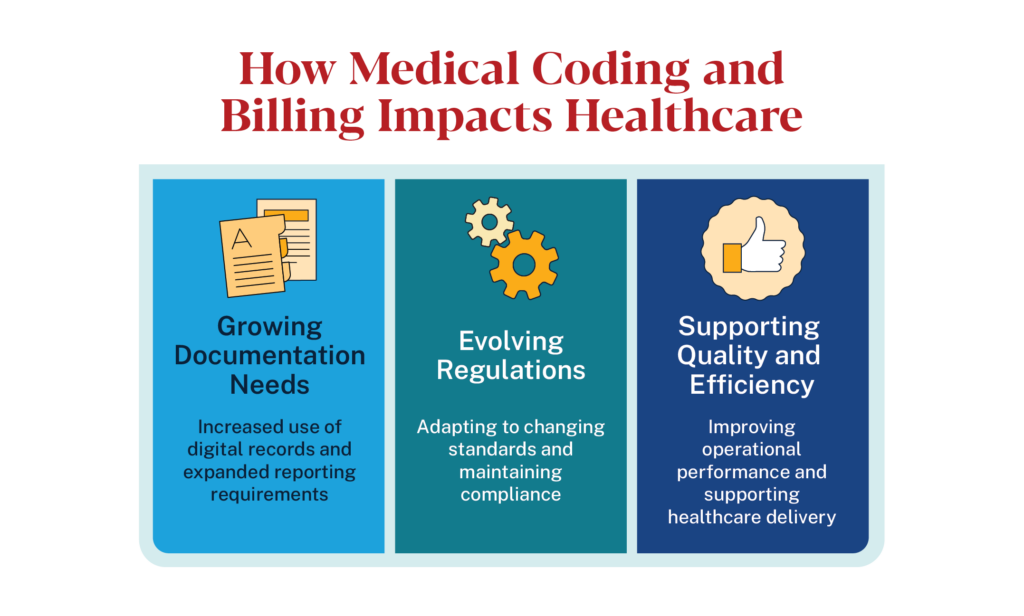
The growing use of EHRs and expanded reporting requirements has increased the need for accurate healthcare documentation. Billing and coding professionals help ensure patient information is complete and consistent.
Evolving Healthcare Regulations
Keeping up with changing coding guidelines and healthcare regulations is an important part of the job. Staying current helps billing and coding professionals support compliance and accurate reimbursement.
Supporting Healthcare Quality and Efficiency
Beyond reimbursement, accurate billing and coding help healthcare organizations improve documentation, streamline administrative processes, and support the delivery of quality patient care.
Common Misconceptions About Medical Billing and Coding
Even though they serve important roles in healthcare, medical billing and coding are often misunderstood.
Billing and Coding Are Not the Same Job
Despite working closely together, medical billing and coding have different responsibilities. Coders translate diagnoses, procedures, and treatments into standardized medical codes, while billers use those codes to prepare insurance claims and manage reimbursement.
The Work Involves More Than Data Entry
Medical billing and coding involve much more than entering data into a computer. The work requires attention to detail, analytical thinking, and an understanding of healthcare documentation, medical terminology, and coding guidelines.
Coding Impacts More Than Reimbursement
Accurate coding supports more than insurance reimbursement. It also contributes to public health reporting, healthcare research, and quality improvement by helping ensure healthcare data is consistent and reliable.
FAQs
Can medical billing and coding be performed remotely?
Yes. Because much of the work is completed using EHRs and billing software, many online medical billing and coding positions can be performed remotely or in hybrid work environments.
What industries outside hospitals employ billing and coding professionals?
Billing and coding professionals work in a variety of healthcare settings, including physician offices, outpatient clinics, specialty practices, rehabilitation centers, long-term care facilities, insurance companies, and government agencies. Some also work for organizations that provide outsourced billing and coding services.
How does medical billing and coding support public health reporting?
Standardized medical codes help healthcare organizations collect and report consistent health data. Public health agencies can use this information to monitor disease trends, identify emerging health issues and support public health planning.
What challenges can arise from inaccurate coding?
Coding errors can lead to claim denials, delayed reimbursement, compliance issues and inaccurate patient records. They can also affect healthcare reporting, making coding accuracy an important part of the billing and coding process.
How often do medical coding guidelines change?
Medical coding guidelines are updated regularly to reflect changes in healthcare, medical procedures and reporting requirements. Billing and coding professionals stay up to date so they can apply the latest coding standards accurately.
How do billing and coding professionals work with healthcare providers?
Billing and coding professionals work closely with physicians, nurses and other healthcare providers to clarify documentation, answer coding questions and help ensure medical records accurately reflect the care patients receive.
American College of Education (ACE) offers affordable, fully online healthcare programs that equip professionals with the advanced skills to lead and influence change.