

What is quality improvement in healthcare? At its simplest, it’s a structured, ongoing approach to enhancing how care is delivered through safer practices and stronger system performance. Rather than relying on one-time fixes, quality improvement in healthcare emphasizes continuous evaluation and refinement to ensure patients receive the best care.
In modern healthcare organizations, this means aligning processes, data, and decision-making around quality patient care and safety. Teams work to identify gaps, reduce errors, and increase efficiency across the healthcare system. These efforts are integrated into daily workflows and long-term planning.
As expectations for care continue to evolve, quality improvement plays a central role in enhancing the patient experience and supporting meaningful clinical outcomes. Understanding how these initiatives work, from core components to real-world applications, offers a clearer view of how healthcare organizations can continuously progress.
Why Quality Improvement Matters in Healthcare
Quality improvement efforts are directly tied to patient outcomes and more reliable care delivery. In a system where even small breakdowns can affect safety, structured strategies help healthcare organizations reduce risk and improve consistency.
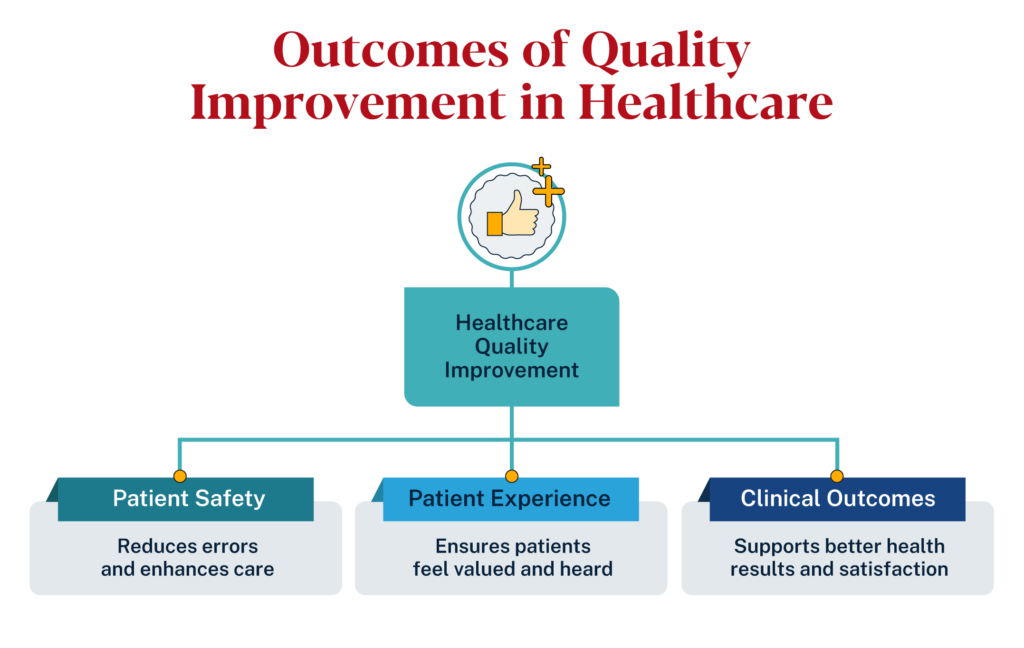
One of the most immediate impacts is on patient safety. By identifying patterns and addressing root causes, organizations can reduce preventable issues such as medication errors and delays in care. These efforts not only protect patients but also build trust in the healthcare system.
Beyond safety, optimizing care processes enhances the overall patient experience. Shorter wait times, clearer communication, and more coordinated care contribute to better satisfaction and stronger engagement. At the same time, these efforts support stronger clinical outcomes, helping providers deliver more effective treatment.
Key Components of Quality Improvement in Healthcare
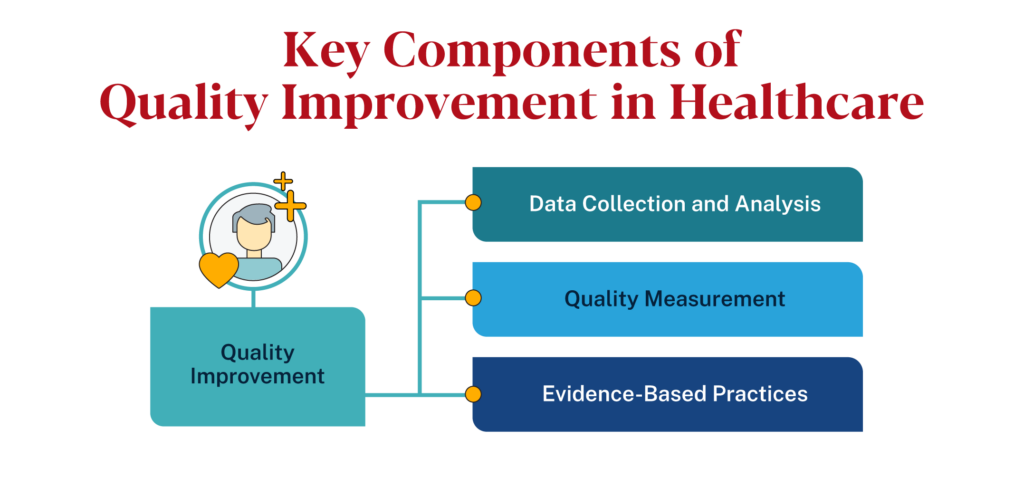
Effective quality management in healthcare relies on a set of core components that guide how organizations evaluate, measure and enhance performance. These elements provide the structure needed to move from observation to action.
Data Collection and Analysis
Quality improvement begins with collecting and analyzing reliable data. Healthcare teams use data collection methods to track performance, identify trends and uncover areas where care can be improved. Without accurate data, it becomes difficult to measure progress, evaluate outcomes or determine whether changes are effective.
Quality Measurement
Once data is gathered, quality measurement helps organizations assess how well they are meeting established standards. Metrics and benchmarks, like readmission rates or patient satisfaction scores, offer a clear way to evaluate the quality of care and identify growth opportunities.
Evidence-Based Practices
Improvement strategies are most effective when grounded in evidence-based approaches. By using research, data, clinical guidelines and proven methods, healthcare professionals can make informed decisions that lead to more reliable outcomes and stronger quality across care settings.
Common Quality Improvement Methods in Healthcare
To translate insights into action, healthcare organizations rely on structured methods that support meaningful, positive results.
Plan-Do-Study-Act (PDSA) Cycle
The Plan-Do-Study-Act cycle is a widely used framework for testing and implementing change. Teams plan an intervention, apply it on a small scale, study the results and refine the approach before broader adoption. This iterative process allows organizations to improve gradually while minimizing risk.
Root Cause Analysis
Root cause analysis focuses on identifying the underlying factors behind a problem rather than addressing symptoms alone. By examining why issues occur, like breakdowns that lead to medication errors, healthcare teams can implement solutions that prevent recurrence and support safer care.
Lean and Process Improvement
Lean principles emphasize efficiency by reducing waste and optimizing workflows. In healthcare settings, this might involve streamlining patient intake processes or strengthening communication between departments. These efforts contribute to more efficient operations and stronger quality patient care.
Examples of Quality Improvement in Healthcare
Across the healthcare system, organizations apply quality improvement strategies in practical ways to enhance care and outcomes.
Improving Patient Safety
Hospitals and clinics often focus on reducing medication errors by implementing standardized procedures, electronic prescribing systems and double-check protocols. These measures help minimize risk and protect patients at every stage of care.
Enhancing Patient Experiences
Building clear communication pathways is a key priority in many quality improvement efforts. Clearer instructions, better coordination between providers and more transparent processes help patients feel informed and supported. Streamlining workflows can also reduce wait times, leading to a more positive patient experience.
Improving Clinical Outcomes
Healthcare teams use data to refine treatment approaches and improve effectiveness. By analyzing experiences and applying evidence-based practices, providers can make better decisions that lead to stronger clinical outcomes and more consistent results across patient populations.
Challenges in Healthcare Quality Improvement
While the benefits are clear, implementing quality improvement strategies comes with challenges that healthcare organizations must address thoughtfully.
Data and Resource Limitations
Collecting and analyzing data requires both technology and skilled personnel. Some organizations face limitations in their ability to gather accurate data or dedicate resources to improvement initiatives, which can slow progress.
Resistance to Change
Adopting new processes can be difficult, particularly in complex healthcare environments. Staff may be hesitant to change established workflows, making leadership, communication and training essential for successful implementation.
Maintaining Continuous Improvement
Sustaining improvement over time requires ongoing commitment. Organizations must regularly monitor results, adjust strategies and reinforce a culture of continuous growth to ensure long-term success.
FAQs
How do healthcare organizations measure success in quality improvement?
Success is typically measured using performance metrics such as patient outcomes, readmission rates and patient experiences. These indicators help organizations evaluate whether their efforts are leading to meaningful change.
What role do healthcare professionals play in quality improvement efforts?
Healthcare professionals are central to quality improvement. They help identify issues, implement new practices and monitor results, ensuring that efforts are practical and aligned with patient needs.
How does quality improvement impact healthcare costs?
By reducing inefficiencies, preventing errors and strengthening outcomes, quality improvement can lower overall healthcare costs. Fewer complications and readmissions translate into more efficient use of resources.
What is the difference between quality assurance and quality improvement?
Quality assurance focuses on maintaining established standards, while quality improvement emphasizes ongoing efforts to enhance performance. The two approaches often work together but serve different purposes.
How can small healthcare facilities implement quality improvement strategies?
Smaller facilities can start with targeted initiatives, such as strengthening communication or tracking a few key metrics. Even limited efforts can lead to meaningful gains when applied consistently.
What skills are important for working in healthcare quality management?
Key skills include data analysis, problem-solving, communication and familiarity with quality measurement tools. Professionals in this field must be able to interpret data and apply insights to advance care.
American College of Education (ACE) offers affordable healthcare programs designed for working professionals that equip you to make a difference in patient care.