

Time management is one of the most important professional skills needed for teachers, because it directly affects instructional quality, productivity and work-life balance. Many educators associate time management with schedules and endless to-do lists, consuming valuable time without improving productivity.
Effective time management for teachers is key to balancing lesson planning, classroom instruction, grading, meetings, communication with families and personal responsibilities without sacrificing the quality of their teaching.
Why Time Management Is Important for Teachers
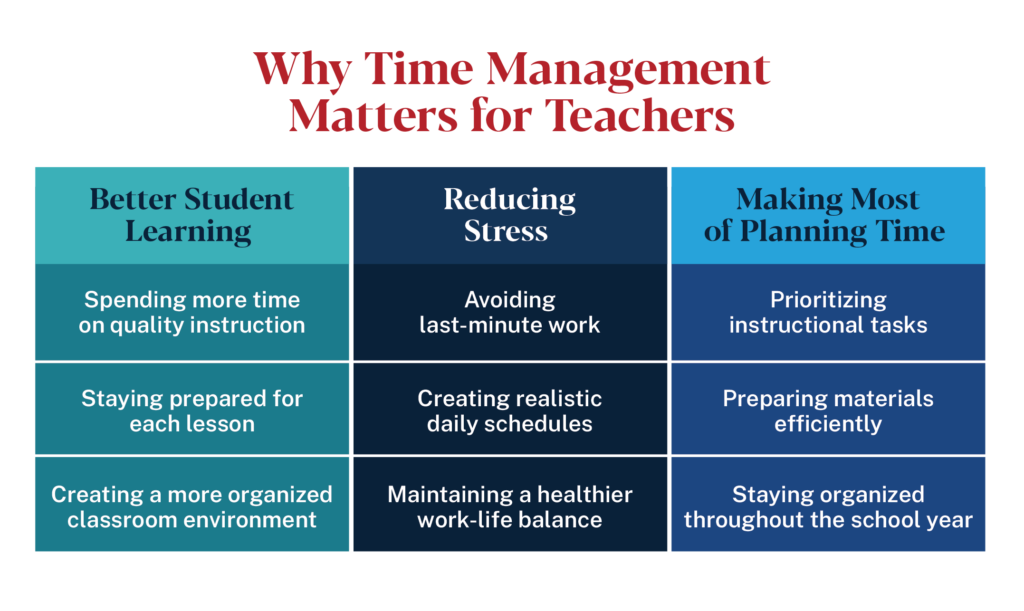
Teachers rely on their time management skills, knowing that every lesson builds on the previous one. When instructional objectives are not completed, the learning gap often carries into the next class, disrupting future lessons and reducing instructional continuity.
Time management strategies empower teachers to complete lesson objectives within the allotted class period, allowing time for student questions. A simple strategy is to write the learning objectives on the board at the beginning of class and revisit them before the lesson ends. This reinforces learning, promotes accountability and confirms that students are ready to move forward.
Supporting Better Student Learning
Effective time management allows teachers to achieve learning objectives within the scheduled class period, giving students time to process new concepts. A practical strategy is to end direct instruction five minutes before class ends to recap the learning objectives, answer questions and determine if students are ready for tomorrow’s lesson. Consistently meeting instructional goals strengthens a teacher’s credibility by modeling accountability.
Reducing Stress and Burnout
Stress often results from unfinished work and last-minute preparation. Effective time management helps teachers anticipate schedule changes, such as covering a colleague’s class or adjusting a lesson. Quick shifts like planning ahead can prepare students for upcoming instruction while reusing effective lessons and classroom resources can further reduce preparation time and support a healthier work-life balance.
Making the Most of Planning Time
Planning time should focus on lesson preparation, assessments and reviewing student progress. During instruction, limiting teacher talk to essential concepts allows more time for guided and independent practice, where students learn by doing. Organizing teaching materials by unit or topic also saves time throughout the school year.
Daily and Weekly Task Organization Tips
The time management skills needed for teachers start with prioritization. A practical approach is to categorize responsibilities by urgency: student learning first, administrative deadlines second and routine tasks third. Prioritizing responsibilities in this way improves productivity and ensures instructional tasks receive the attention they deserve.
Focus on High-Impact Activities
Complete lesson planning, assessment preparation and communication with students and families before lower-priority administrative tasks. Whenever possible, prepare lesson plans and assessments together to reduce duplicate work and improve instructional alignment.
Separate Urgent From Important Tasks
Teachers often face multiple urgent requests at once. A practical guideline is to ask, “What happens if this task waits one hour or one day?” If delaying affects student safety, learning or a deadline, complete it first. Otherwise, schedule it for later and remain focused on current priorities.
Build Flexibility Into Your Schedule
Build flexibility into each lesson by identifying the essential learning objective and one or two optional activities. Certain activities can be postponed if students need more practice or used afterward if the lesson finishes early, allowing you to adjust instruction without disrupting the curriculum.
Efficient Lesson Planning Routines
Efficient lesson planning relies on systems rather than starting from scratch each time. Creating a lesson plan template, maintaining a collection of evergreen activities and following a consistent planning routine reduce preparation time while keeping instruction focused on student learning.
Batch Lesson Planning
Planning multiple lessons at once improves efficiency and instructional continuity. Batch planning also includes developing reusable scenario-based activities, assessments and classroom resources that can be adapted across lessons.
Organize Teaching Materials
Storing digital and printed teaching materials by unit or topic allows quick access during class. Ensuring instructional files are compatible with classroom software and keeping printed copies of essential handouts available is essential in case technology or internet access fails.
Plan Assessments Alongside Lessons
Embed self-assessments every few lessons to help students monitor their progress and identify learning gaps. When appropriate, use technology to provide immediate feedback through quizzes or assessments, allowing you to monitor understanding while reducing grading time.
How To Manage Grading More Efficiently
Grading is more than assigning scores; it measures student learning, identifies misconceptions and provides timely feedback. An efficient grading system helps you accomplish these goals while ensuring fairness, consistency and manageable workloads.
Establish a Grading Schedule
Setting aside specific times each week for grading instead of waiting until assignments accumulate helps prevent backlogs. Dividing large grading tasks into smaller sessions makes grading more manageable.
Use Rubrics and Templates
Rubrics establish clear expectations before students begin an assignment and promote consistent grading across classes. Frequently used comments or feedback templates also reduce repetitive writing while ensuring every student receives fair, consistent and transparent evaluations.
Provide Efficient Feedback
Focusing feedback on one or two specific improvements instead of every mistake saves time and makes feedback more meaningful. Allowing students to ask questions when returning graded work improves understanding. Use tools like Microsoft Forms or Google Forms for quizzes to provide immediate feedback while reducing grading time.
Time Management Tools for Teachers
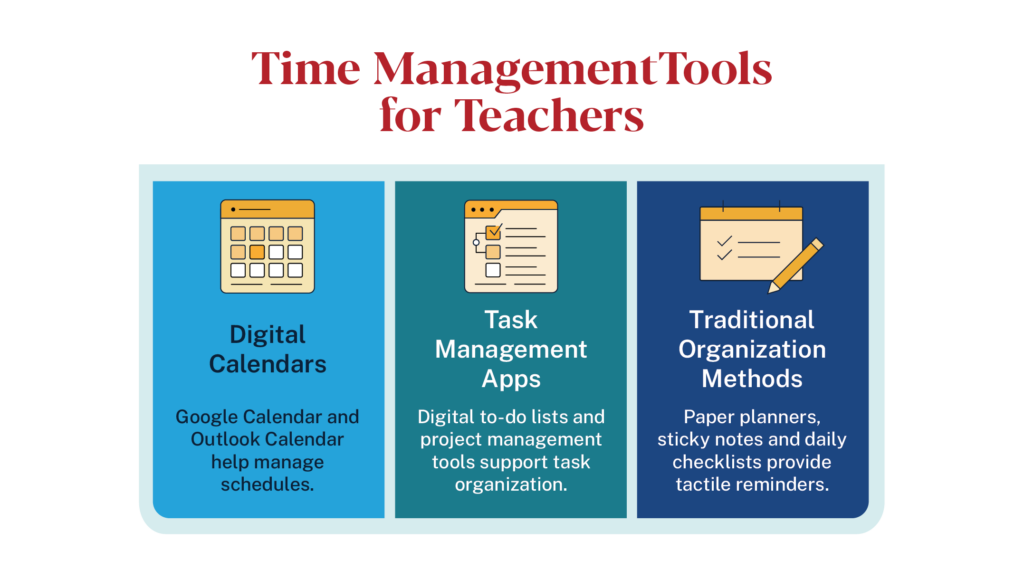
Whether teachers use digital applications or traditional organizational tools, the objective is the same: simplifying daily responsibilities, staying organized and making more time for teaching.
Digital Calendars
Digital calendars such as Google Calendar and Outlook Calendar combine scheduling, reminders, recurring events, color-coding and notifications in one place. You can also lean on Microsoft Bookings to add self-service appointment scheduling for parent conferences and one-on-one student meetings. Regardless of the tool you use, calendar blocking reserves time for emergencies without disrupting planned instruction.
Task Management Apps
Microsoft Planner, Microsoft To Do and other task management apps help teachers organize assignments, grading, committee work and project-based learning. Keeping tasks in one location simplifies tracking deadlines, student submissions and long-term projects.
Traditional Organization Methods
If you prefer to have your calendar on paper, traditional planners provide a quick overview of daily priorities, sticky notes capture reminders and daily checklists help ensure routine tasks are completed. The best system is the one you will use consistently.
Time Management Strategies for Teachers Outside the Classroom
Protecting personal time requires intentional planning. Scheduling exercise, family activities, hobbies or social events makes it less likely that work will consume evenings and weekends.
Establish Healthy Work Boundaries
Setting a consistent time to end the workday helps establish healthy boundaries between work and personal life. Including business hours in an email signature also sets clear expectations about availability and enforces them externally.
Schedule Professional Development
Scheduling conferences, workshops, webinars and certification activities during less demanding periods of the school year makes professional development easier to manage. Establishing realistic learning goals supports long-term career growth without interfering with teaching responsibilities.
Maintain Work-Life Balance
Scheduling time for family, hobbies, exercise and rest on your daily calendar helps protect your personal time. Taking regular breaks from work improves focus, reduces stress and helps you return to the classroom with renewed energy.
Time Management Tips for New Teachers
New teachers often spend more time preparing lessons, managing classrooms and learning school procedures than experienced teachers, especially while they’re establishing their workflow and rhythms. Developing effective time management strategies during the first year of teaching is essential to long-term professional success.
Develop Daily Routines
Developing a consistent daily routine includes arriving a few minutes early to review the day’s learning objectives and preparing instructional materials. Beginning each day with the same routine reduces last-minute decisions and helps you start class prepared.
Learn to Delegate When Appropriate
Delegating appropriate responsibilities begins with asking for help when it is available. Using shared lesson plans, instructional resources and mentoring opportunities reduces preparation time and helps new teachers learn established classroom practices.
Reflect and Adjust Regularly
Reflecting at the end of each school day by writing down three accomplishments and three goals for tomorrow helps teachers recognize progress, identify priorities and begin the next day with a clear plan.
How ACE’s Online Education Programs Help Teachers Manage Their Time
Professional growth is essential to a successful teaching career. American College of Education (ACE) offers affordable, career-centered degree programs with fully online courses and local hands-on requirements, for the programs that require them, that allow educators to pursue career advancement while continuing to teach.
FAQs
Why is time management considered an essential teaching skill?
Time management is an essential teaching skill because it enables teachers to complete lesson objectives, provide meaningful feedback, meet administrative requirements and maintain a productive learning environment. It also reduces stress and allows teachers to balance professional responsibilities with their personal lives.
How can teachers avoid procrastination during the school year?
Teachers can reduce procrastination by identifying the most urgent tasks at the beginning of each day or week, breaking large projects into smaller steps, and establishing consistent planning and grading routines. Completing small tasks regularly prevents work from accumulating and becoming overwhelming.
What role does organization play in effective classroom management?
Organization supports effective classroom management by creating predictable routines, reducing classroom disruptions and ensuring instructional materials are readily available. Well-organized classrooms allow teachers to spend more time teaching and less time searching for resources or responding to preventable issues.
How can teachers stay productive during especially busy times of the school year?
Teachers can remain productive during busy periods by focusing on high-priority responsibilities, reusing instructional resources, leveraging digital planning tools and maintaining realistic expectations. Planning ahead and protecting dedicated planning time also help prevent last-minute work.
How can effective time management improve teacher job satisfaction?
Effective time management reduces stress, improves work-life balance and allows teachers to spend more time on meaningful instruction rather than administrative tasks. Feeling prepared and in control of daily responsibilities contributes to greater job satisfaction and long-term career success.
What habits do highly organized teachers have in common?
Highly organized teachers establish consistent routines, plan ahead, maintain organized teaching materials and review upcoming responsibilities regularly. They also use practical time management tools and continuously refine their planning strategies to improve efficiency throughout the school year.
American College of Education offers affordable, high-quality programs for aspiring and current teachers to manage a classroom with evidence-based pedagogy and effective organization skills. Designed to fit the schedule of a busy teacher, ACE helps you balance your time between school, work and personal responsibilities.