

Combination classrooms are increasingly common due to school size, enrollment needs or an intentional multi-age teaching approach. Also known as combo classes, mixed-grade classes, split-grade classes or multi-age classrooms, they bring students from two or more grade levels together with one teacher.
A combination classroom can create opportunities for peer learning, independence and differentiated instruction, but it can also present challenges when managing multiple curricula and learning needs. Understanding these advantages and drawbacks can help teachers plan effectively and set their classroom up for success from day one.
What Is a Combination or Multi-Age Classroom?
A combination classroom includes students from two or more grade levels or age groups with one teacher leading. Schools may create these grade classes intentionally as part of a multi-age teaching philosophy or practically in response to enrollment and staffing needs.
Often called a multi-age or mixed-grade classroom, this structure requires teachers to support students at different developmental and academic levels within the same learning environment.
Benefits of a Multi-Age Class
Combination classes can expose students to different lived experiences, encourage peer learning, and provide instruction tailored to students across different grades and ability levels.
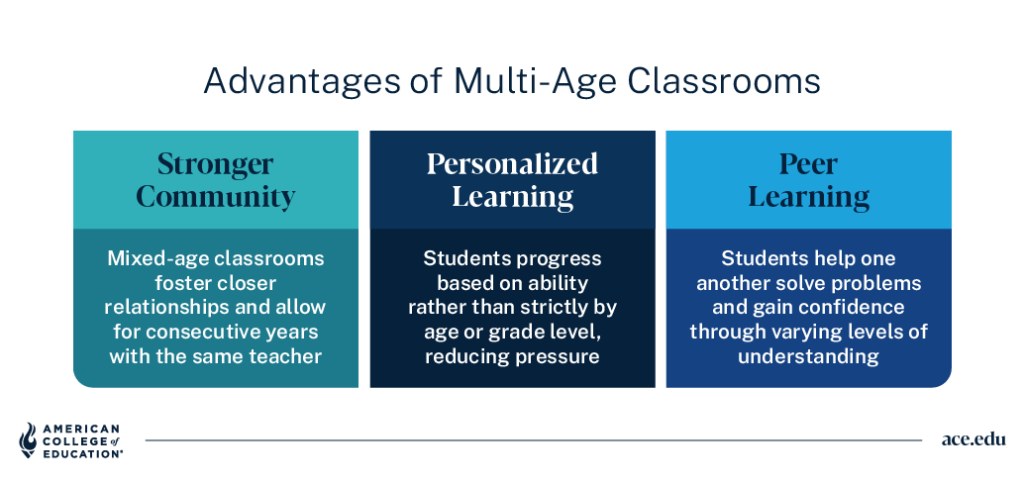
Personalized, Self-Paced Learning
Combination classes create opportunities to tailor instruction to students’ existing knowledge and experience. For example, a student with advanced knowledge of a topic can receive an assignment that extends their learning, while a student new to the topic can focus on foundational concepts.
Students can work at an appropriate level of challenge and progress at their own pace while meeting grade-level learning goals. For example, tiered assignments can address the same learning objective at different levels, with advanced applications at the top tier, grade-level practice in the middle and foundational activities at the bottom.
Peer Learning and Role Models
Students with advanced knowledge or experience can mentor peers working at the foundational level by modeling problem-solving, critical thinking and practical applications. At the same time, students at the foundational level can bring fresh perspectives and questions that encourage others to reconsider an application or theory. This two-way exchange allows students to learn from one another while building confidence and independence.
Establishing a Community of Students
A combination class brings students with different experiences, knowledge and perspectives into the same learning environment. Shared activities, peer mentoring and collaboration can help them build relationships across grade levels and develop a sense of community. In mixed-grade classrooms where students are with the same teacher or classmates for consecutive years, students benefit from continuity as they get more time to develop relationships and share classroom time.
Drawbacks of Combination Classes
While combination classes offer several benefits, they also present challenges for teachers and students. Understanding these drawbacks can help teachers anticipate instructional and classroom management needs and plan appropriate strategies.
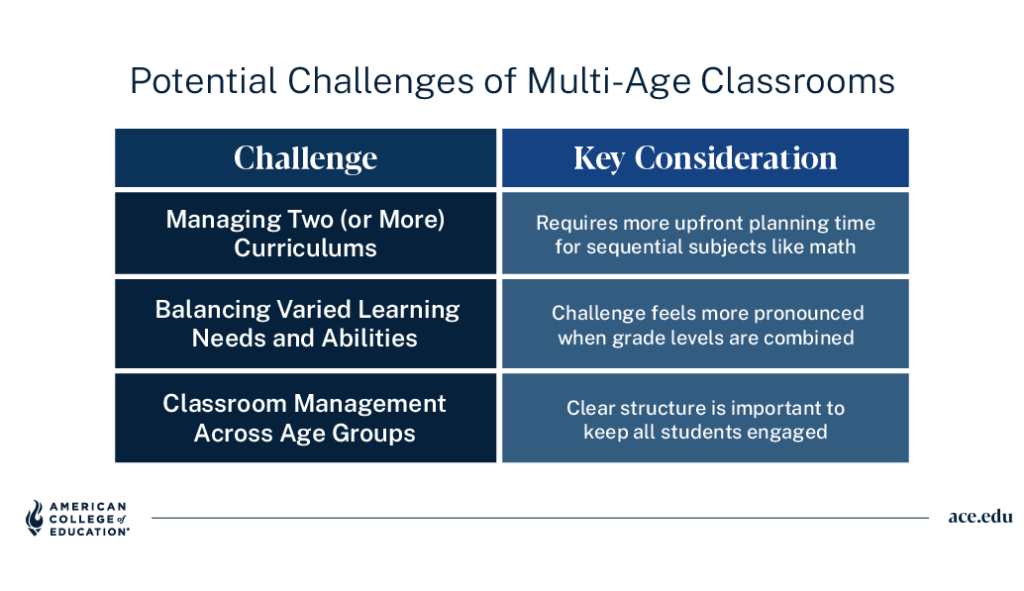
Managing Two (or More) Curriculums
Teaching multiple grade levels requires teachers to plan for different curriculum standards, learning objectives and assignments within the same class. This is particularly demanding in subjects such as math, where concepts build sequentially and students may be working at different points in the curriculum. Coordinating these requirements can add planning time compared with a single-grade class.
Balancing Varied Learning Levels
Teachers in combination classes may encounter a wider range of prior knowledge, experience and learning levels within one classroom. While these differences exist in single-grade classrooms, combining grade levels can broaden the range of instructional needs a teacher must address. Careful planning can help teachers address these differences while maintaining clear learning objectives.
Classroom Management Across Grade Levels
Managing a combination class requires expectations and routines that account for different grade levels, learning needs and developmental stages. Clear instructions and consistent routines help students remain engaged and on task while the teacher works with another group. Establishing these expectations at the beginning of the year also helps students understand how to work independently during transitions.
How to Teach a Split Class Effectively
Teaching a split class effectively begins with a clear structure that accounts for different grade levels, learning needs and curriculum requirements. Thoughtful planning can help teachers coordinate instruction, organize small groups and maintain a learning environment where students know what to work on when the teacher is supporting another group.
Talk to Your Administrator About Expectations
Before planning instruction, clarify expectations with your administrator. Ask whether each grade requires a separate curriculum, which subjects or learning objectives can be combined, and what instructional resources or additional support are available. Having this information upfront can help you plan instruction within your school’s requirements.
Think in Terms of Learning Levels, Not Just Grade Levels
Rather than treating a combination class as two rigid age groups of grade-level students, consider students’ current knowledge, experience and instructional needs. A range of learning levels exists within single-grade classrooms as well, so grade placement alone does not determine the level of instruction a student needs. Grouping students around specific skills or learning objectives can help teachers provide appropriate instruction without assigning fixed labels to students.
Use a Balanced Literacy or Workshop Model
A workshop model allows teachers to introduce a shared reading or writing concept to the whole class before moving students into small groups for targeted instruction and practice. Groups can focus on different aspects of the same learning objective based on current learning levels, while other groups work together on independent or collaborative activities. This structure allows the teacher to provide focused instruction without separating every lesson by grade level.
Prepare Parents Early
Communicate with parents early about how instruction will be organized and how their child’s grade-level learning needs will be addressed within the combination class. Explain classroom routines, instructional approaches and how student progress will be monitored. Proactive parental involvement can address questions and concerns before they arise and establish expectations for the school year.
Efficient Classroom Organization for Multigrade Settings
An organized multigrade classroom should support whole-group instruction, small-group work and independent learning. Arrange seating so students can move between these formats without disrupting other groups and organize materials in clearly labeled bins, folders or stations by grade or subject.
A block schedule can designate time for whole-group instruction, targeted small-group lessons and independent work while the teacher rotates between groups. Consistent locations for materials and predictable schedules reduce time spent on transitions and locating resources, leaving more instructional time for teaching and learning.
Building a Positive Learning Environment in a Multi-Age Classroom
A positive learning environment begins with creating one shared class identity rather than treating different grade levels as separate classes sharing a room. At the beginning of the school year, teachers can establish common expectations, routines, goals and classroom traditions that encourage a sense of belonging.
Structured partner and group activities can also build relationships among students with different experiences and perspectives. When children learn and work together toward shared goals, they contribute to the classroom community while developing collaboration and communication skills.
Why Combo Classes Are Becoming More Common
Some schools adopt combination classes as an intentional instructional model. Combining grade classes can support differentiated instruction, peer learning and opportunities for students to work at varying learning levels while meeting grade-level objectives. The model can also encourage collaboration among students with different knowledge and experiences.
Practical factors can also influence their use. Ongoing teacher shortages may lead some schools to combine classes when positions cannot be filled, a challenge that can be particularly relevant for rural schools.
Making Combo Classes Work
Making a combination class work requires planning that accounts for multiple grade levels without treating them as separate classrooms. Teachers can map overlapping curriculum objectives, establish independent-work routines for times when another group receives instruction, use targeted small-group instruction and organize materials so students can access what they need independently. Planning these structures at the beginning of the school year can make the daily demands of a split class more manageable and allow teachers to focus more time on instruction.
FAQs
How do schools typically decide which grade levels to combine?
Schools typically consider enrollment numbers, staffing, class size, curriculum alignment and students’ instructional needs when deciding which grade levels to combine. Adjacent grades are often paired because their curriculum and learning objectives may offer more opportunities for coordinated instruction. The final decision depends on the school’s academic model, available resources, and district or school policies.
Can combo classes work for subjects like math that build sequentially by grade?
Yes, but sequential subjects require careful planning. Teachers can identify concepts shared across grade levels, introduce the common concept together, and then provide grade-specific instruction and practice.
For example, during a fractions unit, the class might begin with a shared review of fraction concepts before students move into small groups working on objectives appropriate to their grade and current learning level. Mapping both grades’ standards before the school year can also help teachers identify where instruction can overlap and where separate lessons are necessary.
How do teachers assess and grade students fairly across two grade levels in one class?
Teachers can assess students against the learning objectives for their grade while also recognizing different levels of proficiency. A rubric might identify advanced, intermediate and foundational performance within each grade-level objective, allowing students to demonstrate progress without being compared across grades. Regular formative assessments can help teachers identify each student’s current proficiency level, adjust instruction and document growth over time.
Are multi-age classrooms more common in certain types of schools?
Combination classrooms are often found in smaller or rural schools where enrollment may not support a separate class for every grade. They can also be found in schools that intentionally use mixed-grade instruction as part of their educational model. The reasons for adopting a combination classroom therefore vary by school, ranging from enrollment and staffing considerations to instructional philosophy.
American College of Education offers affordable education programs designed to help teachers and education staff grow professionally. With fully online courses and local hands-on components for select programs, busy professionals can pursue a degree amid work and professional commitments.