
Career Guide: Credit Analyst
Here’s what you need to know.
Toggle Navigation
Our Enrollment Counselors are here to answer your questions and walk you through the enrollment process.
Career Overview: Credit Analyst
Whether you’re buying your first home, financing a car or applying for a credit card, credit plays a significant role in everyday life. And if you own a business, access to credit can fuel growth, support expansion and provide the capital needed to pursue new opportunities.
Behind many of these financial decisions are credit analysts. These professionals evaluate financial information, assess risk and help determine whether individuals or organizations are likely to repay borrowed funds. Their work supports responsible lending while helping financial institutions make informed decisions that protect both borrowers and lenders.
If you’re interested in finance, problem-solving and data analysis, becoming a credit analyst could be a rewarding career path. Learn more about the credit analyst job role, credit analyst education requirements and how to become a credit analyst.
What Is a Credit Analyst?
A credit analyst is a finance professional who evaluates the financial health and creditworthiness of individuals, businesses or organizations seeking financing. By reviewing financial information and assessing potential risks, they help determine whether a borrower is likely to repay a loan or meet other financial obligations.
The credit analyst job role is essential to responsible lending. Credit analysts provide recommendations that help banks, credit unions and other financial institutions make informed lending decisions while managing financial risk. Their assessments help organizations balance business growth with sound financial practices.
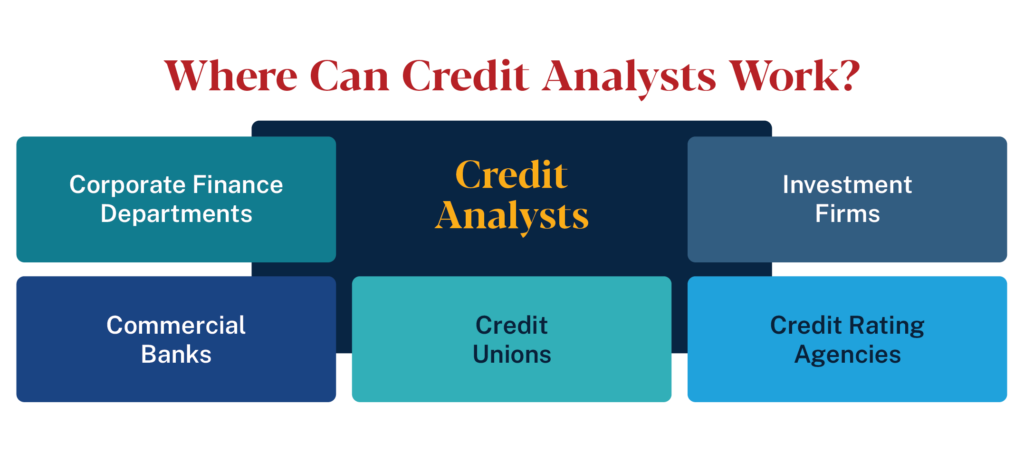
Credit analysts work in a variety of settings, including commercial banks, credit unions, investment firms, corporate finance departments and credit rating agencies. Regardless of the industry, their goal remains the same: helping organizations make confident, data-driven credit decisions.
What Does a Credit Analyst Do?
A credit analyst evaluates financial information to determine the level of risk associated with lending money or extending credit. They review credit applications, financial statements and other supporting documentation to help organizations make informed lending decisions that protect both borrowers and lenders.
Core Duties and Responsibilities
A typical day for credit analysts can include:
- Reviewing credit applications and loan requests to determine whether applicants meet lending requirements
- Analyzing financial statements, cash flow and credit history to assess an individual’s or organization’s financial health
- Evaluating financial risk and recommending appropriate credit limits based on repayment capacity
- Preparing written credit reports and financial assessments that summarize findings and support lending decisions
- Monitoring existing accounts for changes in financial performance that could affect future lending risk
- Collaborating with loan officers, underwriters and risk managers throughout the credit evaluation process
- Recommending approval, modification or denial of loan applications based on established lending policies
Work Environments
Credit analysts can build careers in many areas of the financial industry. Commercial banks and credit unions frequently hire analysts to evaluate consumer and business loan applications, while investment firms rely on them to assess the creditworthiness of bonds and other fixed-income investments. Many large corporations employ credit analysts within their corporate finance departments to evaluate business partners, suppliers and customers before extending credit. Others work for credit rating agencies that assess the financial stability of companies, municipalities and debt securities.
Skills & Traits For a Successful Credit Analyst
Successful credit analysts combine strong analytical abilities with sound judgment and effective communication. Because their recommendations can influence major financial decisions, they must be comfortable interpreting complex financial data while clearly explaining their findings to others.
Essential Soft Skills
Strong interpersonal and professional skills help credit analysts communicate recommendations and build trust across lending teams. Some of the most common soft skills required in the field include:
- Analytical thinking: Evaluate financial information and identify trends that affect creditworthiness
- Attention to detail: Recognize inconsistencies or potential risks that may influence lending decisions
- Communication: Present financial findings clearly through written reports and discussions with stakeholders
- Critical judgment: Make objective recommendations using available financial evidence
- Ethical decision-making: Handle sensitive financial information responsibly while maintaining professional integrity
Important Technical Skills
Credit analysts also rely on specialized financial knowledge and technical expertise. For instance:
- Financial statement analysis to evaluate profitability, liquidity and cash flow
- Credit scoring and credit history evaluation to assess borrower reliability
- Knowledge of corporate finance and interest rate structures to understand lending decisions and repayment costs
- Risk assessment techniques that estimate the likelihood of default
- Financial software and spreadsheet proficiency for modeling, reporting and forecasting
If you’re interested in strengthening these skills, you may also benefit from exploring how business analysis helps organizations evaluate data, identify opportunities and make strategic decisions.
How These Skills Apply on the Job
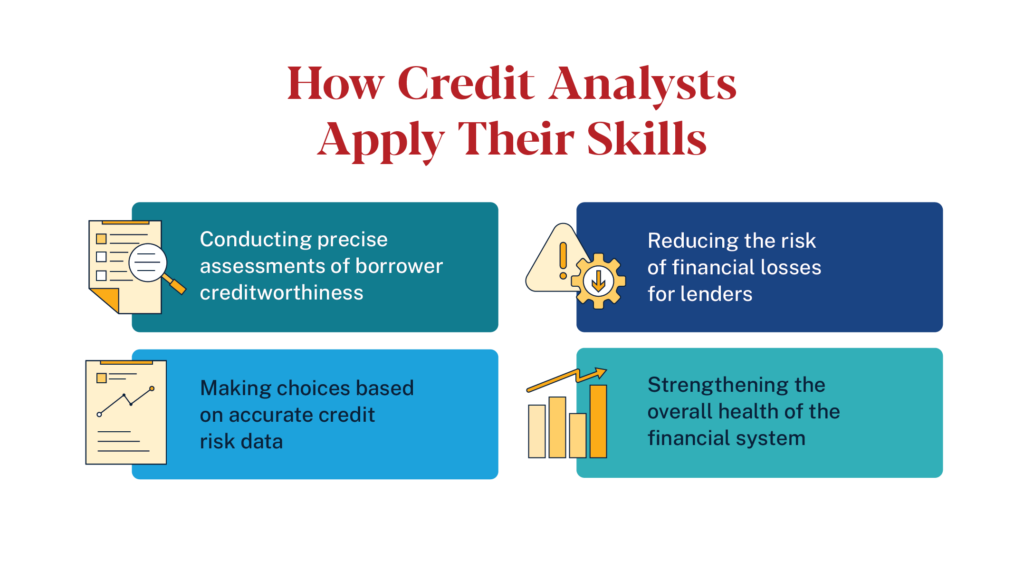
These skills allow credit analysts to evaluate borrower risk, identify financial strengths and weaknesses, and make informed lending recommendations. Whether reviewing a small business loan or assessing a corporation’s financial stability, credit analysts help financial institutions make decisions that support long-term financial success while minimizing unnecessary risk.
Credit Analyst Education Requirements
Understanding credit analyst education requirements is one of the first steps when exploring how to become a credit analyst. Most employers look for candidates with a strong educational foundation in finance, accounting or business, along with analytical experience gained through internships or entry-level positions.
Minimum Education Requirements
A bachelor’s degree is typically required for credit analyst positions. Common fields of study include finance, accounting, economics and business administration. These programs introduce students to financial reporting, accounting principles, economics and quantitative analysis while building the analytical skills needed for credit evaluation.
Preferred Education Pathways
Many employers prefer candidates with coursework in corporate finance, investments, risk analysis and financial modeling. As professionals advance in their careers, graduate education may help prepare them for management positions or specialized finance roles.
Some credit analysts also pursue the Chartered Financial Analyst (CFA) designation to strengthen their expertise, particularly if they plan to transition into investment analysis or advanced financial management roles.
Certifications and Training Options
Professional certifications can demonstrate expertise and support long-term career growth. The CFA designation is one of the most widely recognized credentials in finance, while other credit risk certification programs and continuing education opportunities help professionals stay current with changing regulations, lending practices and financial markets. Membership in related professional organizations, like the National Association of Credit Management, can also support staying current on best practices in the field.
How to Become a Credit Analyst
- Earn a Bachelor’s Degree
Your career as a credit analyst will likely begin by earning a bachelor’s degree in finance, economics, accounting or business administration. These programs help you develop the financial knowledge and analytical skills needed to evaluate borrowers and interpret financial data.
- Gain Financial or Banking Experience
Internships and entry-level positions with banks, credit unions or other financial institutions provide valuable hands-on experience. Working alongside experienced professionals allows you to become familiar with loan applications, credit evaluation processes and financial reporting.
- Develop Analytical and Technical Skills
As you gain experience, continue building your expertise in financial modeling, spreadsheet analysis and credit assessment techniques. The ability to review financial statements and identify lending risks is essential for success in this profession.
- Apply for Credit Analyst Positions
Once you’ve developed the necessary education and experience, you can pursue opportunities with commercial banks, credit unions, financial institutions and corporate finance departments. Many professionals begin by evaluating consumer loans before advancing into commercial lending or specialized credit analysis roles.
- Optional: Pursue Certifications or Graduate Education
As your career progresses, earning the CFA designation or completing a graduate degree such as an MBA may help prepare you for leadership positions or more advanced roles in finance and risk management.
Day-in-the-Life & Real-World Scenarios
A Typical Workday
A credit analyst’s day often begins by reviewing new loan applications and gathering supporting financial documents. Throughout the day, they analyze credit reports, evaluate financial statements, prepare written assessments, and meet with loan officers or lending teams to discuss recommendations. They may also monitor existing accounts to identify changes in borrower risk.
Real-World Examples
Imagine a manufacturing company applying for a loan to purchase new equipment. A credit analyst reviews the company’s financial statements, cash flow and repayment history before determining whether the business can reasonably manage additional debt. Similarly, the credit analyst may evaluate whether an existing corporate client qualifies for a higher credit limit based on improved financial performance and reduced risk.
What Success Looks Like in the Role
Successful credit analysts consistently provide accurate, well-supported recommendations that help organizations make informed lending decisions. Their work contributes to healthier loan portfolios, stronger financial performance and effective risk management across financial institutions.
Credit Analyst Salary & Job Outlook
A credit analyst salary can vary based on education, experience, industry and geographic location. Professionals may find opportunities with commercial banks, credit unions, investment firms, insurance companies and corporations with dedicated finance teams.
Organizations continue to rely on skilled credit analysts to evaluate financial risk, support lending decisions and protect long-term financial stability. Professionals with strong analytical skills, business knowledge and experience interpreting financial data may find opportunities for advancement into senior analyst, portfolio management or risk manager positions.


FAQs
Is a credit analyst role stressful?
Like many finance careers, credit analysis can involve deadlines and significant responsibility. However, professionals who enjoy analyzing data, solving problems and making informed decisions often find the work both engaging and rewarding.
Can credit analysts work remotely?
Some credit analysts work remotely or in hybrid roles, particularly when much of their work involves reviewing digital financial documents and preparing reports. Remote opportunities often depend on the employer, industry and security requirements.
What software do credit analysts typically use?
Credit analysts commonly use spreadsheet software, financial modeling tools, accounting systems and credit reporting platforms. Many organizations also use specialized lending software to manage credit applications and evaluate borrower risk.
What is the difference between a credit analyst and a financial analyst?
Both roles analyze financial data, but their responsibilities differ. Credit analysts focus on evaluating creditworthiness and lending risk, while financial analysts typically evaluate investments, budgets, business performance or market trends to support broader financial planning.
Turn Smart Financial Decisions Into Your Future Career
Credit analysts help chart the journey toward financial stability through responsible lending practices. By combining financial expertise, analytical thinking and sound judgment, these professionals play an important role in helping borrowers achieve their goals and financial institutions maintain their integrity.
Whether you're beginning your career or preparing to advance in finance, ACE's business degree programs can help you develop the leadership, analytical and decision-making skills needed to succeed in today's financial industry.