
American College of Education (ACE) is incredibly proud of our graduates and how their impactful research contributes to various fields. Ed.D. in Curriculum and Instruction graduate Dr. Stephen Scherer’s dissertation focused on high school teachers’ perceptions of trauma and trauma-informed practices in suburban Ohio schools. Below is a summary of Scherer’s study, and we invite readers to explore the full version.
Student trauma has become an increasingly important topic in education as schools seek to support the academic and personal success of all students. Research has shown that trauma can affect everything from classroom behavior to academic performance, leading many teachers to explore trauma-informed approaches. How do teachers view these practices, and what support do they need to implement them effectively?
Scherer gathered insights from 18 general education teachers in two suburban Ohio high schools to explore how teachers understand student trauma, use trauma-informed practices and navigate the challenges of implementing those approaches in the classroom. Specifically, Scherer sought to answer:
- Research Question 1: What are high school teachers’ experiences with using trauma-based teaching strategies to support students’ academic achievement?
- Research Question 2: What challenges or barriers do high school teachers encounter when using trauma-based teaching strategies in suburban high schools?
- Research Question 3: What types of support do high school teachers believe are necessary to effectively implement trauma-based teaching strategies in suburban high schools?
To guide the research, Scherer drew on polyvagal theory and social cognitive theory, two frameworks that help explain how trauma can affect students’ responses to their environment and the role teachers play in supporting learning and development.
Supporting Students Through Trauma-Informed Teaching
Teachers work with students whose experiences outside the classroom can influence how they learn, behave and engage at school. Trauma-informed teaching recognizes that adverse childhood experiences and other traumatic events can affect students in different ways. It also seeks to create learning environments that promote safety, consistency and support.
Trauma-informed practices encourage teachers to consider the factors that may influence student behavior and academic performance while building positive relationships and fostering a sense of belonging. These approaches often focus on creating predictable classroom environments, supporting students’ social-emotional needs and helping students feel safe enough to engage in the learning process.
As schools continue to address the diverse needs of students, trauma-informed teaching has become an important area of focus for teachers and school leaders. Understanding how teachers perceive these practices and the support they need to implement them can help schools create more effective learning environments for all students.
What Existing Research Reveals About Trauma-Informed Teaching
Before conducting his study, Scherer reviewed existing research on trauma, adverse childhood experiences and trauma-informed practices. His review of others’ work examined how trauma can affect student learning and behavior, as well as the strategies teachers use to support students affected by trauma.
The Impact of Adverse Childhood Experiences on Academic Achievement
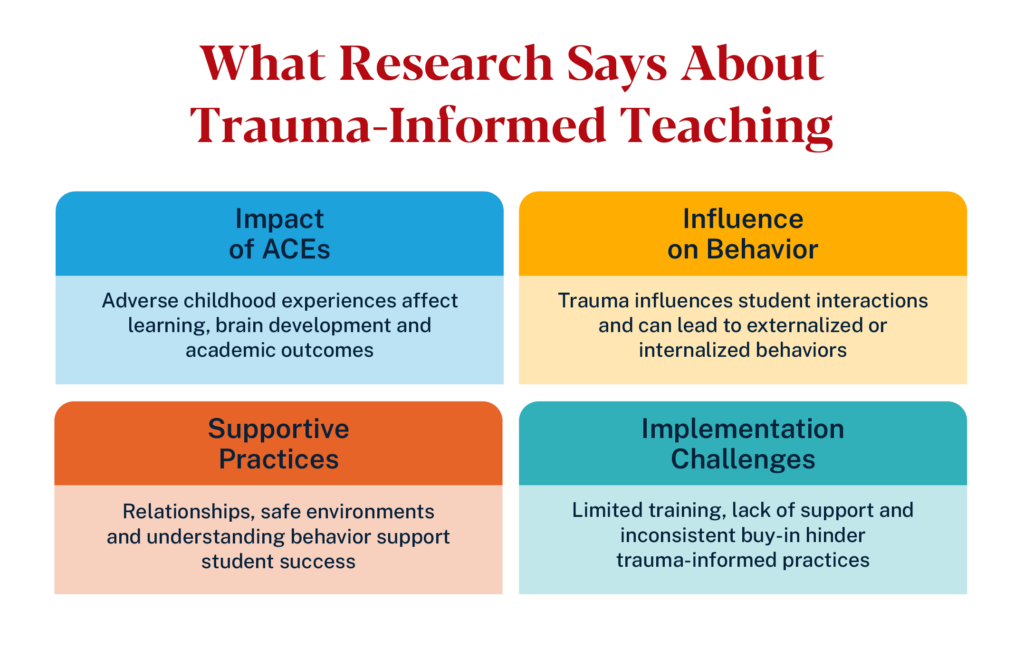
Adverse childhood experiences (ACEs) can affect multiple aspects of student learning. ACEs may include abuse, neglect, domestic violence, substance misuse within the household, homelessness, family separation and other traumatic events. Studies have shown that trauma can influence brain development and interfere with cognitive processes related to attention, memory, concentration and emotional regulation.
The literature also identified a connection between trauma exposure and academic outcomes. Students affected by trauma may experience challenges with classroom engagement, academic performance and school attendance. Research further suggests that the effects of trauma can become more pronounced as the number of adverse experiences increases, creating additional barriers to student success.
How Trauma Influences Student Behavior
Trauma can influence how students interact with teachers, classmates and learning environments. Affected students may experience heightened stress responses that influence behavior both inside and outside the classroom.
The literature identified two common types of behavioral responses. Some students may exhibit externalized behaviors such as aggression, impulsivity, defiance or hyperactivity. Others may internalize their experiences, leading to anxiety, depression, withdrawal or disengagement from school. Researchers have also linked trauma exposure to increased absenteeism, disciplinary referrals and exclusionary discipline practices, all of which can create additional challenges for student success.
According to the research reviewed in the dissertation, many behaviors associated with trauma may reflect students’ attempts to cope with difficult experiences rather than intentional misconduct. This understanding has helped shape trauma-informed approaches that encourage teachers to consider the factors that may influence student behavior and engagement.
Trauma-Informed Practices That Support Student Success
Across the research, one message was clear: Relationships matter. Studies suggested that students who feel supported by their teachers are more likely to engage in learning and develop positive connections to school.
Studies also highlighted the importance of creating safe, supportive and predictable learning environments. Consistent classroom routines, opportunities for meaningful participation and positive interactions with peers and teachers can help students feel connected to school and better positioned for success.
Researchers further noted that students may benefit when teachers focus on understanding the experiences that shape behavior rather than relying solely on punitive responses. These approaches can help strengthen trust, improve engagement, and support both academic and personal growth.
Challenges to Implementing Trauma-Informed Practices
Common challenges discussed throughout the literature included:
- Limited training opportunities: Many teachers reported feeling unprepared to implement trauma-informed practices without dedicated training and ongoing support
- Lack of administrative support: Researchers found that implementation was often more difficult when school leaders did not provide resources, professional learning opportunities or a clear vision for trauma-informed education
- Inconsistent teacher buy-in: Some studies suggested that teachers were less likely to adopt trauma-informed practices when they questioned their effectiveness or lacked a clear understanding of their purpose
How the Research Was Conducted
To better understand teachers’ perspectives on trauma-informed practices, Scherer gathered feedback from 18 general education teachers working in two suburban high schools in central Ohio.
Participants completed an open-ended questionnaire that asked about their experiences using trauma-informed teaching practices, the challenges they encounter and the support they believe is needed for successful implementation.
Their responses provided insight into how teachers understand student trauma and the factors that influence the use of trauma-informed practices in the classroom.
Analyzing Teacher Experiences and Perspectives
After collecting participant responses, Scherer used thematic analysis to identify patterns and recurring ideas within the data. Responses were reviewed, coded and grouped into categories before broader themes were developed.
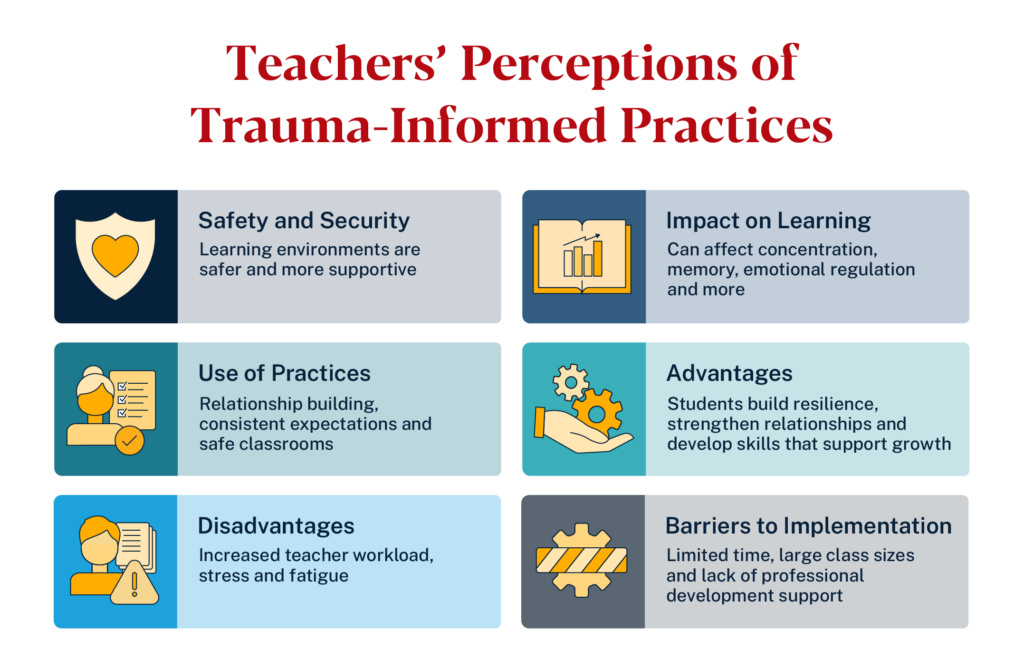
The analysis resulted in six themes that reflected teachers’ experiences and perceptions of trauma-informed practices:
- Maintaining a sense of safety and security
- Trauma’s impact on learning
- The use of trauma-informed practices
- Advantages of trauma-informed practices
- Disadvantages of trauma-informed practices
- Barriers to implementation
These themes provided the framework for examining participants’ responses and answering the study’s research questions.
Key Findings on Trauma-Informed Teaching in High Schools
Positive Experiences With Trauma-Informed Practices
Overall, participants demonstrated a strong understanding of how trauma can affect students and their ability to learn. Teachers described the ways it may influence concentration, memory, emotional regulation, classroom engagement, and relationships with peers and teachers. Many acknowledged that students experiencing trauma often face challenges that extend beyond academics and can affect nearly every aspect of the learning process.
Participants also reported generally positive experiences using trauma-informed practices. Many viewed these approaches as an effective way to support students while creating safer and more supportive learning environments. Teachers frequently emphasized the importance of building strong relationships with students, maintaining consistent expectations and fostering a sense of safety in the classroom.
Teachers identified several benefits associated with trauma-informed practices. Participants believed these approaches could strengthen student engagement, improve classroom relationships and contribute to more positive learning environments. Some also noted that trauma-informed strategies helped students build resilience, strengthen relationships and develop skills that support both academic and personal growth.
Implementation Challenges Around Adoption
Although participants generally viewed trauma-informed practices positively, they also identified several barriers that can make implementation difficult.
Many teachers said they wanted more professional development around trauma-informed practices. While most participants had received some training, they often felt they needed additional support and practical strategies they could use in their day-to-day work with students.
Additional barriers included:
- Large class sizes that make it difficult to build meaningful relationships with students
- Limited time to consistently implement trauma-informed strategies
- Increased workload associated with supporting students affected by trauma
- Feelings of stress and compassion fatigue
These findings suggest that many teachers value trauma-informed practices but face practical challenges that can affect their ability to implement them consistently.
A Need for Additional Support
Participants also emphasized the importance of support beyond the classroom level. Many highlighted the role of school leaders in providing resources, establishing clear expectations and fostering a shared commitment to trauma-informed practices across the school community.
Rather than relying on individual teachers to address student trauma independently, participants frequently advocated for a schoolwide approach. Teachers suggested that consistent practices across classrooms and stronger organizational support could help create more effective and sustainable implementation efforts.
Limitations and Future Research
As with any study, several limitations should be considered when interpreting the findings. The research focused on 18 teachers from two suburban high schools within a single Ohio school district, which may limit the transferability of the results to other educational settings.
Based on the findings, Scherer recommended continued investment in trauma-informed education through ongoing professional development, stronger administrative support and schoolwide implementation efforts. The study also highlighted the need for practical training that helps teachers apply trauma-informed strategies in real classroom settings while addressing challenges such as time constraints, workload and large class sizes.
Scherer recommended additional research examining teachers’ experiences with trauma-informed practices in different geographic regions and school contexts. Future studies could also explore how targeted professional development, administrative support and schoolwide initiatives influence implementation over time.
American College of Education (ACE) offers affordable education programs that can equip teachers and educational leaders to implement student-centered approaches effectively.