

|
Getting your Trinity Audio player ready...
|
Creating a welcoming classroom starts before the first lesson. From the moment students enter the room or log on to an online course, they begin forming impressions. They notice how welcome they feel, whether expectations are clear, how mistakes are handled and whether they feel like part of the group.
Making learning environments feel welcoming does not have to be elaborate, but it does need to be intentional. Students are more likely to ask questions, participate and take academic risks when they feel safe and know their contributions are valued. Whether students are learning in person or online, teachers can help create that environment by building relationships, establishing reliable routines, removing unnecessary barriers and providing meaningful ways to participate.
What Makes a Classroom Environment Welcoming?
A welcoming classroom is a place where students know what is expected, feel comfortable asking for help and know that different perspectives are respected. The connection between the classroom environment and learning is easy to overlook, but it’s essential to a positive academic experience.
When students are worried about making mistakes, uncertain about routines or unsure how their teacher will respond, some of their attention shifts away from learning and toward managing those concerns.
Welcoming students does not mean lowering expectations. Students can be challenged while still knowing that help is available and mistakes are part of learning. Whether students walk through a classroom door or log in from home, the goal is the same: creating a sense of belonging within the classroom community.
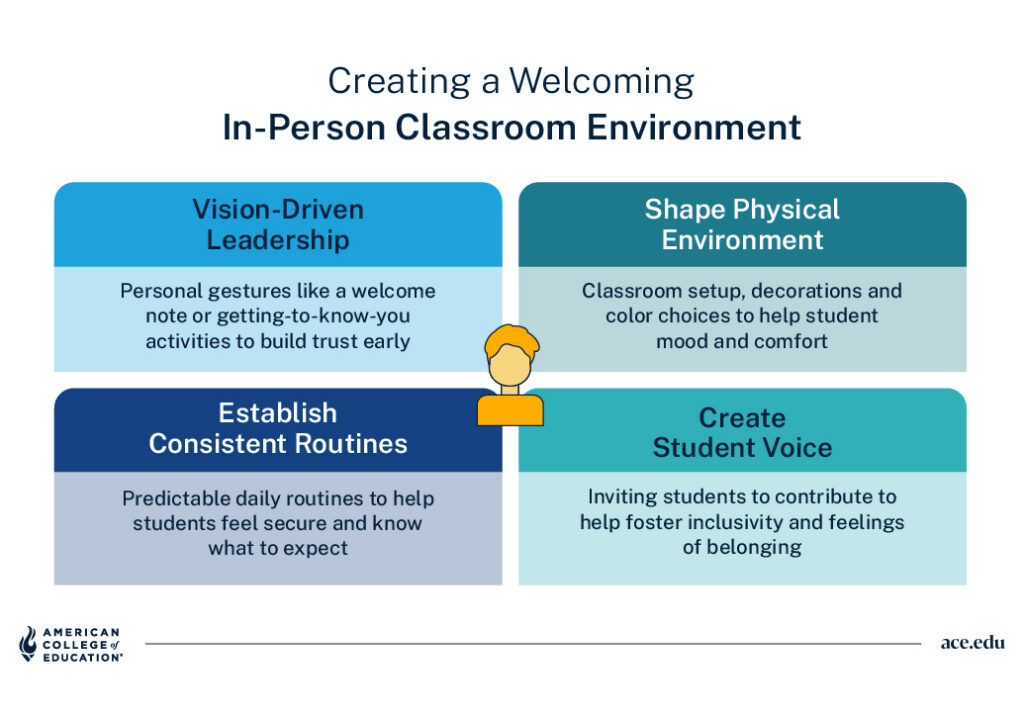
How to Create a Welcoming Environment for Students In-Person
In-person classrooms can feel more welcoming with a few simple strategies.
Build Relationships From Day One
Building relationships is part of teaching, not something that happens before the “real” work begins. Students are more likely to ask questions, attempt challenging work and admit when they are confused when they trust their teacher.
Teachers build relationships through everyday interactions. Learn students’ names and pronounce them correctly. Find out about their interests. Remember something a student told you and ask about it later. Notice when a student who normally has a lot to say becomes quiet. Brief check-ins, informal questions and written reflections can also provide ways to connect with students who may not be comfortable speaking in front of the class.
Recognition matters, too. Encouraging students does not have to mean praising only high grades. Notice persistence, improvement, thoughtful questions, collaboration and the willingness to try again. These small moments of attention and consistency are part of the broader qualities of a good teacher.
Shape the Physical Environment
A welcoming classroom does not have to resemble a magazine photo. It needs to work for the students who use it. Consider whether students can move around easily, access frequently used materials, see important information and find a place where they can concentrate.
The physical environment includes more than desks and decorations. Lighting, noise, traffic patterns, seating, visual clutter and accessibility can all affect how students participate. Classroom displays can also contribute to belonging when they include student work, useful reference materials and examples representing different people and experiences. The goal is not a perfect classroom. It is a functional space that reflects the students who learn there.
Establish Consistent Routines
Routines help clearly outline expectations. When students know how class begins, where to find materials, how to submit work and what to do when they need help, they can focus more attention on learning.
Routines are also an important part of classroom management. Teachers can explain and practice procedures rather than assuming students already know them. Consistency does not mean every day must look the same. Routines can provide structure while still allowing teachers to adjust when students need something different. Well-established routines contribute to a positive learning environment by reducing unnecessary uncertainty.
Create Opportunities for Student Voice
Students tend to feel more connected when they have some opportunity to shape their classroom experience. Teachers can involve students in discussions about classroom expectations and offer meaningful choices about topics, project formats or ways to demonstrate learning.
It is also useful to ask students what is working. What helps them concentrate? When do they feel comfortable participating? Is a routine or assignment regularly confusing? Not every suggestion requires a change, but asking for input and taking it seriously is one way of empowering students. When students build parts of the classroom culture alongside their teacher, the classroom becomes something they participate in rather than simply enter each day.
How to Create a Welcoming Environment for Students Online
Creating a welcoming online classroom requires many of the same practices as an in-person classroom, but connections must be more intentional. In a physical classroom, teachers can notice a confused expression or talk with a student before class. Those interactions are less likely to happen spontaneously online.
Online teachers need other ways for students to ask questions, interact with one another and know that someone is paying attention.
Set Clear Expectations and Norms Early
Students should not have to spend their time figuring out how an online course works. They need to know where assignments and announcements are posted, how to submit work, how they are expected to participate and where to go for help.
A consistent course layout and regular communication routine reduce confusion. Students should also know how to contact their instructor and approximately when they can expect a response.
Use Video and Discussion Tools to Build Connection
Technology provides many ways to interact, but using a digital tool does not automatically create a connection. Breakout rooms work better when students have a specific task, and discussion boards are more meaningful when the prompt gives students something worth discussing rather than simply requiring a certain number of replies.
Students also participate differently. A student who rarely speaks during live videos may contribute extensively to a written discussion, while another may be more comfortable talking with a small group. Providing different opportunities can make online learning experiences more interactive and accessible.
Provide Consistent, Personal Feedback
Online students can easily wonder whether anyone is paying attention to what they submit. Timely, individualized feedback helps reduce that distance.
Feedback does not have to be lengthy to be meaningful. A specific comment about an idea, a question that encourages deeper thinking or a suggestion about what to work on next shows that someone actually read the student’s work. When feedback arrives in time for students to use it, it supports learning while also providing another point of connection with the instructor.
Design for Accessibility and Flexibility
Accessibility should be considered when an online course is designed, not only after a student encounters a barrier. Videos should be captioned, documents should work with screen readers and important materials should be easy to locate.
Teachers should also remember what they cannot see online. Students may have unreliable internet access or share technology with family members. They may also have to work or study in distracting environments. Flexibility does not mean eliminating expectations. It means determining which requirements are essential and where students can have different ways to access instruction or demonstrate learning.

Shared Strategies That Work in Both Environments
Across learning environments, students pay attention to how teachers respond when they struggle. Creating a safe environment does not mean removing challenges. It means students feel safe asking questions, making mistakes and seeking help without being embarrassed. This also aligns with trauma-informed teaching, which emphasizes learning environments in which students feel supported and respected.
Recognition works the same way in both settings: acknowledging effort and growth, not just grades. Communication with families can also strengthen relationships, particularly when teachers share progress and successes instead of contacting families only when something is wrong.
Building Belonging in Every Classroom
Creating a welcoming classroom is ongoing work. Teachers do not establish a sense of belonging during the first week and then check it off the list. It develops through ordinary interactions: noticing when a student becomes unusually quiet, responding respectfully to an incorrect answer, providing another way for a reluctant student to participate or giving an online student feedback that is specific to their work.
What works for one group may need to change for another. Teachers have to keep paying attention, asking students about their experiences and adjusting when needed. The strategies may differ between physical and online classrooms, but the goal remains the same: Students should know they are valued members of the learning community.
FAQs
How can teachers create a welcoming environment for students who join a class mid-year?
A student entering mid-year has to learn academic content while also figuring out routines and expectations that everyone else already knows. Teachers can make that easier by providing a brief orientation, showing the student where materials are located, explaining common routines and making sure they know how to ask for help.
Pairing the student with a classmate can help with everyday questions. It is also useful to check in again after several days, when the student may have a better idea of what is still confusing.
What role do classroom decorations play in an online or hybrid setting?
In an online or hybrid classroom, organization is usually more important than decoration. A consistent layout, clear headings, simple visual cues and student-created content can make the space easier to navigate and more inviting. Too much visual information can have the opposite effect. Digital spaces benefit from the same consideration as classroom walls: what is there should have a purpose.
How can teachers balance structure with flexibility in a welcoming classroom?
Structure and flexibility can coexist. Students benefit from knowing what is expected and how the classroom operates, but they do not all learn in the same way or encounter the same circumstances.
Learning objectives can remain consistent while students demonstrate what they know in different ways. The important question is what needs to remain consistent for learning to occur and where there is room to adjust.
What are signs that a classroom environment isn’t feeling welcoming to students?
Students may stop participating, avoid asking questions, withdraw from classmates or become reluctant to take academic risks. Sometimes the signs are less obvious. Students may complete their work but rarely contribute, or the same few students may dominate discussions.
These patterns do not automatically mean a classroom is unwelcoming, but they are worth noticing. Anonymous surveys, written reflections, class discussions and individual check-ins can help teachers understand what students are experiencing.
American College of Education offers affordable education programs with fully online courses and local hands-on components in the select programs that require them. Whether you’re aspiring to teach or you’re a seasoned educator looking to deepen your knowledge, our programs help grow your expertise and build your career.