

Summer break is supposed to be one of the perks of teaching. It’s a couple of unpaid months to rest, recharge and step away from the classroom. For plenty of teachers, that isn’t how the season plays out.
American College of Education (ACE) surveyed 583 K–12 teachers about what they do once school lets out, and their responses describe summers filled with side jobs, gig work and financial pressure. The findings raise questions about teacher pay and what “time off” actually means in the profession.
Key Takeaways
- More than four in five teachers (82%) expect to work for pay over their summer break
- About half of teachers (51%) take on freelance, gig work or a side business over the summer
- Nearly three in four teachers (72%) say a true “summer off” is a myth
- More than half of teachers (55%) have considered leaving the profession because of financial pressure
- More than two in three teachers (68%) headed into summer break moderately or severely burned out this year
- 8 in 10 teachers (80%) say it is unfair that they are expected to use their summers to make ends meet
The Financial Pressure Behind Summer Break
A teaching salary is supposed to cover the whole year, summer included. For many educators, it doesn’t stretch that far.
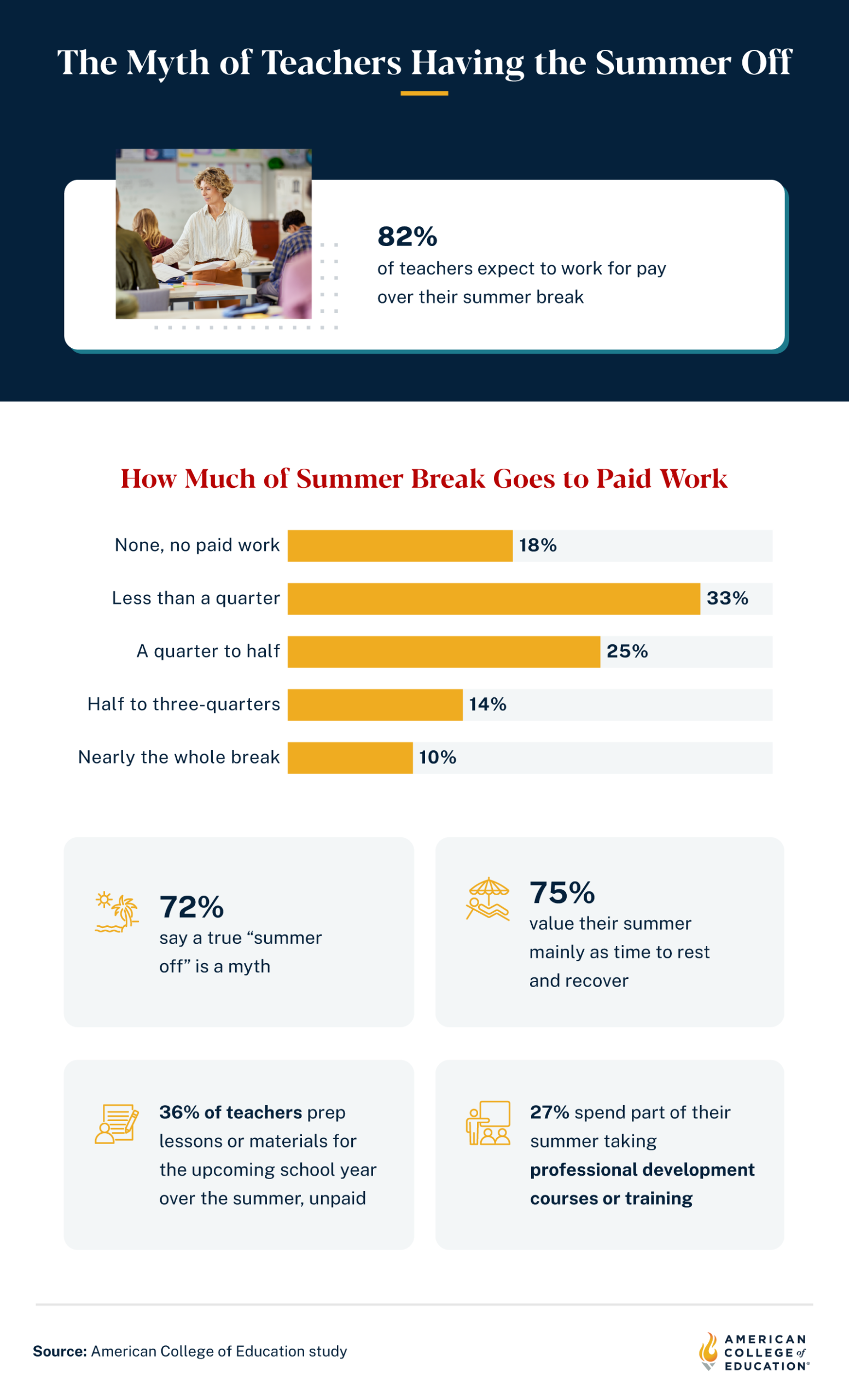
- 80% of teachers say it is unfair that they are expected to use their summers to make ends meet
- 78% feel financial pressure to earn outside the school year
- 71% say their teaching salary alone is not enough to cover the year
How Teachers Patch Together Summer Income
When teachers take on summer work, it rarely looks like one steady job. For many, the break becomes a run of short-term gigs and side roles pulled from inside and outside the classroom.
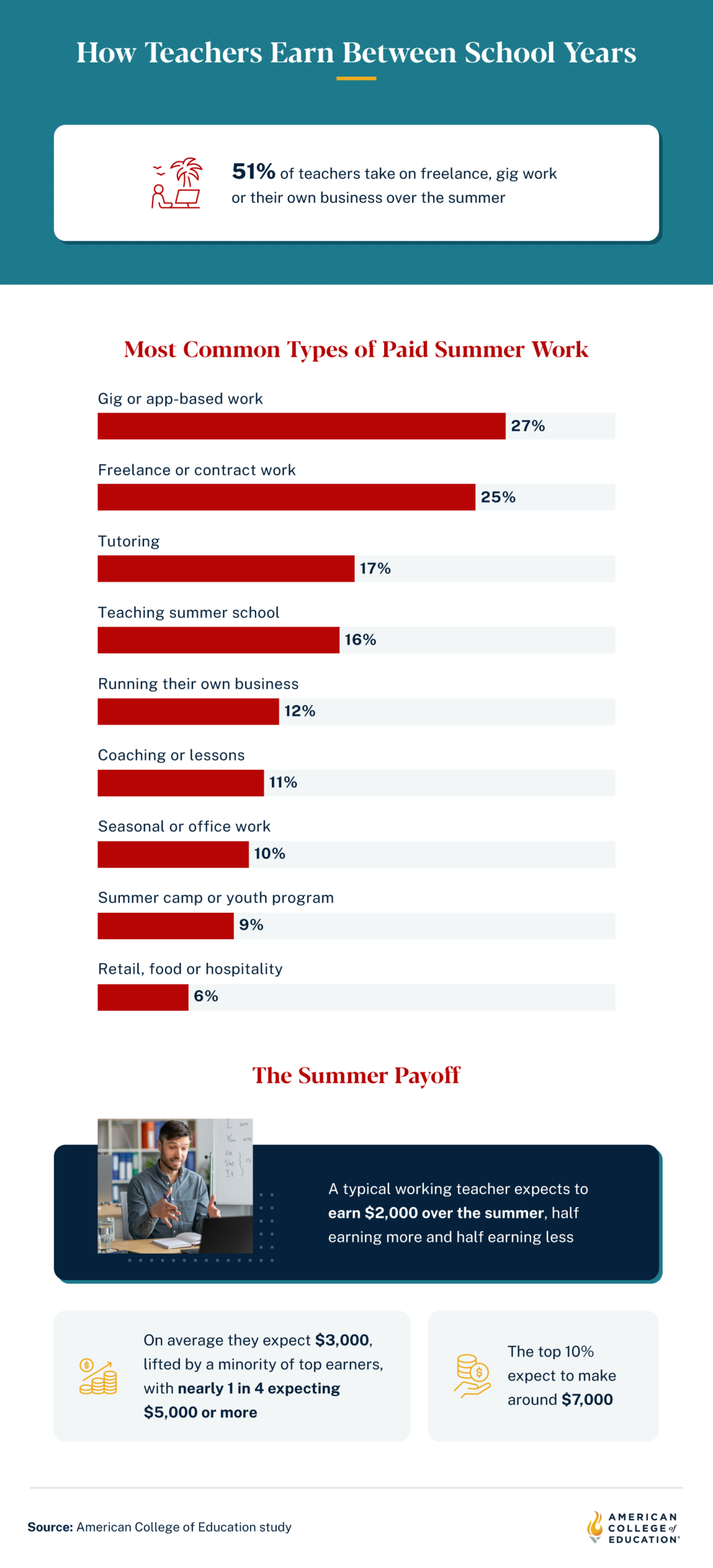
- More than one in three teachers (38%) take on two or more types of summer work, piecing together income from multiple sources
- Teachers are more likely to take summer work outside education, like gig, retail or seasonal jobs (45%) than education-adjacent work, like tutoring or summer school (36%)
- Nearly two in five teachers (39%) expect to earn less than $1,000 from summer work, while about one in four expect $5,000 or more
- High school teachers are nearly twice as likely as elementary teachers to freelance over the summer (38% vs. 21%)
Where the Money Goes and Who Feels the Strain
Where that summer money ends up tells its own story, and it isn’t always about extras or savings. The toll of earning it doesn’t land evenly either.
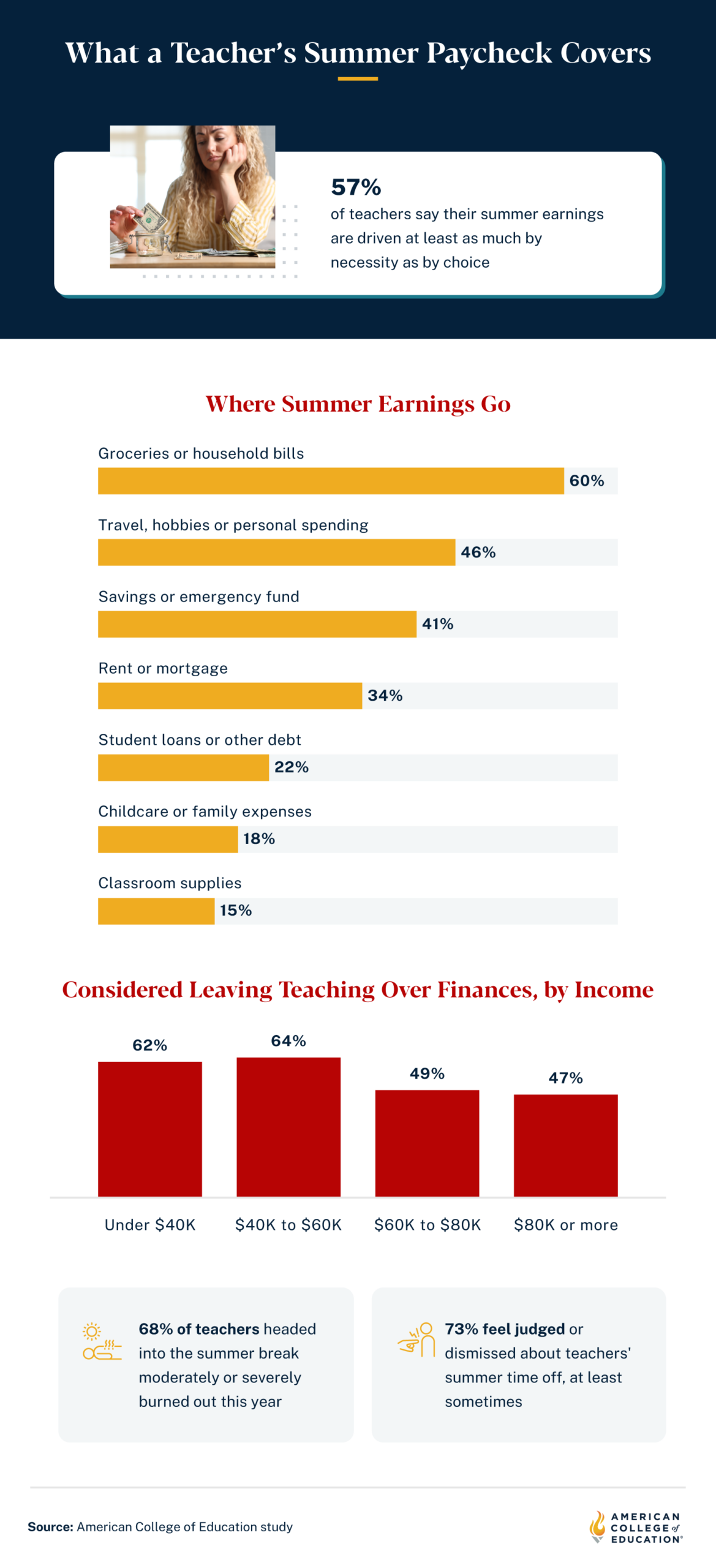
- 23% of teachers call their summer earnings essential to cover their basic living expenses
- Gen Z teachers are more than twice as likely as Gen X to put summer earnings toward rent (49% vs. 23%)
- Women are nearly twice as likely as men to be severely burned out (32% vs. 17%)
- Teachers who teach kindergarten lean hardest on summer income, being the most likely to call their earnings essential (35% vs. 22% of high school teachers) and to put summer pay toward groceries (73% vs. 61%)
Methodology
This survey was conducted online by Fractl on behalf of American College of Education from June 16–18, 2026, among 583 United States teachers. To qualify, respondents had to be currently employed as K–12 teachers. The generational breakdown was Gen Z (16%), millennials (53%), Gen X (28%) and baby boomers (3%). Respondents were recruited through an online research panel. Results have a margin of error of approximately +/- 4 percentage points.
About American College of Education
American College of Education (ACE) is an accredited, fully online college specializing in high-quality, affordable programs in education, business, leadership, healthcare and nursing. Headquartered in Indianapolis, ACE offers more than 60 innovative and engaging programs for adult students to pursue a doctorate, specialist, master’s or bachelor’s degree, along with graduate-level certificate programs.
Fair Use Statement
The information in this article may be used for noncommercial purposes only. If shared, a link with proper attribution to American College of Education must be provided.