

Understanding Special Education Teacher Burnout
Special education (SPED) teacher burnout is a significant challenge in today’s schools. Ongoing teacher shortages not only affect performance but also impact progress and outcomes for students with disabilities. In this blog post, we’ll explore the causes and warning signs of burnout as well as practical strategies for prevention and recovery.
Causes of Special Education Burnout
Burnout occurs when teachers experience prolonged stress that leads to emotional exhaustion, feelings of detachment and a diminished sense of personal accomplishment. It’s more than just stress and is often driven by high demands. Special education teachers are at a higher risk of leaving the field than general education teachers, with approximately 13% leaving each year and another 20% switching to general education, resulting in an annual attrition rate of 33%.
In healthcare and education, we hear the term compassion fatigue, which results from emotional overload without time to refill your own cup. Special education teacher burnout is not just an individual challenge but a systemic issue that impacts teacher retention and student success.
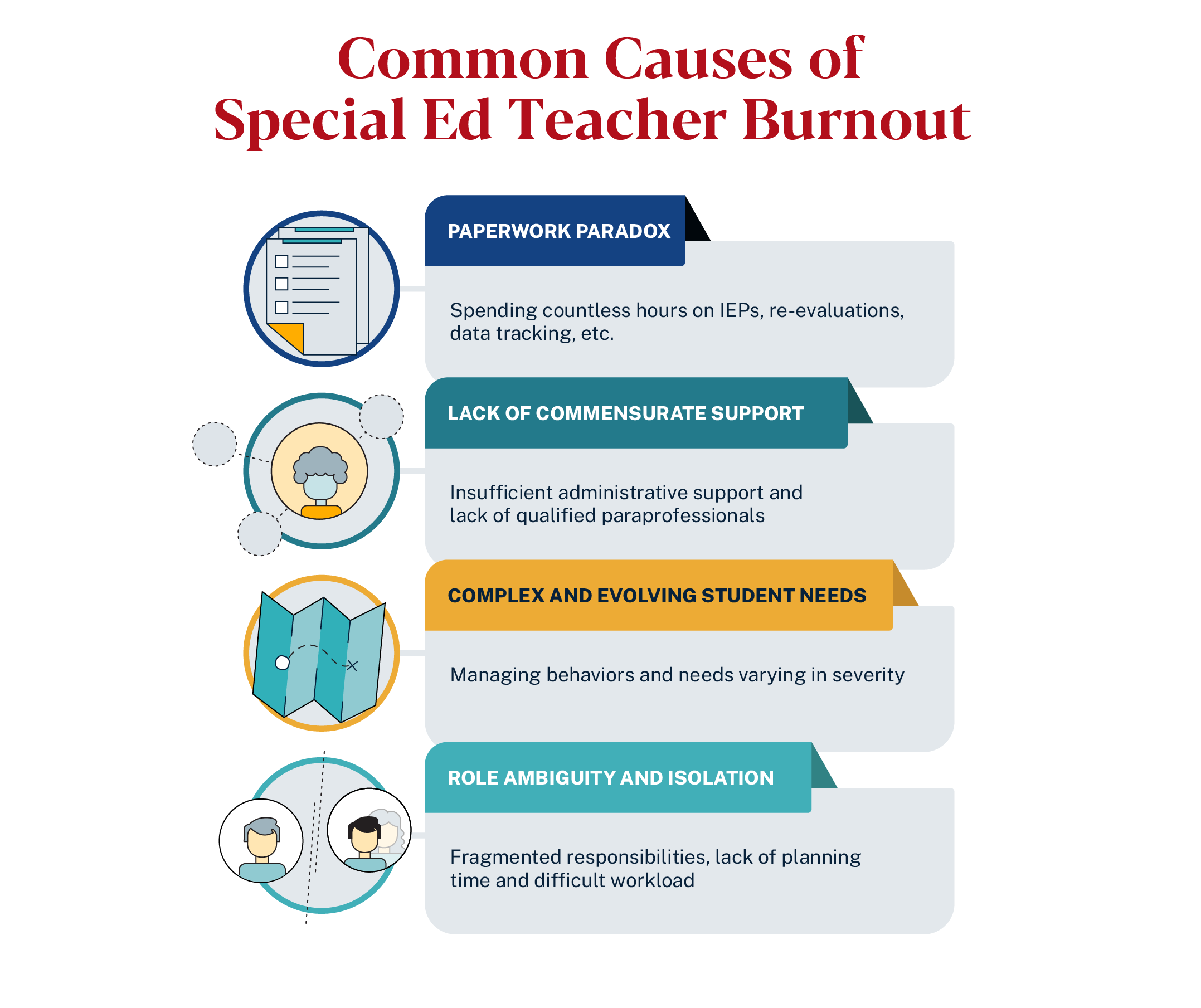
The Paperwork Paradox
Teaching special education involves preparing for the individual needs of their students and collaborating with families, administration and related services. This is amid efforts to stay on top of endless paperwork, data tracking and compliance, as students with disabilities need documentation to receive the academic and developmental support they need. Individualized education plan (IEP) paperwork stress is sometimes why paraprofessionals don’t want to become SPED teachers.
Lack of Commensurate Support
When school leaders don’t take time to understand special education law, IEP needs and inclusive instructional practices, teachers may experience limited advocacy at higher levels and feel pressure to navigate these areas on their own. Without administrative support and qualified paraprofessionals to help, special ed teachers are left to fill more responsibilities than one person can or should.
Complex and Evolving Student Needs
The increasing diversity in special education classrooms today includes but is not limited to disabilities, mental health challenges, exposure to trauma, and cultural and/or linguistic differences. It requires special education teachers to continuously adapt instructional strategies and intervention approaches. Such ongoing responsiveness demands professional expertise and flexibility, particularly in schools with limited access to multidisciplinary support (i.e. school psychologists, counselors, behavior specialists).
Role Ambiguity and Isolation
Special education teachers wear many hats, and sometimes this can lead to feeling isolated or like focusing on teaching is an impossible endeavor. For example, you’re responsible for case management, curriculum design, teaching and consulting. These fragmented responsibilities leave little time for sufficient planning, co-teaching and individualized instruction. That’s why it’s critical to have effective support personnel and systems in place.
Warning Signs of Special Education Burnout
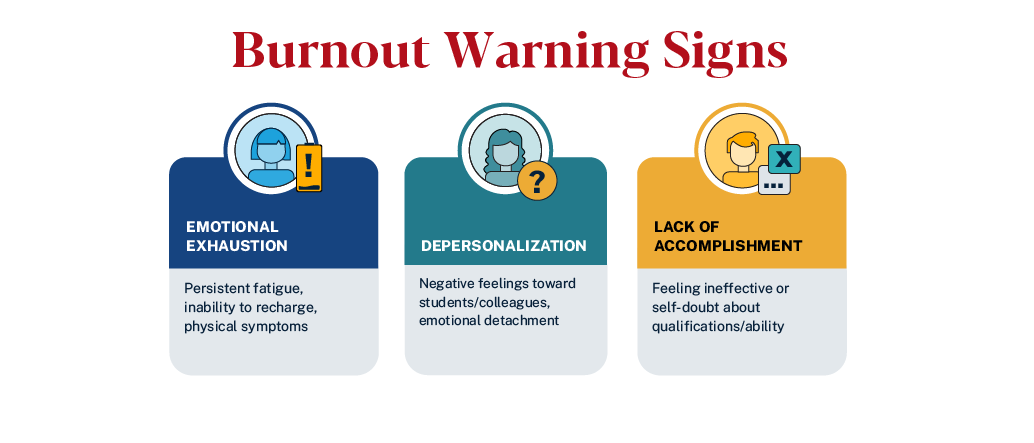
Recognizing early warning signs of burnout is essential. While burnout can look different for every individual, several common indicators often emerge, like emotional exhaustion, depersonalization and lack of personal accomplishment. Recognizing these signs early is crucial for preventing deeper emotional and physical strain.
Emotional Exhaustion
Emotional exhaustion is often the earliest and most recognizable sign of burnout. In this state, you might experience:
- Feeling consistently drained or overwhelmed with the inability to recharge over the weekend
- Increased irritability or frustration, especially during routine tasks
- Decreased sense of personal accomplishment or feeling like you’re not making a difference
- Decreased patience with students, colleagues or families
- Insomnia, headaches and/or susceptibility to illness
Depersonalization (Emotional Detachment)
When exhaustion builds throughout the school year, teachers may begin to emotionally distance themselves as a form of self-protection. Depersonalization can include:
- Sudden or slowly building negative, cynical, or indifferent feelings toward students and colleagues
- Distancing yourself emotionally to protect personal energy
- Reduced job satisfaction, a loss of enthusiasm or feelings of being ineffective despite your efforts
Lack of Personal Accomplishment (Imposter Syndrome)
Burnout can also erode your confidence and sense of competence, leading to feelings of:
- Inadequacy despite working long hours and going “above and beyond”
- Self-doubt about qualifications or ability to help students meet their goals
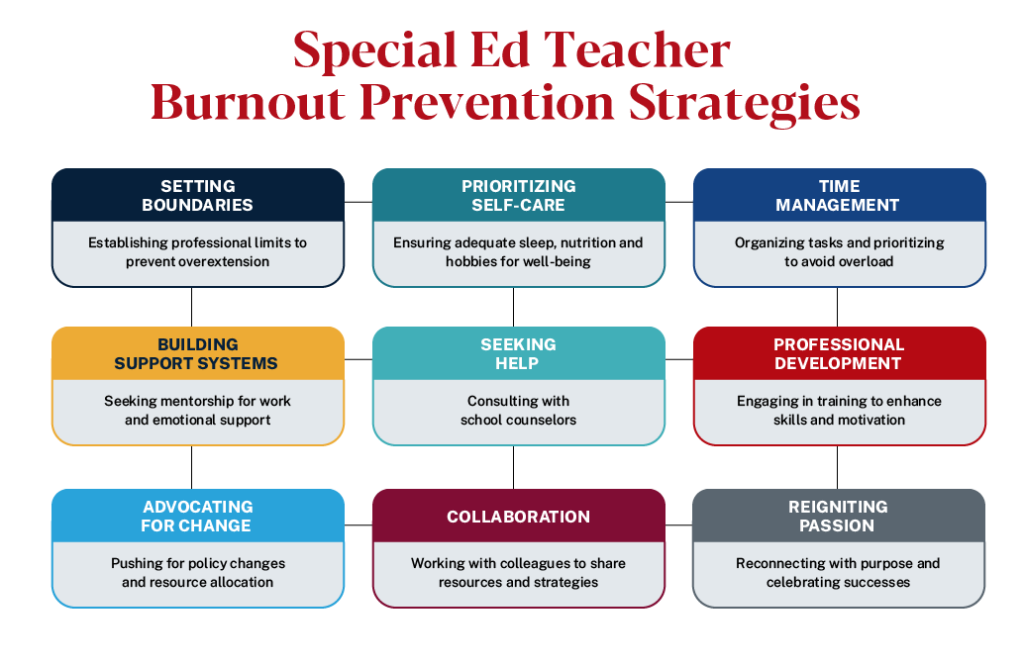
How to Avoid Burnout as a Special Education Teacher
Strategies to help avoid burnout can be easily implemented in both your professional and home settings. Some small but helpful tips include:
- Taking a daily lunch break
- Creating meaningful and collaborative projects in the classroom
- Organizing your space in a way that works for you
- Asking administration for support
- Connecting with a loving family member or friend who will listen
- Going on walks
- Taking a day off when you are able
- Seeking professional help from a counselor, if needed
Mentoring
Mentoring is one of the most powerful tools for reducing burnout. For example, support with creating IEPs not only eases anxiety but also builds confidence in navigating compliance and collaboration.
A strong mentor can provide practical classroom stress management strategies and model best practices for assessment, data interpretation and family communication. Beyond technical skills, mentors offer emotional support, helping teachers feel less isolated and more connected to their school community.
Ongoing Professional Development
Continuous learning is one of the most effective ways to support teachers, and targeted professional development provides practical tools and a sense of community. When teachers collaborate and exchange real-world solutions, it not only builds confidence but also fosters resilience, which can reduce classroom turnover. Ultimately, professional development experiences should help teachers feel equipped, valued and connected, reducing feelings of isolation and reinforcing their commitment to student success.
Professional Boundaries
One of the most overlooked strategies to implement is setting clear boundaries between work and personal life. Special education teachers often feel compelled to go above and beyond, and while this dedication is admirable, it can also quickly lead to emotional exhaustion and compassion fatigue.
Healthy boundaries and effective time management strategies protect your wellness, preserve energy for instruction, and model sustainable self-care practices for your peers and students. When you feel empowered to balance your professional and personal lives, you’re more likely to remain resilient and committed to your students.
School and Systemic Solutions
Effective burnout prevention requires a system-level approach that starts with school district and administrative leadership. Don’t be afraid to advocate for change if burnout is extensive in your school system. Educational leaders can:
- Advocate for smaller caseloads and more training. Manageable caseloads and high-quality professional development reduce emotional exhaustion and help teachers feel more effective.
- Recognize signs early and implement teacher burnout prevention measures. When leadership understands burnout indicators and puts proactive boundaries in place, teacher resilience and retention improve significantly.
- Collaborate with teachers and fellow leaders. Share the load with colleagues and create team approaches to your work.
Reigniting Your Passion for Teaching
Reconnecting with your “why” is one of the most powerful tools to combat burnout. You can do so by:
- Remembering your purpose. Take time to review student successes that couldn’t have happened without you.
- Celebrating small wins. Reflect on small breakthroughs and moments of growth to bring the joy back into teaching.
- Staying motivated through gratitude and student success stories. This can serve as a grounding force to help you recognize the difference you make, even on the hardest days.
Most importantly, teachers deserve permission to be human. The work is complex and emotionally demanding. Mistakes and tough days are inevitable. But through reflection, gratitude and celebrating student progress, you can reconnect.
FAQs About Special Education Teacher Burnout
What are early warning signs of teacher burnout?
Early warning signs of burnout emerge emotionally, physically and professionally. For example, you may experience ongoing fatigue, irritability, headaches, sleep disruption, or a sense of detachment from students and colleagues.
How can administrators help prevent special ed teacher burnout?
Administrators can mitigate burnout by providing protected time for IEP workloads and collaboration, ongoing professional development opportunities in trauma-informed teaching and inclusive practices, and strong paraprofessionals and behavioral support staff. They can also offer time management tools and resources while encouraging self-care activities and boundaries.
What’s the best way to recover from teacher burnout?
Some teachers may not realize they are burning out. Recovery is most effective when self-reflection is present. Adjustments may need to be made in caseload to allow time and space to rebuild emotional resilience and re-engage with their practice.
Conclusion
Ultimately, supporting teacher wellness is not optional; it’s essential for sustaining high-quality instruction and ensuring that students with disabilities receive the individualized instruction they deserve. By recognizing the signs early and implementing practical solutions, we can help special education teachers remain resilient, passionate and committed to their vital work.
Gain the tools and knowledge you need to succeed in special education with the fully online programs offered at American College of Education (ACE).


