
American College of Education (ACE) is incredibly proud of our graduates and how their impactful research contributes to various fields. Ed.D. in Leadership graduate Dr. Shaneka Green focused a dissertation on the experiences of female educational leaders and how leadership influences teaching and learning. Below is a summary of Green’s study, and we invite readers to explore the full version.
Green explored how female educational leaders navigate leadership roles, the influence of gender in those roles, and how leadership affects teaching and learning. Through interviews with female educational leaders, the study examined the experiences, challenges and leadership practices that shape schools and support educators. The findings offer practical insight into how schools can better support women in leadership.
Green sought to answer:
- Research Question 1: What are the lived experiences of women in educational leadership roles regarding the influence their gender has on teaching and learning?
- Research Question 2: How do female leaders describe their lived experiences regarding their roles in leadership and their influence on teaching and learning?
Advancing Women’s Leadership in Education
Women have long made up much of the education workforce, but leadership positions haven’t always reflected that reality. Although more women are now serving as principals, district leaders and other administrators than in previous decades, women remain underrepresented in many senior leadership roles.
As more women have entered educational leadership, conversations about gender and leadership have continued to evolve. Many female leaders navigate expectations and experiences that differ from those of their male counterparts, making it important to better understand how leadership is experienced across today’s schools.
What Previous Research Says About Female Educational Leadership
Before conducting the study, Green reviewed existing research on women in educational leadership to better understand what was already known and where gaps remained.
Persistent Barriers to Leadership
Women continue to face barriers as they pursue educational leadership roles, even as representation has improved over time. Across the literature, Green found consistent discussion of the challenges women face as they seek senior leadership positions.
One of the most common themes was the glass ceiling, or the invisible barriers that can limit advancement despite having the education, experience and qualifications to lead. Green also highlighted research showing that gender bias continues to shape perceptions of leadership, often placing different expectations on women than men.
Green also found that the barriers women face aren’t always the same. The literature explored how factors like work-life balance, salary disparities and access to sponsorship can influence leadership opportunities, while acknowledging how race, socioeconomic background and other aspects of identity can shape those experiences.
Leadership Approaches in Education
Transformational leadership emphasizes inspiring others, encouraging collaboration and working toward shared goals. Throughout the literature, this leadership style was associated with stronger organizational culture, professional growth for educators, and improvements in teaching and learning.
Women were also frequently associated with transformational leadership. Several studies described female leaders as effective collaborators who motivate others, support innovation and create environments where educators can grow and succeed. These leadership practices were also linked to positive school culture and student outcomes.
Building strong relationships also emerged as a recurring theme. Trust, collaboration and strong professional relationships were consistently identified as essential to effective leadership. The research suggests these qualities help create supportive school environments, encourage professional learning, and strengthen teaching and learning across the school community.
Filling an Important Research Gap
Although women in educational leadership have been widely studied, less attention has been given to how they describe their own experiences and the influence of gender on teaching and learning.
Green’s study was designed to address that gap by exploring how female educational leaders experience leadership, how gender shapes those experiences, and how leadership influences teaching and learning.
Exploring Female Educational Leadership Perceptions
To better understand the experiences of female educational leaders, Green interviewed 10 women serving in leadership roles across a rural Northern California school district. Participants included principals, assistant principals, directors and coordinators, each with at least two years of leadership experience.
Green used a qualitative descriptive phenomenological approach, which focused on understanding participants’ experiences in their own words. Each interview lasted about 30 minutes and included open-ended questions about leadership, gender, and the influence of leadership on teaching and learning.
Conducted over Zoom, the interviews gave participants the opportunity to reflect on their leadership journeys, the challenges they have faced and the ways they believe leadership shapes teaching and learning.
Turning Experiences Into Meaningful Findings
After the interviews were completed, Green transcribed each conversation and reviewed the transcripts for accuracy. Participants also had the opportunity to confirm that their responses accurately reflected what they intended to share.
Green then reviewed the interview responses to identify common ideas and experiences across participants. Using NVivo software and a thematic analysis process, similar responses were grouped together until five key themes emerged that addressed the study’s research questions.
Throughout the analysis, Green aimed to ensure the findings reflected what participants shared during the interviews.
What the Research Revealed
Five major themes emerged from the interviews, offering insight into how female educational leaders experience leadership, navigate gender, and influence teaching and learning.
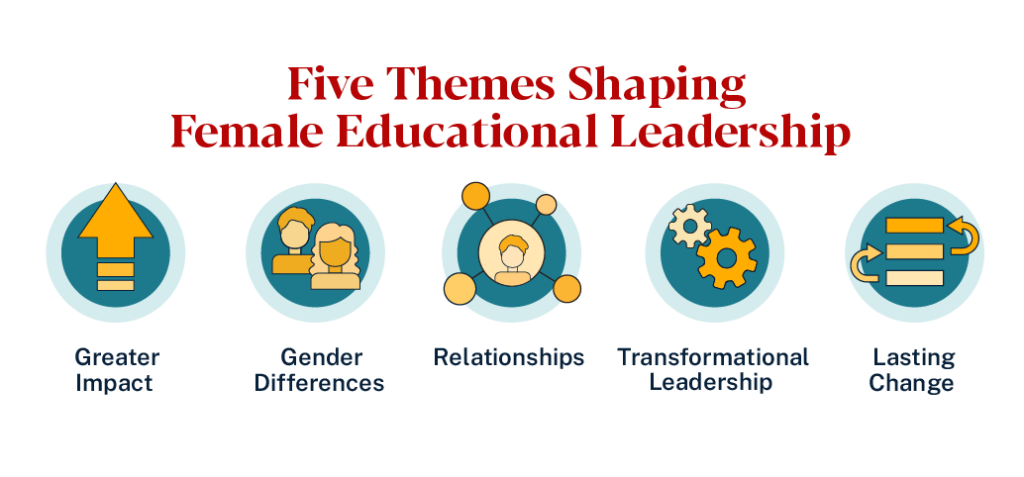
Leadership Begins With a Desire to Make a Greater Impact
Participants entered educational leadership through a variety of paths. Some were encouraged by colleagues who recognized leadership potential, while others pursued administrative roles after years in the classroom. Many described leadership as a natural opportunity for continued professional growth.
Once in leadership roles, participants focused on supporting teachers, strengthening instruction and helping shape decisions that affected entire schools. Several reflected on the opportunity to influence teaching and learning beyond the classroom while working alongside educators to improve student outcomes.
The transition wasn’t without challenges. Leaders described earning the trust of teachers, parents and other stakeholders while adjusting to new responsibilities. Moving from colleague to administrator often meant navigating new expectations and relationships within the school community.
Gender Shapes Leadership Experiences Differently
Participants described different experiences related to gender in educational leadership. While some encountered gender bias or stereotypes, others said gender had little influence on their day-to-day work.
Several participants described feeling pressure to prove their competence or establish authority. Some also shared experiences of having their leadership decisions questioned because of gender.
Not every participant shared those experiences. Many leaders, particularly those working in elementary schools, reported little or no gender bias in their roles. Several described leadership teams with more women than men, noting that collaboration, communication and instructional leadership were often valued more than gender.
Relationships Strengthen Teaching and Learning
Participants consistently described effective leadership as building trust, encouraging collaboration and working alongside educators rather than leading through authority alone.
Many participants said strong relationships with teachers were essential before meaningful instructional change could happen. They emphasized creating environments where educators felt comfortable sharing challenges, asking for feedback and participating in professional learning.
Several participants described mentoring teachers and encouraging reflection as important parts of instructional leadership. These efforts helped educators continue developing their skills while strengthening collaboration across the school.
Participants also believed relationship-building contributed to a stronger school culture. Working alongside teachers instead of directing them encouraged shared responsibility and a collective focus on improving teaching and learning.
Transformational Leadership Supports School Improvement
Participants frequently connected effective leadership with creating a shared vision, encouraging collaboration and supporting teachers. Rather than relying on authority alone, many described leadership as motivating others to work toward common goals.
Several participants said leading by example helped build trust and encouraged teachers to embrace instructional improvement and innovation. Others emphasized the importance of empowering educators, remaining flexible and responding to the changing needs of students, staff and schools.
Participants also connected these leadership practices to positive changes within their schools, including stronger instruction and improved organizational outcomes. Many viewed transformational leadership as an important part of creating supportive environments where teachers and students could succeed.
Leadership Creates Opportunities for Lasting Change
Participants viewed leadership as an opportunity to create meaningful change across their schools. Rather than focusing only on day-to-day operations, many described leadership as a responsibility to improve teaching, support educators and strengthen student learning.
Several participants emphasized the importance of advocating for teachers, expanding professional learning opportunities and creating school cultures that encourage continuous improvement. Leadership was described as an ongoing commitment to helping both educators and students succeed.
Study Limitations and Recommendations
While the study offers valuable insight into the experiences of female educational leaders, Green also acknowledges several limitations that should be considered when interpreting the findings.
The study reflects the experiences of a small group of female educational leaders from one rural Northern California school district. As a result, the findings are intended to provide insight into those participants’ experiences rather than represent all educational settings.
Because Green’s research focused on one group of educational leaders and their experiences, the findings don’t represent every school or leadership setting. Green also notes that participant attrition reduced the final sample from the 15 originally planned participants to 10 interviews, which still provided sufficient data for analysis.
Based on the findings, Green recommends that school systems:
- Create intentional leadership pathways for women transitioning from the classroom into administrative roles
- Expand mentorship, leadership preparation, leadership shadowing and professional development opportunities
- Address gender bias through leadership preparation, organizational policies and increased awareness among educators, parents and other stakeholders
Green also recommends future research examining how gender perceptions relate to measurable outcomes like student achievement and organizational performance. Additional research exploring factors like race, ethnicity, age and leadership experience could provide a deeper understanding of how women experience educational leadership across different settings.
American College of Education offers affordable degree programs designed to equip aspiring leaders with the evidence-based knowledge and skills needed to lead effectively in education settings.