
Career Guide: Speech-Language Pathologist
Here’s what you need to know.
Toggle Navigation
Our Enrollment Counselors are here to answer your questions and walk you through the enrollment process.
Career Overview: Speech-Language Pathologist
One of the most remarkable and often-overlooked parts of everyday life is our ability to communicate. We may not think about it often, but communication helps us connect with others, learn new skills, and navigate the challenges and opportunities we encounter each day. When speech, language or swallowing disorders make these interactions more difficult, speech-language pathologists help patients develop the skills and strategies needed to improve their quality of life.
If you’re interested in healthcare, education and/or rehabilitation, speech-language pathology can offer a rewarding career path. Learn what a speech-language pathologist does, the education required to enter the profession and what to expect from this growing healthcare field.
What Is a Speech-Language Pathologist?
A speech-language pathologist (SLP), sometimes called a speech therapist, is a healthcare professional who evaluates, diagnoses, and treats communication and swallowing disorders. They work with patients across different age groups, helping them improve speech, language, cognitive communication and swallowing abilities.
Speech therapists may work in schools, hospitals, skilled nursing facilities, rehabilitation centers and private practice settings. Their work often supports children with developmental speech delays, adults recovering from illness or injury, and older adults experiencing age-related communication challenges.
What Does a Speech-Language Pathologist Do?
If you’re wondering, “What does a speech pathologist do?” the answer depends on the patients they serve and the setting in which they work. In most cases, they assess communication challenges, develop treatment plans and help patients achieve meaningful progress through therapy.
Core Duties and Responsibilities
Speech-language pathologists often combine clinical expertise with patient education and rehabilitation support. Common responsibilities include:
- Evaluating speech, language and swallowing disorders
- Developing individualized treatment plans
- Providing therapy for communication challenges and speech delays
- Supporting patients recovering from injury or illness
- Collaborating with healthcare teams and educators
- Monitoring patient progress and adjusting therapy approaches
- Educating families and caregivers on communication support strategies
Work Environments
Speech-language pathologists work in a variety of healthcare and educational settings. Common environments include:
- Hospitals and rehabilitation centers
- Skilled nursing facilities
- Schools and educational programs
- Private practice clinics
- Home healthcare and teletherapy services
Skills & Traits That Make a Successful Speech-Language Pathologist
Speech therapists rely on a combination of interpersonal and clinical skills to support patients with diverse needs and treatment goals.
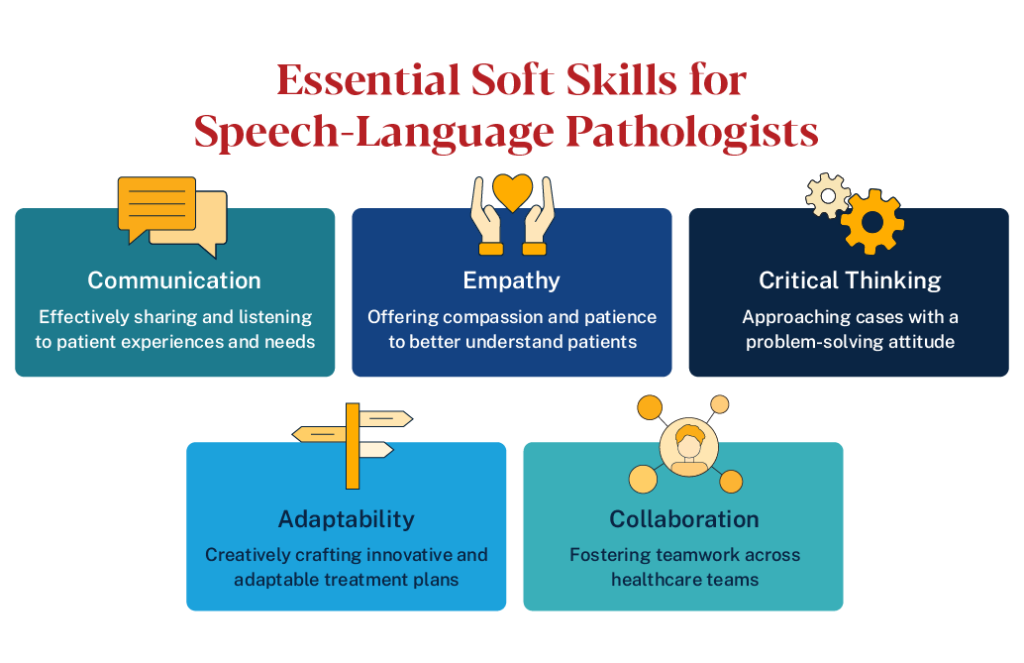
Essential Soft Skills
Because communication is central to the profession, strong relationship-building skills are essential. Successful speech-language pathologists often demonstrate:
- Communication and active listening
- Empathy and patience
- Critical thinking and problem-solving
- Adaptability and creativity
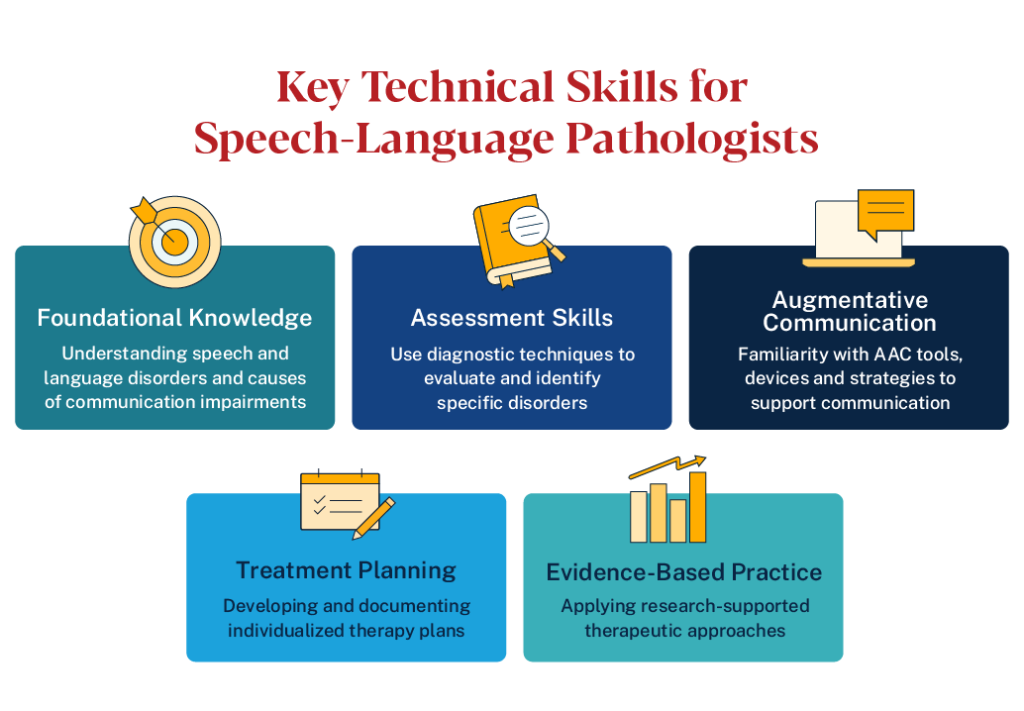
Important Technical Skills
Alongside soft skills, speech-language pathologists must understand assessment methods, treatment planning and evidence-based therapy practices. Important technical skills may include:
- Knowledge of speech and language disorders
- Assessment and diagnostic techniques
- Understanding augmentative communication tools
- Documentation and treatment planning
- Familiarity with evidence-based therapy practices
How These Skills Apply on the Job
These skills help speech-language pathologists improve communication abilities, support swallowing and cognitive rehabilitation, and coordinate care plans with healthcare professionals and educators. For example, they may work with a patient recovering from a stroke, helping them rebuild communication skills while coordinating treatment goals with the broader healthcare team.
Speech-Language Pathologist Education Requirements
Individuals researching speech pathologist education requirements should understand that this profession requires both advanced education and supervised clinical training.
Minimum Education Requirements
Most speech-language pathologists begin by earning a bachelor’s degree in communication sciences, healthcare or a related field. A master’s degree in speech-language pathology is typically required to practice professionally.
Preferred Education Pathways
Many aspiring speech therapists attend graduate programs accredited by the Council on Academic Accreditation in Audiology and Speech-Language Pathology (CAA). These programs combine coursework in communication disorders with supervised clinical practice designed to build competence in speech language assessment and treatment.
Certifications and Training Options
Many professionals pursue the Certificate of Clinical Competence in Speech-Language Pathology (CCC-SLP), a credential offered through the American Speech-Language-Hearing Association (ASHA). Certification, state licensing and continuing education help support long-term professional development and clinical competence in speech language services.
How to Become a Speech-Language Pathologist
- Earn a Relevant Bachelor’s Degree
The first step toward becoming a speech-language pathologist is earning a bachelor’s degree in communication sciences, healthcare or a related field. This foundational education introduces you to communication disorders, human development and healthcare concepts.
- Complete a Master’s Degree Program
Most states require you to earn a master’s degree from a program accredited by the CAA. These graduate programs combine classroom learning with clinical training that prepares you to evaluate and treat communication disorders.
- Gain Clinical Experience
You must also complete supervised clinical experience through practicum placements and fellowship opportunities. This hands-on training allows you to apply classroom knowledge while working directly with patients under professional supervision. Clinical practicum requirements vary by state but range from 300-400 cumulative hours.
- Post-Graduate Fellowship
One requirement to obtain ASHA CCC-SLP certification is a post-graduate fellowship, commonly known as a SLP clinical fellowship. This is designed to help you successfully transition from student to practicing speech-language pathologist. Clinical fellows must complete 1,260 hours of clinical work over a minimum of 36 weeks. This is typically split in three segments of 12 weeks each.
- Obtain Certification and State Licensure
After completing graduate education, clinical requirements and your fellowship, you will need to pass the Praxis Speech-Language Pathology Exam to earn your ASHA CCC-SLP certification and meet state licensing requirements. Certification can demonstrate advanced competence in speech language pathology and may strengthen career opportunities.
- Optional: Specialize in a Focus Area
Some speech-language pathologists choose to specialize in areas such as pediatric speech therapy, swallowing disorders or neurogenic communication disorders. Specialization can support career growth and allow you to focus on niche patient populations.
Day-in-the-Life & Real-World Scenarios
A Typical Workday
A speech-language pathologist’s day may include conducting assessments, leading therapy sessions, documenting treatment progress, and collaborating with caregivers, educators or healthcare teams. Depending on the setting, they may work with several patients throughout the day, each with unique communication goals and challenges.
Real-World Examples
One speech-language pathologist may help a child strengthen language development skills needed for success in the classroom. Another may support a stroke survivor relearning communication abilities or regaining swallowing function during rehabilitation. These varied experiences make the career field a highly diverse profession.
What Success Looks Like in the Role
Success often means helping patients communicate more effectively, gain independence and improve their overall quality of life. Strong outcomes can also include positive relationships with families and meaningful progress toward long-term therapy goals.
Speech-Language Pathologist Salary & Job Outlook
Speech pathologist salary potential can vary based on experience, location, specialization and work setting. Demand for qualified professionals remains strong across healthcare and educational environments.


FAQs
Can speech-language pathologists work remotely through teletherapy?
Yes. Many speech-language pathologists provide services through teletherapy platforms, allowing patients to receive treatment remotely while maintaining access to specialized care.
What age groups do speech-language pathologists work with?
Speech-language pathologists work with patients across the lifespan, including children, adults and older adults.
Do speech-language pathologists only treat speech disorders?
No. In addition to speech disorders, they may treat language, cognitive communication and swallowing disorders.
Can you become a speech pathologist with a nursing degree?
A nursing degree alone does not qualify someone to practice as a speech-language pathologist. However, individuals with a nursing background may pursue the required graduate education, clinical experience, certification and state licensing needed to enter the profession.
Your Speech Pathology Career Starts With ACE
Speech-language pathologists help patients overcome communication and swallowing challenges that can affect daily life, learning and independence. For individuals interested in healthcare, rehabilitation and patient-centered support, this profession can offer a meaningful opportunity to make a lasting difference.
American College of Education (ACE) offers affordable healthcare-focused degree programs designed to support your professional growth and long-term career goals.