Career Guide: Librarian
Here’s what you need to know.
Toggle Navigation
Our Enrollment Counselors are here to answer your questions and walk you through the enrollment process.
Career Overview: Librarian
Libraries have long been the place where people go to discover information, explore new ideas and build expertise. But these valuable centers of knowledge don’t just run on their own. At the heart of it all are librarians, who help students conduct research, connect communities with educational resources, support digital learning and guide people through an increasingly complex information landscape.
For individuals who enjoy learning, helping others and working with information, a librarian career can offer a meaningful way to make an impact. Whether working in public libraries, schools, colleges or specialized organizations, they play an important role in supporting education, literacy and lifelong learning. Learn more about what librarians do, librarian education requirements and how to become a librarian.
What Is a Librarian?
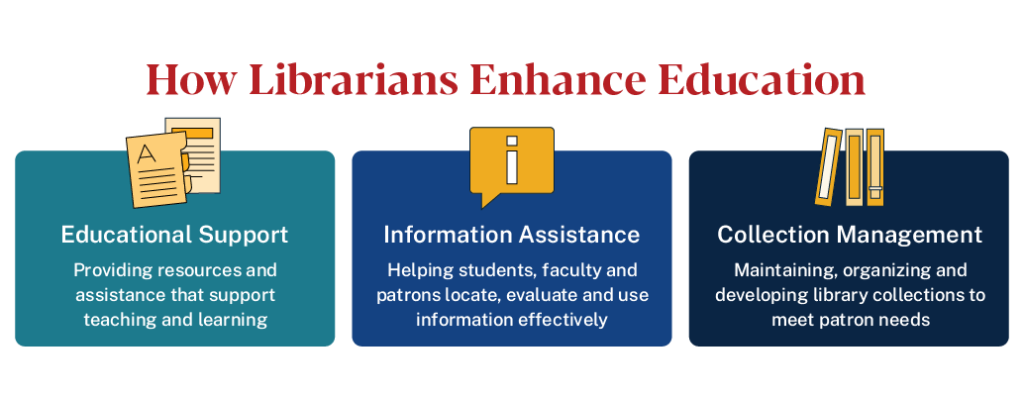
A librarian is a professional who manages collections of physical and digital resources while helping people find, evaluate and use information effectively. While books remain an important part of many libraries, modern librarians oversee a wide range of materials, including databases, journals, multimedia resources and online research tools.
As technology continues to change how information is created and accessed, librarians serve as guides who help individuals navigate reliable sources and develop research skills. They may assist a college student conducting scholarly research, help a parent find age-appropriate reading materials or support community members seeking career development resources.
Librarians work in a variety of settings and specialties. For instance, public and service librarians serve local communities through public libraries. School librarians support K-12 students and educators through school library programs. Academic librarians work at colleges and universities, while specialized librarians may support healthcare systems, law firms, government agencies or research organizations.
What Do Librarians Do?
Librarians do a lot more than simply checking books in and out. They manage information resources, provide research assistance, develop educational programming and help ensure people have access to the tools they need to learn, work and grow.
Core Duties and Responsibilities
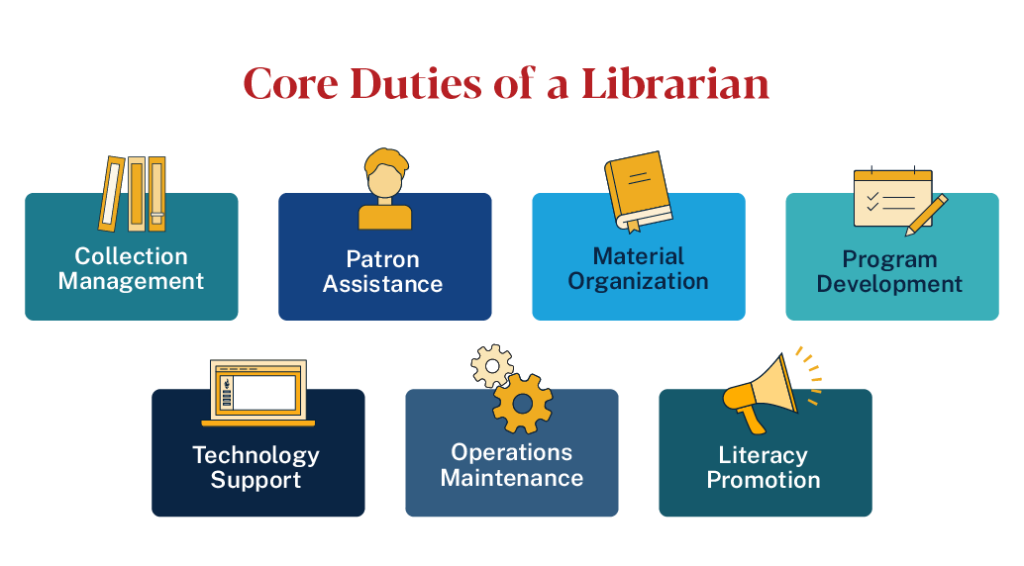
Librarians perform a wide range of responsibilities that support both library operations and community engagement. Depending on their work environment, they may manage library collections, assist patrons with research requests and oversee access to digital and physical library materials.
Many spend time organizing and cataloging information resources to ensure patrons can locate materials efficiently. They may also develop literacy programs, coordinate educational workshops and create services designed to meet the needs of specific populations.
Additional responsibilities often include supporting library systems, maintaining technology resources, evaluating new materials for collection development and promoting library services within the community. Through these efforts, librarians help create environments where learning and information access remain accessible to everyone.
Work Environments
Librarians work in a variety of settings, each serving different patrons and information needs.
Public libraries focus on community services, literacy initiatives and lifelong learning opportunities for patrons of all ages. School libraries support classroom instruction and help students develop research and information literacy skills. Academic libraries at colleges and universities assist students, faculty and researchers with scholarly resources and specialized databases.
Other professionals work in government and corporate libraries where information management supports organizational goals. Special libraries may serve healthcare organizations, legal offices, museums or research institutions that require highly specialized collections and expertise.
Skills & Traits That Make a Successful Librarian
Success in librarianship requires a combination of interpersonal skills, organizational abilities and technical knowledge. While specific responsibilities vary across library settings, effective librarians share several common strengths that help them support patrons and manage information resources effectively.
Essential Soft Skills
Communication is one of the most important skills for this job. Whether helping a student refine a research topic or assisting a community member with technology questions, librarians must explain information clearly and provide excellent customer service.
Equally important are strong organizational skills and attention to detail. Managing collections, maintaining records and supporting library operations require accuracy and consistency. Problem-solving abilities help librarians identify solutions when patrons need assistance locating information or navigating unfamiliar resources.
When it comes to soft skills, adaptability has become increasingly valuable as libraries continue integrating new technologies and digital services. Librarians who embrace innovation are often better equipped to meet changing community needs, and some even specialize as library media specialists. A commitment to serving diverse populations also helps ensure library services remain welcoming and accessible to all users.
Important Technical Skills
Modern librarians rely on a variety of technical tools and systems. Familiarity with library systems and cataloging software helps them organize and manage collections efficiently.
Many also use database platforms, digital archives and information retrieval systems to support research and information access. Knowledge of digital resource management has become increasingly important as libraries expand online collections and electronic services.
Emerging technologies, including artificial intelligence tools, are also influencing how information is discovered and evaluated, creating new opportunities for librarians to guide patrons in responsible and effective technology use.
Collection development skills help librarians evaluate materials and maintain relevant library resources. Understanding information management principles and research methodologies further supports effective service delivery across a variety of environments.
How These Skills Apply on the Job
These skills come together in practical ways every day. For example, an academic librarian may help a graduate student locate peer-reviewed research while teaching strategies for evaluating sources. A public librarian might assist a job seeker with online applications while recommending career development resources.
By combining technical expertise with strong interpersonal skills, librarians help people navigate an increasingly information-rich world.
Librarian Education Requirements
Understanding librarian education requirements is an important step for anyone exploring how to become a librarian. While educational pathways can vary depending on specialization, most professional librarian positions require both undergraduate and graduate-level education.
Minimum Education Requirements
Most begin by earning a bachelor’s degree. Undergraduate study provides foundational skills in communication, research and critical thinking that support future work in library and information services.
Because librarians work in many different environments, educational backgrounds often vary. They may study education, history, English, social sciences, business or other disciplines before pursuing graduate-level library training.
Preferred Education Pathways
A Master of Library and Information Science (MLIS), sometimes called a Master of Library Science (MLS), is commonly required. These graduate programs focus on information management, research methods, library services and emerging technologies.
Depending on career goals, students may pursue specialized coursework related to education, archives, information systems or research support. Academic librarian and specialized librarian roles often benefit from advanced subject-matter knowledge in addition to library science training.
Certifications and Training Options
Some positions require additional credentials. For example, school librarians may need state certification or licensure depending on local requirements.
Continuing professional development is also common throughout a librarian career. Training in digital resources, information technology and emerging library systems helps professionals stay current as information services evolve. Professional organizations frequently offer workshops, conferences and certifications that support ongoing growth.
How to Become a Librarian
While career paths can vary, most follow a similar progression that combines education, practical experience and professional development.
- Earn a Bachelor’s Degree
The first step is completing a bachelor’s degree in a field that supports strong communication, research and analytical skills. Choose areas of study that align with your interests or future specialization goals.
- Pursue a Master’s Degree in Library Science
After earning a bachelor’s degree, pursue an MLIS or related graduate program. This specialized education provides the knowledge needed to manage information resources, support research and oversee library services.
- Gain Experience in Library Settings
Practical experience is valuable for developing professional skills and understanding daily library operations. Gain this experience through internships, part-time positions or entry-level roles in public libraries, school libraries or academic libraries.
Working directly with patrons and information resources helps you build confidence while learning how different library environments operate. - Obtain Required Certifications
Some positions require state certification, employer-specific credentials or additional training. Requirements vary by location and specialization, so research the expectations of your intended career path.
- Optional: Pursue Specialized Librarian Roles
As you gain experience, you may choose to specialize. Perhaps you want to focus on supporting higher education and scholarly research. Alternatively, you could work closely with educators to strengthen student learning. Outside of academic settings, you could also work at organizations with unique information needs and specialized collections.
Day-in-the-Life & Real-World Scenarios
A Typical Workday
A librarian’s day often includes a mix of public service, information management and program support. One part of the day may involve assisting patrons with research questions, while another focuses on managing collections or updating digital resources.
Many librarians also coordinate educational programs, collaborate with community organizations and support events designed to encourage literacy and learning. The variety of responsibilities helps make the profession both dynamic and rewarding.
Real-World Examples
Imagine a high school student preparing a major research project. A school librarian may help identify credible sources, teach effective search strategies and explain how to evaluate information for accuracy and bias.
In a public library setting, a librarian might develop a literacy program for community members, helping participants strengthen reading skills while connecting them with additional educational resources and support services.
What Success Looks Like in the Role
Successful librarians help improve access to information and educational opportunities. They create welcoming environments where people can explore ideas, develop skills and find reliable resources.
Strong community engagement, effective management of library collections and meaningful support for learning initiatives are all indicators of success. Ultimately, they help empower others through knowledge and information access.
Librarian Salary & Job Outlook
Librarian salary can vary based on factors such as education, experience, geographic location and work setting. These positions exist within public libraries, schools, colleges and universities, government agencies, and specialized organizations, with earning potential often reflecting the scope of responsibilities and expertise required for the role.
The job outlook for librarians continues to be shaped by evolving technology, digital resource management and the growing need for information literacy. Those who develop expertise in research support, digital collections and library systems may find opportunities to expand their responsibilities and advance within the profession.


FAQs
Do all librarians need a master’s degree?
Many positions require a Master of Library and Information Science (MLIS) degree. However, requirements can vary depending on the employer, work setting and specific role. Some support positions may not require graduate education, while school and academic librarians often have additional credential requirements.
What is the difference between a school librarian and an academic librarian?
School librarians work in K-12 educational settings and support student learning, literacy development and classroom instruction. Academic librarians work at colleges and universities, where they assist students, faculty and researchers with scholarly resources, research methods and information literacy.
Can librarians specialize in specific subjects or industries?
Yes. They can specialize in areas such as healthcare, law, government, archives, business, research or education. Specialized librarians often develop expertise in the information needs and resources associated with a particular field.
How has technology changed the librarian profession?
Technology has expanded the role of librarians beyond managing physical collections. Today, they frequently oversee digital resources, online databases, electronic collections and technology-based learning tools while helping patrons evaluate information in digital environments.
Take an Active Role in Your Community’s Knowledge
If you're interested in helping people discover knowledge, develop research skills and access valuable information resources, a librarian career may offer a rewarding path. Through education, professional development and practical experience, librarians help strengthen communities, support lifelong learning and connect people with the resources they need to succeed.
ACE offers affordable degree programs designed for working adults seeking to build skills in education, leadership and professional studies. Whether you're preparing for a new career path or advancing your educational goals, ACE can help you take the next step toward your future.