
Career Guide: Instructional Coordinator
Here’s what you need to know.
Toggle Navigation
Our Enrollment Counselors are here to answer your questions and walk you through the enrollment process.
What Is an Instructional Coordinator?
Instructional coordinators develop, evaluate and improve curriculum and instruction across schools and education systems. An instructional coordinator focuses on aligning school curricula and teaching standards with district, state and national expectations.
Working across elementary, middle and high school settings, instructional coordinators review instructional materials, assess curriculum effectiveness and support consistent teaching practices. By connecting classroom instruction with broader academic goals, they help drive measurable improvements in student outcomes.
What Does an Instructional Coordinator Do?
Instructional coordinators improve teaching and learning by guiding curriculum decisions, supporting teachers and monitoring academic performance across schools.
Core Duties and Responsibilities
Most instructional coordinator job descriptions focus on the ability to develop and refine curriculum frameworks while ensuring alignment with school boards and state standards. This position involves evaluating curriculum effectiveness and analyzing student performance data to guide instructional decisions and training teachers.
Collaboration with administrators is also central to the role, particularly when implementing updates and ensuring compliance with district and state requirements.
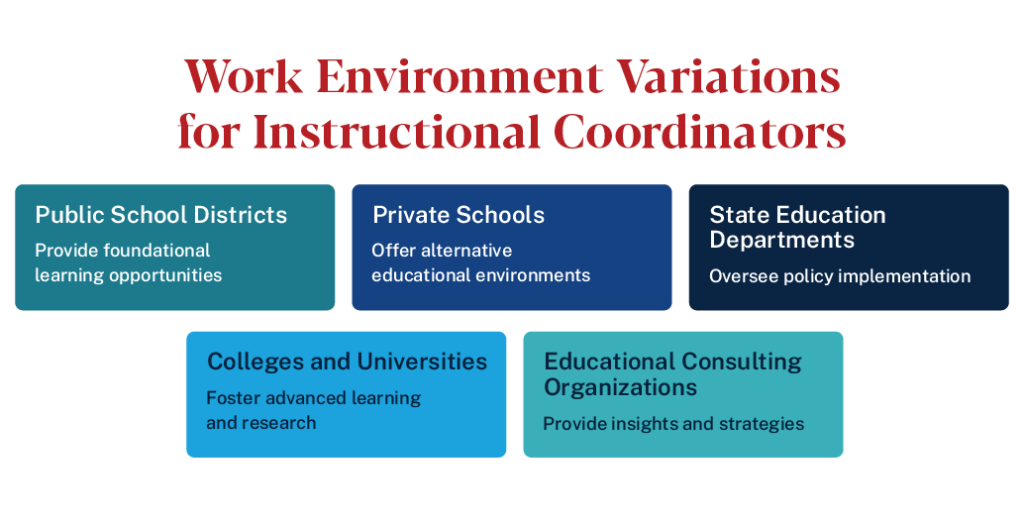
Work Environment Variations
Instructional coordinators work in public schools, private schools and state education departments. Some roles are based in colleges, universities or educational consulting organizations, focusing on program development or policy work.
Skills & Traits For Success
Essential Soft Skills
Instructional coordinators rely on a combination of interpersonal and leadership skills to work effectively across teams.
- Communication and leadership
- Critical thinking and problem-solving
- Collaboration with educators and administrators
- Organizational and project management
- Adaptability to evolving education standards
Important Technical Skills
The role also requires a strong foundation in curriculum design, data analysis and education systems.
- Knowledge of curriculum and instruction design
- Experience with data analysis and assessment tools
- Understanding of education policies and standards
- Ability to implement instructional technologies
How These Skills Apply on the Job
These skills are used daily while training teachers, providing educational support, evaluating instructional outcomes and leading school-wide improvements tied to student performance.
Instructional Coordinator Education Requirements
Entering this field requires formal education, classroom experience and ongoing professional development.
Minimum Education Requirements
A bachelor’s degree in education or a related field is typically required, along with prior teaching experience in many roles.
Preferred Education Pathways
Many employers prefer candidates with a graduate degree, especially for roles with expanded responsibilities.
Certifications and Training Options
Depending on the state, some positions require an education administrator license. Ongoing training in curriculum development, instructional leadership and teaching techniques can support advancement.
How to Become an Instructional Coordinator
Becoming a patient liaison involves building the right combination of education, experience and communication skills. Each step helps prepare you to work effectively with patients and healthcare teams.
- Earn a Degree in Education
Start with a bachelor’s degree in education or a related field.
- Gain Teaching Experience
Work as a teacher in elementary, middle or high school settings to build classroom experience and develop an understanding of curriculum use.
- Earn a Graduate Degree
Pursue a master’s degree in curriculum and instruction or educational leadership to prepare for advanced responsibilities.
- Obtain Licensure or Certification
Meet any state requirements for an education administrator license.
- Optional: Pursue Advance Into Leadership Roles
With experience, instructional coordinators can move into roles such as curriculum director or education administrator positions within a school district.
Day-in-the-Life & Real-World Scenarios
A Typical Workday
Instructional coordinators review curriculum materials, meet with teachers and administrators, and analyze student performance data to guide decisions.
Real-World Examples
- Implementing new teaching standards across a school district
- Training teachers on updated curriculum frameworks
What Success Looks Like in the Role
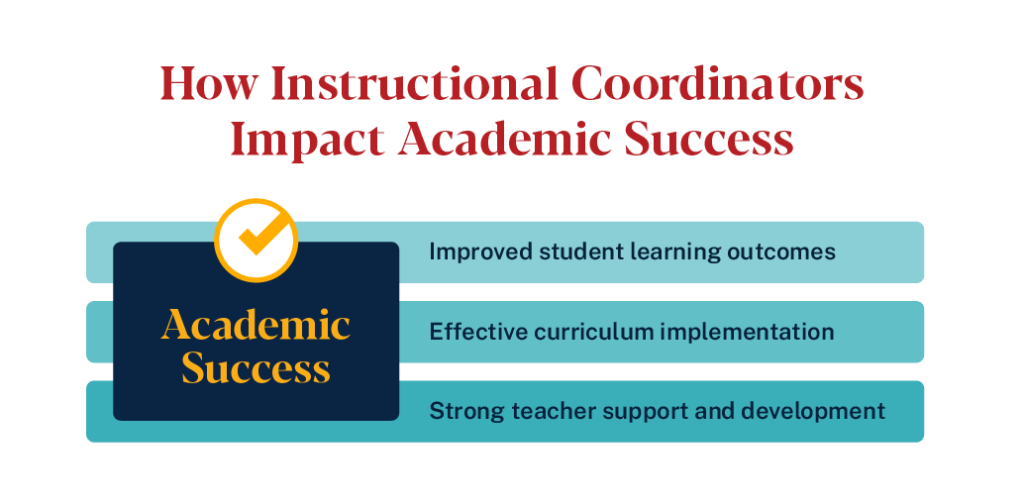
Success is reflected in improved student outcomes, consistent curriculum implementation and stronger teacher development.
Available Degree Programs
Advancing into this role typically builds on classroom experience with expertise in curriculum, leadership or instructional technology. American College of Education (ACE) offers fully online courses with some programs requiring local in-person learning experiences.
- M.Ed. in Curriculum and Instruction
- M.Ed. in Educational Leadership
- M.Ed. in Instructional Design and Educational Technology
- M.Ed. in Instructional Coaching and Teacher Leadership
Career Outlook & Growth
Instructional coordinator salary reflects a combination of teaching experience and leadership responsibility with variation based on location and qualifications.


The United States Bureau of Labor Statistics reports a median annual salary of $74,720 for instructional coordinators as of May 2024.* Entry-level roles may earn less, while experienced professionals can earn more depending on position and setting.
Approximately 21,900 openings are projected each year from 2024 through 2034 as schools continue to focus on improving curriculum effectiveness and student outcomes.*
FAQs
Do instructional coordinators need teaching experience?
Most roles require teaching experience to ensure a strong understanding of classroom instruction.
Do instructional coordinators need a license?
Some states require an education administrator license, depending on the role and location.
Can instructional coordinators work outside of schools?
Yes, they may work in higher education, government agencies or consulting organizations.
What is the difference between an instructional coordinator and a curriculum specialist?
The roles are often similar, though instructional coordinators may take on broader leadership responsibilities than curriculum specialists.
How long does it take to become an instructional coordinator?
It typically takes five to eight years, including earning a bachelor’s degree, gaining teaching experience and completing a graduate degree.
How ACE Can Help
American College of Education
offers online programs with flexible courses designed to help you develop expertise in curriculum development, teacher support and educational leadership. Our programs can support your career goals and prepare you for roles in instructional coordination and academic administration.