Junior High Teacher Career Guide
Here’s what you need to know.
Toggle Navigation
Our Enrollment Counselors are here to answer your questions and walk you through the enrollment process.
Junior High Teacher Career Overview
The years between elementary school and high school are a period of rapid growth. Students begin forming stronger academic interests, developing independence and navigating more complex social experiences. A junior high teacher supports learners during this transition, helping them build confidence, strengthen study habits and stay motivated as school becomes more challenging.
If you are drawn to guiding adolescents through this important stage, this could be a meaningful and dynamic teaching career. In this guide, we’ll explore how to become a junior high teacher, responsibilities, qualifications, advancement opportunities and more.
What Is a Junior High Teacher?
A junior high teacher is an educator who works with sixth through eighth-grade students. Some districts refer to these grades as middle school instead of junior high, and grade groupings can vary. Junior high schools traditionally serve students who are transitioning from elementary school into more advanced academic expectations, often focusing on grades seven and eight, while middle schools more commonly include grades six through eight.
While naming conventions differ, the classroom responsibilities and teacher qualifications are very similar across both settings. Junior high teachers usually focus on a specific subject area, such as math, science, English or social studies. Because students at this age are developing quickly, teachers combine academic instruction with guidance that supports social and emotional growth.
Strong communication skills, patience and adaptability are essential. Teachers must respond to changing student needs, encourage independence, and create a structured environment that supports both learning and well-being.
What Does a Junior High Teacher Do?
Junior high teachers balance academic instruction with guidance that supports students during an important stage of development. Their daily work blends subject expertise, structured classroom practices and collaboration with others who support student success. Specific responsibilities include but aren’t limited to:
Curriculum and instruction: Junior high teachers develop lessons that align with state standards and support student learning in their content area. Instruction becomes more specialized than in earlier grades, and teachers help students prepare for high school coursework.
Classroom management: Effective classroom management is central to success. Teachers establish expectations, maintain routines and promote respect. Strong classroom leadership helps create a positive and inclusive learning environment.
Assessment and feedback: Teachers grade assignments, track academic progress and adjust instruction based on results. Feedback helps students understand their strengths and areas for improvement.
Collaboration: Junior high teachers communicate regularly with families, administrators and support staff, including special education teams. These partnerships help address academic and behavioral needs.
Subject specialization: Unlike many elementary school educators, junior high teachers typically specialize in a single subject. For example, one teacher may focus on seventh-grade math, while another teaches eighth-grade history.
How to Become a Junior High Teacher
If you are researching how to become a junior high teacher, you will usually complete a degree, a preparation program and state credentials. Requirements vary by state and by department of education, but the general pathway is similar.
| Step | What You’ll Do | Why It Matters |
|---|---|---|
| Earn a bachelor’s degree | Complete a bachelor’s degree in your chosen subject area or in education through an accredited degree program | Builds content knowledge and prepares you for a teaching career |
| Complete teacher preparation | Participate in a teacher education program with supervised classroom experience | Develops practical skills in instruction and classroom management |
| Pass required exams | Take a teaching certification exam in your subject area and teaching knowledge | Demonstrates readiness for state licensure |
| Obtain certification | Apply for teaching certification or a teaching license in your state | Required for most public school teacher roles |
| Continue professional development | Pursue professional development or a master’s degree | Supports advancement in your education career path |
Keep in mind that licensure rules vary, so it’s important to review your state’s guidelines.
Essential Skills for Junior High Teachers
Success in junior high classrooms depends on both subject knowledge and interpersonal strengths. The following teacher skills support strong student motivation and engagement:
- Classroom management: Clear expectations and consistent routines help maintain a productive environment.
- Subject expertise: Deep knowledge of a specific subject area allows you to present material clearly and answer student questions.
- Emotional intelligence: Early adolescents experience rapid emotional changes. Teachers who understand this can better support student growth.
- Technology use in teaching: Digital tools, learning platforms and classroom technology are now part of everyday instruction in many public schools.
Related Degree Programs
Initial Licensure Programs
Initial licensure programs are designed for those with a bachelor’s degree who are seeking to become educators. These programs meet state educational requirements for initial teacher certification/licensure in Indiana.
- Certificate in Transition to Teaching in Secondary Education
- Certificate in Transition to Teaching in Special Education
- M.A. in Secondary Teaching
Content Specialization Programs
Content area programs are designed for educators seeking to specialize in a subject and deepen instructional expertise within it.
- M.Ed. in Biology Education
- M.Ed. in Chemistry Education
- M.Ed. in English Education
- M.Ed. in History Education
- M.Ed. in Literacy
- M.Ed. in Mathematics Education
- M.Ed. in Sociology Education
- M.Ed. in Special Education
- M.Ed. in STEM Education
Junior High Teacher Salary and Job Outlook
The Bureau of Labor Statistics categorizes junior high teachers under the occupational classification for middle school teachers, and as of May 2024, the median annual salary for middle school teachers was $62,970.* Earnings vary based on experience, location, education level and industry.
Although overall employment is projected to decline modestly, schools continue to need qualified educators to replace those who retire or leave the profession. Junior high teachers often benefit from stable employment, scheduled school breaks, health insurance options, and retirement plans offered through many public schools and school districts. Over time, some educators move into roles such as instructional coach, department chair or school administrator.
*Bureau of Labor Statistics. Accessed Feb. 9, 2026.
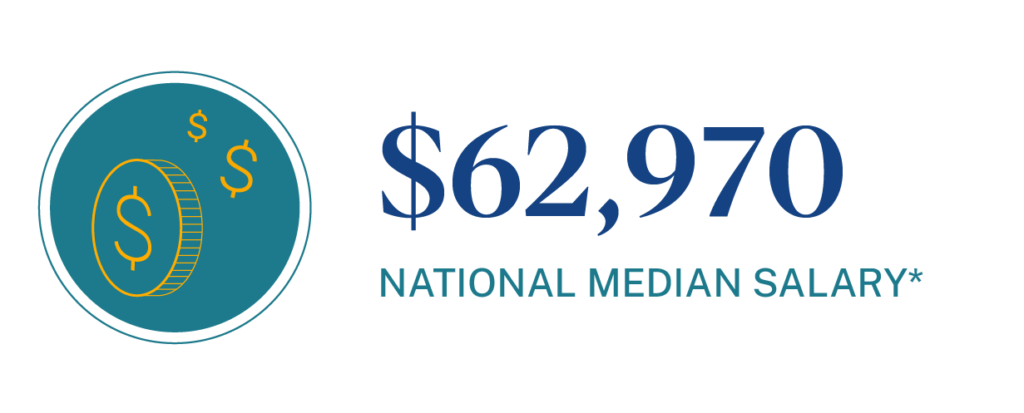

As of 2024, the median annual pay for middle school teachers is $62,970.*
About 40,500 middle school teacher openings are projected each year from 2024 to 2034.*
FAQs
What degree do I need to teach junior high?
Most positions require a bachelor’s degree in a subject area along with completion of a teacher preparation program.
How long does it take to become a junior high teacher?
A bachelor’s degree typically takes four years, followed by time to complete certification and licensing requirements.
What’s the difference between middle school and junior high teachers?
The terms often refer to similar roles. Junior high traditionally includes grades seven and eight, while middle school may include grades six through eight, but the responsibilities are largely the same.
Can I become a teacher without an education degree?
Some states offer alternative certification routes that allow individuals with a bachelor’s degree in another field to enter teaching after completing required training and exams.
Take the Next Step in Your Career
Junior high teachers help students build the academic skills, confidence and independence they need as they prepare for high school and beyond. This stage of learning can shape how students see themselves as learners and how they approach future challenges.
With flexible online programs designed for working adults, ACE can support you as you take the next step toward a meaningful and rewarding future in education.