
Career Guide: History Teacher
Here’s what you need to know.
Toggle Navigation
Career Overview
History helps us better understand the world around us. It provides context for current events, shapes cultural awareness and encourages thoughtful decision making. Without a strong foundation in history, interpreting societal changes and engaging in civic life becomes much more challenging.
History teachers play an essential role in building that foundation. Guiding students through past events, diverse perspectives and critical analysis cultivates skills that extend far beyond the classroom. Teaching history is not just about dates and facts. It is about helping students think deeply, ask questions and develop informed viewpoints.
If you are considering this career path, this guide will help you explore how to become a history teacher, responsibilities, qualifications and more.
What Is a History Teacher?
A history teacher is an educator who helps students explore past events, understand their significance and connect them to the present. While their core responsibility is teaching history, the role also involves developing students’ ability to analyze information, evaluate sources and communicate ideas clearly.
History teachers often design lesson plans that go beyond textbooks. They incorporate discussions, primary source analyses and real-world connections to make content engaging and meaningful. In doing so, they support both academic growth and personal development.
It’s important to note that these teachers work in a variety of settings, including middle schools, high schools and colleges. However, most history teachers begin their careers in K-12 education, where they focus on building foundational knowledge and critical thinking skills.
What Does a History Teacher Do?
A history teacher’s daily work blends instruction, planning and student support. In the classroom, they create structured learning environments where students can explore complex ideas while developing essential academic skills.
Core Duties and Responsibilities
The responsibilities of a history teacher extend beyond delivering lectures. Each task contributes to creating an engaging and supportive learning experience that helps students succeed.
- Developing and delivering lesson plans: Creating structured lessons that cover topics such as world history, United States history and government and are designed to meet curriculum standards while keeping students engaged
- Assessing student performance: Evaluating how well students understand key concepts and provide feedback to support improvement through essays, quizzes and projects
- Teaching specialized topics: Focusing on specific areas such as world history or advanced placement courses, depending on school needs
- Integrating instructional tools: Enhancing the learning experience and making historical content more accessible using technology, multimedia resources and interactive activities
- Communicating with school communities: Collaborating with parents, administrators and colleagues to support student success
- Mentoring and guiding students: Encouraging curiosity and critical thinking
Work Environment Variations
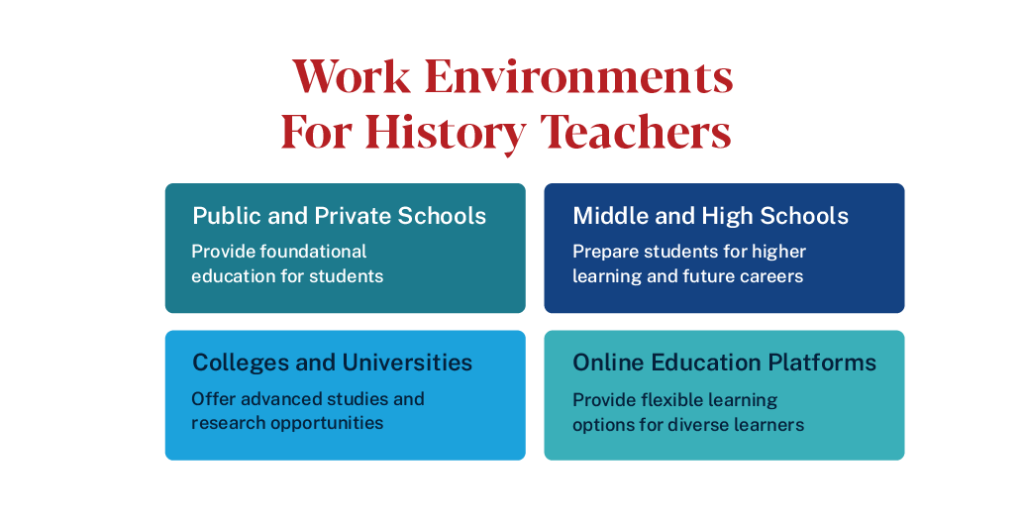
History teachers can work in different educational settings, each offering unique experiences and expectations.
- Public and private schools: Most history teachers work in K-12 settings, where they follow state standards and established curricula
- Middle schools and high schools: Some teachers focus on introductory content, while others teach more advanced or specialized courses
- Colleges and universities: Postsecondary teaching often requires advanced degrees and may include research responsibilities
- Online learning environments: Virtual education continues to grow, creating opportunities to teach history through digital platforms
Skills & Traits That Make a Successful History Teacher
Becoming an effective history teacher requires a balance of interpersonal strengths and technical expertise. These skills help teachers create meaningful learning experiences while supporting student success.
Essential Soft Skills
Strong soft skills allow teachers to connect with students and create a positive classroom environment.
- Communication skills: Explaining complex historical ideas in clear and engaging ways is essential.
- Critical thinking: Teachers guide students in analyzing events, comparing perspectives and forming conclusions
- Patience and adaptability: Every classroom is different, so flexibility helps address diverse learning needs
- Classroom management: Maintaining an organized and respectful environment supports effective learning
- Cultural awareness: Understanding diverse perspectives helps teachers present history in a balanced and inclusive way
Important Technical Skills
In addition to interpersonal strengths, history teachers rely on practical teaching tools and subject knowledge.
- Lesson planning and curriculum development: Structured planning ensures lessons align with standards and learning goals
- Subject matter expertise: A strong degree in history provides the foundation for accurate and engaging instruction
- Educational technology: Digital tools support interactive learning and assessment
- Knowledge of certification requirements: Understanding teacher certification and standards is essential for career advancement
How These Skills Apply on the Job
These skills come together in everyday teaching. You might find yourself leading a discussion on a major historical event, helping students analyze primary sources or guiding them as they connect past events to current issues. In each moment, history teachers use these skills to support understanding, build confidence and help students develop lasting academic habits.
History Teacher Education Requirements
If you are exploring how to become a history teacher, understanding the required education is an important first step. Most pathways include a combination of academic preparation and hands-on teaching experience.
Minimum Education Requirements
Most qualifications for history teacher include a bachelor’s degree in history, social studies or education. In addition, candidates must complete an approved teacher preparation program that includes supervised teaching experience. State criteria may vary.
Preferred Education Pathways
Many teachers choose to combine a degree in history with a focus on secondary education. This approach helps build both subject knowledge and teaching skills, preparing candidates for classroom success.
Certifications and Training Options
To work in public schools, you will typically need a state teaching license or certification. This process often includes passing required exams, completing student teaching or a classroom practicum, and demonstrating your readiness to lead a classroom independently.
These hands-on experiences are an important part of teacher preparation programs, giving you the opportunity to apply what you have learned in a real-world setting. Many teachers also choose to participate in professional development workshops to continue building their skills after entering the field.
How to Become a History Teacher
Becoming a history teacher is a structured process, but it is also a rewarding one that builds your confidence step by step. Each stage is designed to help you develop the knowledge, practical skills and credentials needed to succeed in the classroom. While requirements may vary by state, most pathways follow a similar progression that prepares you for both certification and real-world teaching.
- Earn a Relevant Degree
The first step is completing a bachelor’s degree in history, education or a related field. This stage helps you build a strong foundation in historical knowledge while introducing key instructional concepts. As you progress, you will begin to understand how to translate complex topics into lessons that students can engage with and understand.
- Gain Classroom Experience
Hands-on experience is an essential part of becoming a history teacher. Through student teaching and classroom placements, you will spend time in middle or high school settings working directly with students.
During this stage, you may observe experienced teachers, assist with lesson delivery and gradually take on more responsibility in the classroom. Mentorship from established teachers can also help you refine your teaching style and build confidence before leading your own classroom. - Obtain Certification
After completing your degree and classroom experience, the next step is earning your teaching certification. This typically involves passing state-required exams and applying for licensure. Certification ensures that you meet the standards required to teach in your state and demonstrates that you are prepared to support student learning effectively.
- Apply for Teaching Positions
Once you are licensed, you can begin applying for teaching roles in public or private schools. Opportunities may also exist in online or hybrid learning environments, depending on your interests and experience. As you enter the field, you will continue developing your skills, refining your teaching approach and building meaningful connections with your students.
- Optional: Advance With a Graduate Degree
Earning a master’s degree can open doors to leadership roles, curriculum development or advanced teaching opportunities.
Day-in-the-Life & Real-World Scenarios
Understanding the daily experience of teaching can help you decide if this path aligns with your goals. While no two days are exactly the same, history teachers often balance instruction, preparation and meaningful interaction with students throughout the day.
A Typical Workday
A typical day might begin with preparing materials for upcoming lessons or reviewing student work from the previous day. In the classroom, history teachers lead lessons, guide discussions and encourage students to share their perspectives.
Throughout the day, you may shift between introducing new concepts, facilitating group activities and answering questions that help students think more critically. Outside of class time, teachers often grade assignments, plan future lessons and review curriculum standards to ensure students stay on track.
Real-World Examples
In practice, teaching history often involves creating opportunities for students to connect with the material. You might design a unit on U.S. history that encourages students to explore multiple perspectives or lead a discussion on how past events continue to shape current issues.
You may also guide students through analyzing primary source documents, helping them evaluate credibility, identify bias and form their own conclusions. These moments help bring history to life and make learning more meaningful.
What Success Looks Like in the Role
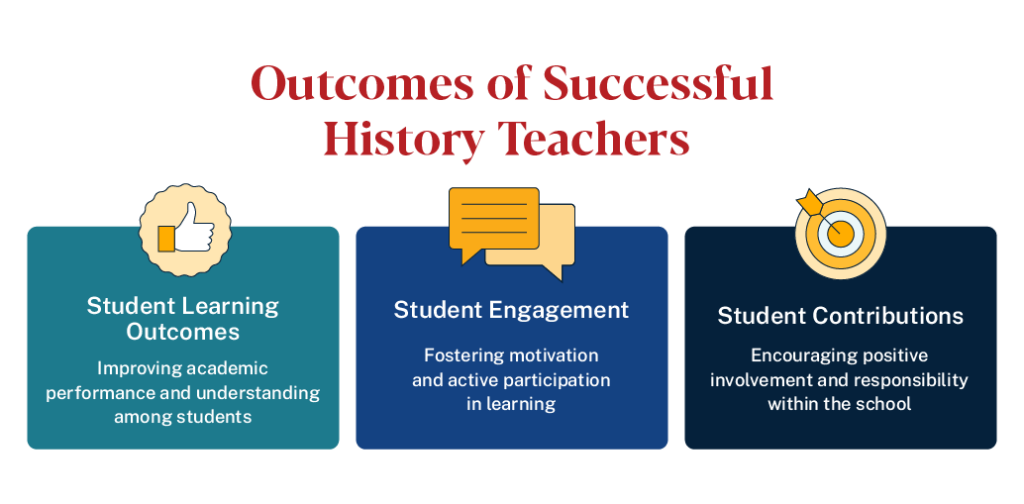
Success in this role is often measured through student growth and engagement. You might see it when a student begins to participate more confidently in discussions or demonstrates a deeper understanding of complex topics.
Over time, success also includes creating a positive classroom environment, supporting student achievement and contributing to the broader school community. These outcomes reflect the lasting impact history teachers can have on their students.
Available Degree Programs
Pursuing the right degree can help you build the skills needed to lead a classroom effectively. ACE offers programs designed to support both new and experienced teachers, with flexible coursework to fit a busy educator’s schedule.
Salary & Job Outlook for History Teachers
According to the U.S. Bureau of Labor Statistics, history teachers are classified as high school teachers. Salaries can vary based on experience, education and location. Entry-level teachers may earn less, while experienced teachers or those with advanced degrees may earn more.


FAQs
How long does it take to become a history teacher?
Most candidates complete a bachelor’s degree in about four years, followed by certification requirements.
What certification is required to teach history?
Requirements vary by state but typically include passing exams and obtaining a teaching license.
Can history teachers teach multiple subjects?
Yes, especially in middle school settings where teachers may cover broader social studies topics.
Are online teaching opportunities available for history teachers?
Yes, online education platforms continue to expand, creating new teaching opportunities.
What types of schools hire history teachers beyond K-12?
Colleges, universities and private institutions may hire history teachers, often requiring advanced degrees.
Turn the Past Into Your Purpose With ACE
History teachers help shape how future generations understand the world. With American College of Education (ACE), you can play a key role in developing critical thinkers and informed citizens.
If you are ready to take the next step, earning a degree from ACE can help you build the skills and confidence needed to succeed in the classroom. With affordable programs designed for working adults, you can move toward a meaningful career in education on your schedule.