
Career Guide: Health Services Manager
Here’s what you need to know.
Toggle Navigation
Our Enrollment Counselors are here to answer your questions and walk you through the enrollment process.
Career Overview: Health Services Manager
Healthcare organizations depend on skilled leaders to keep operations running efficiently while improving patient outcomes. If you’re interested in combining business, leadership and healthcare, health services management offers opportunities to make an impact behind the scenes of patient care.
What Is a Health Services Manager?
A health services manager oversees the business and operational side of healthcare. These professionals plan, coordinate and manage healthcare services to help organizations deliver quality patient care, improve efficiency, and meet healthcare laws and regulatory requirements.
Health services managers work in a variety of healthcare settings, with responsibilities that vary by role. Depending on the work setting, they may also be known as healthcare administrators, nursing home administrators or health information managers.
What Does a Health Services Manager Do?
Health services managers oversee the daily operations of healthcare organizations, improving efficiency, supporting healthcare outcomes and keeping services running smoothly.
Core Duties and Responsibilities
A health services manager’s responsibilities often include:
- Daily healthcare operations
- Staff supervision and team leadership
- Budget development and financial management
- Compliance with healthcare laws and regulations
- Patient care quality and operational improvement
- Healthcare systems and electronic health records (EHR)
- Strategic planning and organizational initiatives
Work Environments
Health services managers work in a variety of healthcare settings, including:
- Hospitals and healthcare systems
- Nursing homes and long-term care facilities
- Outpatient care centers
- Physician offices and medical practices
- Public health organizations
- Government healthcare agencies
Skills & Traits That Make a Successful Health Services Manager
Health services managers need a combination of leadership, business and healthcare skills to support efficient operations and quality patient care.
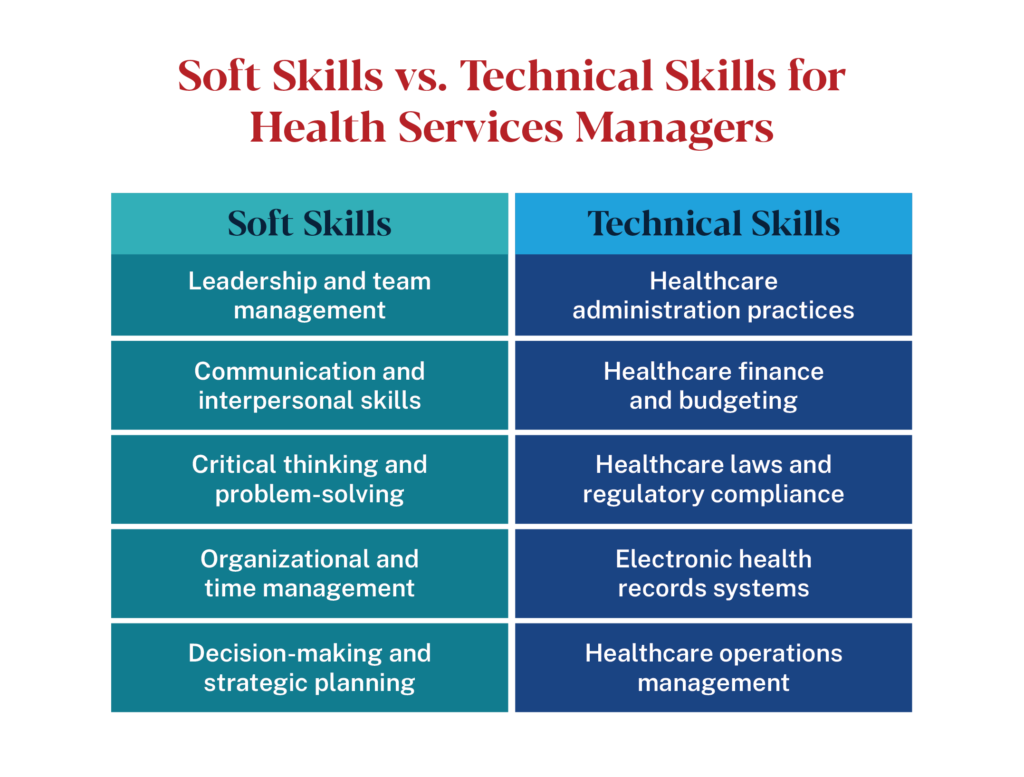
Essential Soft Skills
Health services managers rely on strong leadership and interpersonal skills, including:
- Leadership and team management
- Communication and interpersonal skills
- Critical thinking and problem-solving
- Organizational and time management
- Decision-making and strategic planning
Important Technical Skills
Technical skills that add to success in the role include:
- Healthcare administration principles
- Healthcare finance and budgeting
- Healthcare law and regulatory compliance
- EHR systems
- Healthcare operations management
- Data analysis and performance improvement
How These Skills Apply on the Job
Health services managers apply these skills to lead teams, improve healthcare operations, evaluate performance and strengthen patient outcomes. They also use data to identify opportunities for improvement and help organizations meet operational goals.
Health Services Manager Education Requirements
Most health services managers need formal education in healthcare administration or a related field. The education required depends on the employer and leadership level.
Minimum Education Requirements
Most positions require at least a bachelor’s degree. Common fields of study include healthcare administration, business administration, public health or a related discipline.
Preferred Education Pathways
As you advance into leadership roles, some employers may prefer candidates with a master’s degree. Graduate programs often build expertise in healthcare management, healthcare systems and organizational leadership.
Certifications and Training Options
Certification requirements vary by employer and work setting, but many health services managers pursue professional credentials to strengthen their leadership and healthcare management skills. Continuing education and professional development also help professionals stay current with changing regulations and industry best practices.
How to Become a Health Services Manager
If you’re wondering how to become a medical and health services manager, here is a step-by-step guide.
- Earn a Relevant Degree
Start by earning a bachelor’s degree in healthcare administration, business administration, public health or a related field. This education builds the knowledge and leadership skills you need for a career in health services management.
- Gain Healthcare Experience
Build experience in hospitals, clinics, long-term care facilities or other healthcare organizations. Hands-on experience can help you better understand healthcare operations, patient services and the day-to-day responsibilities of a health services manager.
- Build Leadership and Management Skills
Look for opportunities to supervise employees, coordinate projects and lead operational initiatives. Building experience in budgeting, compliance and healthcare operations can prepare you for management roles.
- Apply for Health Services Management Positions
Once you’ve gained the education and experience employers are looking for, you can apply for health services management positions in hospitals, healthcare facilities, physician practices, public health organizations and other healthcare settings.
- Optional: Advance With a Graduate Degree
If you’re interested in executive leadership or senior management roles, earning a master’s degree can strengthen your qualifications and prepare you for greater leadership responsibilities.
Day-in-the-Life & Real-World Scenarios
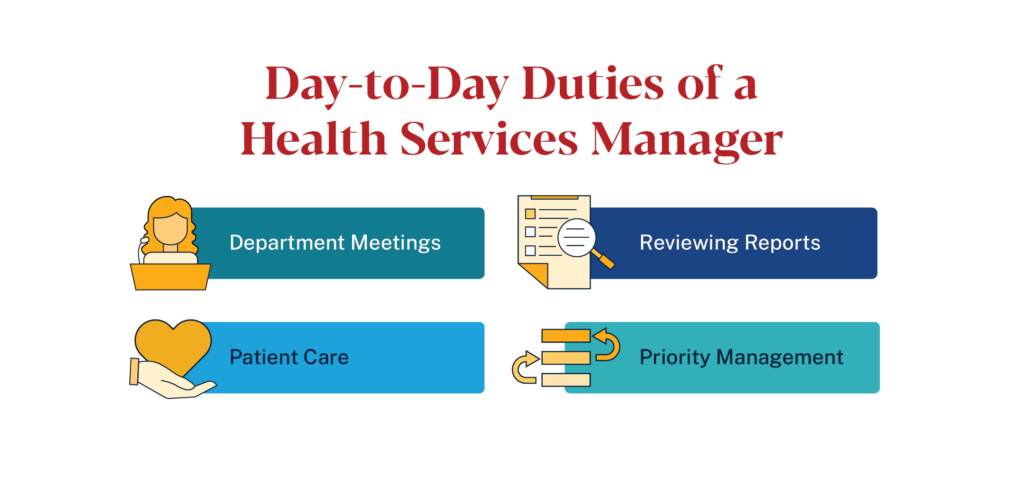
A Typical Workday
A typical day may include meeting with department leaders, reviewing operational and financial reports, monitoring patient care quality initiatives, and managing staffing, compliance and other organizational priorities.
Real-World Examples
A health services manager may lead the implementation of a new EHR system, improve patient satisfaction through operational improvements or coordinate services across multiple healthcare departments to lead to more efficient care.
What Success Looks Like in the Role
Success in this role means helping healthcare organizations operate more efficiently while supporting quality patient care and positive patient outcomes. Strong health services managers also provide effective leadership and help their organizations maintain regulatory compliance.
Health Services Manager Salary & Job Outlook
Health services managers play an important role in helping healthcare organizations operate efficiently while supporting quality patient care. As demand for skilled healthcare leaders continues to grow, professionals in this field may find opportunities across a variety of healthcare settings.


FAQs
What is the difference between a health services manager and a healthcare administrator?
In general, healthcare administrators oversee an entire healthcare organization, while health services managers often lead specific departments, programs or operational areas.
Can health services managers work outside of hospitals?
Health services managers work in a variety of healthcare settings, including nursing homes, outpatient care centers, physician practices, insurance organizations, government agencies and public health organizations.
What leadership skills are most important for health services managers?
Successful health services managers need strong leadership, communication, decision-making and organizational skills. They also need to adapt to changing healthcare regulations and lead teams through operational challenges.
Is a master's degree required to become a health services manager?
A master's degree isn't always required, but it can prepare you for senior leadership and executive roles. Many professionals begin their careers with a bachelor's degree and pursue graduate education as they gain experience and seek advancement opportunities.
Advance Your Healthcare Career
If you’re ready to lead, innovate, and make a lasting impact in the healthcare industry, the next level of your career is within reach. Whether you’re just getting started or geared toward a move in a leadership role, ACE’s online healthcare programs can provide the tools and knowledge you need.
The next level of your career is ready when you are. All you have to do is apply now!