
Career Guide: Head Nurse
Here’s what you need to know.
Toggle Navigation
Our Enrollment Counselors are here to answer your questions and walk you through the enrollment process.
Head Nurse Career Overview
Picture a busy hospital floor during a high-demand shift. Nurses are moving quickly between patients, physicians are coordinating care plans and every decision being made is of the utmost importance. In the middle of all this action is someone making sure everything runs smoothly, by supporting the team, solving problems in real time and keeping patient care on track: the head nurse.
A head nurse plays a critical leadership role in healthcare settings, bridging the gap between hands-on patient care and nursing administration. This position goes beyond clinical responsibilities, requiring strong communication, organization and decision-making skills. Head nurses help guide nursing teams, manage daily operations and ensure that care standards are consistently met.
For those with nursing experience who are ready to take on more responsibility, this role offers a clear path into leadership. It combines patient care with team management, allowing professionals to make a broader impact across their organization. Learn more about what a head nurse does, how to become one and what to expect as you grow into this important nursing leadership role.
What Does a Head Nurse Do?
A head nurse is responsible for leading nursing teams while ensuring that patient care remains consistent, safe and efficient. This role blends clinical expertise with management responsibilities, making it a key position within nursing administration. Head nurses oversee daily operations, support staff and act as a point of coordination between nurses, physicians and leadership.
In many cases, this role requires balancing immediate patient needs with long-term operational goals. On a busy shift, a head nurse may move from resolving a staffing issue to reviewing care plans and then meeting with a physician to coordinate treatment priorities.
Core Duties and Responsibilities
The day-to-day responsibilities of a head nurse center on leadership, organization and quality care. While duties may vary by setting, most roles include a mix of clinical oversight and administrative work.
- Supervising nursing staff: Head nurses guide team members, delegate responsibilities and ensure that each nurse is supported throughout their shift
- Overseeing patient care: They monitor care delivery to make sure quality standards are met and patients receive consistent attention
- Managing schedules and workflow: This includes adjusting staffing levels, covering gaps and keeping operations running smoothly during high-demand periods
- Coordinating with healthcare teams: Head nurses work closely with physicians and other providers to align care plans and communicate updates
- Handling administrative duties: Reporting, documentation and policy updates are part of maintaining an organized healthcare environment
- Supporting staff development: They mentor new nurses, provide feedback and help team members grow in their nursing roles
- Ensuring compliance: Head nurses make sure procedures follow healthcare regulations and safety standards
Work Environment Variations
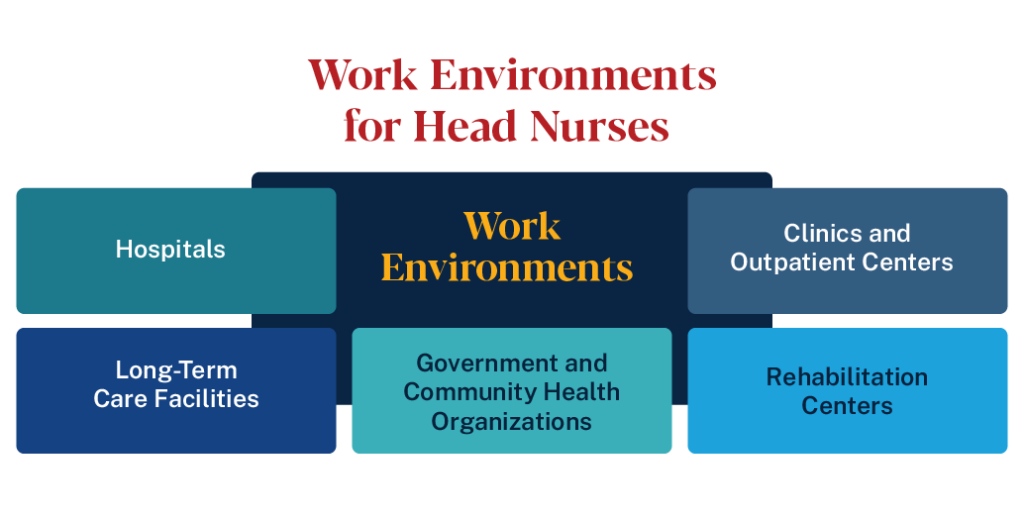
Head nurses work in a range of healthcare settings, each with its own pace and priorities. While the core responsibilities remain similar, the day-to-day experience can vary.
- Hospitals: Often fast-paced, with a focus on acute patient care and coordination across departments
- Long-term care facilities: Emphasis on ongoing patient support and consistency in care routines
- Clinics and outpatient centers: Typically more structured schedules with a focus on efficiency and patient flow
- Rehabilitation centers: Focus on recovery and long-term treatment plans
- Government and community health organizations: May involve broader public health efforts and community outreach
Exploring different nursing career paths? Learn more about different types of nurses and nursing specialties to see how roles can vary across the field.
Skills & Traits That Make a Successful Head Nurse
Stepping into a leadership role in nursing requires more than clinical knowledge. It calls for a combination of strong interpersonal skills, technical understanding and the ability to manage complex situations with confidence.
Essential Soft Skills
Soft skills are critical in helping head nurses lead effectively and maintain a supportive environment for both staff and patients.
- Leadership and team management: Head nurses guide teams through busy shifts and challenging situations, ensuring everyone understands their role
- Communication: Clear communication helps prevent misunderstandings and keeps patient care on track
- Decision-making: Quick, informed decisions are often needed when patient needs or staffing levels change
- Empathy: A patient-centered mindset supports both patient care and team morale.
- Time management: Organizing tasks and priorities ensures that nothing important is overlooked
Important Technical Skills
Alongside soft skills, technical knowledge supports effective performance in this role.
- Clinical expertise: A strong background in patient care allows head nurses to guide and support their teams
- Healthcare administration knowledge: Understanding workflows and operations is essential in nursing administration
- Regulatory knowledge: Familiarity with healthcare regulations ensures compliance and safety
- Staff scheduling: Managing resources effectively helps maintain consistent care.
- Data tracking: Reviewing reports and performance metrics supports better decision-making
How These Skills Apply on the Job
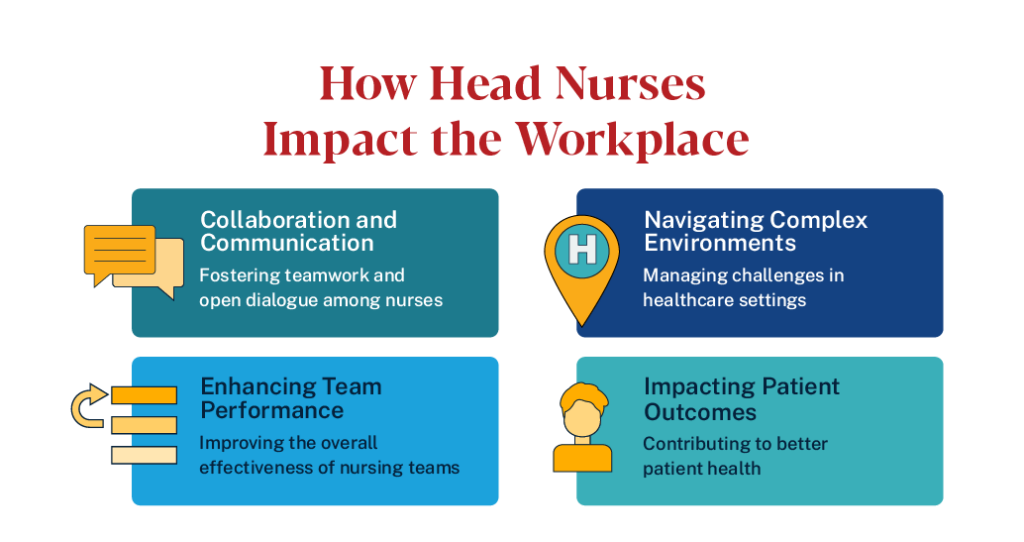
In practice, these skills come together throughout the day. A head nurse might use communication and leadership to guide a team through a busy shift, then rely on data and clinical expertise to address a patient care concern. Over time, this ability to balance people, processes and patient care is what defines strong nursing leadership.
Head Nurse Education Requirements
If you are wondering how to become a head nurse, education is an essential first step. Most professionals begin with formal nursing degrees and build on that foundation as they gain experience and move into leadership roles.
Minimum Education Requirements
To begin, you must become a registered nurse (RN) by completing an accredited nursing program and obtaining an RN license. This often includes an associate or bachelor’s degree in nursing, along with clinical training. State requirements may vary.
These programs introduce the fundamentals of patient care, clinical procedures and healthcare systems, all of which are critical for building nursing experience.
Preferred Education Pathways
Many employers prefer candidates who hold a Bachelor of Science in Nursing (BSN), especially for leadership roles. A BSN provides a deeper understanding of patient care, healthcare systems and nursing leadership.
As you advance, coursework in leadership or healthcare administration can help prepare you for responsibilities related to team management and operations. Continuing your education with a Master of Science in Nursing (MSN) is another way for you to gain this knowledge, especially if the program allows you to focus your study in nurse administration.
Certifications and Training Options
Continuing education plays an important role in career advancement. Head nurses often strengthen their qualifications through:
- Nurse leadership or management certifications
- Continuing education in nursing administration
- Advanced clinical certifications
These additional credentials can help demonstrate your readiness for leadership and expand your opportunities within the field.
How to Become a Head Nurse
Moving into a head nurse position is a gradual process that builds on experience, education and leadership development. Many professionals follow a similar path as they transition from clinical roles into nursing leadership.
- Become a Registered Nurse
The first step is to earn a nursing degree and obtain RN licensure. This provides the clinical foundation needed to begin working in patient care and developing essential practical nursing skills.
- Gain Clinical Nursing Experienc
Once licensed, gaining hands-on nursing experience is critical. Working directly with patients helps you understand care processes, develop clinical expertise and build confidence in real-world situations. For example, you may work in a hospital setting where you learn how to manage patient needs, communicate with healthcare teams and handle the pace of a busy environment.
- Develop Leadership Experience
As your experience grows, begin taking on leadership responsibilities. This may include stepping into a charge nurse role, mentoring new staff or helping manage workflows during shifts. These experiences help you build the skills needed for a leadership role and show your ability to support both patients and team members.
- Apply for Head Nurse Positions
With the right combination of experience and leadership skills, you can begin applying for head nurse positions in hospitals, clinics and other healthcare facilities. At this stage, your ability to manage teams, oversee patient care and handle administrative responsibilities becomes especially important.
- Optional: Advance With Higher Education
Some nurses choose to pursue advanced degrees to strengthen their qualifications. Programs such as an RN to MSN or BSN to MSN can help deepen your knowledge in nursing leadership and administration.
A Master of Healthcare Administration can also support career growth. Advanced education can open the door to roles such as nursing manager or even director of nursing, where leadership responsibilities expand even further. You can also explore doctoral nursing programs for opportunities to move into high-level leadership or specialized roles.
Day-in-the-Life & Real-World Scenarios
A Typical Workday
A typical day for a head nurse involves a mix of leadership, coordination and patient care oversight. One part of the day may focus on reviewing staffing levels and assigning responsibilities, while another involves checking on patients and supporting the nursing team. Meetings with physicians, updates on patient care plans and administrative tasks are all part of maintaining a smooth and effective healthcare environment.
Real-World Examples
Imagine a situation where a hospital experiences an unexpected increase in patient volume. A head nurse may need to adjust schedules quickly, reassign staff and ensure that patient care remains consistent despite the added pressure.
In another scenario, a head nurse might notice a recurring issue in patient care processes and work with the team to improve coordination, leading to better outcomes and more efficient workflows.
What Success Looks Like in the Role
Success in this role often comes down to balance. Strong head nurses maintain high standards of patient care while supporting their teams and managing operations effectively.
When teams feel supported and patients receive consistent, high-quality care, it reflects the strength of nursing leadership within the organization.
Head Nurse Salary & Job Outlook
Head nurse salary can vary depending on experience, education and work setting. While the United States Bureau of Labor Statistics (BLS) does not list a specific “head nurse” category, this role aligns closely with nursing leadership and healthcare management roles classified by BLS under medical and health services managers.
According to BLS, medical and health services managers can earn an annual salary of $117,960 per year as of May 2024.*
Demand for nursing leadership roles is expected to grow by 23% as healthcare systems expand and patient care needs increase.* This growth translates to roughly 62,100 new job openings each year in the next decade.*
Organizations continue to rely on experienced nurses who can step into leadership roles, manage teams and ensure quality patient care across departments.

According to BLS, medical and health services managers can earn an annual salary of $117,960 per year as of May 2024.*

Demand for nursing leadership roles is expected to grow by 23% as healthcare systems expand and patient care needs increase.* This growth translates to roughly 62,100 new job openings each year in the next decade.*
FAQs
How many years of experience are needed to become a head nurse?
Most head nurse positions require several years of nursing experience. Many professionals spend time working as RNs before moving into leadership roles, allowing them to build both clinical expertise and confidence.
Do head nurses still provide direct patient care?
In many cases, head nurses still provide some level of patient care, especially in smaller settings. However, their primary focus is often on supervising staff, managing operations and ensuring quality care across the team.
What is the difference between a head nurse and a nurse manager?
These roles are often similar, but a nurse manager may have broader administrative responsibilities. Head nurses typically focus more on day-to-day operations and direct team leadership.
Can a head nurse advance into director of nursing roles?
Yes, many head nurses continue advancing into higher leadership positions such as director of nursing. With additional experience and education, these roles involve overseeing entire departments or facilities and shaping long-term healthcare strategies.
Step Into Nursing Leadership
A career as a head nurse combines your nursing experience with leadership, organization and commitment to patient care.
If you are ready to take the next step, American College of Education (ACE) offers affordable programs designed to support your journey in nursing leadership. Explore your options and begin building a future where you can lead with confidence and make a lasting impact.