
Career Guide: Algebra Teacher
Here’s what you need to know.
Toggle Navigation
Our Enrollment Counselors are here to answer your questions and walk you through the enrollment process.
Career Overview: Algebra Teacher
Algebra serves as the foundation to solving many everyday problems. It’s also the theoretical basis for many careers in science, technology, engineering, healthcare, business and many other fields.
Helping students build these skills is the work of an algebra teacher. They help students develop confidence in mathematics while preparing them for future academic and career success. Through teaching algebra, they encourage critical thinking, strengthen problem-solving abilities and show students how mathematical concepts connect to the world around them.
Learn more about what an algebra teacher does, how to become an algebra teacher, how much education is required for an algebra teacher and the opportunities available within this profession.
What Is an Algebra Teacher?
An algebra teacher is an educator who teaches students the mathematical concepts that form the foundation for higher-level mathematics. They work in a variety of educational settings, including public schools, private schools, charter schools and virtual learning programs. Most states require teachers to complete an approved education program and earn teacher certification before leading their own classrooms.
What Does an Algebra Teacher Do?
Most algebra teachers work with students in middle school or high school, where they introduce topics such as linear equations, functions, inequalities and problem-solving strategies that prepare learners for geometry, calculus and other advanced coursework. Beyond teaching mathematical concepts, algebra teachers create lesson plans that align with curriculum standards, evaluate student progress through assignments and assessments, and adapt instruction to meet the needs of different students.
Core Duties and Responsibilities
An algebra teacher’s daily responsibilities may include:
- Teaching algebra and other foundational mathematical concepts that prepare students for higher-level coursework
- Developing engaging lesson plans that align with curriculum standards and connect mathematics to real-world situations
- Assessing student learning through assignments, quizzes, exams and classroom activities
- Differentiating instruction to support students with a variety of learning styles and academic needs
- Preparing students for standardized mathematics assessments through review and targeted practice
- Managing classroom behavior while fostering a positive and engaging learning environment
- Collaborating with fellow teachers, school administrators and parents to support student success
Work Environments
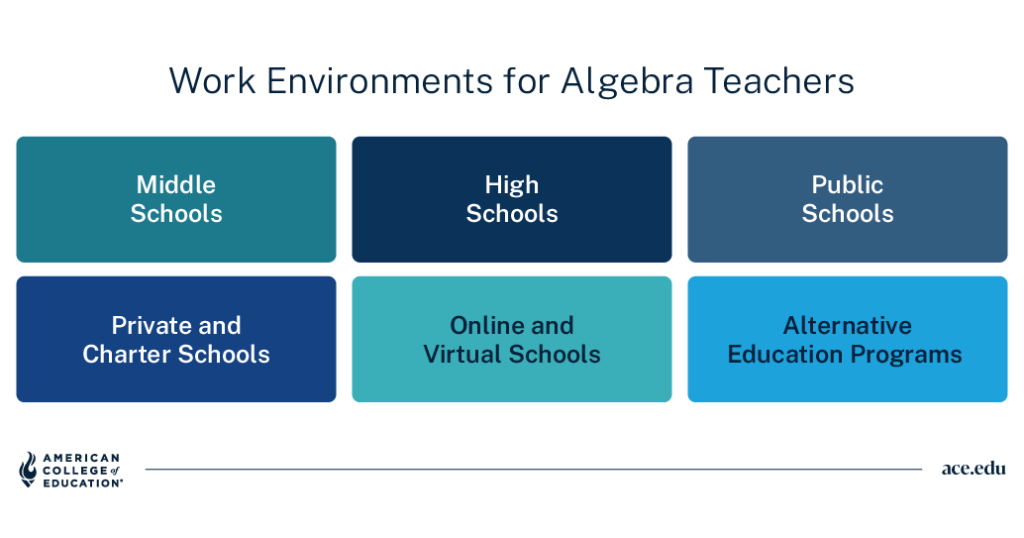
Algebra teachers can find opportunities in several educational settings, including:
- Middle schools, where teachers help students transition from arithmetic to algebraic thinking and prepare them for more advanced mathematics
- High schools, where teachers often teach Algebra I, Algebra II and other mathematics courses that support college and career readiness
- Public school districts, where instruction follows state curriculum standards and teachers collaborate across grade levels
- Private schools and charter schools, which may offer different instructional models while maintaining a strong focus on mathematics education
- Online and virtual schools, where teachers use digital learning platforms to deliver instruction and support students remotely
- Alternative education programs, where educators provide individualized instruction to help students meet academic goals
Skills & Traits That Make a Successful Algebra Teacher
Algebra teacher jobs combine subject matter expertise with communication, adaptability and classroom leadership to help students develop confidence and problem-solving skills. These abilities allow teachers to create engaging learning experiences while supporting students with different backgrounds and learning styles.
Essential Soft Skills
Strong algebra teachers rely on several interpersonal skills to help students succeed, including:
- Communication and presentation skills to explain complex mathematical concepts in ways students can understand
- Patience and adaptability when adjusting instruction to meet individual learning needs
- Leadership and classroom management to create a positive learning environment where students feel comfortable asking questions
- Critical thinking to identify learning challenges and develop effective instructional strategies
- Relationship-building to establish trust, encourage participation and motivate students throughout the school year
Important Technical Skills
Algebra teachers also need technical knowledge that supports effective instruction, including:
- A strong understanding of algebra and other mathematics concepts
- Experience creating lesson plans that align with curriculum standards and learning objectives
- Familiarity with educational technology and digital learning tools that support classroom instruction
- The ability to assess student performance and use data to guide future instruction
- Knowledge of classroom management strategies that promote engagement and academic success
How These Skills Apply on the Job
Teaching means understanding that no two students are the same. Every classroom is composed of students who learn at different paces and approach problem solving in different ways. Effective algebra teachers make mathematical concepts more accessible by connecting lessons to real-world situations, adapting instruction when students need additional support and creating opportunities for active participation. These skills help improve student engagement, strengthen academic achievement and build the confidence students need to succeed in future mathematics courses.
Algebra Teacher Education Requirements
Are you wondering how to become an algebra teacher? An important first step is understanding the career path’s education requirements. Please keep in mind that teacher licensing requirements vary by state.
Minimum Education Requirements
Most states require algebra teachers to earn at least a bachelor’s degree before becoming eligible for teacher certification. Many complete an education program that combines mathematics coursework with instructional methods and classroom management strategies.
Teacher preparation programs also include student teaching, which allows future teachers to gain supervised classroom experience while applying the instructional techniques they’ve learned. After completing these requirements, candidates typically earn state teacher certification or licensure before seeking employment in a public school or other K-12 educational setting.
Preferred Education Pathways
Many aspiring algebra teachers earn a bachelor’s degree in mathematics, mathematics education or a related education field. These programs provide a strong understanding of mathematical concepts while preparing future teachers to develop effective lesson plans and support student learning.
As teachers gain teaching experience, some choose to continue their education by earning a master’s degree. Graduate study can strengthen expertise in curriculum development, instructional leadership or secondary mathematics education while preparing teachers for additional responsibilities within their schools or districts.
Certifications and Training Options
Most states require algebra teachers to obtain a teaching certificate or teaching license before working in K-12 classrooms. Depending on the state, educators may also earn mathematics endorsements that demonstrate specialized knowledge in secondary mathematics instruction.
Professional learning often continues throughout a teacher’s career. Continuing education courses, district-sponsored professional development and graduate certificates in education or instructional leadership can help teachers stay current with instructional strategies, educational technology and changing standards established by their state’s department of education.
How to Become an Algebra Teacher
Becoming an algebra teacher typically involves earning the appropriate education, gaining classroom experience and meeting your state’s teacher certification requirements. Consider these steps:
- Earn a Bachelor’s Degree
Begin with earning a bachelor’s degree in mathematics, mathematics education or a related field. Some degree programs also include an approved teacher preparation program that introduces instructional methods, classroom management strategies and curriculum planning. This combination of subject knowledge and teaching skills prepares you to lead your own classroom.
- Complete Student Teaching
As part of your education program, you’ll complete student teaching under the guidance of an experienced teacher. This supervised placement allows you to practice lesson planning, classroom management and instructional techniques while working directly with students. Student teaching also helps you build the confidence and teaching experience needed for your first full-time role.
- Earn Teacher Certification
Before teaching in a public school, you’ll need to meet your state’s teacher certification or licensure requirements. This process typically includes completing an approved teacher preparation program and passing any required certification examinations. Some states may also require background checks or additional coursework before issuing a teaching certificate.
- Apply for Algebra Teacher Positions
Once you’ve earned your teaching certificate, you can begin applying for algebra teacher positions in middle schools, high schools and other educational settings. As you gain classroom experience, you’ll continue refining your instructional strategies, expanding your subject knowledge and supporting students as they build strong mathematical foundations.
- Optional: Advance With a Graduate Degree
As your career progresses, you may decide to pursue a master’s degree in education, mathematics education, curriculum and instruction, or educational leadership. Graduate education can strengthen your instructional expertise while preparing you for opportunities such as department chair, instructional coach, curriculum specialist or other leadership roles within K-12 education.
Day-in-the-Life & Real-World Scenarios
Although each school and grade level is different, the algebra teacher role frequently combines classroom instruction, lesson preparation and ongoing collaboration with students and fellow educators.
A Typical Workday
A typical day often begins by preparing for class and reviewing lesson plans before students arrive. Throughout the day, algebra teachers introduce new concepts, guide classroom discussions, answer questions and lead activities that help students apply what they’ve learned. Between classes, they may grade assignments, review assessments, meet with students who need additional support and collaborate with colleagues to discuss instructional strategies or student progress.
Real-World Examples
Imagine introducing a lesson on linear equations by asking students to compare the costs of two cell phone plans. As students create graphs and solve equations, they discover how algebra can help them make informed financial decisions in everyday life.
Or picture working with a student who has struggled to understand quadratic equations. By approaching the concept from a different perspective and providing additional practice, you help the student gain confidence and solve problems independently. Moments like these often become some of the most rewarding parts of teaching.
What Success Looks Like in the Role
Success as an algebra teacher extends beyond strong test scores. It can be seen when students participate in classroom discussions, approach challenging problems with confidence and begin applying mathematical concepts to situations outside the classroom. By creating a supportive learning environment and encouraging curiosity, algebra teachers help students build skills that prepare them for future coursework, STEM careers and lifelong learning.
Algebra Teacher Salary & Job Outlook
An algebra teacher salary can vary based on factors including education, years of teaching experience, geographic location and the type of school where an educator works. Teachers employed by larger school districts or those who earn advanced degrees may also qualify for higher salaries or additional career advancement opportunities.
As schools continue preparing students for college, careers and an increasingly technology-driven workforce, qualified mathematics teachers remain an important part of K-12 education. Algebra serves as a gateway to advanced mathematics and many STEM-related fields, creating an ongoing need for educators who can help students build strong mathematical foundations and critical thinking skills.


FAQs
Can algebra teachers teach other mathematics subjects?
Yes. Many algebra teachers are qualified to teach additional math courses depending on their teaching certificate, school district and grade level. Some educators can teach subjects such as pre-algebra, geometry, Algebra II or other secondary mathematics courses.
What grade levels do algebra teachers typically teach?
Algebra teachers most often work with students in middle school and high school. Some introduce Algebra I to eighth-grade students, while others teach Algebra I, Algebra II or related mathematics courses at the high school level. The specific grade level and course assignments depend on the school district, curriculum and teacher certification requirements.
Is a mathematics degree required to become an algebra teacher?
Not always. While many aspiring algebra teachers earn a bachelor's degree in mathematics or mathematics education, some complete degrees in education with a concentration in mathematics or another related field. Requirements vary by state, so it's important to review your state's teacher certification and licensure requirements before choosing an education program.
What professional development opportunities are available for algebra teachers?
Professional development can help algebra teachers strengthen their instructional skills and stay current with new teaching strategies, educational technology and curriculum standards. Many teachers pursue graduate degrees, subject-area endorsements, workshops or continuing education courses throughout their careers. Professional development can prepare teachers for instructional leadership, curriculum development or other advanced roles within K-12 education.
Advance Your Education Career
The next level of your career is ready when you are. All you have to do is apply now!