
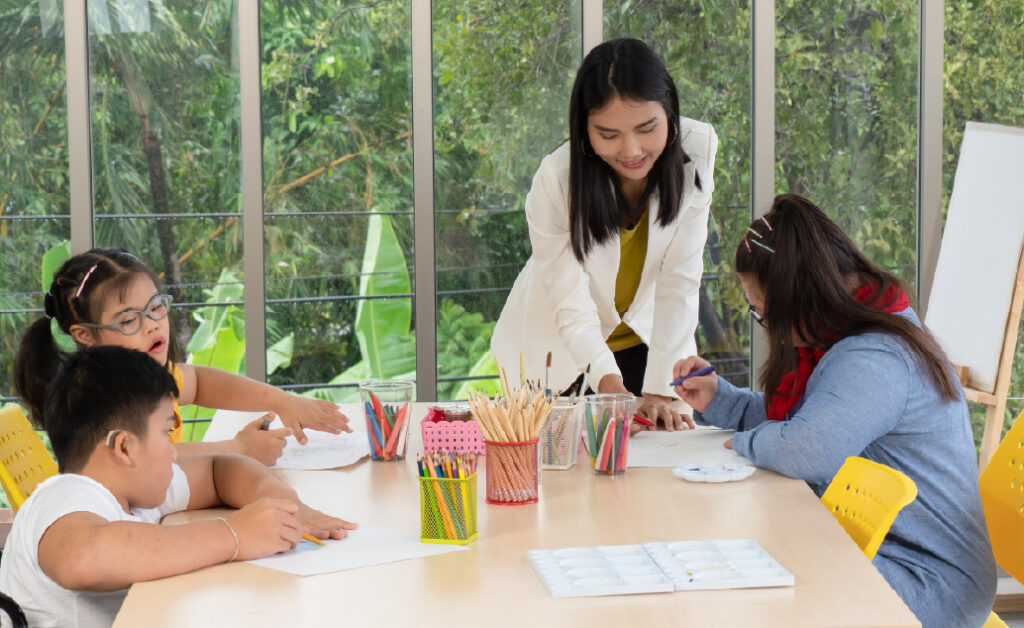
Special education teachers play a vital role in creating inclusive classrooms. They support and educate students with diverse learning needs and help them achieve success alongside their peers. Daily responsibilities extend beyond traditional teaching and include individualized instruction and planning, collaboration with other educators, ongoing assessment, and strong advocacy to ensure every student feels supported, respected and included.
What Does a Special Education Teacher Do?
Special education teachers work with students who have various disabilities and learning differences, including specific learning disabilities, emotional and behavioral disorders, physical disabilities, autism spectrum disorders, health impairments, and developmental delays. They customize instruction to meet each student’s individualized needs, creating equitable access to high-quality learning experiences. Special education teachers also collaborate closely with parents, classroom aides and general education teachers to maintain alignment in instruction, support and behavioral expectations.
Daily Duties and Responsibilities of a Special Education Teacher
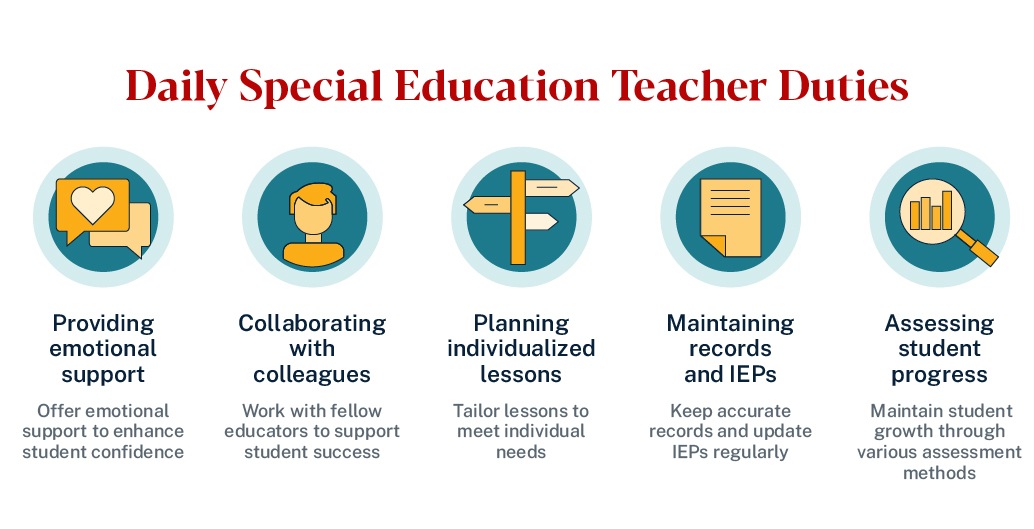
On a day-to-day basis, managing a special education caseload in pre-K-12 settings requires wearing many hats.
- Provide emotional support
- Teachers who work with students with disabilities nurture their emotional wellbeing by helping them build confidence and strengthen their communication skills.
- Collaborate with colleagues and support teams
- Collaboration is an inherent necessity. They work alongside general education teachers to create inclusive classrooms, consult with specialists such as speech and occupational therapists, and coordinate with paraprofessionals or classroom aides. They also maintain consistent, ongoing communication with families to ensure students’ needs are met.
- Plan individualized lessons
- Special education teachers review individualized education program (IEP) objectives, analyze assessment data and design classroom activities that accommodate different learning styles and skill levels. This may include creating modified worksheets, integrating assistive technology in classrooms, creating visual supports or adapting materials from general education curriculum. Special education teachers also plan differentiated instruction activities so that each student can access content at their own level while working toward their goals. Then, they adapt their teaching methods based on student engagement and responses.
- Maintain records and IEPS
- Documentation takes up a significant portion of a special education teacher’s duties as they must maintain detailed records and regularly update IEPs. They also track students’ progress and hold meetings with families and colleagues to discuss achievement or set new goals. This process requires them to maintain organized records that meet legal requirements and inform teaching approaches.
- Assessing students and monitoring progress
- Special education teachers assess students through both formal and informal methods. They first conduct baseline assessments to establish where students are academically and functionally, then regularly monitor progress toward preset annual IEP goals in areas like social skills, life skills and behavioral goals. This often involves collecting data through observations, student work samples, standardized tests and functional assessments. Information collected is critical for determining whether instructional strategies are effective or need adjustment.
Long-Term Professional Duties
Conducting baseline assessments in special education settings helps teachers prepare for and lead annual and interim IEP meetings as well as triennial IEP reevaluation meetings. They gather input and feedback from IEP team members and families to write the final legal document that outlines each student’s plan.
Engaging in professional development is also a critical component of teaching special education because teachers must have an up-to-date understanding of evidence-based practices and changes in special education laws.
Additionally, they often support postsecondary transition planning for older students, helping them prepare for life after high school, which may involve further education, vocational training or entering the workforce.
Skills Every Special Education Teacher Needs
Teaching special education requires a unique skillset to be effective.
Patience and empathy are essential because they work with students who experience frustration when they are facing learning or behavioral challenges. Special needs students often require classroom accommodations and modifications to learn new concepts.
Other skills include strong communication and adaptability because it’s critical to explain lessons in different ways and adjust instructional approaches based on individual student needs.
Knowledge of classroom management strategies and conflict resolution is vital for creating structured and safe classrooms. This includes effective behavior management strategies that help students feel supported as they grow.
Finally, collaborative skills are crucial when working alongside multidisciplinary teams, including therapists, school counselors, service providers, caregivers and families.
How to Become a Special Education Teacher
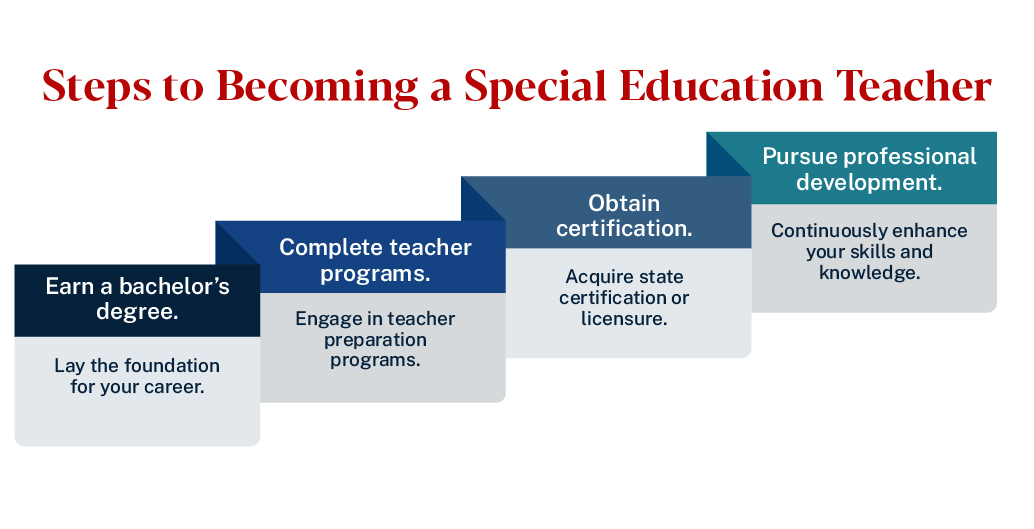
For those inspired to enter this rewarding field, becoming a special education teacher typically includes earning a bachelor’s degree in special education, completing hands-on student teaching and obtaining state licensure. Special education teachers also pursue ongoing professional development and advanced degrees to continue growing in their profession. Checking your state’s teacher certification and special education qualifications will help guide your path.
Challenges and Rewards of the Profession
The special education profession has many challenges and rewards.
- Challenges: Special education teachers are often tasked with managing daily paperwork. They also face student behavior problems and emotional fatigue.
- Rewards: Special education teachers make a difference in students’ lives and experience joy alongside students’ success and growth. Their impact can last a lifetime.
FAQs About Special Education Teachers
What subjects do special education teachers teach?
Special education teachers can teach any academic subject if they have the proper state licensure and certification for that subject.
How do special education teachers support students emotionally?
Special education teachers support students emotionally by listening, encouraging and helping them feel safe and understood.
What tools or technology do special education teachers use?
Special education teachers use many tools and technologies to help meet students’ learning needs. For example, they use text-to-speech, speech-to-text, educational apps and augmentative assistive devices to support reading, writing and communication. Artificial intelligence offers opportunities to integrate adaptive learning tools as well as customize learning experiences based on needs.
What’s the difference between a special education teacher and a regular classroom teacher?
Special education teachers work with students who need extra support and create IEPs. They may teach whole groups, small groups or one-on-one and have specialized training to support different disabilities. Regular, or general education teachers, teach the general grade-level curriculum to all students.
Whether you’re looking to become a special education teacher, build your skills as a current educator or become a leader, American College of Education offers fully online special education programs to help get you there.