

When you’re exploring college programs, you’ll likely come across terms like major, minor, concentration and focus of study. At first glance, they can feel interchangeable. In practice, each plays a distinct role in shaping your academic experience.
A focus of study is a degree concentration that allows you to tailor your education within a broader academic program. It helps you build deeper expertise in a specific area of interest while still completing your core degree requirements. At American College of Education (ACE), the term focus of study is used in place of concentration to reflect a more flexible, student-centered approach to specialization.
For many college students, choosing a focus of study is where a degree starts to feel personal. It’s how you align what you’re learning with where you want to go, whether that means advancing in your current role or moving into a new career path.
What Is a Degree Concentration?
A degree concentration is a specialized track within a major. While your major defines your primary field of study, a concentration narrows that focus, guiding your coursework toward a specific subject area.
Instead of taking only broad courses in your major, you’ll complete targeted classes that build deeper knowledge in a particular area, like leadership, data analytics or literacy.
This structure helps connect your coursework more directly to your career goals. Rather than graduating with general knowledge alone, you develop skills aligned with the roles or industries you want to pursue.
Both undergraduate and graduate students often choose a concentration to gain a competitive edge. It allows them to demonstrate clear expertise in a specific area of interest when entering or advancing in the workforce.
Examples of Degree Concentrations
Concentrations vary widely depending on the program, but they all serve the same purpose: helping you specialize within your major through a targeted course of study.
At ACE, examples include:
- An M.S. in Organizational Leadership with concentrations in areas like Business Performance Management, Data Analytics or Human Resources
- MSN programs with concentrations such as Nurse Educator or Nurse Administration
- Education programs with concentrations like Literacy, STEM Education or Special Education
In each case, the goal is the same: to help you focus your studies on a specific area that supports your career path.
Why Does ACE Use Focus of Study Instead of Degree Concentration?
While “degree concentration” is common across higher education, it can feel technical or rigid, especially for adult learners returning to school. “Focus of study” reflects a more flexible, student-centered approach, emphasizing that your education should align with your goals.
The meaning itself is the same. A focus of study still represents a structured way to specialize within your major. The difference is in how it’s framed: as an opportunity to explore, refine and direct your learning toward your career path.
This language also reflects ACE’s broader approach to education: making programs more accessible, easier to navigate and closely connected to real-world outcomes.
Differences Between a Concentration and Other Degree Options
Understanding how different degree options fit together can help you choose a path that supports your career goals and interests.
Major vs. Concentration Degree
A major defines your primary field of study and includes the majority of your coursework. A concentration exists within that major. It narrows your focus, allowing you to specialize in a specific subject area.
For example:
- A business major might offer concentrations in marketing, finance or management
- A psychology major might offer concentrations in counseling or research
Choosing a concentration helps you refine your career path. It signals to employers that you’ve developed targeted expertise within your broader field.
Minor vs. Concentration Degree
A minor is a secondary field of study outside your major. It typically requires fewer courses and allows you to explore a different subject area. A concentration, by contrast, stays within your major and deepens your knowledge in that field.
For example, you might major in business, choose a concentration in marketing and add a minor in communication. This approach allows you to build both depth and breadth in your education.
Major vs. Minor vs. Concentration: Quick Comparison:
| Term | Definition | Purpose | Example |
|---|---|---|---|
| Major | Primary subject of your degree | Forms the foundation of your academic program | Business |
| Minor | Secondary field of study outside your major | Complements your primary focus with fewer courses | Business major with a minor in communication |
| Concentration | Specialized track within your major | Focuses your coursework on a specific topic | Business major with a concentration in marketing |
Why Degree Concentrations Matter
By focusing on a specific area, you build expertise that can support your career goals. This targeted approach helps you stand out in competitive job markets, where employers look for candidates with both broad knowledge and specialized skills.
Concentrations also influence the opportunities available during your program. They can guide professional experiences, research projects and internship choices, when applicable, helping you stay aligned with your long-term goals.
For graduate students, a well-chosen concentration can support advanced study by preparing you for more specialized academic work. It can also strengthen your resume by demonstrating a clear area of expertise to employers.
By focusing on a specific area, you build expertise that can support your career goals. This targeted approach helps you stand out in competitive job markets, where employers look for candidates with both broad knowledge and specialized skills.
Concentrations also influence the opportunities available during your program. They can guide professional experiences, research projects and internship choices, when applicable, helping you stay aligned with your long-term goals.
For graduate students, a well-chosen concentration can support advanced study by preparing you for more specialized academic work. It can also strengthen your resume by demonstrating a clear area of expertise to employers.
How to Choose a Degree Concentration
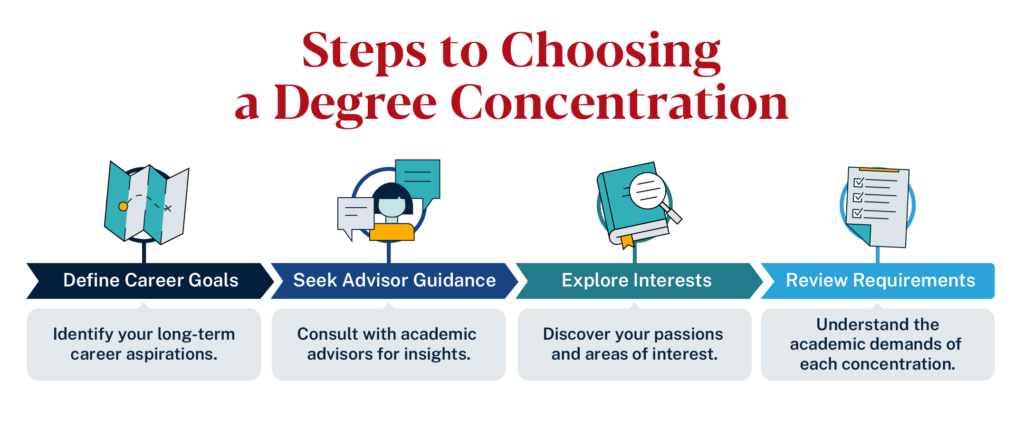
Selecting the right concentration is a key decision, but it doesn’t have to be overwhelming. A clear approach can help you narrow your options and move forward with confidence.
Consider Your Career Goals
Start by thinking about where you want your degree to take you. What roles or industries interest you? A concentration should move you closer to those outcomes, not just reflect what’s available.
Identify Your Area of Interest
Your academic success often follows your level of engagement. Choosing a subject you’re genuinely interested in can make your coursework more meaningful and easier to sustain.
Talk With Academic Advisors
Academic advisors and Student Success Coaches can help you make sense of your options. They’ll walk you through program requirements, explain how different concentrations fit into your degree and connect your choices to your career path.
Review Program Requirements
Not all concentrations are structured the same way. Some may require specific coursework, projects or field experiences. Reviewing these details early helps you make an informed decision.
FAQs
What is a concentration in college?
A concentration is a specialized area within a major that focuses your coursework on a specific subject.
What is degree concentration?
Degree concentration refers to the set of courses within a program that builds expertise in a particular topic or field.
What is the difference between a major and a concentration?
A major is your primary field of study, while a concentration is a focused area within that major.
Can students have more than one concentration?
Some programs allow multiple concentrations, though policies vary by institution.
What is the difference between a minor and a concentration?
A minor is a secondary field outside your major, while a concentration deepens your focus within your major.
How do I choose the right concentration for my career goals?
Consider your long-term goals, explore your interests, consult academic advisors and review program requirements to find the best fit.
American College of Education helps students learn targeted, career-relevant skills through customizable programs and abundant focus of study options. Learn more about our programs and see how ACE can help develop your career.