

In today’s job market, technical expertise alone is rarely enough to set someone apart. Many roles require similar credentials, certifications or technical proficiencies, which means hiring decisions often come down to soft skills – how individuals communicate, collaborate and respond to challenges in real-world situations. What are soft skills in the workplace?
Soft skills are the personal attributes and interpersonal abilities that shape how individuals work, interact with others and navigate professional environments. These include communication, emotional intelligence, problem solving and time management. They influence not just what work gets done but how it gets done.
In the workplace, soft skills play a central role in day-to-day effectiveness. They impact how teams function, how clearly ideas are shared and how efficiently problems are resolved. As work environments become more collaborative and fast-paced, the ability to adapt, listen and engage with others has become increasingly important.
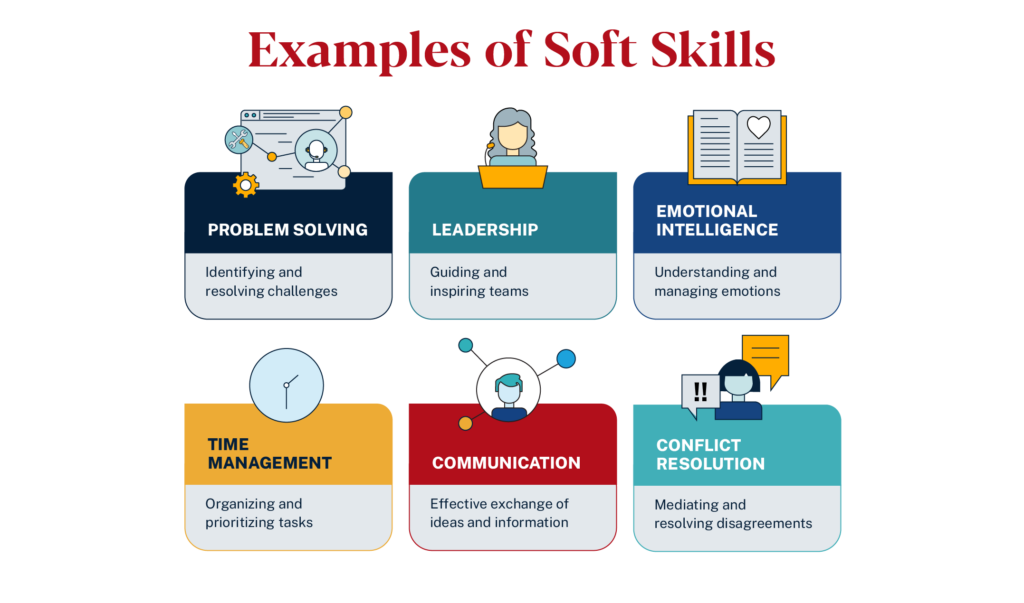
Examples of Soft Skills
Soft skills show up during meetings, in how feedback is handled and in the way individuals manage competing priorities. While technical skills may vary by role, these core soft skills consistently support professional effectiveness across industries.
They also play a direct role in professional growth. Individuals who communicate clearly, collaborate effectively and approach challenges with strong problem-solving skills are often better positioned to build trust, take on new responsibilities and contribute at a higher level over time. In many cases, these personal attributes influence not just how work gets done but how individuals are perceived within their organizations.
Communication and Active Listening
Clear communication is foundational in nearly every role. It ensures expectations are understood, reduces errors and helps teams stay aligned. This includes communicating clearly in both verbal and written formats, practicing active listening to fully understand others’ perspectives, and building strong relationships with colleagues, clients and stakeholders.
In practice, communication gaps can slow down projects or lead to unnecessary rework. Practicing active listening by asking clarifying questions or reflecting back what you’ve heard helps prevent misunderstandings and improves collaboration, especially in team-based work environments.
Emotional Intelligence
Emotional intelligence involves recognizing and managing your own emotions while also understanding how others think and feel. In many work environments, this shapes how individuals respond to feedback, navigate stress and communicate during moments of tension.
Rather than reacting impulsively, professionals with strong emotional intelligence tend to pause and consider the situation before responding with intention. In practice, this often shows up in small but important ways like maintaining composure during a difficult conversation or taking the time to understand another person’s perspective before responding. Over time, these behaviors build trust and strengthen collaboration, contributing to more productive team dynamics.
Problem Solving and Critical Thinking
Problem-solving skills are essential in workplaces where challenges are complex, evolving or without a clear solution. Rather than relying on routine answers, individuals are expected to assess situations, identify potential paths forward and make informed decisions based on available information.
Strong problem-solving typically involves breaking down an issue and evaluating possible outcomes before determining the most effective approach. In practice, this might mean analyzing data or weighing competing priorities, especially when circumstances change quickly. These skills become especially valuable in fast-paced environments, where the ability to think clearly and act decisively can influence both individual performance and broader team success.
Leadership and Teamwork
Leadership skills are not limited to formal management roles. In many workplaces, leadership shows up through initiative, accountability and the ability to support others in achieving shared goals. At the same time, effective teamwork requires collaboration, flexibility and a willingness to contribute beyond individual responsibilities.
Professionals often move between leading and supporting roles depending on the situation. For example, someone might take the lead on a project, then shift into a collaborative role to incorporate feedback or align with team priorities. This balance is critical in environments where success depends on collective effort.
Individuals who can navigate both leadership and teamwork effectively tend to build stronger relationships and contribute more consistently, positioning themselves for future growth opportunities.
Time Management and Organization
Time management directly impacts productivity and the ability to meet expectations in demanding work environments. This includes the ability to prioritize tasks and meet deadlines, stay organized in fast-paced settings, and manage multiple responsibilities efficiently.
In practice, professionals are often balancing overlapping deadlines and shifting priorities while navigating competing demands. Strong time management allows individuals to stay focused, reduce stress and maintain consistent performance.
Conflict Resolution
Conflict is a natural part of any workplace, particularly in environments where people bring different perspectives, priorities and communication styles. What matters most is how those disagreements are handled.
Effective conflict resolution involves approaching situations with professionalism and focusing on solutions rather than assigning blame while maintaining respect for those involved. This might include listening carefully to understand another viewpoint, identifying common ground and working toward an outcome that supports everyone. When handled constructively, conflict can lead to better decision-making, stronger collaboration and more resilient working relationships over time.
Importance of Soft Skills in Today’s Job Market
Many roles now require collaboration across teams, departments and even geographic locations, making interpersonal effectiveness essential. Hiring managers often look for candidates who can communicate clearly, adapt to change and contribute to a positive work environment. In a competitive job market where candidates may have similar technical backgrounds, soft skills often become the deciding factor, signaling how someone will function within a team and respond to challenges.
Beyond immediate performance, soft skills also play a meaningful role in long-term career growth and advancement. Professionals who consistently demonstrate strong communication, adaptability and interpersonal awareness are often trusted with greater responsibility over time, positioning them for sustained success across a range of work environments.
How Soft Skills Impact Career Success
While technical skills may help someone secure a position, soft skills often determine how they grow within it.
Early in a career, strong communication and teamwork can help individuals build credibility and integrate quickly into new environments. As responsibilities increase, skills like problem solving, emotional intelligence and the ability to prioritize tasks become more critical.
Over time, soft skills play a central role in advancement. Professionals who can manage relationships, navigate conflict and lead effectively are often seen as strong candidates for leadership opportunities. These skills contribute to visibility within an organization and influence how others perceive reliability and professionalism. Over time, they also support career mobility.
How to Develop Soft Skills
Soft skills are not fixed traits. They can be developed through consistent effort, reflection and real-world experience. Unlike technical skills, which are often learned in structured settings, soft skills tend to improve through practice and feedback over time.
For many individuals, developing soft skills becomes part of a broader commitment to professional growth. Continuing education can support this process by creating opportunities to collaborate, communicate and think critically in applied settings.
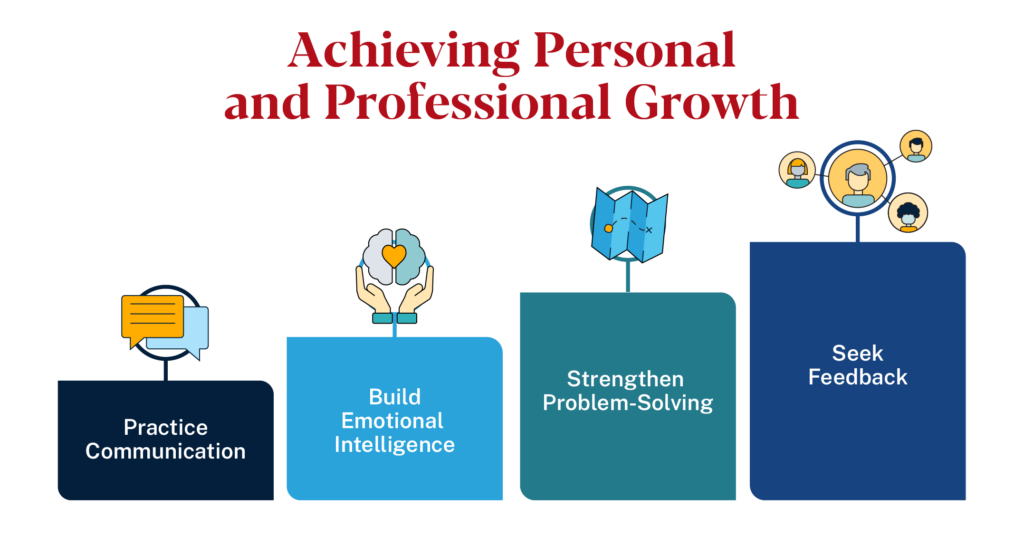
Practice Communication and Active Listening
Improving communication starts with everyday interactions. You should:
- Focus on clarity and tone in conversations and written communication
- Practice active listening by giving full attention and asking thoughtful questions
- Pay attention to how others respond and adjust your approach as needed
One common challenge is listening with the intent to respond rather than understand. Shifting that mindset can significantly improve how information is exchanged.
Build Emotional Intelligence
Developing emotional intelligence requires ongoing self-awareness. You’ll need to:
- Reflect on your reactions in different situations
- Consider how your behavior affects others
- Practice empathy, especially in challenging conversations
Over time, this awareness can help you respond more thoughtfully and build stronger professional relationships.
Strengthen Problem-Solving Skills
Problem solving improves with experience and intentional practice. Try to:
- Break down complex challenges into manageable steps
- Evaluate potential solutions using logic and data analysis
- Apply problem-solving skills in real-world scenarios whenever possible
A common mistake is rushing to a solution without fully understanding the problem. Taking time to assess the situation often leads to better outcomes.
Seek Feedback and Continuous Improvement
Feedback plays a critical role in developing soft skills. You can:
- Ask colleagues, mentors or supervisors for constructive input
- Look for patterns in feedback to identify areas for growth
- Set realistic goals to improve your soft skills over time
Consistent reflection and small adjustments can lead to meaningful improvement, especially when paired with real-world application.
FAQs
Why do employers value soft skills as much as technical skills?
Soft skills influence how work gets done. Communication, collaboration and adaptability directly impact team performance, productivity and overall workplace effectiveness.
Can soft skills be measured or evaluated during hiring?
Yes. Hiring managers often assess soft skills through behavioral interview questions, communication style, and how candidates approach real-world scenarios or problem-solving situations.
How do soft skills differ across industries?
While the core skills remain consistent, their application varies depending on the work environment, role expectations and level of collaboration required across different industries.
Are soft skills more important for leadership roles?
They become increasingly important in leadership roles, where guiding teams, managing conflict and making decisions are central to maintaining performance and supporting long-term success.
How can students build soft skills before entering the workforce?
Students can build soft skills through group projects, internships, part-time roles, and practicing communication and teamwork in academic and real-world settings.
What role do soft skills play in remote work environments?
They are essential for maintaining clarity, accountability and connection, especially when teams rely heavily on digital communication and operate across different locations or time zones.
American College of Education (ACE) offers affordable programs designed to support both academic and professional development.