
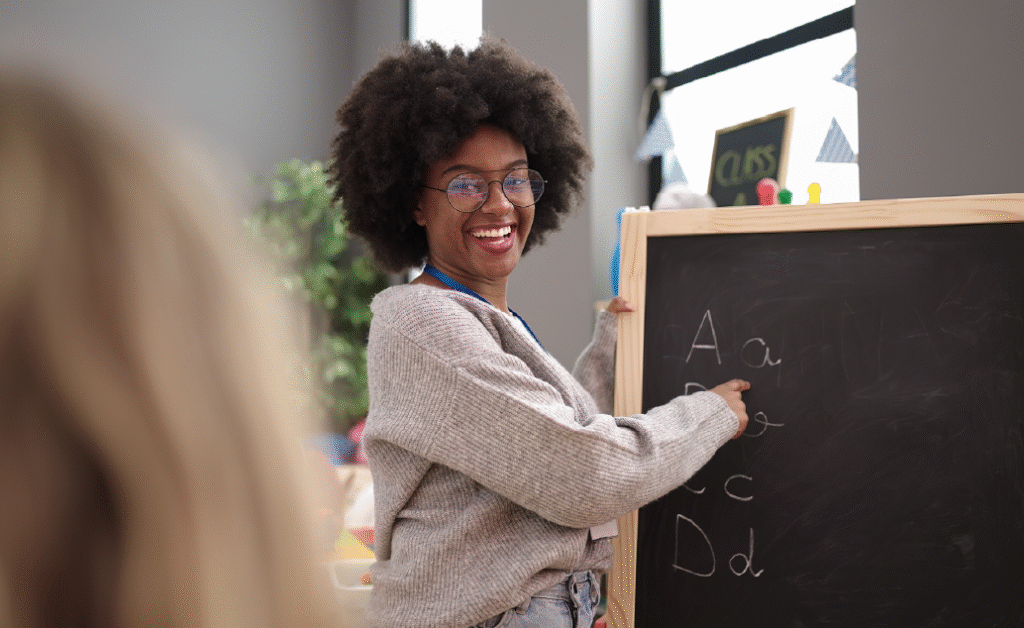
Special education classrooms are full of inspiration. One student is celebrating a breakthrough they’ve worked toward for weeks. Another is focused and engaged, transitioning into an exciting new activity. The teachers are not only teaching but supporting student learning, building trust and creating structures that help students grow.
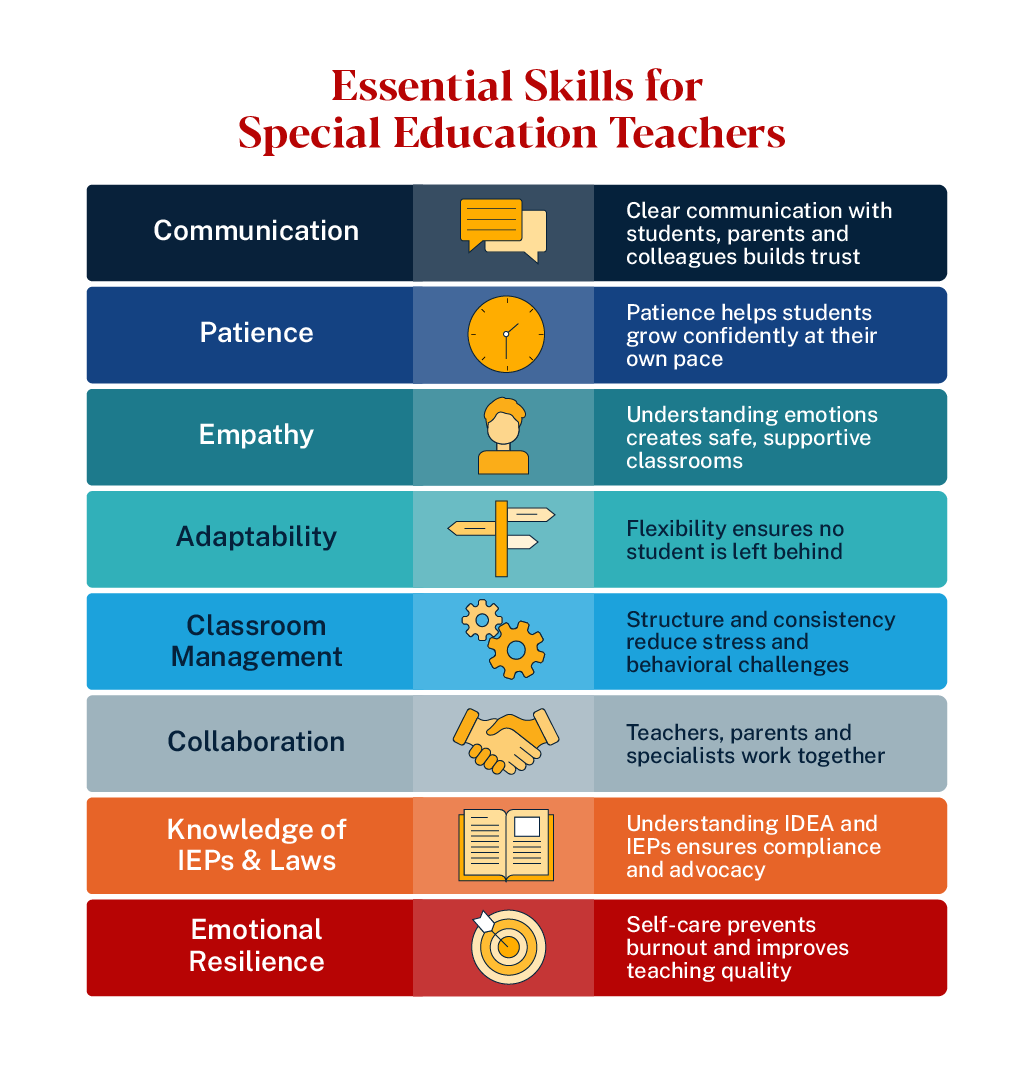
This is what makes special education such meaningful work and why it requires unique qualities and professional skills. In this blog, we will cover essential teaching skills for teachers supporting students with disabilities.
Communication Skills for Special Education Teachers
A special education (SPED) teacher communicates with students, families, support staff, administrators and therapists, sometimes all in the same day. This communication has to be clear, consistent and student-centered, because it affects everything from lesson planning to student learning, parent trust and implementing individualized education programs (IEPs).
Verbal and Nonverbal Communication Matters
In many special education classrooms, students respond best when language is paired with supportive cues. You must be able to use a mix of verbal and nonverbal communication skills like:
- Speaking in clear, simple language
- Repeating instructions when needed
- Using modeling and gestures
- Watching student body language for signs of frustration or fatigue
- Verifying understanding using student-friendly questions
Simplifying Instruction and Using Multisensory Strategies
Knowing how to simplify and clarify directions without lowering expectations is paramount. Many students benefit from multisensory instruction, such as:
- Visuals and pictures
- Manipulatives
- Hands-on demonstrations
- Audio supports
- Interactive movement or kinesthetic learning
Patience and Empathy: The Foundation of Special Education
Patience and empathy are daily essentials in the life of a special needs teacher. You often work with students who learn at different paces and require repeated practice to build confidence and skills over time. Understanding that progress is not always loud or obvious is key. Sometimes it shows up as a major milestone, and other times it’s a quiet breakthrough that only a teacher who truly knows the student can recognize.
Why Emotional Understanding Matters
Empathy helps teachers recognize what students are communicating through behavior. For instance, some may think students who act out are simply being difficult. However, a special needs teacher recognizes that these students may be responding to stress, confusion, overstimulation or unmet needs.
Leading a classroom with empathy involves asking yourself:
- What is this student trying to communicate?
- What skill is missing?
- How can I support them while still guiding them forward?
Real Progress Takes Time
Patience is a valuable tool that helps support student development and gives you the opportunity to celebrate small steps such as:
- Using a new communication tool independently
- Completing a task without prompts
- Participating in group learning for longer periods
- Showing improved emotional regulation
Adaptability and Creativity in Lesson Planning
There is no one-size-fits-all approach to instruction, especially in special education. This makes adaptability one of the most important skills to hone and master. You must be able to adjust strategies, materials, pacing and delivery to meet individual student needs.
Adjusting Instruction for Individual Learning Needs
It’s critical to be able to differentiate instruction while still focusing on academic goals. This might mean:
- Offering multiple ways to complete an assignment
- Modifying text for reading level while maintaining content meaning
- Breaking down steps into smaller pieces
- Giving choices to increase engagement
Additionally, lessons may need to be redesigned so that students with different cognitive abilities, communication needs or attention spans can participate meaningfully. That might include:
- Simplifying language
- Incorporating visuals
- Building in movement breaks
- Offering more than one way for students to demonstrate understanding
IEPs Support Flexible Teaching
IEPs are essential to informing instruction approaches as they outline accommodations, services and goals that support learning and progress. A teacher may use IEP goals to shape:
- Lesson planning priorities
- Targeted skill-building
- Progress monitoring strategies
- Individualized supports
Classroom Management and Behavior Support
Classroom management in special education is about structure, safety and consistency. When students know what to expect, they are more likely to engage in learning and less likely to experience escalations. Ultimately, the classroom must be led in a way that supports all students, including those who need additional emotional support.
Building Structure and a Calm Environment
Classroom management is often less about control and more about creating routines students can rely on. Positive and inclusive learning environments often include:
- Predictable rhythms
- Clear expectations
- Visual schedules
- Calm transitions
- Reinforcement systems that are supportive rather than punitive
Behavior Intervention
Behavior intervention is essential, especially for educators working with students who experience emotional or behavioral regulation challenges. Strong behavior support requires consistency, reflection and a willingness to adjust strategies over time. Evidence-based practices and data tracking can also help you measure improvement, identify patterns and make informed adjustment. Strategies include:
- Identifying triggers
- Offering proactive supports
- Using positive reinforcement
- Teaching replacement behaviors
- Maintaining calm, neutral responses during escalations
Collaboration and Teamwork
Success in special education often depends on teamwork, especially when students receive services across several learning environments. Strong collaboration helps teams stay aligned, supports inclusion, and makes IEP implementation more consistent and effective. It often includes communicating with:
- Parents and guardians
- General education teachers
- Speech and occupational therapists
- School psychologists
- Behavior specialists
- Administrators
Building Relationships with Loved Ones
Special education teachers communicate regularly with the people who support a student’s learning and development both in and outside the classroom. Families bring valuable insight into a student’s strengths, needs, life skills, routines and goals, so you want to build strong, trusting relationships with them.
Teamwork Supports IEP Progress
IEPs are implemented by teams, not individuals. Special education teachers often coordinate IEP goals, progress monitoring, accommodations and documentation while helping team members stay aligned with expectations.
Multidisciplinary Collaboration
Working across a multidisciplinary team involves more than friendly cooperation. Student progress often depends on consistent support across settings and requires:
- Listening skills
- Shared decision-making
- Conflict resolution
- Clear documentation of responsibilities
Knowledge of Special Education Laws, IEPs and Documentation
One of the most important special education teacher responsibilities is ensuring students receive the services and accommodations they are legally entitled to. That means you need a strong working knowledge of relevant laws and documentation.
The Individuals with Disabilities Education Act (IDEA) outlines requirements related to student rights, access to services and the least restrictive environment. Understanding IDEA helps special education teachers protect students and support families while meeting compliance expectations. IDEA supports:
- Appropriate identification and support services
- Ethical teaching practices
- Compliance with IEP requirements
- Student and family rights
IEPs and Documentation
IEPs provide the roadmap for individualized instruction. They help teachers design appropriate lesson plans, align accommodations and monitor progress over time. Special education teachers must be skilled at:
- Writing and reviewing IEPs
- Implementing accommodations
- Tracking and assessing student progress
- Maintaining accurate documentation
- Communicating updates to the IEP team
Emotional Resilience and Self-Care
Teaching special education is deeply rewarding, but it can also be emotionally demanding. You’ll often support students through behavioral challenges, academic frustration and moments of emotional dysregulation. Sometimes, you may also carry the weight of family concerns, time constraints and intensive documentation requirements.
Resilience helps you remain steady and supportive in high-demand situations while continuing to show up for students with consistency and care. Emotionally regulated adults create psychologically safe classrooms, which support student development, participation and trust.
Burnout and Compassion Fatigue
Burnout and compassion fatigue can happen when you:
- Feel overwhelmed by workload and documentation
- Absorb student stress without enough support
- Limited time to recharge
- Experience isolation or lack of staff collaboration
Self-Care Strategies
Resilience does not mean ignoring stress. It means building habits that protect your energy so you can continue working with students effectively. Practical strategies include:
- Setting boundaries around after-hours work
- Using planning systems to reduce last-minute stress
- Asking for help from your team
- Protecting time for rest
- Seeking professional counseling or peer networks when needed
Lifelong Learning and Professional Growth
New teaching strategies, assistive technologies and research-informed approaches continue to shape the special education landscape. By engaging in continuous learning, you can strengthen your practice, improve inclusion and better support student outcomes over time.
Professional Development Supports Student Success
Ongoing professional development can strengthen both your skills and specialized competencies. It also helps you stay up to date on evolving expectations related to IDEA, IEPs and assessment practices. Workshops, certifications and mentoring can strengthen:
- Behavior intervention skills
- Adaptive teaching strategies
- Lesson planning approaches
- Progress monitoring and assessment
- Communication skills
Accessibility Tools and Assistive Technology
Digital tools can support student learning and expand access when used intentionally. They help reduce barriers, improve engagement and create stronger learning environments. Examples include:
- Live captioning for students who benefit from visual language access
- Microsoft Immersive Reader for read-aloud, text customization and translation features
- Video captions and playback controls that support comprehension and engagement
FAQs
How can teachers develop these skills?
Special education teacher skills are generally developed through experience and intentional practice. You can improve by seeking mentorship, reflecting on classroom challenges, joining professional networks, and pursuing training in areas like behavior intervention, lesson planning and communication.
Why is empathy so important in special education?
Empathy helps teachers respond to student needs rather than reacting to behaviors alone. It builds trust, supports inclusion and helps students feel safe enough to engage in learning.
Do special education teachers need specialized training?
Yes. Special education teachers need specialized preparation related to IDEA requirements, IEP development, adaptive teaching, student assessment and supporting diverse learning needs.
American College of Education offers affordable and flexible programs that can help you start or advance your special education teaching career. If you’re interested in becoming a special education teacher, you can explore our career guide.