Choosing between public and private schools is a major decision for many families and a familiar fork in the road for educators. Whether you’re a parent, teacher or administrator, understanding the key differences and similarities between these school types can clarify what’s best for students, staff and communities.
Let’s take a closer look at how public and private schools compare, from funding and curriculum to teacher roles and responsibilities.
What Is a Public School?
Public schools are funded primarily by local, state and federal taxes and are governed by school districts and state boards of education. These public schools provide tuition-free education and are open to all eligible students, without discrimination based on background, income or academic performance. According to the National Center for Education Statistics, nearly 90% of U.S. students in pre-K-12 attend public schools.
In many communities, public schools serve as both academic and cultural hubs. They offer a wide range of services, including support for students with disabilities, who need special education services, English language learners and low-income families. Teachers in public schools typically hold a state-issued license, and curriculum is often aligned to state standards, such as the Common Core.
Public schools also come in different forms:
- Traditional public schools serve local neighborhoods.
- Charter schools operate with more flexibility in exchange for increased accountability.
- Magnet schools offer specialized programs such as STEM or the arts.
What Is a Private School?
Private schools operate independently of government funding and typically rely on tuition, donations and endowments for financial support. Because they are not governed by the same statutes and regulations that apply to public schools, private schools may establish their own admissions criteria, curricular frameworks and staffing requirements, consistent with applicable federal, state and accreditation regulations. Private schools may be secular or affiliated with a religious tradition, including but not limited to Catholic, Jewish or Christian institutions
These schools may have smaller student-to-teacher ratios and more individualized instruction. Because they aren’t bound by the same accountability systems as public schools, private institutions can tailor their educational approach based on a unique mission, whether it’s classical education, Montessori philosophy or college prep.
Some key categories include:
- Independent schools (non-religious and self-governed)
- Faith-based schools (such as parochial or religious academies)
- Boarding schools
- Montessori and Waldorf schools, which follow specific pedagogical philosophies
While private school teachers may not be required to hold a state teaching license, many still hold advanced degrees or certifications.
Key Differences Between Private Schools and Public Schools
While both public and private schools aim to support student achievement, they differ in several core areas:
Cost
- Public schools: Funded by local, state and federal taxes; tuition-free for all students to attend
- Private schools: Tuition-based, though many offer scholarships or financial aid
Governance
- Public schools: Managed by elected school boards and state education departments
- Private schools: Operated by independent boards or religious organizations, often with greater autonomy
Curriculum
- Public schools: Must follow state-mandated standards such as Common Core
- Private schools: Have flexibility to create or adapt curricula based on the school’s philosophy or mission
Teacher Certification
- Public schools: Teachers are typically required to hold a state-issued teaching license
- Private schools: Certification requirements vary; not always mandated, though many teachers hold advanced degrees
Class Size
- Public schools: Tend to have larger class sizes due to broader access
- Private schools: Generally offer smaller classes and more personalized instruction
Student Population
- Public schools: Serve a diverse population with open enrollment policies
- Private schools: Can be selective in admissions, which may lead to less socioeconomic diversity
Accountability
- Public schools: Subject to standardized testing and state evaluations
- Private schools: Utilize internal assessments or follow accreditation standards for accountability
Similarities Between Public and Private Schools
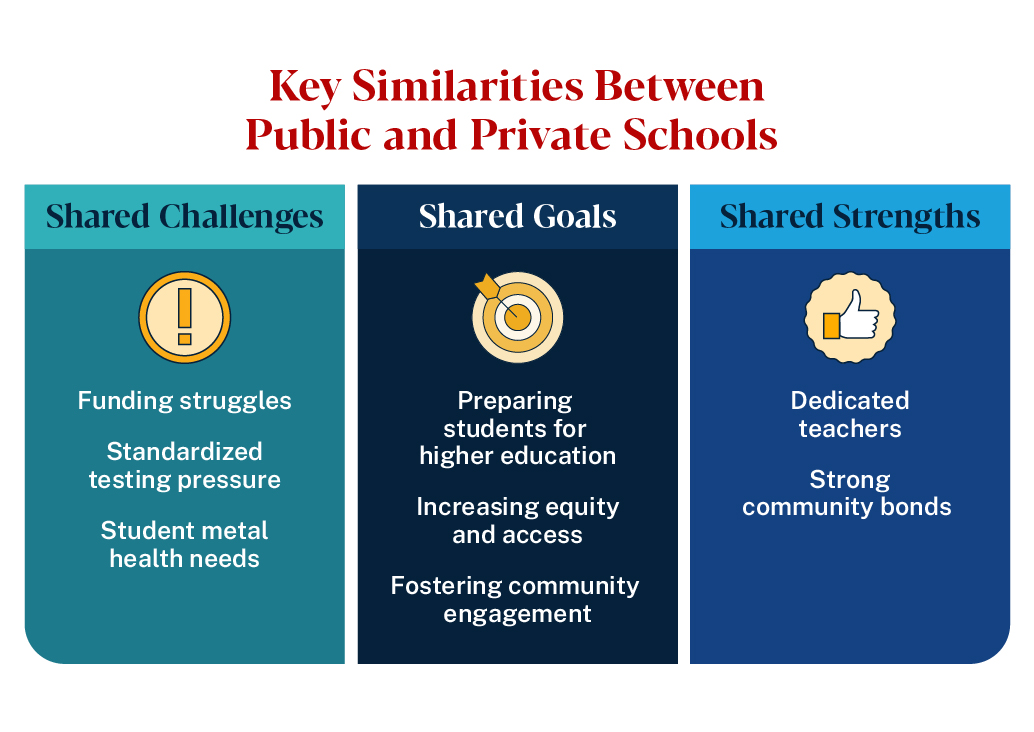
While public and private schools often stand on opposite sides of educational policy debates, they share more in common than many realize. Beneath the structural differences are shared values, overlapping challenges and a collective commitment to student success. Whether publicly funded or privately governed, schools across the nation are responding to similar pressures and striving toward similar outcomes. Recognizing these commonalities offers a more balanced understanding of the education landscape, especially for parents, educators and policymakers about weighing options or shaping reform.
Shared Challenges
Both public and private schools face significant challenges in today’s educational landscape. Mental health concerns among students are increasing across all education systems, and educators are working hard to support students experiencing anxiety, depression and trauma.
Funding limitations, though experienced differently, are also a reality. Public schools rely heavily on government budgets, while private institutions depend on tuition and donations, which can fluctuate. Additionally, both sectors must navigate the pressures of standardized testing, accountability measures and evolving family expectations.
Shared Goals
Despite their structural differences, public and private schools share a common goal: to prepare students for success beyond the classroom. Whether the path leads to college, career or personal growth, both systems strive to build critical thinking skills, foster creativity and ensure academic readiness.
Schools also work toward increasing equity and access, implementing initiatives to close achievement gaps, and better support underserved students. Community engagement is another mutual priority, with both types of schools seeking strong relationships with families and local partners.
Shared Strengths
Both public and private schools are powered by dedicated educators who go above and beyond for their students. Regardless of funding model, student demographics and admissions criteria, both systems benefit from passionate teachers, committed administrators and supportive school communities. Schools often serve as hubs of connection, where educators, students and families collaborate to create safe, welcoming environments. While the approaches may differ, the heart behind the mission remains the same: a belief in the transformative power of education.
Key Differences for Teachers
Choosing between teaching in a public or private school setting is a deeply personal decision that depends on your values, priorities and professional goals. While both settings offer rewarding experiences, there are distinct differences that educators should consider before making the switch.
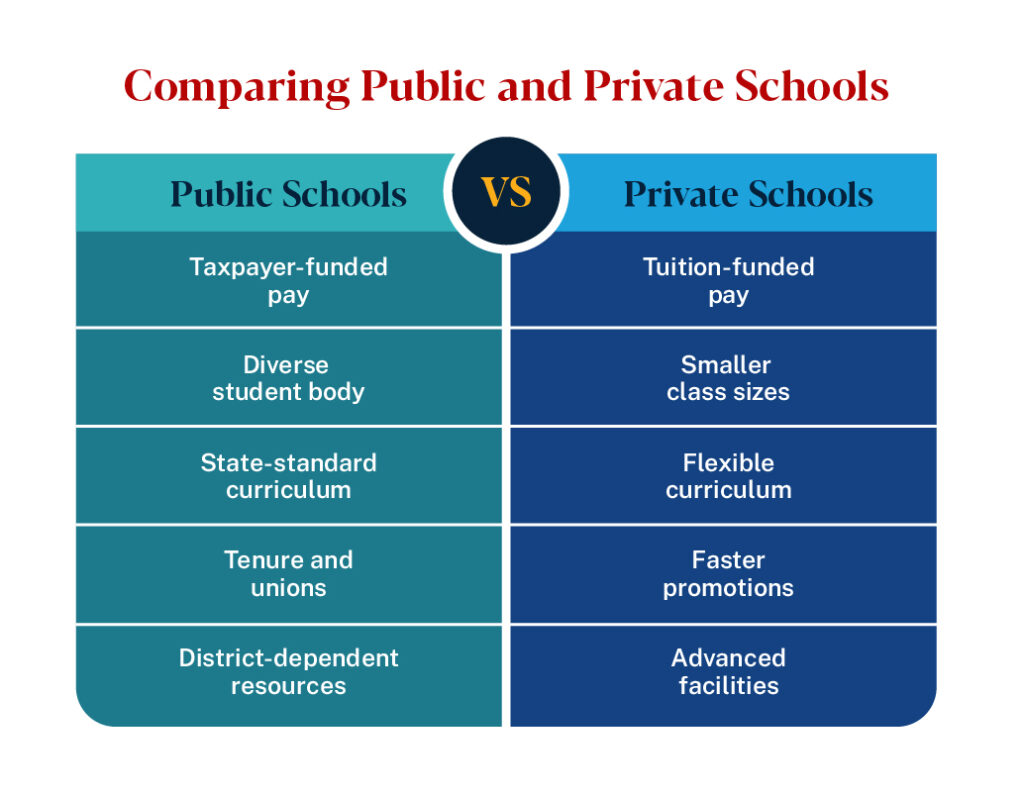
- Teacher pay and benefits: Public school teachers are often unionized, with access to union benefits like pension plans and standardized salary scales. Private school salaries may be lower but can offer additional perks like tuition discounts, on-campus housing or smaller teacher workloads.
- Class size and student demographics: Teachers at public schools will often have a more diverse student body and larger class sizes. As a result, some schools struggle with overcrowding and resource limitations. Because private schools have selective admissions, class sizes can be kept smaller and more consistent.
- Job security and career growth: Tenure laws and collective bargaining agreements in public schools can provide greater protection. However, bureaucratic stipulations can also make career advancement more time-consuming for public school teachers. Private schools typically operate on annual contracts and are able to create their own criteria for career advancement or promotion, which can sometimes lead to faster career advancement.
- Teaching autonomy: Private school educators may enjoy more curriculum flexibility, able to design their own or use nontraditional methods. Public school teachers may face stricter guidelines but also have access to larger resource pools and professional development systems.
- Resources and facilities: The learning environments and resources available to public schools will vary depending on the funding they receive. Therefore, public school teachers typically don’t have access to the same resources and advanced facilities that private school teachers do.
- Professional development: Public schools often receive state funding for PD and have district-level coaching. Private schools may have more limited but highly focused development opportunities.
When considering school options, the best fit will often align with your personal values, desired work environment and long-term goals. Whether you prefer the structure and stability of public schools or the curricular flexibility of private institutions, both paths can be deeply rewarding.
FAQs
What’s the biggest difference between private schools and public schools?
While there are many differences, perhaps the biggest difference between private and public schools is how they are funded.
Private schools are privately funded, typically through tuition costs, endowments or donations. Public schools are funded by taxpayers. In many ways, funding source then defines the students these schools serve and how they are held accountable.
Do teachers get paid more in private schools or public schools?
In general, public school teachers tend to get paid more than private school teachers. However, there are many factors that can influence this, including location, role and the school itself.
Do private schools require teaching licenses?
Not all private schools require teaching licenses. Requirements for teachers will vary from school to school.
Which has more job security: public or private schools?
Public school teachers typically have more job security because they are often represented by unions.
Prepare to teach or lead in any educational setting with a flexible and affordable education program at American College of Education.