
When registered nurses reach a point in their career when they start to wonder what comes next, they often consider stepping into a role beyond individual patient care to impact systems, populations and influence the nursing profession.
Some feel called to mentor and teach the next generation. Others are drawn to leadership, where they can shape how care is delivered across entire organizations. This is where the decision between nurse educator vs. nurse administrator begins.
As a nurse educator, you would focus on teaching, mentoring and preparing future nurses. In a nursing administrator role, you would lead teams, manage operations and improve patient care systems. Understanding their differences matters. Whether you are a current nurse, a student or exploring ways of advancing your nursing career, choosing the right path can help you align your work with your long-term goals.
As you explore this career breakdown, keep in mind that both roles typically require a Master of Science in Nursing (MSN) and real-world experience in clinical settings, but they offer very different day-to-day experiences and outcomes.
What Is a Nursing Administrator?
A nursing administrator is a leader responsible for overseeing nursing operations and ensuring that patient care is delivered effectively. These professionals play a central role in the healthcare system by connecting clinical teams with organizational strategy.
In a nurse administrative role, responsibilities go beyond direct patient care. Administrators manage resources, support staff and implement policies that improve outcomes across healthcare settings. Their work helps ensure that both patients and providers benefit from efficient and well-organized systems.
Nurse Administrator Job Description
A typical nurse administrator job description includes a combination of leadership and operational duties. These include:
- Managing nursing staff and supervising nurse managers
- Developing policies and procedures that guide patient care
- Overseeing budgets and resource allocation
- Ensuring compliance with healthcare regulations
- Leading quality improvement and patient safety initiatives based on data
With experience, many professionals move into executive positions such as chief nursing officer, where they influence decisions at the highest level of an organization.
Where Nurse Administrators Work
Nurse administrators are needed across a wide range of environments and wherever healthcare delivery requires coordination, oversight and leadership. Some of their most common work settings include:
- Hospitals and health systems
- Long-term care facilities
- Public health organizations
- Healthcare networks and corporate systems
- Government and policy-focused organizations
Skills Needed for Nurse Administrators
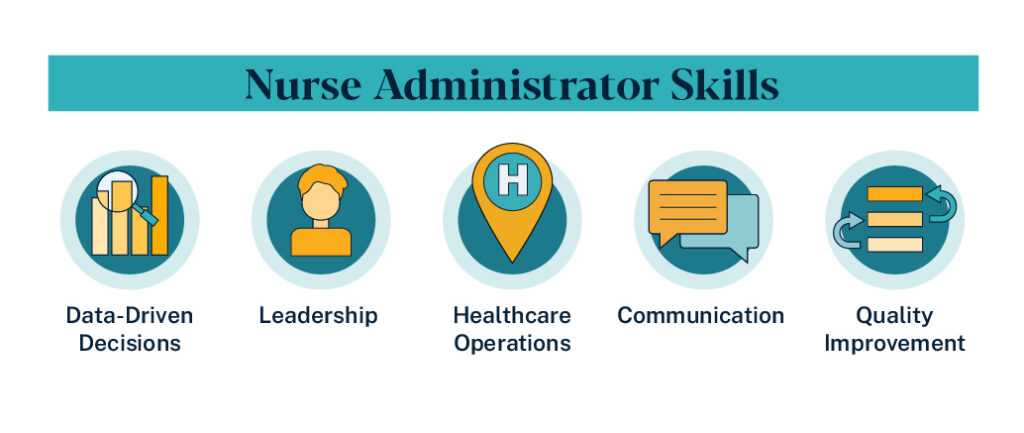
Success in a career as a nurse administrator typically depends on a blend of clinical knowledge and leadership ability. Key skills that can truly make a difference include:
- Strategic planning and decision-making
- Understanding healthcare operations and finance
- Communication and team leadership
- Knowledge of compliance and quality standards
- Ability to analyze data and improve systems
Many nurses build these skills through healthcare leadership degree programs or continuing education for nurses, including MSN programs. American College of Education (ACE) further supports aspiring nurse administrators by offering a fast-track pathway to a Master of Business Administration upon completing our MSN program.
What Is a Nurse Educator?
The nurse educator role revolves around teaching and mentorship. These registered nurses prepare students at all levels of nursing education and support practicing nurses as they grow in their careers. It’s important to note that nurse educators work at the intersection of education and healthcare. They help ensure that nursing professionals are well-prepared with the knowledge, clinical judgment and technical skills needed to succeed in healthcare settings. Their work is essential to upholding professional standards and maintaining consistent, high-quality care across various healthcare systems.
Nurse Educator Job Description
A typical nurse educator job description includes responsibilities such as:
- Teaching courses in classrooms, labs or simulation environments to promote clinical reasoning
- Developing, implementing, and evaluating nursing curricula and educational programs
- Mentoring nursing students and nurses to develop a strong professional identity
- Evaluating performance through exams and clinical assessments
- Collaborating with healthcare and community stakeholders to advance nursing care
- Providing service to departmental, college or university committees
Many nurse educators also conduct research and evidence-based practice, helping improve how nursing is taught and applied.
Where Nurse Educators Work
Nurse educators generally work in both academic and clinical environments. The following settings allow educators the opportunity to influence both new and experienced nursing professionals:
- Colleges and universities
- Nursing schools and academic programs
- Hospitals as clinical nurse educators
- Healthcare organizations offering staff training
- Workforce and continuing education programs
Skills Needed for Nurse Educators
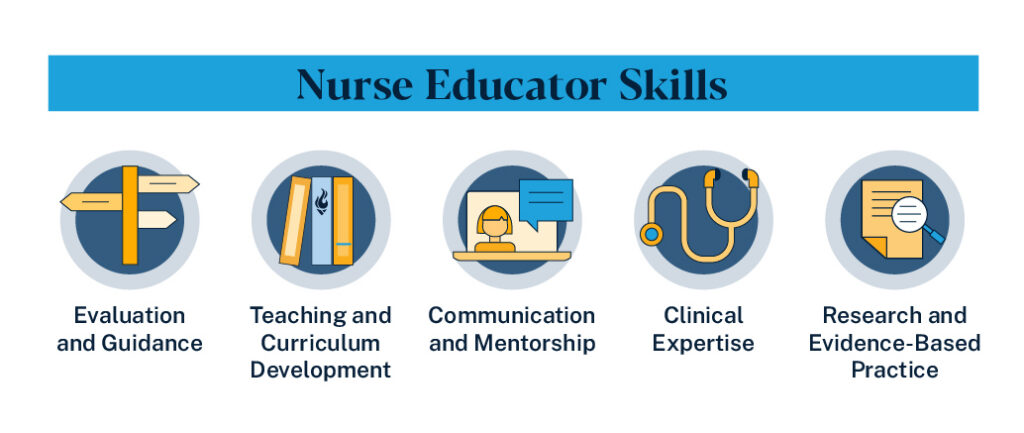
Nurses who want to succeed as educators need:
- Strong teaching and communication skills
- Ability to mentor and guide learners
- Clinical expertise from real-world experience
- Knowledge of research and evidence-based practice
- Skill in evaluating and supporting student growth
Nurse Educator vs. Nurse Administrator: Key Differences
Choosing between these roles often comes down to how you want to make an impact. Both paths require advanced education and experience, but they shape the healthcare system in very different ways.
Primary Responsibilities
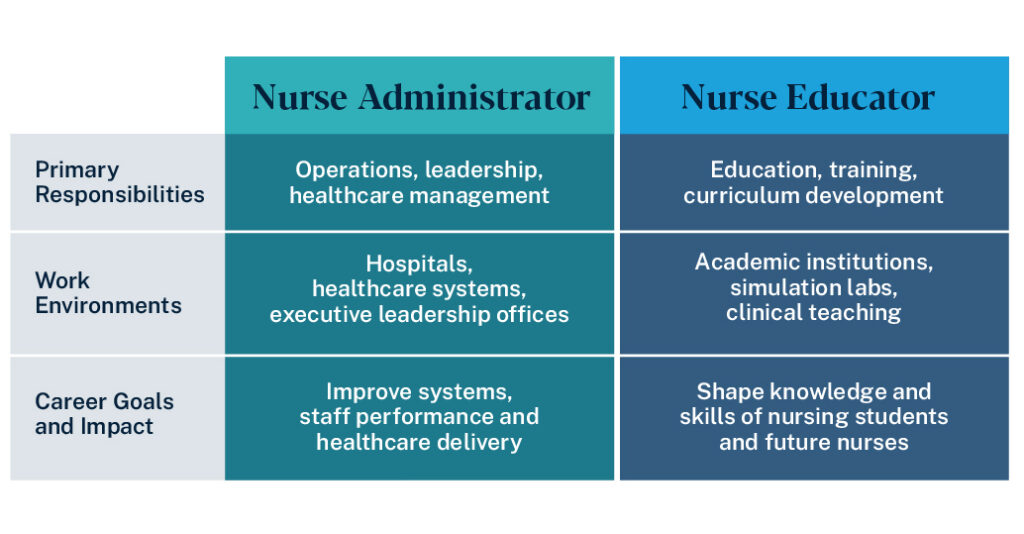
Nurse educators focus on developing people. Their work is centered on teaching, mentoring, and preparing nursing students and future nurses for clinical practice. They spend much of their time guiding students and helping them build confidence in real-world environments.
Nurse administrators focus on leading systems. They manage teams, oversee operations and make decisions that affect patient care on a larger scale. Their role is less about individual instruction and more about improving how care is delivered across entire organizations.
Work Environments
Nurse educators typically work in academic institutions, simulation labs and clinical training environments. Their days often include teaching, planning lessons and working directly with students in clinical settings.
Nurse administrators work in hospitals, healthcare systems and leadership offices. Their responsibilities involve meetings, planning and coordination with teams to ensure that operations run smoothly.
Career Goals and Impact
The impact of each role reflects its focus. Nurse educators shape the future of the profession by preparing nursing students and guiding future nurses as they enter the workforce. Their influence grows over time through the success of the individuals they teach.
Nurse administrators improve how care is delivered. They focus on efficiency, staff performance and patient outcomes. Their decisions can have an immediate effect on both healthcare teams and the patients they serve.
Salary and Career Growth
Both roles typically require an MSN and offer strong advancement opportunities. Nurse educators may move into roles such as senior faculty member, program director, or academic dean. According to the United States Bureau of Labor Statistics’ (BLS) latest data, retrieved on April 3, 2026, nursing instructors and teachers at the post-secondary level have a median salary of $80,780.$80,780.
Nurse administrators often begin as a nurse manager and advance to director-level roles or executive positions like chief nursing officer. BLS, who categorizes nurse administrators within medical and health services managers, reports their median annual pay at $117,960 as of 2024. If you are focused on preparing for nurse leadership roles, either path can support long-term growth depending on your interests.
Education Requirements for Nurse Educators and Administrators
Most professionals in both career paths pursue an MSN with a specialized focus. Common options include:
- Nursing education
- Nursing leadership or administration
Advanced education enables nurses to move beyond bedside care and assume broader responsibilities within the healthcare system. Some programs also offer credit for prior learning, helping experienced professionals move forward more efficiently. Flexible options, such as online programs designed for working nursing professionals, allow you to continue building your career while earning your degree.
Which Career Path Is Right for You?
The decision often comes down to what motivates you most in your work. So, let’s take a closer look at the career factors that you like the best.
| Choose nurse education if you enjoy… | Choose nurse administration if you prefer… |
|---|---|
| Teaching and mentoring others | Healthcare leadership and management |
| Academic/clinical environments | Policy and organizational strategy |
| Research and curriculum design | Improving systems within healthcare settings |
| Preparing the next generation of nurses | Supervising teams of nursing professionals |
FAQs About Nurse Educators and Nurse Administrators
What is a nursing administrator?
A nursing administrator is a healthcare leader who manages nursing staff, oversees operations and works to improve patient care across healthcare organizations.
What does a nurse educator do?
A nurse educator teaches nursing students, develops curriculum, and provides training for both new and experienced nurses in academic or clinical settings.
What is the difference between a nurse educator and nurse administrator?
The difference lies in focus. Nurse educators teach and mentor, while nurse administrators lead teams and manage healthcare operations.
Do nurse educators and administrators need an MSN?
Yes. Most roles require or prefer an MSN, especially for leadership and academic positions.
Can a nurse move from educator to administrator?
Yes. Many nursing professionals transition between roles as they gain experience and pursue additional education.
Take Your Nursing Career to New Heights
Both nurse educators and nurse administrators are impactful and essential to the nursing profession. One focuses on shaping future nurses while the other improves how care is delivered at scale. There is no bad choice in this equation, but the best choice will align with your strengths, interests and long-term goals.
If you’re ready for the next step in your nursing career, American College of Education’s affordable and flexible nursing degrees can help you build the skills. We offer BSN to MSN and RN to MSN options, where you can specialize your coursework to focus on nurse education or nurse administration.