
American College of Education (ACE) is incredibly proud of our graduates and how their impactful research contributes to various fields. Ed.D. in Instructional Technology graduate Dr. Jeanette Stamper completed a dissertation examining fourth-grade teachers’ perceptions of technology integration in literacy instruction, and we invite readers to explore it in full.
Technology has become an integral part of today’s elementary classrooms, prompting educators to continually adapt instructional practices that support student learning. As digital tools become more common in literacy instruction, teachers often navigate competing demands related to instructional planning, technology integration and meeting the diverse needs of students, particularly in Title I schools.
Stamper’s study explores how fourth-grade educators in Title I elementary schools perceive technology integration during daily literacy instruction. Grounded in constructivism and social cognitive theory, the study examines teacher self-efficacy, perceptions of technology’s relationship to student performance and the instructional practices educators use to foster critical thinking, communication and collaboration through technology.
The following research questions guided the study:
- Research Question 1: What are the experiences of fourth-grade educators with self-efficacy challenges in Title I elementary schools?
- Research Question 2: What are fourth-grade educators’ perceptions of technology proficiency and the performance of fourth-grade students in Title I elementary schools?
- Research Question 3: How do fourth-grade educators develop critical thinking, communication and collaboration during technology integration in Title I elementary schools?
Background: Technology Integration and Literacy Instruction
The COVID-19 pandemic accelerated technology integration across K–12 education, requiring schools to rapidly transition to virtual and hybrid learning environments. As instruction shifted online, educators adapted traditional teaching methods, incorporated digital tools into daily lessons and participated in professional development designed to strengthen technology integration. Despite these efforts, many teachers continued to experience challenges related to technology proficiency, classroom management and delivering effective instruction in evolving learning environments.
Technology integration has become increasingly important as schools seek to strengthen literacy instruction while meeting the diverse needs of students. Digital tools can expand opportunities for instruction, assessment and student engagement, but successful implementation often depends on teachers’ confidence, instructional practices and access to meaningful professional learning. Exploring these real-world challenges can help schools identify strategies that better support both educators and students.
Understanding educators’ experiences with technology integration can help schools identify strategies that better support both educators and students while strengthening literacy instruction. Stamper’s study contributes to this ongoing conversation by examining teachers’ experiences within the context of Title I elementary school classrooms.
Previous Studies: Technology Integration and Literacy Instruction
H3 Technology in Learning Communities
Previous research emphasizes that technology integration extends beyond the use of digital tools in the classroom. Effective implementation often depends on collaboration among educators through professional learning communities, where teachers share instructional strategies, interpret student data and develop approaches that support student learning. Research also suggests that technology can strengthen these collaborative environments by connecting formal and informal learning communities and encouraging educators to continuously refine instructional practices.
Digital Pedagogy and Student Engagement
The literature also highlights the importance of digital pedagogy in creating engaging, student-centered learning experiences. Constructivist approaches encourage educators to serve as facilitators while students actively participate in the learning process through inquiry, collaboration and problem-solving. Digital tools can support these instructional practices by promoting communication, critical thinking and independent learning when thoughtfully integrated into literacy instruction.
Technology Implementation and Professional Development
Successfully integrating technology requires more than access to digital resources. Previous studies identify ongoing professional development, instructional coaching and teacher collaboration as key factors in helping educators build confidence and strengthen technology integration practices. Research also recognizes that school districts may struggle to keep pace with rapidly evolving technology, making continuous learning opportunities essential for supporting effective literacy instruction.
Research Gap
Although previous research has explored technology integration, digital pedagogy and professional development, fewer qualitative studies have focused specifically on how fourth-grade teachers in Title I elementary schools perceive technology integration during literacy instruction. Stamper’s study builds on existing research by examining educators’ experiences within this specific instructional context, providing insight into the factors that influence technology integration in elementary literacy classrooms.
Methodology: Exploring Teacher Perceptions of Technology Integration
Stamper employed a qualitative case study design to explore fourth-grade teachers’ perceptions of technology integration. Specifically, they sought to understand their experiences during daily literacy instruction in Title I elementary schools within a large urban school district in North Carolina. A qualitative approach allowed for an in-depth assessment, providing valuable context for understanding the opportunities and challenges associated with technology integration in literacy instruction.
The study included 15 fourth-grade teachers selected through purposive sampling from Title I elementary schools. Data were collected using open-ended questionnaires and one-on-one, in-depth interviews, allowing participants to share experiences and perspectives in their own words while addressing each of the study’s research questions.
Grounded in constructivism and social cognitive theory, the study examined how teachers experienced technology integration, developed instructional practices, and perceived the relationship between technology and literacy instruction. Throughout the research process, participant confidentiality and ethical research practices were maintained.
Data Analysis: Identifying Themes Across Teacher Experiences
Stamper used an inductive approach to thematic analysis to examine the questionnaire and interview responses. Open coding was used to identify meaningful patterns before organizing related ideas into broader themes. These themes formed the foundation for interpreting participants’ experiences with technology integration in literacy instruction.
To strengthen the trustworthiness of the findings, the study incorporated several qualitative research practices. Member checks allowed participants to review and verify their responses, while peer feedback, detailed documentation and an audit trail helped support the study’s credibility, dependability, transferability and confirmability. Together, these measures helped ensure that the findings accurately reflected participants’ experiences and perspectives.
Findings: Teacher Perceptions of Technology Integration in Literacy Instruction
Research Question 1: Teacher Self-Efficacy and Literacy Instruction
The first research question explored fourth-grade teachers’ experiences with self-efficacy challenges. Participants identified several factors that influenced confidence when integrating technology into daily instruction, including limited instructional time, resource constraints, student behavior and the diverse academic needs of students. These challenges often required educators to make thoughtful instructional decisions while balancing multiple classroom demands.
Participants also described strategies that helped address these challenges. Intentional lesson planning, differentiated instruction, small-group learning and collaboration with colleagues were identified as important practices for supporting diverse students. Educators emphasized that effective literacy instruction required careful planning, alignment with instructional standards and flexibility to respond to students’ individual needs. Professional learning teams and collaboration with colleagues also contributed to teacher growth and instructional effectiveness.
Research Question 2: Technology Proficiency and Student Performance
The second research question examined educators’ perceptions of technology proficiency and student performance during literacy instruction. Participants described technology as an important instructional resource that supported lesson delivery, informed instructional decisions and provided students with access to district-approved digital learning tools. Rather than viewing technology as a replacement for effective teaching, participants emphasized that digital tools were most valuable when intentionally integrated into literacy instruction to support learning objectives.
Participants also identified teacher proficiency as an important factor in successful technology integration. Ongoing professional development, instructional coaching and opportunities to strengthen digital competencies helped educators build confidence while adapting instructional practices to meet student needs. Participants acknowledged that differences in technology expertise and available resources could influence implementation across classrooms, reinforcing the importance of continued support for educators.
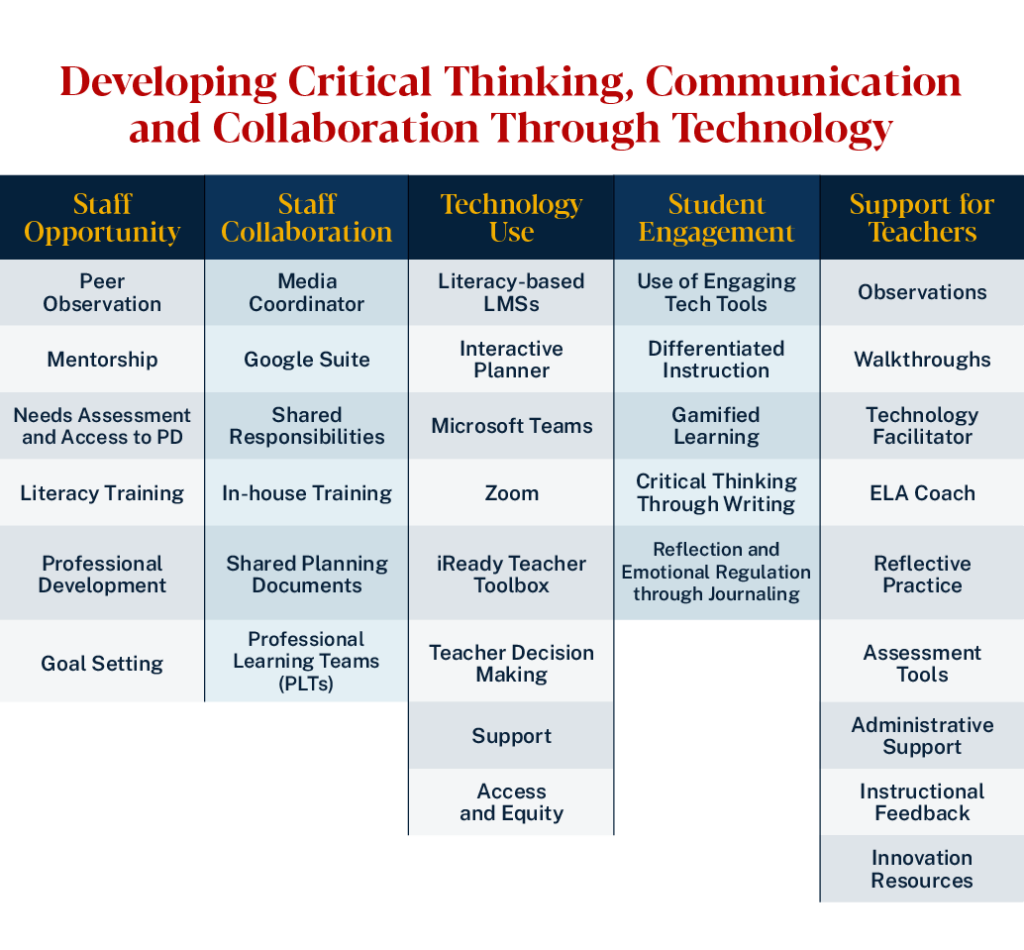
Research Question 3: Developing Critical Thinking, Communication and Collaboration
The third research question explored how educators foster critical thinking, communication and collaboration through technology integration. Participants described using digital tools to create learning experiences that encouraged discussion, collaboration and active participation during literacy instruction. Rather than serving as the primary focus of teaching, technology was intentionally incorporated into lessons to support instructional goals and promote meaningful student engagement.
Participants also emphasized that collaboration extended beyond interactions among students. Professional learning teams, ongoing professional development and opportunities to exchange instructional strategies with colleagues played an important role in strengthening classroom practices. Educators viewed collaboration with their peers as an important component of successful technology integration and continued instructional growth.
Findings and Implications
Stamper’s study demonstrates that successful technology integration in literacy instruction depends on more than access to digital tools. Participants consistently emphasized the importance of intentional instructional planning, meaningful professional development and collaboration among educators. The findings also suggest that supporting educators’ self-efficacy and technology proficiency may strengthen technology integration efforts within Title I elementary schools.
The study is limited to fourth-grade teachers from Title I elementary schools within one large urban North Carolina school district, so the findings may not apply to every educational setting. Stamper recommends future research examining the long-term effects of technology integration on literacy growth, identifying professional development models that strengthen digital instructional practices and exploring how school and district leadership influences educators’ technology adoption, access to resources and self-efficacy. These areas may help inform future instructional practices and leadership decisions related to technology integration.
American College of Education (ACE) offers affordable doctor of education (Ed.D.) programs that equip education professionals for advanced leadership roles.