
Many adult learners return to school with years of professional experience but encounter an unfamiliar challenge with academic writing when developing a strong thesis statement. Consider a healthcare professional pursuing an advanced degree, a business leader seeking new credentials or an educator working toward career advancement. While these individuals may communicate effectively in their professions, translating ideas into a focused academic argument can feel intimidating at first.
Whether you’re writing a short essay, a research paper or a graduate-level assignment, a strong thesis statement serves as the foundation of effective academic writing. Many students understand that a thesis is important, but they are often unsure where to begin or how to develop one that supports their ideas.
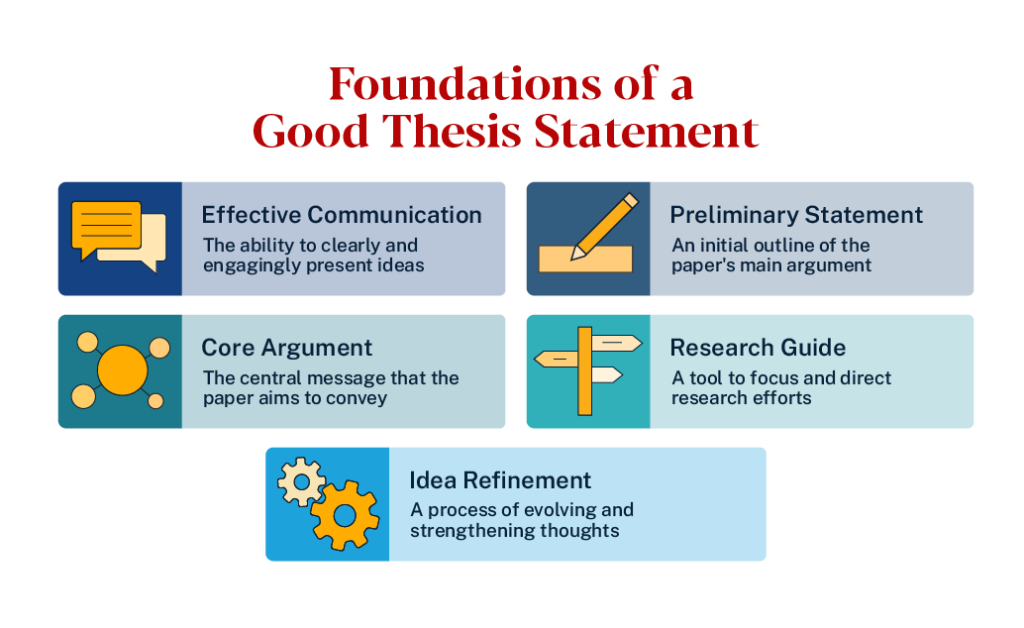
So, what is a thesis statement? It’s a concise statement that communicates the central idea, argument or purpose of a paper. It provides direction for the writer and helps readers understand what to expect. Learning how to write a thesis statement is an essential skill that strengthens essay writing, improves organization and supports academic success.
In this blog post, we’ll explore what makes a good thesis statement, how to write one step by step, common types, examples, frequent mistakes and practical strategies for strengthening academic writing.
Key Takeaways
- A thesis statement is a concise sentence (or two) that states a paper’s central idea, argument or purpose and typically appears at the end of the introduction.
- Writing one is a process: start with a broad topic, narrow it through research, draft a working thesis, then revise it into a final, specific claim.
- A simple formula to build one is Topic + Position/Claim + Supporting Reasons.
- The three main types are argumentative (takes a position), expository (explains and previews) and analytical (interprets evidence).
- Common mistakes include being too broad, stating a fact instead of an argument, cramming in too many ideas, or drifting from the assignment.
- A strong thesis is clear, specific, arguable and supportable with evidence — and it’s normal for it to evolve as research and writing progress.
What Is a Thesis Statement?
A thesis statement is a concise expression of the central idea, argument or purpose of a piece of writing. It tells readers what the paper will discuss and establishes a clear direction for everything that follows.
In academic writing, the thesis serves as the foundation of essays, research papers and scholarly assignments. A well-developed thesis helps writers stay focused while giving readers a roadmap to understanding the paper’s main points.
Why Thesis Statements Matter
A strong thesis statement creates a clear focus for the paper rather than a collection of disconnected ideas. It:
- Helps readers understand the writer’s purpose
- Guides the structure of supporting arguments
- Keeps writing focused and organized
Faculty often observe that the biggest challenge students face is not writing mechanics but unclear thinking. A successful thesis statement helps clarify ideas before drafting begins, improving the entire writing process.
Where a Thesis Statement Typically Appears
Most thesis statements appear at the end of the introduction paragraph in essays and research papers. This placement allows writers to introduce context before presenting the central claim.
What Makes a Good Thesis Statement?
A good thesis statement is clear, focused, specific and aligned with the assignment. It communicates a meaningful idea that can be supported with evidence and analysis.
Clear and Focused
Strong thesis statements avoid vague language.
- Weak: Technology affects education.
- Stronger: Online learning platforms have expanded educational access for working adults by increasing flexibility and reducing geographic barriers.
Specific and Debatable
A strong thesis presents a position or interpretation rather than a simple fact. This is essential for argumentative essays and analytical writing.
Relevant to the Assignment
The thesis must align with the assignment’s purpose and scope. Overly broad or overly narrow topics can weaken the final paper.

The Process of Writing a Thesis Statement
Strong thesis statements rarely start out fully formed. They evolve through research, reflection and revision.
Start With a Topic
Begin with a broad subject, then narrow it.
- Broad topic: Healthcare workforce shortages
- Narrowed topic: Nurse retention in rural hospitals
Conduct Preliminary Research
At this stage, focus on identifying patterns, themes and credible evidence related to your topic. Pay attention to areas of disagreement or gaps in research, as these often become the foundation of a strong academic argument.
Form a Central Argument or Main Idea
Ask:
- What am I trying to prove?
- What conclusion am I reaching?
Draft a Working Thesis
A working thesis is an early version that provides direction but is expected to evolve.
- Working thesis: Rural hospitals struggle to retain nurses.
Revise Into a Final Thesis
Refine for clarity and specificity.
- Final thesis: Rural hospitals can improve nurse retention by investing in mentorship programs, flexible scheduling and professional development opportunities.
A Simple Thesis Statement Formula
A helpful starting point is:
- Topic + Position/Claim + Supporting Reasons
- Example: Online learning + improves access + flexibility, affordability and convenience
- Final thesis: Online learning improves educational access by increasing flexibility, reducing barriers and supporting working adults.
Types of Thesis Statements
Different assignments require different approaches.
Argumentative Thesis Statement
An argumentative thesis statement takes a position and supports it with evidence. It is common in persuasive and argumentative essays, where the goal is to convince the reader.
- Example: Employers should offer flexible work arrangements because they improve employee satisfaction, productivity and retention.
Expository Thesis Statement
An expository essay often features this type of thesis statement. It explains a topic and previews key points that will be covered.
- Example: Effective leadership requires communication skills, emotional intelligence and ethical decision-making.
Analytical Thesis Statement
An analytical thesis statement interprets evidence and explains meaning.
- Example: The author’s use of symbolism highlights the tension between individual freedom and societal expectations.
What Is an Example of a Thesis Statement?
Example of an Argumentative Thesis Statement
Colleges should expand access to online learning because it increases flexibility, improves educational access and supports lifelong learning.
Example of an Expository Thesis Statement
Time management strategies help students improve productivity, reduce stress and achieve academic success.
Example of an Analytical Thesis Statement
The novel’s recurring symbolism reveals the author’s critique of social inequality and power structures.
Common Mistakes When Writing a Thesis Statement
There are several common mistakes that make thesis statements ineffective.
- Being too broad: It covers too much information and lacks focus
- Writing a statement instead of an argument: It simply presents facts instead of a defensive position
- Too complex: Too many ideas are crammed into a single sentence
- Not aligning with the paper: There is a disconnect between the thesis and content
How Long Should a Thesis Statement Be?
Typical Length Guidelines
The ideal length of a thesis statement depends on assignment complexity, but clarity and focus are always more important than length. Most are one to two sentences.
When a Thesis May Need More Detail
Graduate-level writing or complex research papers may require slightly longer thesis statements, but they should remain concise and readable.
Tips for Strengthening Your Thesis Statement
If you’re working on a piece of writing and looking for ways to strengthen your thesis statement, begin with these tips:
- Ask whether the thesis is arguable. A thesis should invite discussion and evidence-based support.
- Make every word count. Remove unnecessary language and improve precision.
- Revisit the thesis during the writing process. Revise as your ideas develop.
- Seek feedback. Instructors and peers can help identify clarity issues.
Before and After: Improving a Thesis Statement
Here’s an example of a weak thesis statement and what a stronger version of it could look like.
- Weak thesis: Social media affects college students.
- Improved thesis: Excessive social media use negatively impacts college students’ academic performance by reducing study time and increasing distractions.
- Why it is stronger: It is specific, arguable and clearly identifies the direction of the paper.
Thesis Statement Checklist
Before submitting your paper, ask:
- Is my thesis clear and easy to understand?
- Does it present a specific argument or purpose?
- Can it be supported with evidence?
- Does it align with my paper’s content?
- Is it concise and focused?
- Have I revised it after drafting?
If your thesis disappeared from the paper, would the reader still understand your main argument? If not, it needs refinement.
How Thesis Statements Support Strong Academic Writing
Thesis statements are the backbone of academic writing, because they support both the writer and the reader. They do so in the following ways:
- Improve organization: The thesis provides a roadmap for structure and flow
- Strengthen arguments: It connects evidence to a central claim, supporting persuasive and analytical writing
- Enhance reader understanding: It clarifies purpose and improves readability
Further Recommendations on Thesis Statements
For many students, learning how to write a thesis statement is a turning point in developing academic confidence. While the process can feel challenging at first, it becomes easier with practice, revision and feedback.
These skills also extend beyond the classroom. In professional environments, individuals are expected to analyze information, support recommendations and communicate ideas clearly. The same critical thinking used in thesis development supports leadership, decision-making and strategic communication.
Students looking to strengthen their writing further may benefit from resources such as this comprehensive guide to scholarly writing and this exploration into how to teach strong writing skills.
FAQs
Can a thesis statement change while writing a paper?
Yes. Many writers begin with a working thesis and refine it as their research and ideas evolve. This revision process is a normal and important part of academic writing.
Do all college assignments require a thesis statement?
Not all assignments require one, but most academic papers benefit from a clearly defined central idea that guides the discussion.
Can a thesis statement include multiple points?
Yes. Many strong thesis statements preview two or three supporting ideas to help structure the paper.
What’s the difference between a thesis statement and a research question?
A research question asks what you want to explore.
Example research question: How does flexible scheduling affect nurse retention in rural hospitals?
A thesis statement answers it with a position:
Example thesis statement: Flexible scheduling improves nurse retention in rural hospitals by reducing burnout and increasing job satisfaction.
Should a thesis statement include evidence or citations?
No. A thesis presents the claim while evidence appears in the body of the paper.
How can students tell if their thesis is strong enough?
A strong thesis is clear, specific, arguable and aligned with the paper. If it guides the writing and can be supported with evidence, it is effective.
American College of Education offers affordable degree programs designed with the flexibility working professionals need. Plus, our students have access to services and resources that support your academic writing journey.