

American College of Education (ACE) is incredibly proud of our graduates and how their impactful research contributes to various fields. Ed.D. in Public Health Education alumna Dr. Susannah Gillespie focused her dissertation on the wellness experiences of women caring for loved ones with Parkinson’s disease who participate in community-based wellness programs. Below is a summary of Gillespie’s study, and we invite readers to explore the full version.
Parkinson’s disease affects millions of people worldwide, creating physical, emotional and social challenges that often extend beyond the individual diagnosed. Family members frequently step into caregiving roles, helping manage daily responsibilities, medical appointments and evolving care needs. While researchers have extensively studied the experiences of people living with Parkinson’s disease, much less attention has been given to the wellness of the family members who support them.
To help address this gap, Gillespie explored the wellness experiences of female care partners whose loved ones participate in community-based Parkinson’s wellness programs. Her study examined how these women navigate the demands of caregiving while maintaining their own well-being. Drawing on Bronfenbrenner’s socioecological theory and Bandura’s social cognitive theory, the research explored the personal, social and environmental factors that shape caregiver wellness.
Two research questions guided the study:
- Research Question 1: What are the lived experiences of female care partners for persons diagnosed with Parkinson’s Disease (PDwPD) participating in community-based wellness programs?
- Research Question 2: How do female care partners for persons diagnosed with Parkinson’s Disease (PDwPD) participating in community-based wellness programs describe their wellness lived experiences?
The Impact of Parkinson’s Disease on Family Care Partners
Parkinson’s disease is the second most common neurodegenerative disease in the world. While symptoms vary from person to person, many individuals experience challenges related to movement, balance, sleep, mood and cognitive function. As the disease progresses, support from family members and loved ones often becomes increasingly important.
For many families, that support comes from a spouse. Women frequently take on the role of primary care partner, helping coordinate appointments, manage medications, provide emotional support and assist with everyday tasks. Although caregiving can create meaningful opportunities for connection, it can also affect a caregiver’s physical, emotional and social well-being.
Researchers have long recognized that caring for a loved one with Parkinson’s disease can be demanding. As responsibilities grow, caregivers may have less time to focus on their own health, relationships and personal interests. Yet despite increased attention to caregiver experiences, questions remain about how care partners maintain their own wellness while supporting someone else.
What Previous Research Says About Caregiving and Wellness
Before beginning her study, Gillespie reviewed existing research on Parkinson’s disease, caregiving and wellness. While much of that research focuses on people living with Parkinson’s disease, it also offers valuable insight into the experiences of family caregivers.
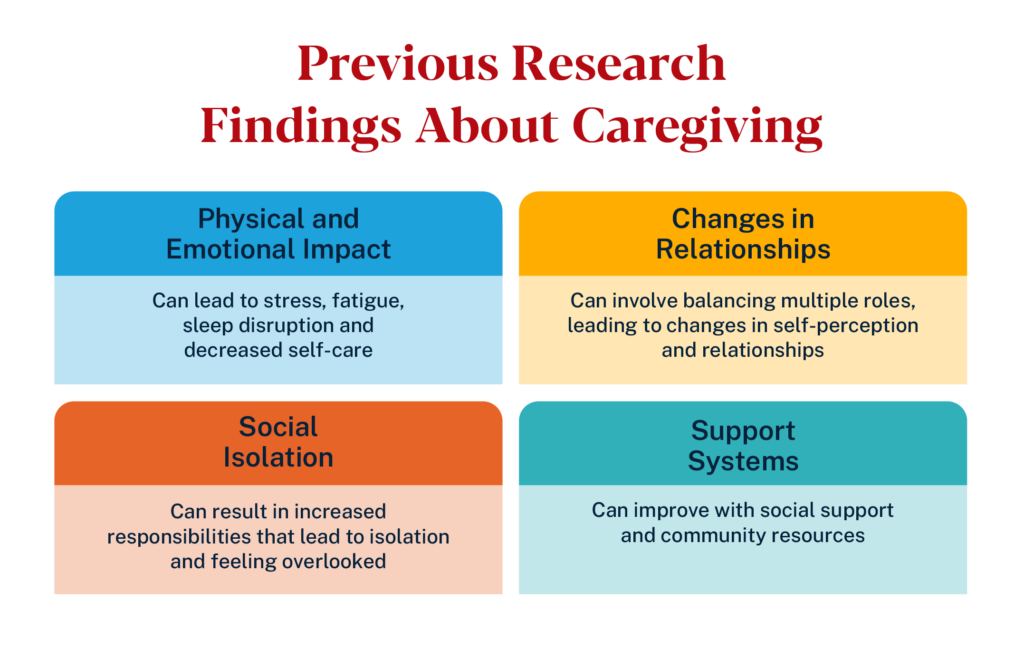
The Physical and Emotional Impact of Caregiving
Caring for someone with Parkinson’s disease can affect nearly every aspect of a caregiver’s life. Previous studies found that as symptoms progress, care partners often take on greater responsibilities and spend increasing amounts of time supporting their loved ones’ daily needs.
These growing demands can contribute to stress, fatigue and sleep disruption. Caregivers may also have less time and energy to focus on their own health and well-being, making it more difficult to maintain healthy routines and self-care practices.
At the same time, caregiving isn’t defined solely by its challenges. Some care partners report developing stronger emotional bonds with their loved ones and finding a greater sense of purpose in their role. Others become more mindful of their own wellness, recognizing that caring for themselves is an important part of caring for someone else.
Changes in Relationships and Social Connections
Living with Parkinson’s disease can change the dynamics of a relationship over time. As care needs increase, many spouses find themselves balancing multiple roles, serving as a partner, advocate and caregiver all at once.
Previous studies suggest these changes can affect how caregivers view themselves and their relationships. Some report grieving the loss of familiar routines and relationship dynamics, while others describe feeling disconnected from activities and social circles that were once an important part of their lives.
Caregivers may also feel isolated as their responsibilities grow. Between managing their loved one’s needs and navigating an unpredictable disease, many have less time to spend with friends, family members and support networks. Some report feeling overlooked in healthcare conversations despite playing a central role in their loved one’s care.
Support Systems and Community Resources
Social support can play an important role in caregiver well-being. Connections with family members, friends, healthcare professionals and fellow caregivers can help reduce feelings of isolation while providing practical advice and emotional encouragement.
Studies have also highlighted the value of support groups, community-based programs and other wellness initiatives. These resources can create opportunities for social connection, information sharing and relationship building among people facing similar challenges.
Despite the recognized importance of support systems, Gillespie identified an important gap in the literature. While previous studies examined the benefits community-based wellness programs provide for people living with Parkinson’s disease, far less attention had been given to the experiences of the care partners who attend alongside them. As a result, little was known about how these programs influence caregiver wellness.
How the Study Was Conducted
Gillespie used a qualitative research approach to better understand the wellness experiences of female care partners of people living with Parkinson’s disease. Rather than relying on surveys alone, the study focused on personal stories and lived experiences shared by caregivers.
The study included women in the United States who were:
- Unpaid care partners for a person diagnosed with Parkinson’s disease
- Accompanying that individual to a community-based wellness program
- Fluent in English
- Not professionally trained or compensated caregivers
Participants were recruited through Parkinson’s disease organizations and online communities, including outreach conducted through the American Parkinson Disease Association. Interested individuals completed a demographic questionnaire and informed consent process before joining the study.
In total, 17 female care partners participated in one-on-one interviews about their caregiving experiences and overall wellness. These conversations gave participants an opportunity to share the challenges, adjustments and successes they encountered while supporting a loved one living with Parkinson’s disease.
How Participant Experiences Were Analyzed
After completing the interviews, Gillespie used a structured thematic analysis process to review participant responses and identify recurring patterns. Interview transcripts, researcher notes and participant feedback were used to help ensure the findings accurately reflected caregivers’ experiences.
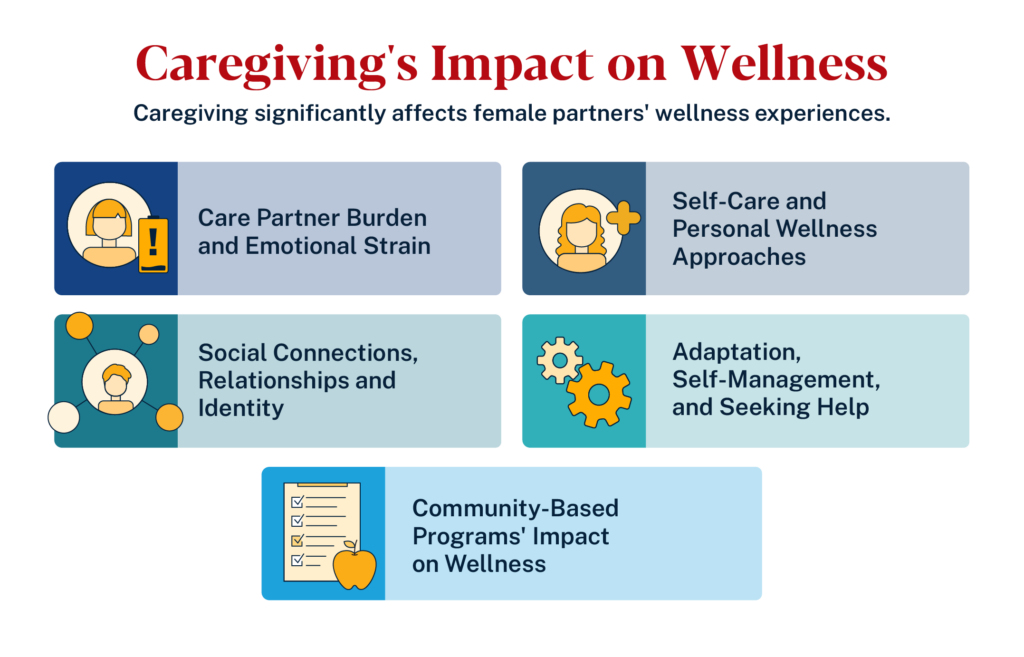
Five major themes emerged from the interviews:
- Care partner burden and emotional strain
- Self-care and personal wellness approaches
- Social connections, relationships and identity
- Adaptation, self-management and seeking help
- Community-based programs’ impact on wellness
Together, these themes offered valuable insight into how female care partners experience wellness while supporting a loved one living with Parkinson’s disease.
What Female Care Partners Revealed About Wellness and Caregiving
The five themes that emerged from the interviews highlight both the challenges and sources of support that shaped participants’ wellness experiences.
Care Partner Burden and Emotional Strain
Many participants described caregiving as emotionally and physically exhausting. As Parkinson’s disease progressed, women often found themselves balancing their loved one’s changing needs with their own responsibilities, leaving little time to focus on themselves.
Several participants spoke about feeling helpless as they watched the disease affect someone they cared deeply about. Others described reaching a point of physical or emotional exhaustion and questioning how long they could continue providing the same level of support without additional help. Some also described postponing their own health needs because caregiving responsibilities took priority.
These experiences underscored the significant toll caregiving can take on wellness, particularly when care partners feel responsible for managing challenges that are often beyond their control.
Self-Care and Personal Wellness Approaches
Many participants viewed self-care as a necessity rather than a luxury, recognizing that their ability to support a loved one depended in part on maintaining their own well-being. They described a variety of activities that helped support their physical and emotional well-being, including:
- Exercise
- Hobbies and creative activities
- Support groups
- Meditation and mindfulness practices
- Time away from caregiving responsibilities
Some participants intentionally scheduled wellness activities just as they would medical appointments, making self-care a regular part of their routine. Others used respite care services to create space for personal interests, exercise or social connection.
Many participants rated their overall wellness higher at the time of the interview than they had at the beginning of their caregiving journey.
Social Connections, Relationships and Identity
For many women, caregiving changed the way they related to their spouse or loved one. As Parkinson’s disease progressed, participants described adjusting to new responsibilities, changing routines and a relationship that often looked different than it had in the past.
Several participants described grieving the loss of their previous relationship dynamic and adjusting to a role that increasingly centered on caregiving. Others described feeling isolated from friends and social activities as caregiving demands increased.
At the same time, connections with other caregivers helped many participants feel less alone. Sharing experiences with people facing similar challenges provided a sense of understanding and support that was often difficult to find elsewhere.
For many women, caregiving became an increasingly important part of how they saw themselves, requiring them to balance the roles of spouse, partner, advocate and caregiver.
Adaptation, Self-Management and Seeking Help
Many participants described learning to adjust as their caregiving responsibilities changed over time. As they gained experience, they became more aware of their own limits and the importance of asking for help when needed.
Some women developed new routines to help manage stress and maintain their well-being. Others relied on family members, friends or community resources for additional support. Several participants also spoke about the importance of setting boundaries and recognizing when they needed time to rest and recharge.
These experiences highlighted the ongoing adjustments many caregivers make as they balance supporting a loved one with caring for themselves.
Community-Based Programs’ Impact on Wellness
Community-based wellness programs played an important role in many participants’ lives. While these programs were designed primarily for people living with Parkinson’s disease, caregivers often experienced meaningful benefits as well.
Participants described finding connection, support and understanding through these programs. Many valued opportunities to build relationships with other care partners who shared similar experiences. Several women described the Parkinson’s community as an extended family and said those relationships helped reduce feelings of isolation.
They also appreciated having a space where they could exchange information, learn from others and feel understood by people facing similar challenges. For many, the sense of community became an important source of support throughout their caregiving journey.
At the same time, participants noted challenges associated with program participation. Transportation demands, time commitments and witnessing the progression of Parkinson’s disease in others could sometimes create additional emotional and logistical strain.
Limitations and Opportunities for Future Research
Gillespie noted several limitations to the study, including its relatively small sample size, reliance on self-reported experiences and recruitment methods that may not fully reflect the experiences of caregivers who are less connected to online communities or Parkinson’s disease support networks.
The study also identified several opportunities for future research, including:
- Examining how caregiver experiences change as Parkinson’s disease progresses
- Comparing experiences across different caregiver populations
- Evaluating interventions designed to support caregiver wellness
- Exploring how community-based programs can better support both caregivers and people living with Parkinson’s disease
These findings highlight the importance of continuing to explore caregiver wellness and identifying ways to better support those who play such a critical role in the lives of people living with Parkinson’s disease.
American College of Education’s affordable doctoral programs provide you with the skills and space to pursue original research and deepen your expertise in your field.