|
Getting your Trinity Audio player ready...
|
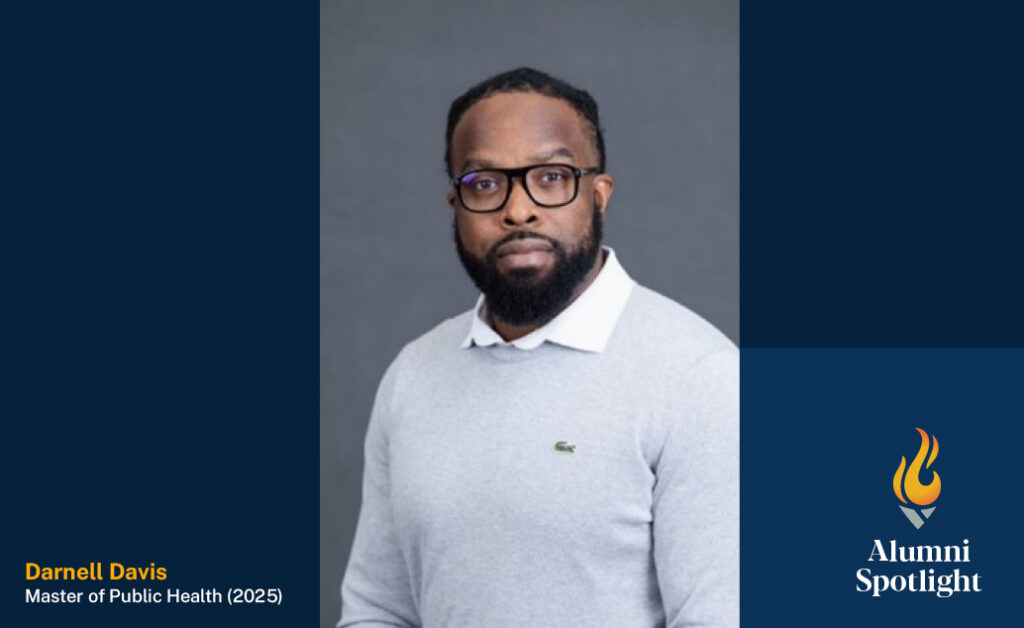
Welcome to the ACE Alumni Spotlight, where we highlight our alumni and share their stories.
Darnell Davis is an expert public health professional and biotechnology leader with extensive experience in viral diagnostics, global health initiatives and innovative research. He graduated from American College of Education (ACE) in 2025 with a Master of Public Health (MPH) degree, where he designed and validated coronavirus diagnostic tools as part of his academic work, focused on improving access in underserved communities. As a chief executive officer for Rifle Mining LLC, he leads multidisciplinary, data-driven consulting in public health, diagnostics and nutrition.
We were thrilled to learn more about his time at ACE and impactful career.
ACE: From serving in the United States Army and making extensive contributions in public health to executive leadership and a Ph.D. on the way, tell us about your most recent work and research milestones since graduating from ACE.
Darnell Davis (DD): Over the past year, one of the most meaningful milestones in my life has been becoming a father. Welcoming my son has reshaped how I think about legacy, responsibility and purpose.
Professionally, I am working on research to identify new biomarkers of active viral replication, with the goal of improving how we detect and interpret infectious diseases. The project has strong translational potential, particularly in distinguishing active infections from residual viral presence. Together, these experiences have strengthened both my scientific focus and my commitment to building a future that is both impactful and intentional.
ACE: You worked as a research fellow at the Association of Public Health Laboratories in connection with the Center for Disease Control and Prevention while completing your MPH. Tell us what this experience was like and how you were able to apply learnings from ACE to your work.
DD: My experience as a research fellow was both rigorous and deeply rewarding. The MPH program at ACE provided practical, real-world tools that I could immediately apply in a public health laboratory setting, particularly in data interpretation and infectious disease response. The faculty’s depth of expertise made mentorship accessible and meaningful throughout the process.
While balancing both responsibilities required discipline, the alignment between my coursework and fellowship made the experience feel like a natural extension of my professional growth.
ACE: How has your public health research and coursework at ACE, particularly designing and validating a coronavirus diagnostic tool for your capstone project, influenced your career?
DD: My coursework at ACE, particularly my capstone project focused on designing and validating a coronavirus diagnostic tool, enabled me to address a critical gap in public health: the limitations of current detection methods. As disease prevalence continues to rise among vulnerable populations, there is an urgent need for diagnostic approaches that move beyond simple presence-based detection.
My research emphasizes understanding viral replication biology to better distinguish active infections from non-infectious states. The influence overall has shaped my career trajectory and continues to inform how I approach both research and public health innovation.
ACE: What are your career aspirations upon earning a Ph.D.?
DD: Upon earning my Ph.D., I plan to transition into the biotechnology space and develop a diagnostic-focused startup centered on advancing infectious disease detection. My goal is to build tools that not only improve diagnostic accuracy but also provide deeper insight into viral activity and transmission dynamics.
I am particularly driven by the need to create accessible, high-impact solutions for underserved communities, where diagnostic gaps often have the greatest consequences. Ultimately, I aim to bridge the gap between research, innovation and real-world application in public health.
ACE: What advice would you give to an aspiring public health professional?
DD: For aspiring public health professionals, I would emphasize the importance of leading with both expertise and empathy. The challenges facing public health today are complex and deeply rooted in social, cultural and structural factors.
Developing cultural competence and building trust within the communities you serve is just as important as technical knowledge. As the field continues to evolve, those who can combine scientific rigor with genuine human understanding will be best positioned to create meaningful and lasting impact.
Being an American College of Education alumni has its perks. When you return as an alum for another program, you can save 5% off your tuition with the Alumni Continuing Education Grant.