
Career Guide: Pediatric Nurse
Here’s what you need to know.
Toggle Navigation
Our Enrollment Counselors are here to answer your questions and walk you through the enrollment process.
Career Overview: Pediatric Nurse
For many families, a children’s visit to the doctor or hospital can feel overwhelming. Pediatric nurses help make those experiences less intimidating by providing skilled medical care while supporting the emotional and developmental needs of young patients and their families.
From routine checkups to emergency situations, pediatric nurses play an important role in helping infants, children and adolescents receive the care they need to grow, recover and stay healthy. For registered nurses (RNs) interested in working with young patients, pediatric nursing offers an opportunity to combine clinical expertise with compassion, communication and family-centered care.
Learn more about what pediatric nurses do, the education and certifications often required for the role, and how to become one.
What Is a Pediatric Nurse?
A pediatric nurse is an RN who specializes in caring for infants, children and adolescents. In addition to providing medical care, they help address the emotional, developmental and educational needs of young patients while supporting parents and caregivers throughout the treatment process.
Because children are constantly growing and developing, pediatric nursing requires an understanding of developmental stages and age-appropriate care. These nurses help patients navigate everything from routine illnesses and injuries to chronic conditions and complex medical treatments.
Pediatric nurses work closely with physicians, specialists and families to provide patient care that supports a child’s overall health and well-being. They may work in hospitals, pediatric clinics, schools, community healthcare settings and acute care facilities.
What Do Pediatric Nurses Do?
Pediatric nurses provide medical care and support for children across a wide range of healthcare settings. While responsibilities vary depending on the patient’s age, condition and treatment needs, they primarily focus on promoting health, supporting recovery and helping families understand their child’s care plan.
Core Duties and Responsibilities
Pediatric nurses combine clinical expertise with family-centered care. Common responsibilities include:
- Monitoring vital signs and patient conditions
- Administering medications, vaccines and treatments
- Educating children and families about health conditions and care plans
- Assisting physicians and healthcare teams during examinations and procedures
- Supporting developmental and emotional needs
- Maintaining patient records and clinical documentation
- Providing care in acute and critical care settings
Work Environments
One of the unique aspects of pediatric nursing is the variety of healthcare settings available. Common work environments include:
- Pediatric hospitals and units
- Pediatric clinics and physician offices
- Schools and community healthcare settings
- Pediatric critical care and emergency departments
- Home healthcare and rehabilitation centers
Skills & Traits That Make a Successful Pediatric Nurse
Working with children requires a unique combination of clinical knowledge, patience and adaptability. Successful pediatric nurses understand that effective care often involves building trust with both patients and their families while providing age-appropriate support and education.
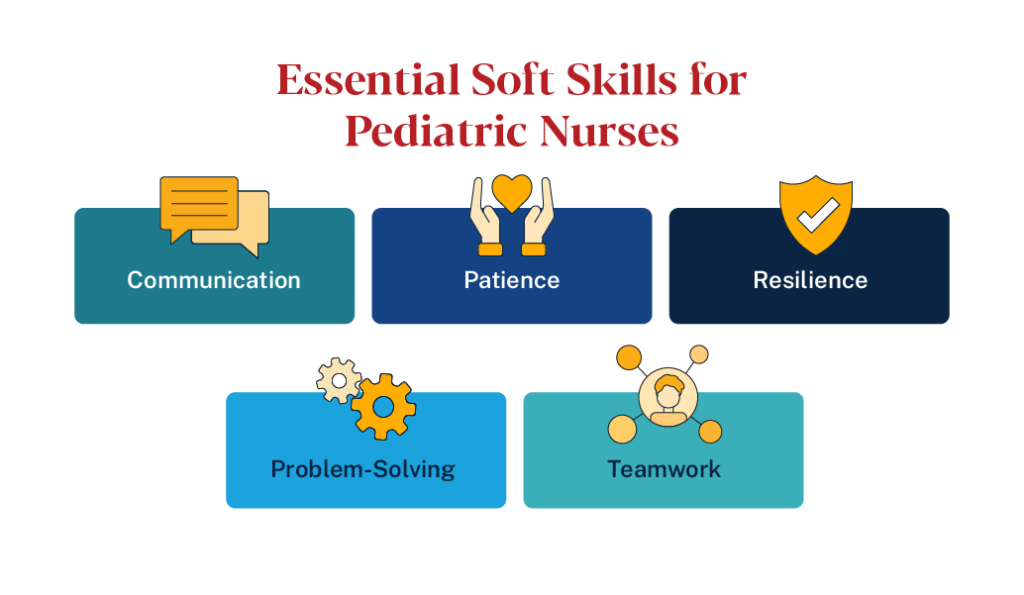
Essential Soft Skills
Communication skills are among the most important qualities. Unlike adult patients, children may struggle to explain symptoms or understand medical procedures. Pediatric nurses must communicate in ways that are appropriate for a child’s age and developmental level while also providing clear information to parents and caregivers.
Patience and empathy are equally important. Children may feel scared, uncomfortable or confused during medical visits, and pediatric nurses often help reduce anxiety by creating a supportive environment. Emotional resilience and adaptability also play a role, particularly when caring for children facing serious illnesses or unexpected medical challenges.
Strong problem-solving abilities help pediatric nurses respond to changing patient needs, while interpersonal skills support collaboration with families and healthcare teams.
Important Technical Skills
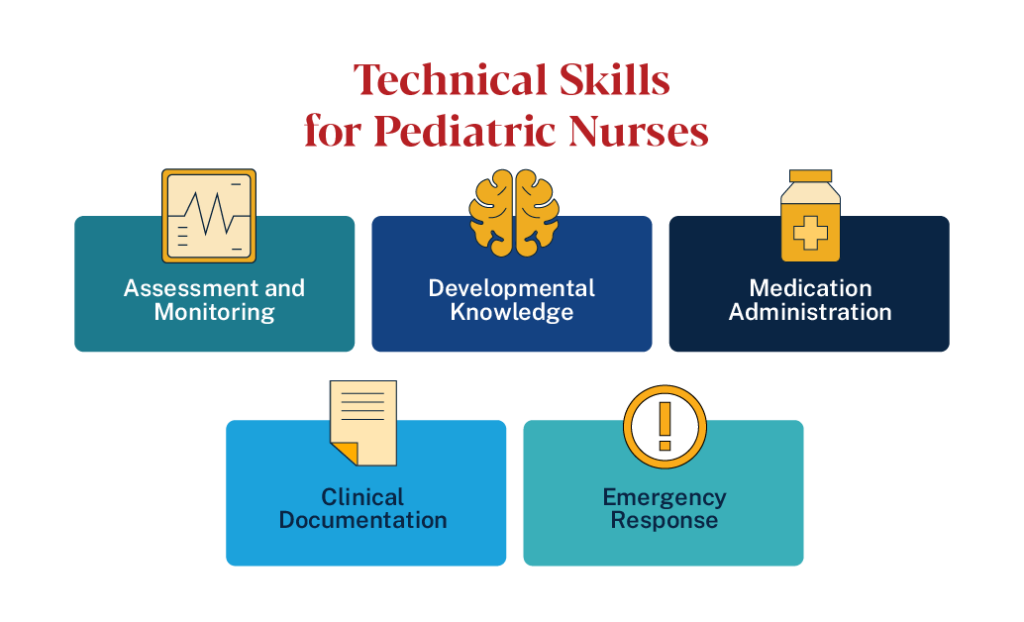
Pediatric nurses must develop specialized clinical skills related to child healthcare and patient assessment. Because children are not simply smaller versions of adults, nurses must understand developmental stages, growth patterns and age-specific healthcare needs.
Technical skills often include pediatric patient assessment, medication administration, patient monitoring and clinical documentation. Pediatric nurses may also use healthcare technology to track patient progress, monitor vital signs and support treatment plans. Some settings require experience with acute care, emergency response or pediatric critical care procedures.
How These Skills Apply on the Job
These skills help pediatric nurses provide safe, effective care while creating positive healthcare experiences for children and families.
For example, they may need to explain a procedure to a nervous child, answer questions from concerned parents and coordinate treatment with healthcare providers — all while carefully monitoring the patient’s condition. The ability to balance clinical responsibilities with compassionate communication is one of the defining characteristics of successful pediatric nursing.
Pediatric Nurse Education Requirements
Individuals researching how to become a pediatric nurse often begin by earning a nursing degree and obtaining RN licensure. Beyond these foundational requirements, they often gain specialized experience and training focused on child healthcare.
Minimum Education Requirements
The first step toward becoming a pediatric nurse is completing an accredited nursing program. Aspiring nurses may earn either an Associate Degree in Nursing (ADN) or a Bachelor of Science in Nursing (BSN).
After graduating, candidates must pass the NCLEX-RN examination and obtain licensure to practice as an RN.
Preferred Education Pathways
While both ADN and BSN graduates can pursue pediatric nursing careers, many employers prefer nurses with a BSN. Additional education can help nurses develop leadership skills, strengthen clinical decision-making and prepare for long-term career advancement.
Clinical experience working with children is also highly valuable. Many pediatric nurses gain experience in pediatric units, family medicine practices or other child-focused healthcare settings before specializing.
Certifications and Training Options
Many pediatric nurses pursue certifications to demonstrate specialized knowledge and commitment to the field. One of the most recognized credentials is the Certified Pediatric Nurse (CPN) certification. The Pediatric Advanced Life Support (PALS) certification is also commonly recommended, particularly for nurses working in acute care or emergency settings.
Continuing education opportunities create ways to stay current with advances in child healthcare, treatment approaches and patient care best practices.
How to Become a Pediatric Nurse
Becoming a pediatric nurse typically involves building a foundation in nursing education, gaining clinical experience and developing expertise in caring for children and adolescents.
- Complete a Nursing Program
The first step is earning an ADN or BSN degree through an accredited nursing program. These nursing programs provide the clinical and academic preparation needed to begin a nursing career.
Students considering a nursing career may also find it helpful to explore different nursing specialties. - Obtain RN Licensure
After completing a nursing degree, graduates must pass the NCLEX-RN examination and obtain state licensure.
- Gain Pediatric Clinical Experience
Many nurses build pediatric experience by working in children’s hospitals, pediatric clinics, family practices or other healthcare settings that serve younger patient populations. This hands-on experience helps build familiarity with working with children of different ages while developing the communication and assessment skills needed to be a pediatric nurse.
- Pursue Pediatric Nursing Certification
As nurses gain experience, many pursue the CPN credential and other specialty training opportunities. These certifications can help demonstrate expertise and support professional growth within pediatric nursing.
- Optional: Advance With Graduate Education
Some pediatric nurses pursue graduate education to expand their career opportunities. Advanced degrees may support leadership positions, nursing education roles or advanced practice careers such as becoming a pediatric nurse practitioner.
Day-in-the-Life & Real-World Scenarios
A Typical Workday
A typical workday often includes monitoring patient conditions, administering medications, coordinating care with healthcare providers and communicating with families. Depending on the setting, nurses may care for newborns, school-aged children or adolescents, each with unique healthcare needs and developmental considerations.
Because children often require reassurance and encouragement during medical care, pediatric nurses spend significant time helping patients feel comfortable and supported throughout treatment.
Real-World Examples
A pediatric nurse may help a child recover after surgery by monitoring vital signs, managing pain and educating family members about post-discharge care. In another situation, a nurse working in an emergency department may support parents while a healthcare team evaluates and treats a child experiencing a serious medical emergency.
These situations require both technical expertise and strong communication skills, particularly when families are experiencing stress or uncertainty.
What Success Looks Like in the Role
Successful pediatric nurses help children receive high-quality care while creating positive experiences for patients and families. Their work often contributes to improved patient comfort, better treatment outcomes, and stronger relationships between healthcare providers and families.
By combining clinical knowledge with compassion and effective communication, pediatric nurses play an important role in supporting children’s health throughout every stage of development.
Pediatric Nurse Salary & Job Outlook
A pediatric nurse’s salary can vary depending on a variety of factors, including location, certifications and education, type of hospital or clinic, as well as types of shifts and overtime pay. Because specialty nurses are classified under registered nurses, salary and employment projections are typically based on broader RN workforce data.


FAQs
Where do pediatric nurses work?
They work in a variety of healthcare settings, including hospitals, pediatric clinics, physician offices, schools, community health organizations, rehabilitation centers and emergency departments.
Do pediatric nurses only work with young children?
No. Pediatric nurses may care for patients from infancy through adolescence. Depending on the healthcare setting, they may work with newborns, toddlers, school-aged children or teenagers.
What certifications are helpful for pediatric nurses?
The CPN credential is one of the most recognized certifications in the specialty. PALS certification may also be beneficial, particularly for nurses working in acute care or emergency settings.
Can pediatric nurses work in emergency or critical care settings?
Yes. Pediatric nurses may work in emergency departments, pediatric critical care units and other specialized healthcare environments that care for children experiencing serious illnesses or injuries.
Help Shape Healthy Futures With ACE
For nurses who enjoy working with children and supporting families, pediatric nursing provides an opportunity to make a meaningful impact throughout a patient's early years. From routine healthcare visits to complex medical situations, pediatric nurses play an important role in helping children receive the care and support they need to thrive.
American College of Education (ACE) offers affordable nursing degree programs designed for working professionals. Whether you're preparing for career advancement or exploring new opportunities within healthcare, ACE can help you continue building the knowledge and credentials needed to achieve your goals.