
Career Guide: Medical Lab Technician
Here’s what you need to know.
Toggle Navigation
Our Enrollment Counselors are here to answer your questions and walk you through the enrollment process.
Career Overview: Medical Lab Technician
Bloodwork, scans and other types of diagnostic tests can play a major role in identifying illnesses and helping doctors find the best possible care for their patients. Behind many of these discoveries is a medical lab technician carefully analyzing samples, operating laboratory equipment and helping healthcare teams guide treatment decisions.
For individuals interested in healthcare, science and problem-solving, becoming a medical lab technician can offer a meaningful and detail-oriented career path. These laboratory professionals support physicians and medical teams by performing tests that help detect diseases and evaluate patient health. Learn more about what a medical lab technician does, the education required to enter the field and what to expect from this steady healthcare profession.
What Is a Medical Lab Technician?
A medical lab technician, sometimes called a medical lab tech or clinical laboratory technician, is a healthcare professional who performs laboratory testing on patient samples to help diagnose, monitor and treat medical conditions. These professionals work behind the scenes in healthcare settings, analyzing blood, tissue and other specimens while supporting physicians and care teams with accurate diagnostic information.
Medical lab technicians use specialized laboratory equipment and scientific procedures to conduct tests in areas such as microbiology, hematology and clinical pathology. Their work helps healthcare providers diagnose and monitor medical conditions.
Because laboratory testing is essential across healthcare, medical lab technicians may work in a variety of environments, including:
- Hospitals and healthcare systems where diagnostic testing supports patient care
- Clinical pathology and diagnostic laboratories that process large volumes of samples
- Blood banks that collect and test blood products for transfusions
- Public health organizations and research laboratories focused on disease prevention and analysis
In many healthcare settings, medical lab technicians play an important role in helping improve accuracy, efficiency and patient outcomes through clinical laboratory sciences and diagnostic testing.
What Does a Medical Lab Technician Do?
Medical lab technician job responsibilities focus on collecting, preparing and analyzing patient specimens while maintaining strict laboratory quality standards. Although many medical lab technicians work behind the scenes, their work directly supports patient diagnosis and treatment planning.
Core Duties and Responsibilities
Medical lab technicians balance technical laboratory work with detailed recordkeeping and safety procedures. Because healthcare providers rely on accurate testing results, precision and consistency are essential in this role. Common responsibilities may include:
- Collecting and preparing patient samples for testing
- Operating laboratory equipment and diagnostic instruments
- Conducting tests in hematology, microbiology and molecular biology
- Recording, reviewing and analyzing laboratory test results
- Maintaining laboratory equipment and quality control procedures
- Assisting physicians and healthcare teams with diagnostic information
- Following laboratory safety and compliance protocols
For example, a clinical laboratory technician may analyze blood samples to identify signs of infection while also monitoring testing equipment and documenting findings for physicians.
Work Environments
Medical lab technicians work in a variety of healthcare and laboratory settings. While some professionals focus on patient-centered healthcare environments, others work in research or public health. Common work settings include:
- Hospitals and healthcare systems
- Clinical laboratories
- Blood banks
- Research laboratories
- Public health organizations
Skills & Traits That Make a Successful Medical Lab Technician
Medical lab technicians need a combination of scientific knowledge, technical ability and strong organizational skills. Because laboratory testing requires precision, successful professionals must remain focused while managing multiple tasks and maintaining quality standards.
Essential Soft Skills
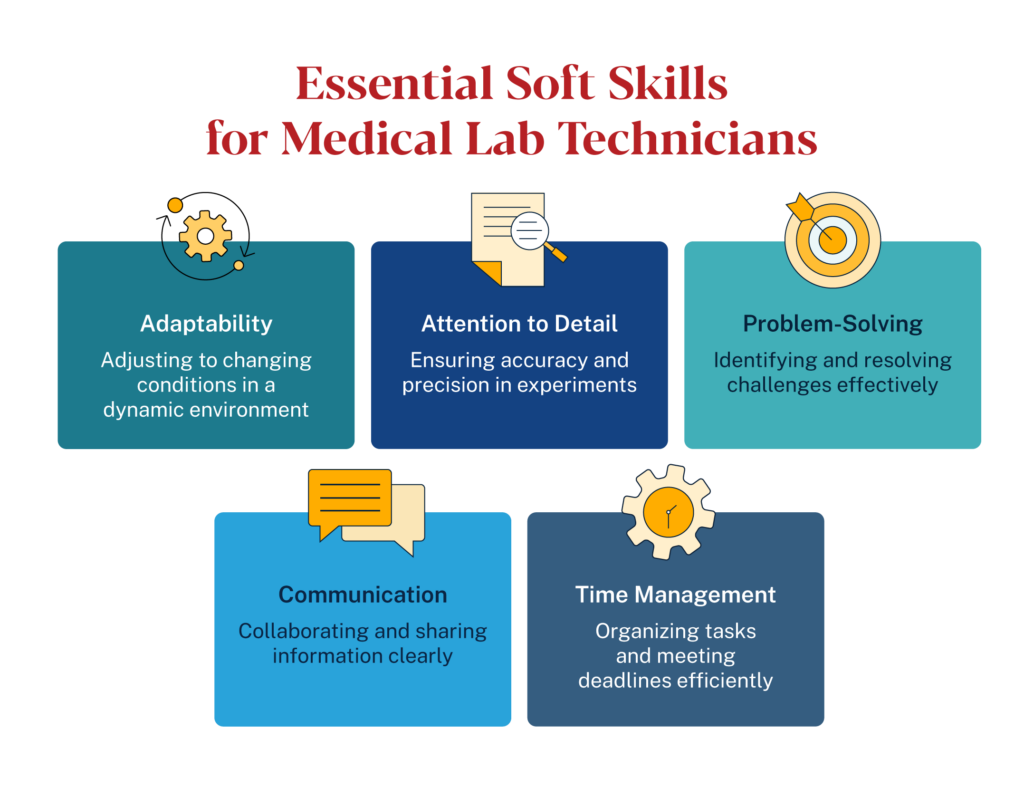
Because laboratory work requires collaboration, successful medical lab technicians also need soft skills such as:
- Attention to detail
- Problem-solving and analytical thinking
- Communication and teamwork
- Time management and organization
- Adaptability in busy laboratory environments
Important Technical Skills
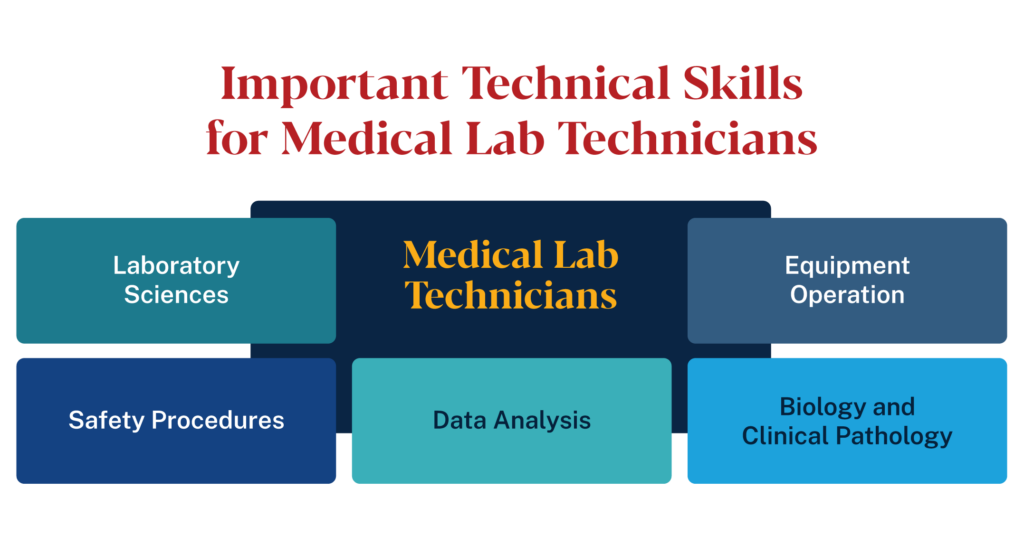
As part of their technical skillset, medical lab technicians must understand laboratory sciences, diagnostic testing procedures and equipment operation. Important technical skills include:
- Knowledge of clinical laboratory sciences
- Operation of laboratory equipment and diagnostic tools
- Understanding laboratory safety procedures
- Data recording and analysis
- Familiarity with molecular biology and clinical pathology techniques
How These Skills Apply on the Job
Let’s say a technician is processing patient bloodwork. As part of the process, they may need to prepare samples, analyze results and identify irregular findings while maintaining strict quality control procedures. Their soft and technical skills contribute to accurate laboratory testing, improve efficiency and assist healthcare teams with patient diagnosis and treatment decisions.
For those exploring related healthcare careers, you can find more information through our pharmaceutical representative career guide, this breakdown of top public health careers or a deep dive into healthcare administration.
Medical Lab Technician Education Requirements
Individuals researching how to become a medical lab technician typically begin by completing an accredited education program focused on laboratory sciences and diagnostic testing. Medical lab technician education combines classroom instruction with hands-on laboratory experience to help you build technical and scientific skills.
Minimum Education Requirements
Most medical lab technicians complete an associate degree in medical laboratory technology or a related healthcare field. These technician programs often include coursework in biology, chemistry and laboratory sciences along with supervised clinical training. Many employers prefer candidates who graduate from accredited programs that meet standards established by an accrediting agency for clinical laboratory education.
Preferred Education Pathways
Some students choose to pursue additional coursework or advanced degrees to expand their opportunities in healthcare and laboratory leadership. Preferred pathways may include:
- Clinical laboratory sciences coursework
- Hands-on laboratory internships and training experiences
- Accreditation through recognized clinical laboratory education organizations
Students interested in broader healthcare leadership opportunities may also explore related healthcare administration or public health programs.
Certifications and Training Options
Professional certification can help medical lab technicians demonstrate competency and strengthen employment opportunities. Most labs require medical lab technicians to successfully complete the credentialing examination from the American Society of Clinical Pathology (ASCP) to use the Medical Lab Technician (MLT) credential. Some professionals also pursue specialized training in molecular biology, clinical pathology or advanced laboratory testing techniques.
How to Become a Medical Lab Technician
- Complete a Medical Lab Technician Program
The first step toward becoming a medical lab technician is completing an accredited associate degree or certificate program focused on laboratory sciences and diagnostic testing. These programs typically combine classroom instruction in biology, chemistry and clinical laboratory sciences with hands-on laboratory training that helps students develop technical skills.
- Gain Clinical Laboratory Experience
Aspiring medical lab technicians typically gain hands-on experience through internships, externships or supervised clinical training. This experience helps students build confidence using laboratory equipment and performing diagnostic testing procedures.
- Earn Professional Certification
Many employers prefer or require professional certification for medical lab technicians. Certification through recognized laboratory organizations can help demonstrate technical knowledge, attention to detail and commitment to laboratory quality standards.
- Apply for Medical Lab Technician Roles
Once education and training requirements are complete, medical lab technicians can begin applying for positions in hospitals, clinical laboratories, blood banks and other healthcare organizations. Entry-level opportunities may involve supporting diagnostic testing, preparing specimens and assisting healthcare teams with laboratory analysis.
- Optional: Advance With Additional Education
Some medical lab technicians pursue additional education to expand their career opportunities in healthcare and laboratory leadership. Earning a bachelor’s degree in clinical laboratory sciences or a related field may help professionals qualify for advanced laboratory roles, supervisory positions or specialized areas of testing and analysis.
Many medical lab technicians seek to become medical lab technologists as the next step in their career progression, and this requires an additional credentialing exam from ASCP or the American Medical Technologist exam.
Day-in-the-Life & Real-World Scenarios
Medical lab technicians often work in fast-paced healthcare environments where accuracy and efficiency are essential.
A Typical Workday
A typical workday may involve preparing samples, conducting laboratory tests and reviewing diagnostic results. Medical lab technicians also spend time monitoring laboratory equipment, documenting findings, and ensuring testing procedures meet quality and safety standards. In busy healthcare settings, technicians may process dozens of patient samples while coordinating with physicians and laboratory teams throughout the day.
Real-World Examples
A medical lab technician might identify abnormal blood test results that help physicians diagnose an infection or chronic illness. They can also work at a blood bank, testing and preparing blood products for emergency transfusions. These responsibilities help healthcare providers make informed decisions about patient care and treatment.
What Success Looks Like in the Role
Successful medical lab technicians consistently produce accurate laboratory results while maintaining strong safety and quality standards. They also communicate effectively with healthcare teams and adapt to changing laboratory demands. Strong performance in this role supports efficient patient diagnoses, improved treatment planning and positive healthcare outcomes.
Medical Lab Technician Salary & Job Outlook
Medical lab technician salary potential depends largely on factors such as education, certifications, geographic location and work environment. As demand for diagnostic testing and laboratory analysis continues to grow across healthcare settings, skilled laboratory professionals remain essential to supporting accurate patient diagnosis and treatment.
Average Salary and Pay Range
Medical lab technician salary expectations can vary depending on education, certifications, geographic location and healthcare setting. According to the United States Bureau of Labor Statistics, the median annual wage for clinical laboratory technologists and technicians is $61,890 as of May 2024.*
Job Outlook and Growth Projections
The demand for laboratory professionals continues to grow due to healthcare reliance on diagnostic testing and clinical analysis to support patient care. According to the BLS, employment for clinical laboratory technologists and technicians is projected to grow at a rate of 2% from 2024 to 2034, translating to an estimated 22,600 job openings each year within the next decade.*
*Bureau of Labor Statistics. BLS classifies medical lab technicians under clinical laboratory technologists and technicians. Accessed May 25, 2026.
FAQs
What is the difference between a medical lab technician and a medical technologist?
Medical technologists often complete more advanced education and may perform higher-level laboratory analysis or supervisory responsibilities. Medical lab technicians typically focus on diagnostic testing, specimen preparation and routine laboratory procedures.
Do medical lab technicians work directly with patients?
Most medical lab technicians spend the majority of their time in laboratory settings rather than providing direct patient care. However, some professionals may collect samples or interact with patients during testing procedures.
What types of tests do medical lab technicians perform?
Medical lab technicians perform tests involving blood samples, bodily fluids and tissue specimens. Testing areas may include microbiology, hematology, molecular biology and clinical pathology.
Can medical lab technicians specialize in certain laboratory areas?
Yes. Some medical lab technicians specialize in areas such as blood bank testing, microbiology, molecular biology or clinical chemistry depending on their interests and experience.
Build Your Future in Healthcare With ACE
Medical lab technicians help healthcare teams deliver accurate diagnoses and informed patient care through detailed laboratory testing and analysis. If you’re interested in science, problem-solving and healthcare support, this career can offer a meaningful opportunity to make an impact behind the scenes every day.
American College of Education (ACE) offers affordable healthcare degree programs designed to support your professional growth and long-term career goals in a way that fits your busy schedule.