
Career Guide: Legal Nurse Consultant
Here’s what you need to know.
Toggle Navigation
Our Enrollment Counselors are here to answer your questions and walk you through the enrollment process.
Legal Nurse Consultant Career Overview
Legal nurse consultants bring clinical expertise into the legal system, helping attorneys interpret complex medical information. This role allows nurses to apply their expertise in a legal context while working with healthcare-related issues.
What Is a Legal Nurse Consultant?
A legal nurse consultant is a registered nurse (RN) who works at the intersection of medical and legal fields. In this role, professionals use clinical experience to analyze medical records, evaluate standards of care and support healthcare legal cases.
Legal nurse consultants clarify medical issues for legal teams at law firms, insurance companies, healthcare organizations or government agencies. They review documentation, assess whether appropriate care was provided and help attorneys understand how clinical decisions relate to legal claims. Their work often supports cases involving personal injury, malpractice and insurance disputes.
What Does a Legal Nurse Consultant Do?
Legal nurse consultants apply nursing knowledge to litigation, connecting clinical practice and legal strategy. The role focuses on analyzing medical records and translating findings for legal professionals.
Core Duties and Responsibilities
Common responsibilities include:
- Reviewing and analyzing medical records
- Identifying standards of care and deviations
- Assisting with personal injury and malpractice cases
- Preparing reports and expert opinions
- Collaborating with attorneys and legal teams
- Supporting case management and litigation processes
Work Environment Variations
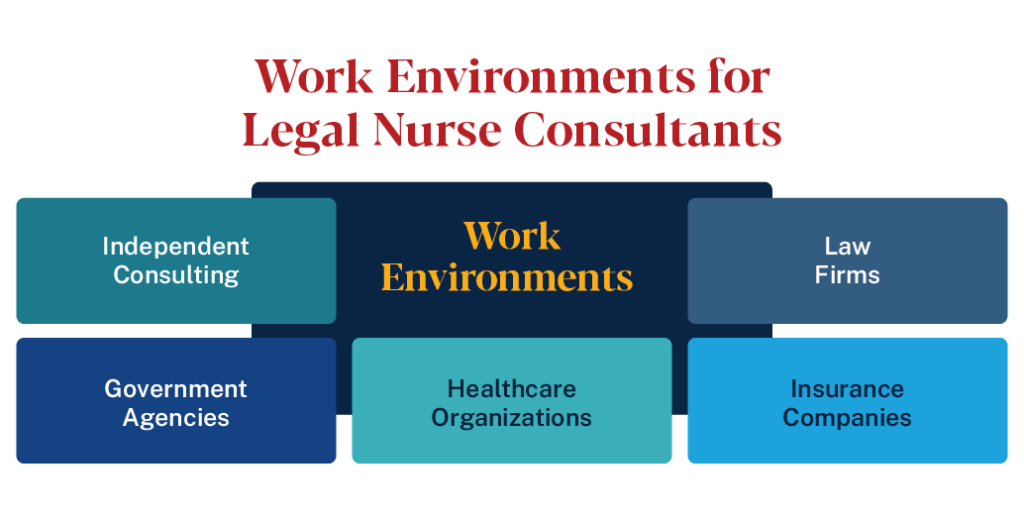
Legal nurse consultants work in a range of settings, including:
- Law firms
- Insurance companies
- Healthcare organizations
- Government agencies
- Independent consulting firms
Skills & Traits That Make a Successful Legal Nurse Consultant
Success in this role depends on clinical knowledge, analytical ability and communication skills.
Essential Soft Skills
- Communication and attention to detail
- Critical thinking and analytical reasoning
- Ethical judgment
- Time management and organization
- Ability to translate complex medical issues
Important Technical Skills
- Knowledge of medical terminology and standards of care
- Medical record analysis
- Understanding of legal procedures and documentation
- Clinical experience and nursing knowledge
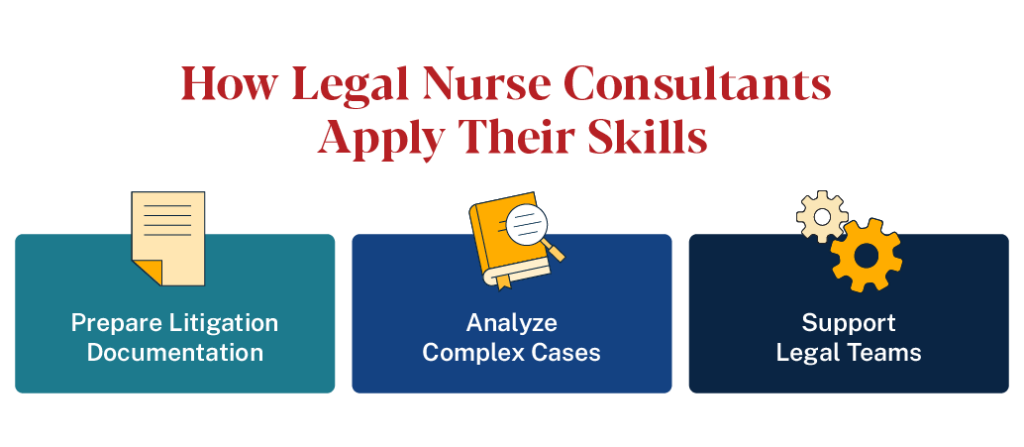
How These Skills Apply on the Job
- Analyzing complex healthcare cases
- Supporting legal teams with medical insights
- Preparing documentation for litigation
Legal Nurse Consultant Education Requirements
Becoming a legal nurse consultant typically involves building on an existing nursing career through education, experience and specialized training.
Minimum Education Requirements
At a minimum, professionals need to become an RN, which requires completing an accredited nursing program and obtaining licensure. This may include an associate or bachelor’s degree in nursing.
Preferred Education Pathways
Many employers prefer candidates with a Bachelor of Science in Nursing or advanced education. Programs like an RN to BSN can support career advancement and deepen knowledge in healthcare systems and case management.
Certifications and Training Options
Some professionals pursue a legal nurse consultant certificate to strengthen their qualifications. Certifications are available through professional organizations and may cover topics related to healthcare legal cases, documentation and consulting practices. Continuing education is also important to stay current in both medical and legal fields.
How to Become a Legal Nurse Consultant
- Become a Registered Nurse
Earn a nursing degree and obtain licensure. This requires passing the NCLEX exam, a nursing-specific test available year-round.
- Gain Clinical Experience
Clinical nursing experience is required to understand patient care, medical issues and standards of care.
- Complete Legal Nurse Consultant Training
Certificate programs and continuing education help nurses build knowledge of legal processes, documentation and consulting practices.
- Transition Into Legal Consulting Roles
After gaining experience and training, nurses may begin working with law firms, insurance companies or healthcare organizations, or pursue independent consulting opportunities.
- Advance With a Graduate Degree (Optional)
Advanced education like a master’s or doctoral program in nursing can support leadership roles with specialized expertise.
Day-in-the-Life & Real-World Scenarios
A Typical Workday
A legal nurse consultant’s day may include reviewing case files, analyzing medical records, meeting with attorneys, and preparing reports or documentation.
Real-World Examples
- Analyzing a malpractice case for standards of care
- Supporting a personal injury claim with medical insights
What Success Looks Like in the Role
Success involves accurate case analysis, collaboration with legal teams and clear communication of complex medical information.
Available Degree Programs
This career involves combining nursing experience with additional education in healthcare or leadership.
Each level of education can expand career opportunities, strengthen expertise in case management and influence long-term earning potential.
Career Outlook & Growth
Nurse legal consultant salary can vary based on experience, education and work setting. The United States Bureau of Labor Statistics does not track legal nurse consultants separately but provides data for registered nurses.


Registered nurses earn a median annual wage of $93,600 as of May 2024, with variation based on experience and location.* Legal nurse consultants may earn comparable or higher rates depending on their specialization and consulting work.
Registered nursing is projected to grow by 5% between 2024 and 2034.* As healthcare legal cases continue to increase in complexity, there is also growing demand for professionals who can interpret medical information within legal contexts.
FAQs
How much clinical nursing experience do I need before becoming a legal nurse consultant?
Most professionals have several years of clinical experience before transitioning into this role, which supports evaluating standards of care and analyzing medical records.
Can a registered nurse work part-time as a legal nurse consultant?
Yes, some registered nurses work part-time as legal nurse consultants while maintaining clinical roles, especially in independent consulting.
What professional associations support legal nurse consultants?
Organizations like the American Association of Legal Nurse Consultants provide resources, networking and certification options.
How do legal nurse consultants stay current with medical and legal regulations?
Professional organizations and continuing education help legal nurse consultants stay current with changes in healthcare and legal standards.
Your Career in Nursing Can Begin Today
At ACE, flexible coursework and career-focused programs are designed to support working professionals and aspiring nurses. From micro-credentials to advanced degrees, these programs can help you expand your expertise and prepare for roles that promote health and improve patient care. Take the next step today.